POWERGRID
Equity Metrics
September 24, 2026
Power Grid Corporation of India Limited
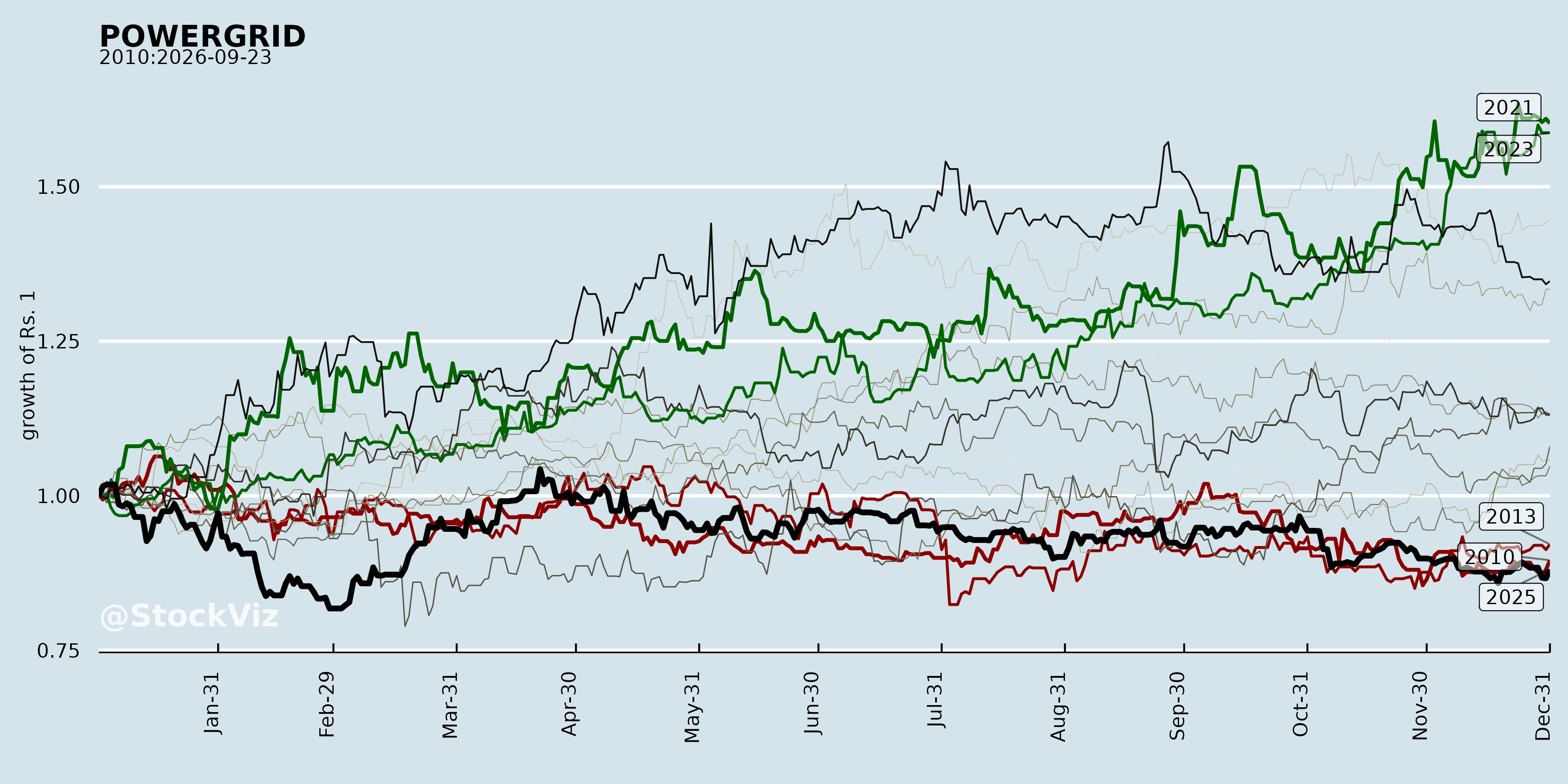
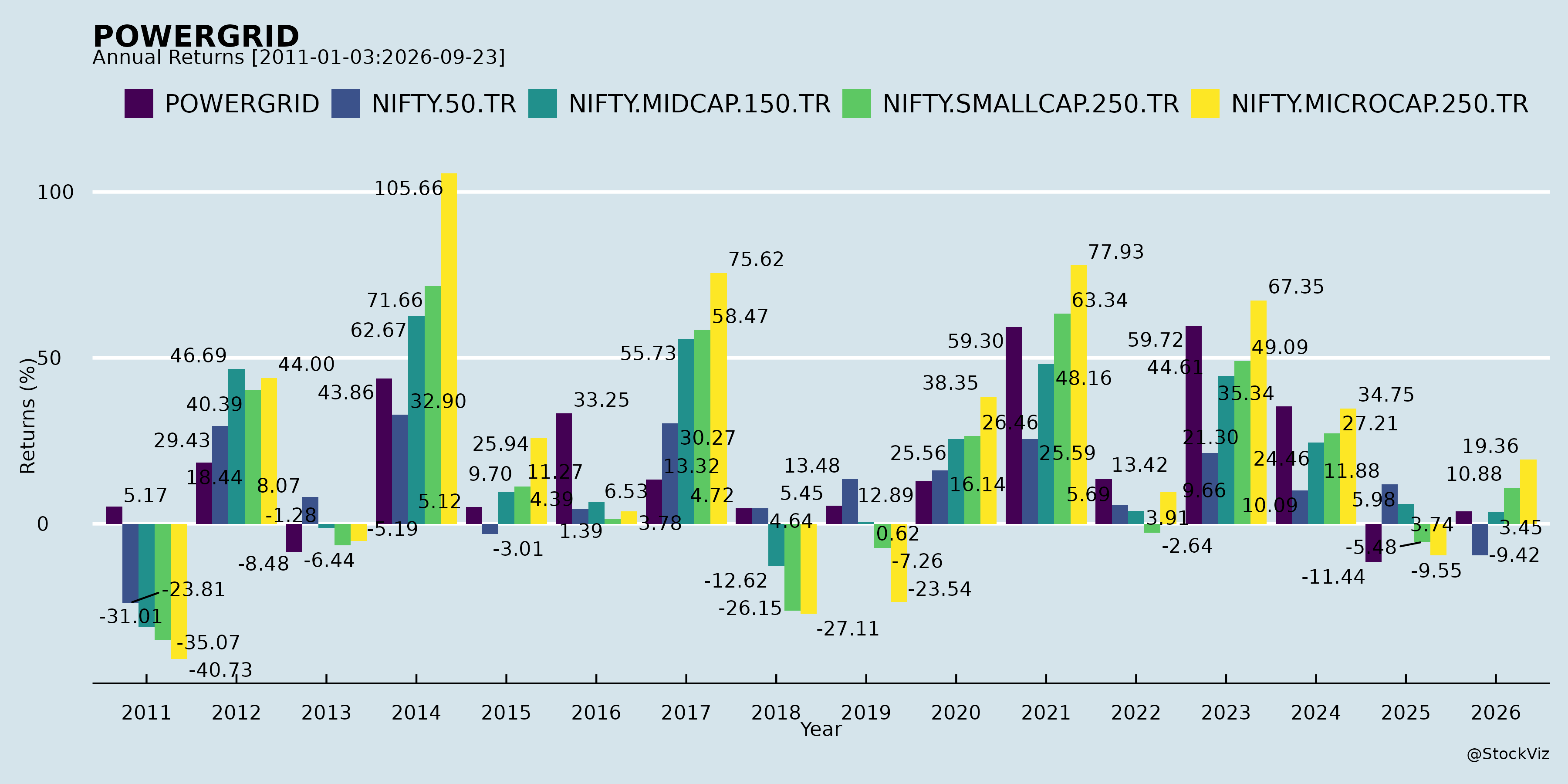
Annual Returns
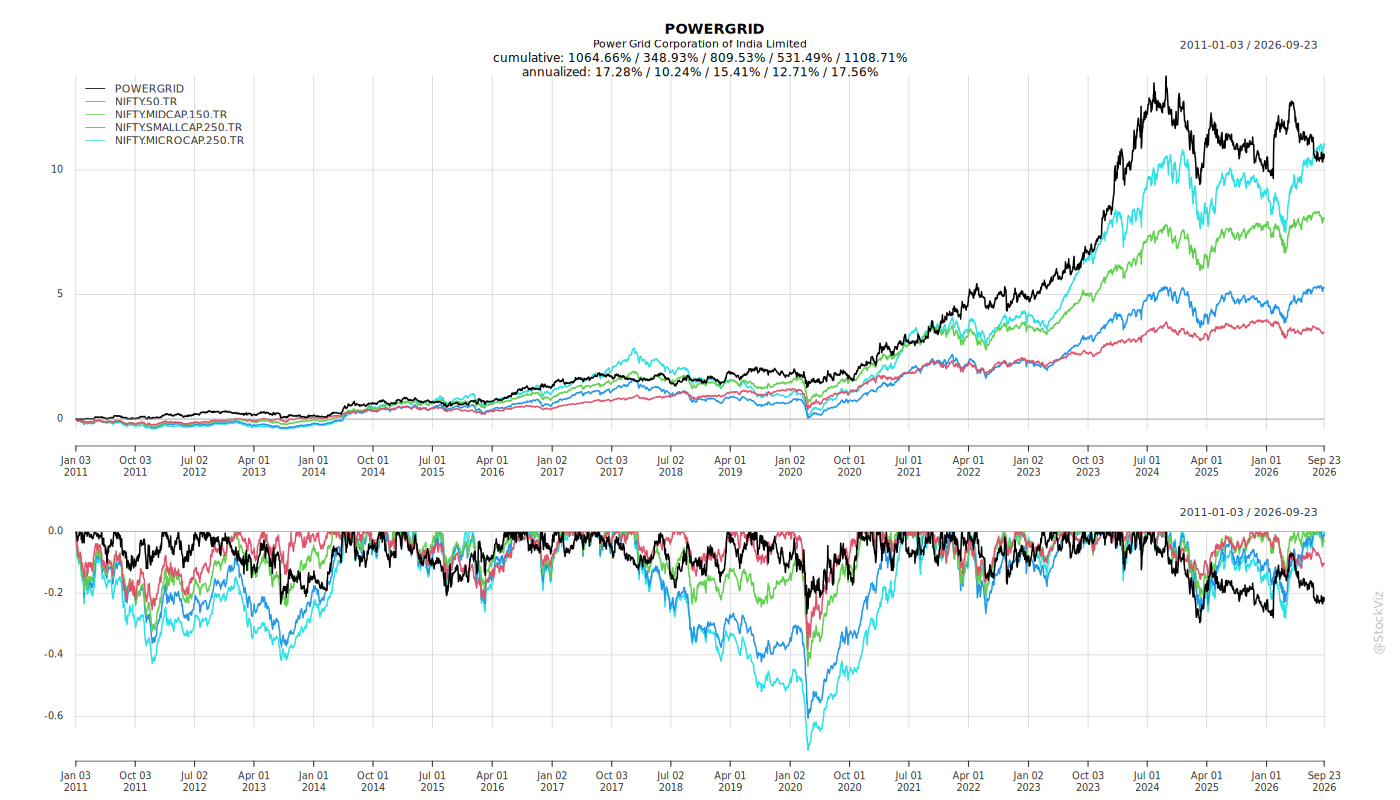
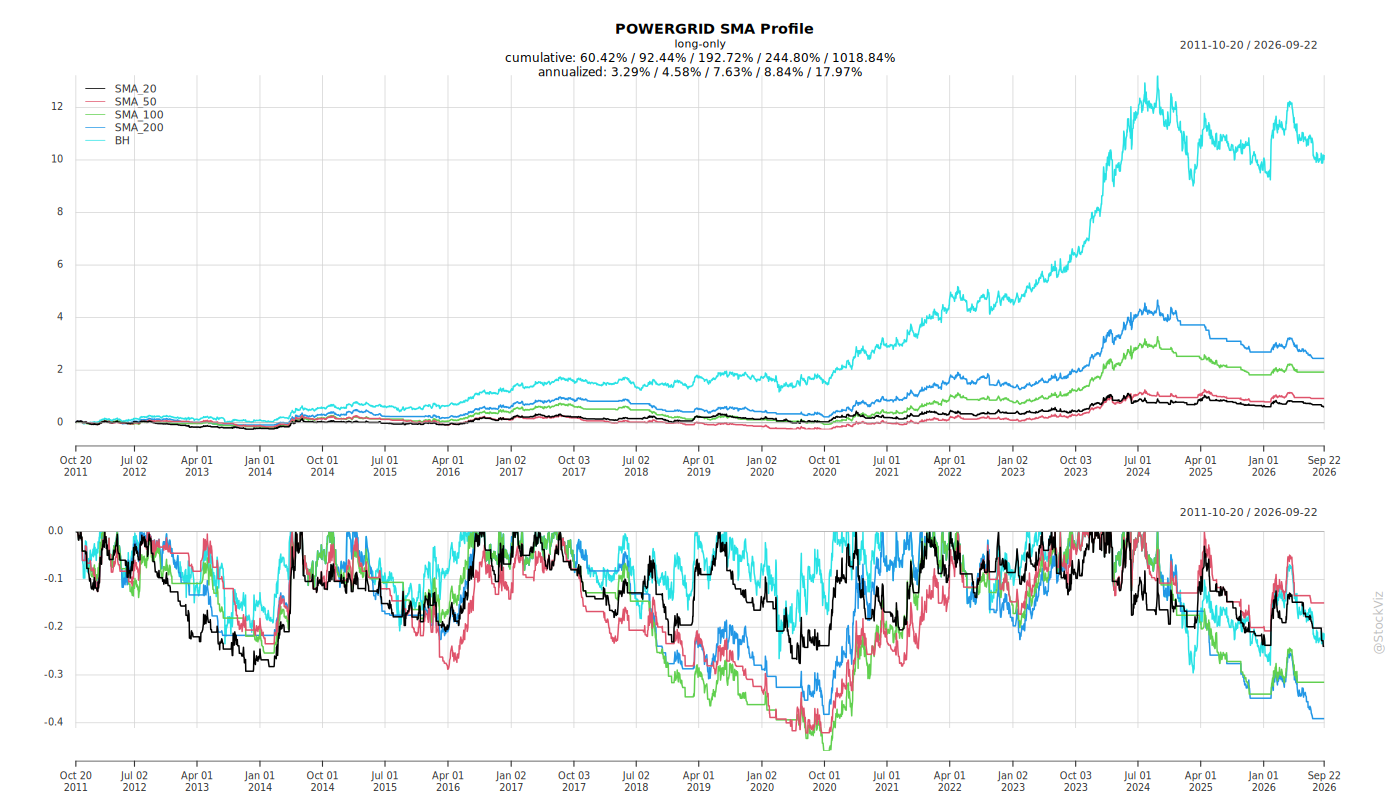
Cumulative Returns and Drawdowns
Fundamentals
Ownership
Margined
AI Summary
asof: 2026-09-14
POWERGRID: Recent Developments and Outlook
1. Headwinds and Challenges
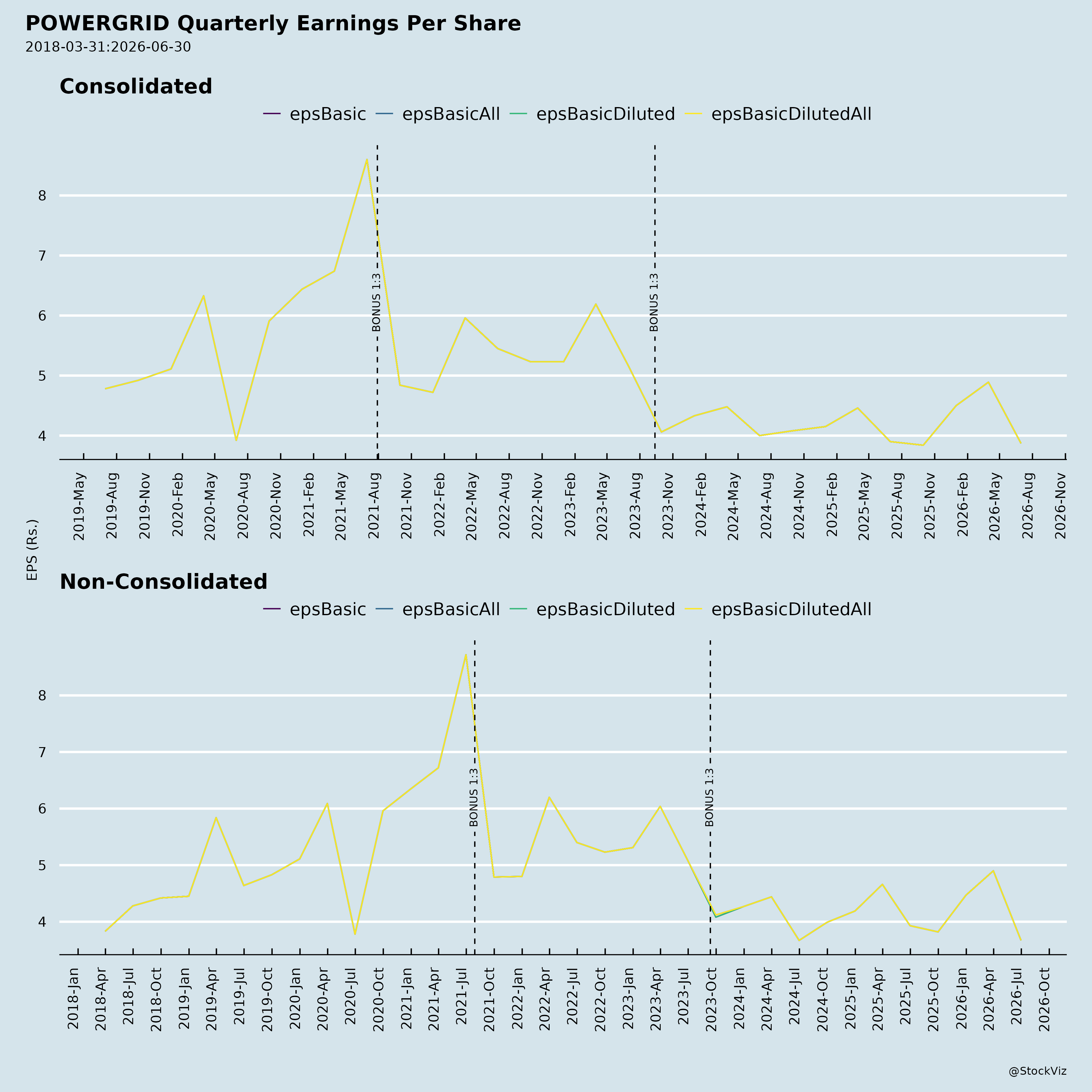
Regulatory drag on reported profitability. In Q1 FY27, transmission charges rose by about ₹790 crore on the back of newly commissioned assets, but reported profit after tax was ₹3,598 crore against ₹3,631 crore in the comparable prior period. Management attributed this to the inherent structure of the regulated tariff regime: depreciation and interest decline as assets age (about ₹330 crore impact in the quarter), and interest accrued on the differential between POWERGRID’s filings and CERC orders (about ₹230 crore) was no longer available because the regulator had issued the relevant orders. A write-back of about ₹33 crore relating to KSK Mahanadi, present in the prior-year quarter, was also absent. Management stated that but for these regulatory characteristics, PAT would have been higher by about ₹247 crore.
Tariff trajectory after 12 years. Management explained that under the regulatory framework, the cost of debt is recovered through depreciation over 12 years, after which only the equity portion remains, so tariffs on older assets decline. Capitalization undertaken around 2014–16 is now completing that 12-year cycle, which management described as a natural feature of the transmission industry under regulation rather than a cause for concern.
Execution timelines and right-of-way. Transmission project timelines had earlier been compressed to as little as 18 months, which management said was not practical; the Government of India has since revised them to about 26–30 months. Land compensation guidelines notified by the Government, initially adopted by states such as Delhi and Haryana, require states to settle on a mechanism for market-rate compensation, which management said will take some settling time and may vary by state.
Equipment supply. High growth intensity in the sector has at times strained existing manufacturing capacity for equipment such as high-capacity transformers and GIS substations. Management noted that raw material costs for transformers will continue to influence equipment pricing even as capacity expands.
Forward-looking statement risk. The company’s disclosures note that forward-looking statements involve known and unknown risks and uncertainties that may cause actual results to differ materially, and that the annual accounts for FY 2025-26 are yet to be approved by shareholders.
2. Tailwinds and Growth Prospects
Order book and pipeline. Works in hand stand at approximately ₹1.75 lakh crore, comprising about ₹1.46 lakh crore of TBCB work, about ₹25,000 crore of RTM work, and about ₹4,200 crore across other businesses including smart metering, data centres, and BESS; about ₹50,000 crore of this is CWIP. The bidding pipeline is about ₹1.19 lakh crore (₹73,875 crore under bidding and about ₹45,000 crore yet to be floated), with a long-term sector outlook exceeding ₹15 lakh crore.
Sector investment drivers. Management cited the National Electricity Plan, the anchor programme of 900+ GW non-fossil capacity by 2035-36 (₹7.9 lakh crore), hydro potential in the Brahmaputra Basin (about ₹6.4 lakh crore), data centres as a major new demand source (about 71 GW), and OSOWOG cross-border integration. Management indicated the ₹7.9 lakh crore programme would likely be bid out over roughly the next 3–4 years, and that the estimate does not factor in escalation or higher land compensation costs, leaving scope for upward revision.
TBCB wins and new asset classes. Six transmission projects were won up to July 2026 (inter-state and intra-state), with total gross annual tariff of about ₹2,200 crore; POWERGRID was successful in 6 of 19 projects bid. The company secured the country’s first Synchronous Condenser project (two units at Fatehgarh II), a new asset class intended to improve system strength, reactive power support, grid inertia, and damping of low-frequency oscillations for RE integration. On 03 September 2026, POWERGRID received a Letter of Intent for the Lakadia REZ Phase II (7,500 MW) ISTS project in Gujarat on a BOOT basis, at quoted annual transmission charges of ₹1,152.49 crore, involving a new 765/400 kV Lakadia-II substation, 765 kV lines in Gujarat, associated equipment and bays, and a Synchronous Condenser at Lakadia-II.
BESS opportunity. A recent CERC amendment to the terms of tariff regulations allows transmission developers such as POWERGRID to develop integrated storage systems. Management said discussions with the Northern and Western Regional Power Committees are complete, petitions have been filed, and the concept will require settling time before awards materialise.
HVDC pipeline. One HVDC project is already in the pipeline, with traction for another by 2027; management referred to about 21 HVDC projects depending on the evolution of generation and load centres. The Rajasthan Phase IV Barmer Complex HVDC bids have been submitted and are under evaluation by the bid process coordinator, with no announcement date yet known.
Financing and collections. POWERGRID signed a green loan agreement with JBIC for JPY 80 billion. Billing stood at about ₹10,963 crore with realisation of about 104% (₹11,404 crore), and receivable days fell from 19.41 to about 12. The ₹13,000 crore of equity invested in TBCB (operational and under construction) has been funded entirely through internal accruals.
Operational scale. Gross fixed assets exceed ₹3.25 lakh crore, with 1,86,595 ckm of transmission lines, 6,34,516 MVA transformation capacity, 291 substations, and 99.80% system availability. In Q1 FY27, 1,635 ckm and about 10,500 MVA were commissioned, and post-June 2026 completions included the 765 kV Raichur-Koppal II and 400 kV Gadag II-Koppal II lines in Karnataka and 400 kV Bikaner II–Bikaner III in Rajasthan, largely associated with RE generation. Telecom connectivity to Andaman and Nicobar was provided through PowerTel, along with the first international long-distance communication link to Nepal.
3. Key Risks
- Regulatory and tariff risk: dependence on CERC orders and the timing of their issuance, which affects interest accrual on filing differentials and the trajectory of depreciation and interest on regulated assets.
- Execution risk: right-of-way and land compensation challenges, with states still settling on market-rate compensation mechanisms, and revised project timelines of about 26–30 months.
- Supply chain risk: constrained manufacturer capacity for high-capacity transformers and GIS substations during a high-growth phase, with raw material costs influencing equipment pricing.
- Competitive risk: TBCB is now the dominant route for growth, requiring balance between growth and profitability across multiple projects.
- Accounting presentation risk: TBCB entities follow lease accounting, so depreciation in TBCB does not move in line with capitalization; management stated PAT is unaffected by the choice between PPE and lease methods.
- Disclosure risk: analysts requested separate consolidated TBCB revenue, EBITDA, and PAT disclosure; management said it would examine the request and that it has disclosed what the regulator requires.
- Forward-looking statement risk: as noted in the company’s own disclosures.
4. Management Guidance Versus Observed Performance
Capex. FY27 capex guidance is ₹37,000 crore. Management stated Q1 capex was more than 10% above the comparable prior-year quarter.
Capitalization. FY27 capitalization guidance is ₹30,000 crore. Q1 FY27 capitalization was ₹5,277 crore, which management described as about 3.13 times the prior-year figure of ₹1,683 crore. Asked whether there was scope for meaningful upside to the ₹30,000 crore guidance, management noted that transmission systems follow implementation cycles shaped by timelines and ROW challenges rather than quarterly or annual cycles.
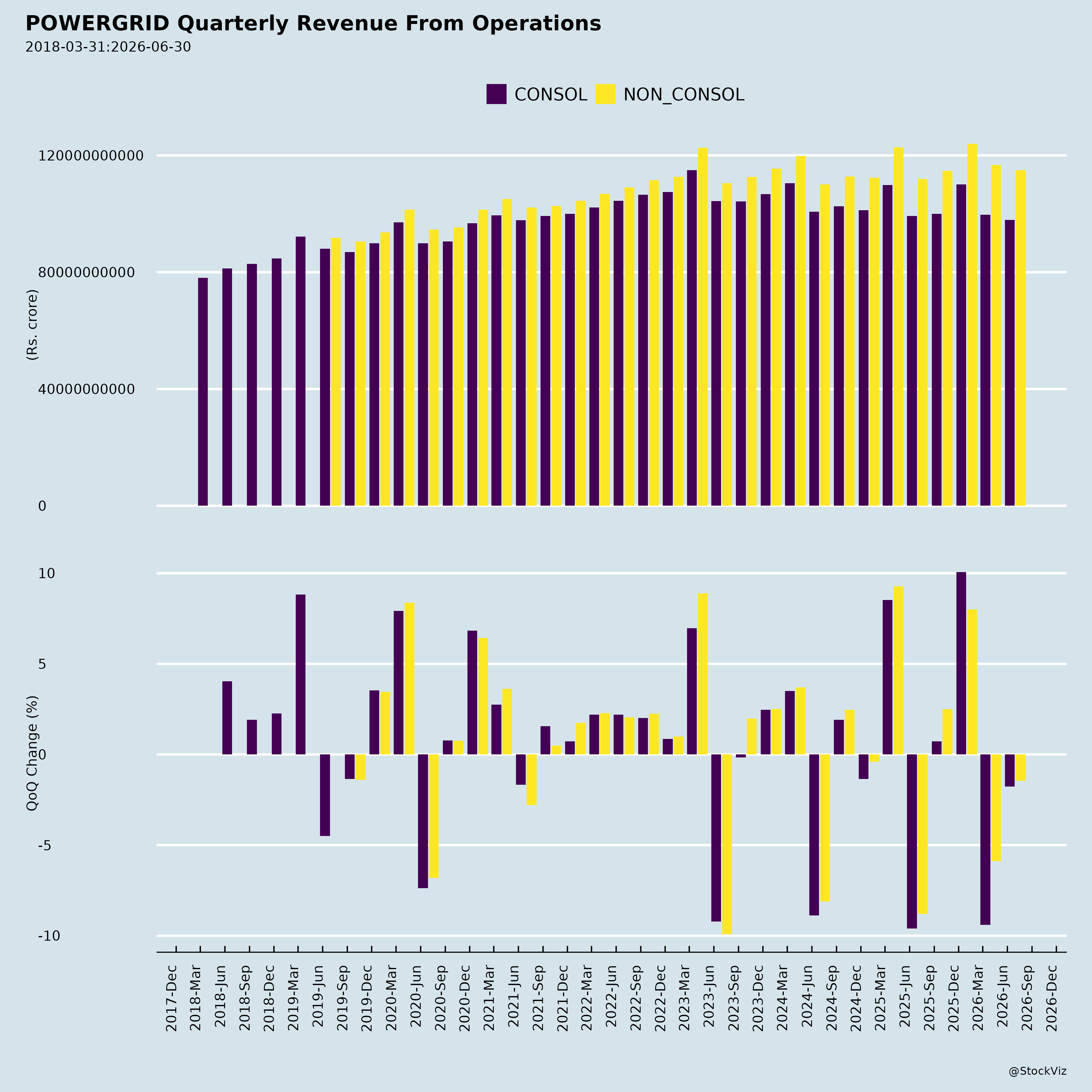
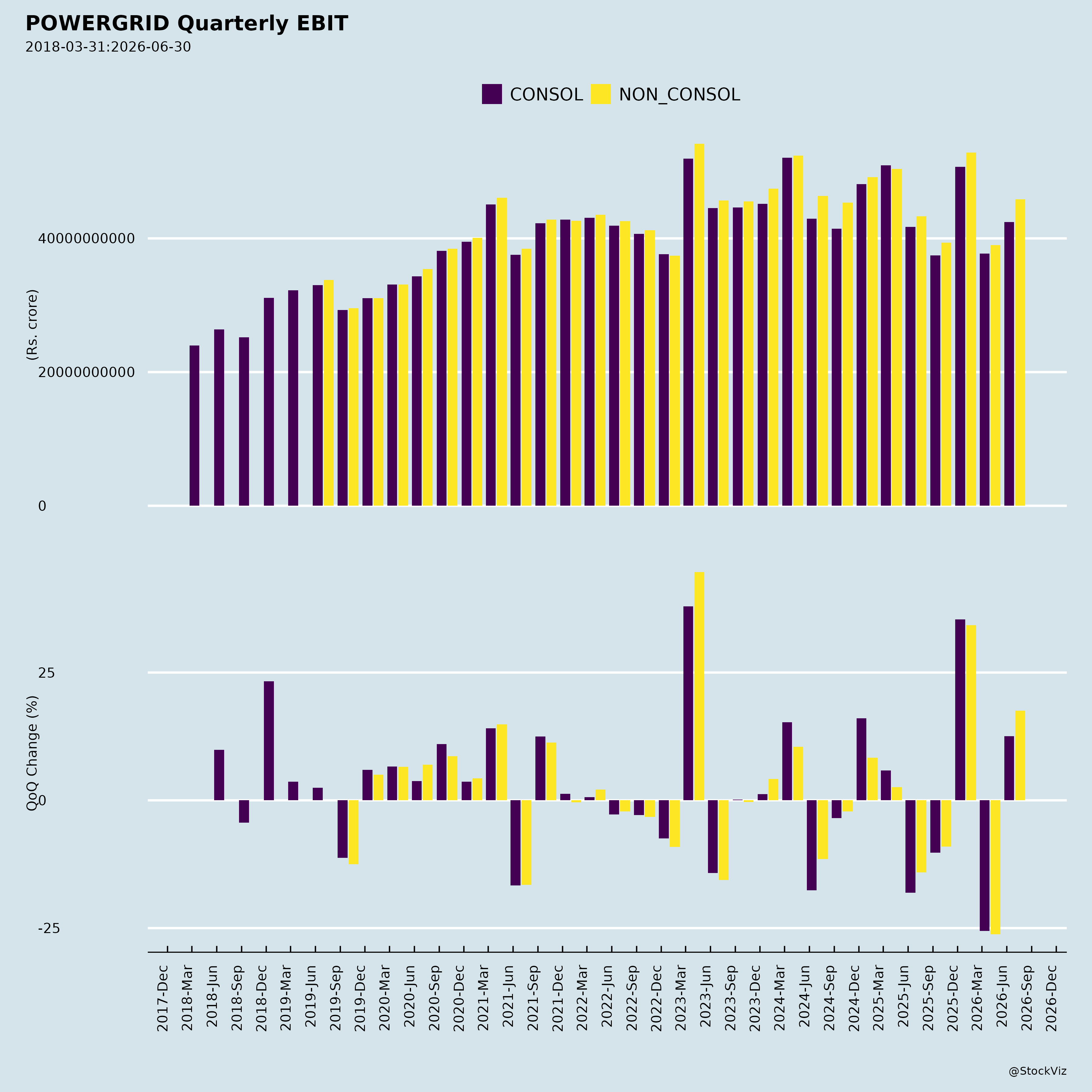
Revenue and profit. Management stated that transmission charges should have risen by about ₹788 crore on newly commissioned lines, with PAT higher by about ₹247 crore, but for the regulatory drag the reported figures were a 3% rise in transmission charges (₹10,620 crore to ₹10,905 crore), total income of ₹11,697 crore versus ₹11,444 crore, and PAT of ₹3,598 crore versus ₹3,631 crore.
TBCB equity returns. Asked about returns on operational TBCB equity (which rose from ₹4,671 crore to ₹9,965 crore), management said returns are well-calibrated across multiple projects to keep investors comfortable, without quantifying a return figure.
BESS. Management guided that the concept will require settling time, with petitions already filed and the regulator’s position awaited.
HVDC. Management guided that one HVDC project is in the pipeline and another may enter by 2027, with about 21 projects dependent on generation and load-centre evolution; the Barmer Complex bid outcome date is not yet known.
Equipment supply. Management expects the supply situation to be less strained than before as manufacturers ramp up capacity, with additional relief expected from the recent approval allowing four companies to bid.
Broker Narrative
Early reports framed Power Grid as a steady beneficiary of a doubling transmission pipeline, with near-term worries about execution, slow smart metering, and rising competition; by the last report the story had shifted to a Buy on long-duration energy-transition growth (HVDC, data centres, green hydrogen), while still acknowledging RoW and execution risks. Persistent themes were the dominant ISTS franchise and large renewable-evacuation capex; the key change was that risk emphasis moved from project-specific delays to structural RoE dilution from TBCB competition and capitalisation lag.
Fears that came true
- Project execution risk did not recede: the first report called it the key risk, the last report still lists ‘capitalisation lag and execution risk’, and most completed actual-return windows were negative/disappointing.
- Competitive intensity in transmission awards materialised as a rising TBCB mix: the last report explicitly ties this to moderating RoE, matching the early concern that competition would become a problem.
Optimism that failed
- The expected pickup in capex and commissioning over the following two years did not materialise: the final report still flags capitalisation lag, and the stock’s actual returns over most horizons were negative.
- The projected ~10% medium-term earnings growth and FY24-26E 9% CAGR did not translate into positive realised returns: every concluded early call ended in DISAPPOINTMENT or at best FLAT.
Broker Timeline
26 broker calls · 2024-05-27 to 2026-08-25
Copyright © 2023 SAS Data Analytics Pvt. Ltd. All rights reserved.