POONAWALLA
Equity Metrics
November 18, 2026
Poonawalla Fincorp Limited
Non Banking Financial Company (NBFC)
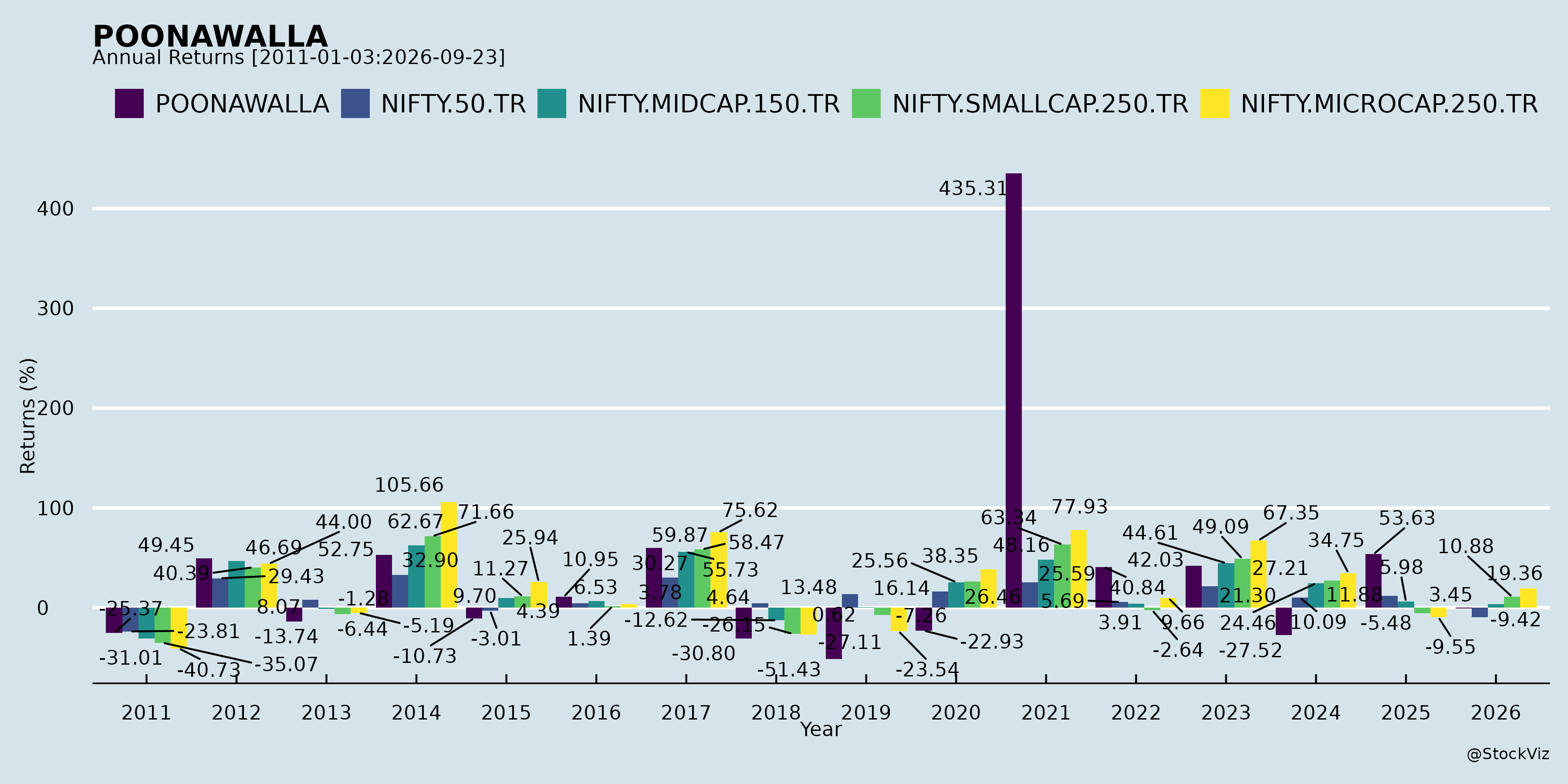
Annual Returns
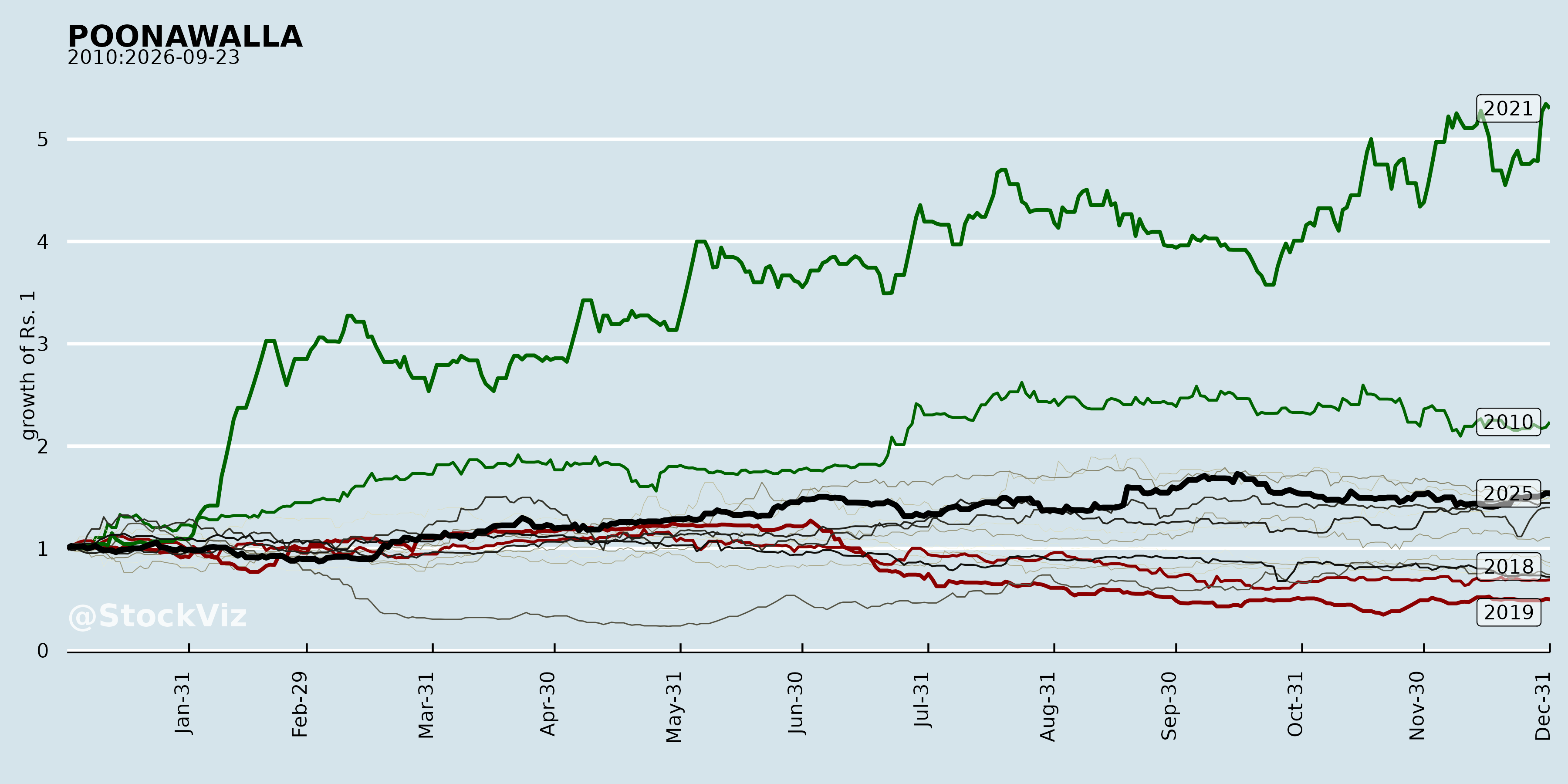
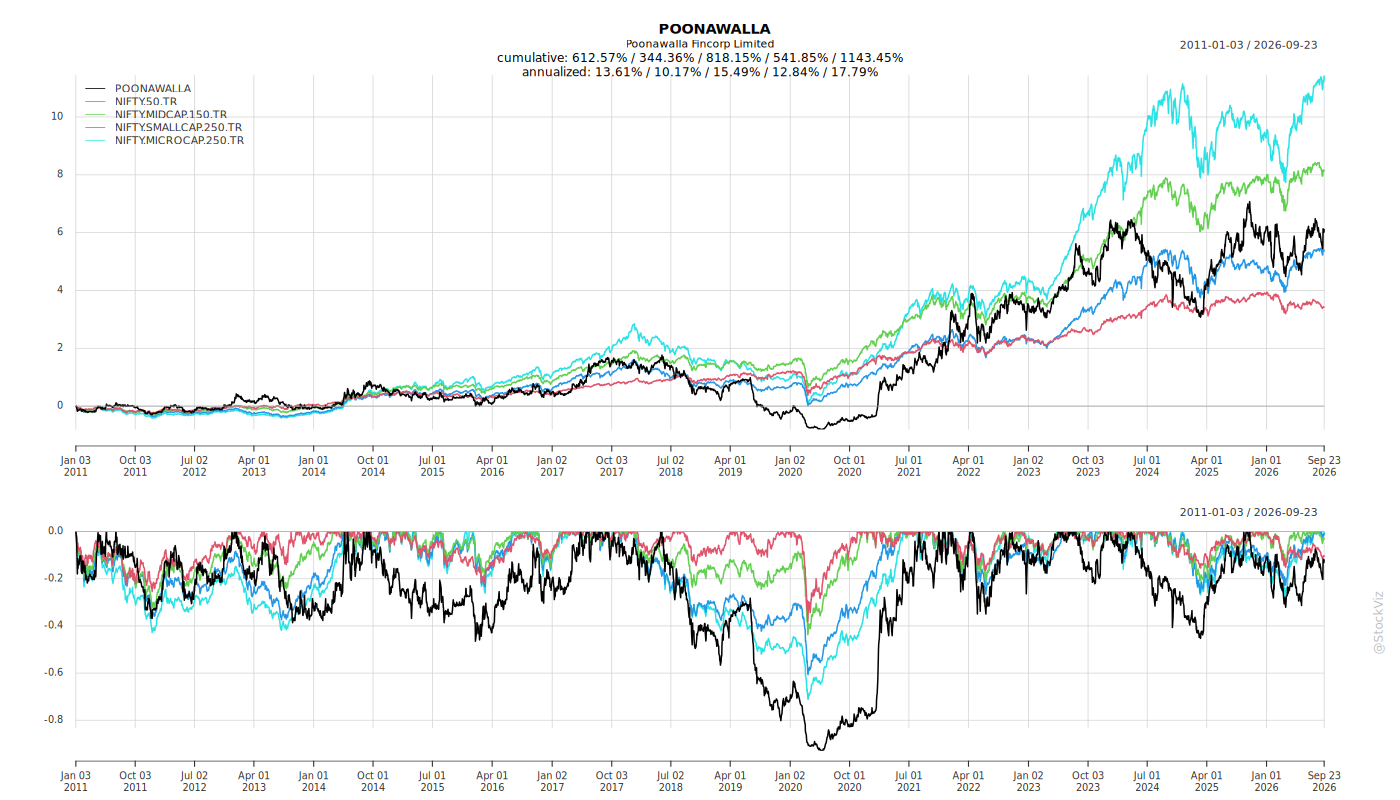
Cumulative Returns and Drawdowns
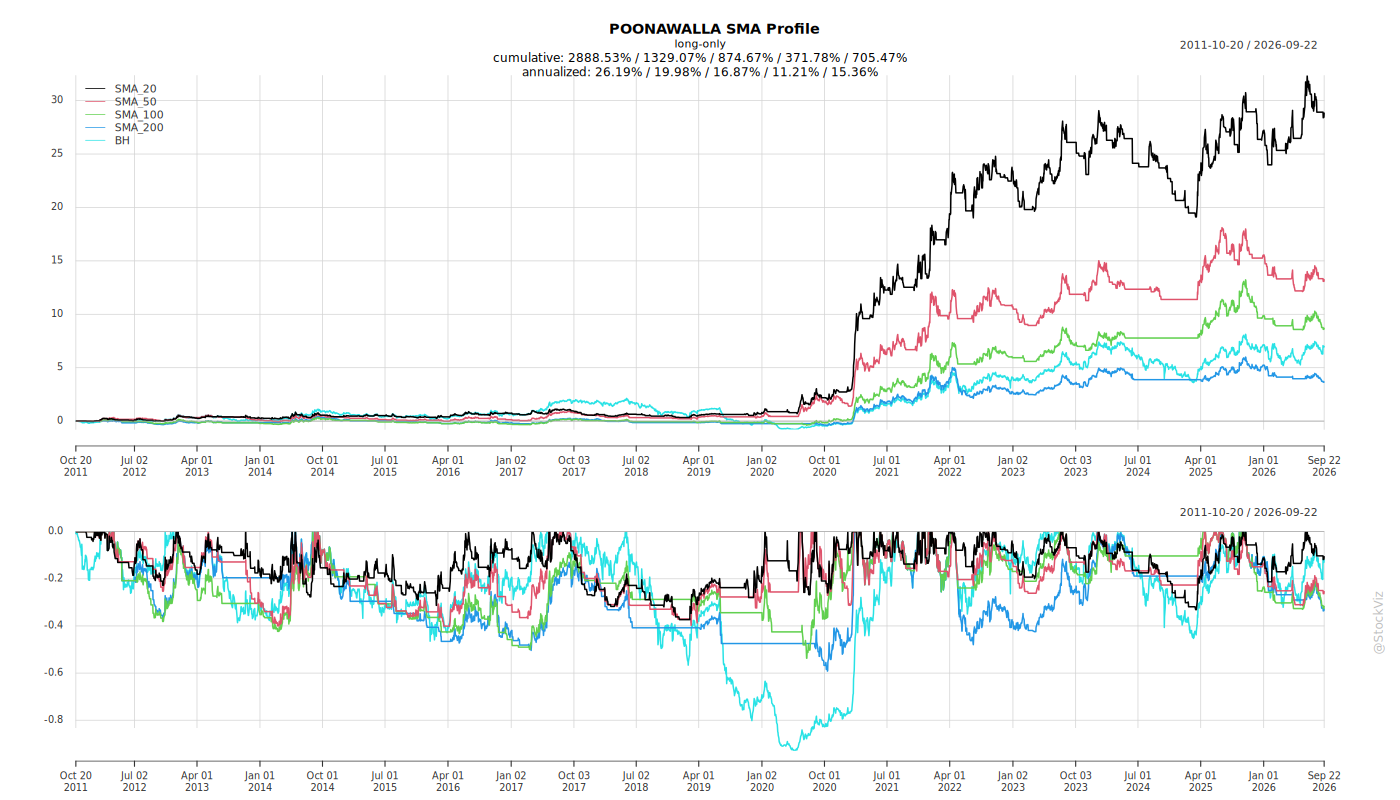
Fundamentals
Ownership
Margined
AI Summary
asof: 2026-09-16
Poonawalla Fincorp: Recent Developments
Headwinds and Challenges
- Cost of borrowing pressure. The company reported a cost of borrowing of 7.72% in Q1FY27, 9 bps higher than Q4FY26, described as a modest uptick amidst the prevailing geopolitical and interest rate environment. The presentation also flags interest rate volatility as a risk factor.
- Energy crisis watch. In the Commercial Vehicle business, disbursements were maintained at a steady monthly run rate of ~₹97 crore in Q1FY27 “while keeping a close watch on the current energy crisis.”
- Elevated credit cost. Credit cost as a percentage of average AUM stood at 2.40% in Q1FY27 (improved from 2.51% in Q4FY26), still a meaningful drag on profitability.
- Provision coverage. PCR stood at 49.11% in Q1FY27, with Stage 2 PCR declining to 17.9% from 19.0% in Q4FY26.
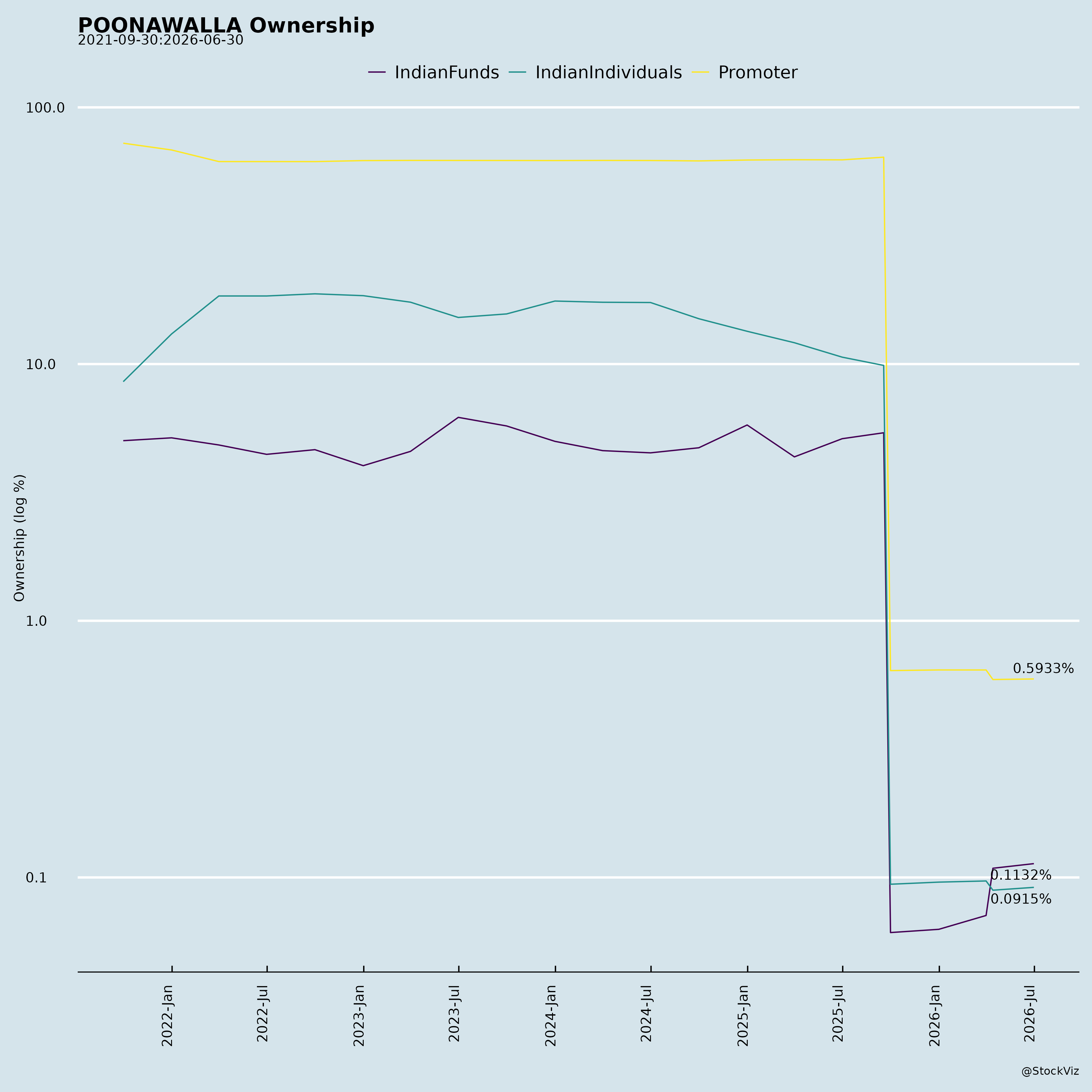
- Dissent on promoter re-appointment. At the 46th AGM (July 24, 2026), the resolution to re-appoint Mr. Adar Poonawalla received 0.4035% votes against, with public institutions casting 3,028,821 votes against (1.4581% of their votes polled) — the highest dissent among the four resolutions.
- Governance/risk factors cited. The presentation lists risks including fluctuations in collateral value, management of NPAs, fraud, changes in regulations, and compliance with capital adequacy norms.
Tailwinds and Growth Prospects
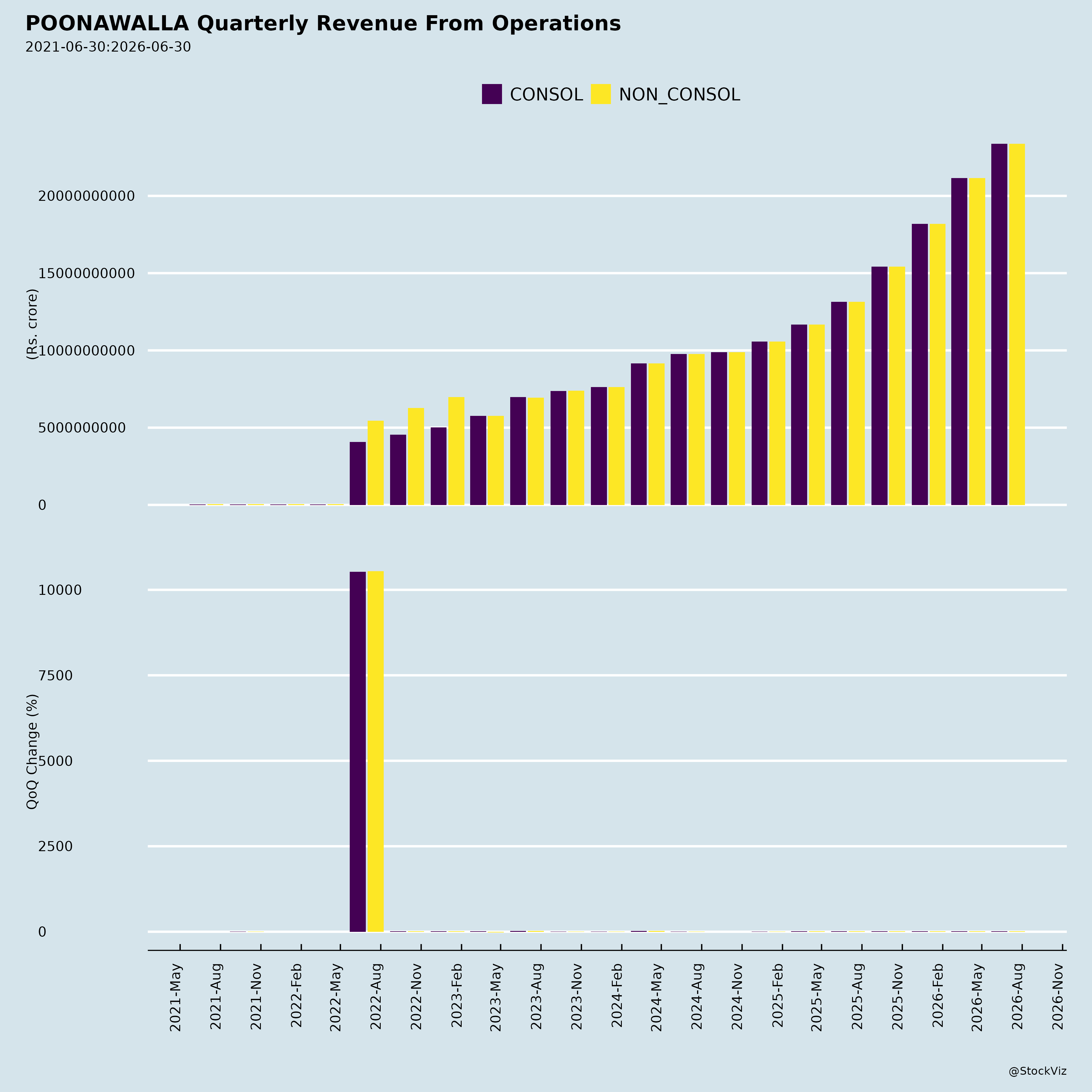
- Strong AUM momentum. AUM stood at ₹67,054 crore as on June 30, 2026. In FY26, AUM increased 69.4% to ₹60,348 crore. New products contributed 16% of AUM in Q1FY27 and 26% of total disbursements (₹3,600+ crore in Q1FY27).
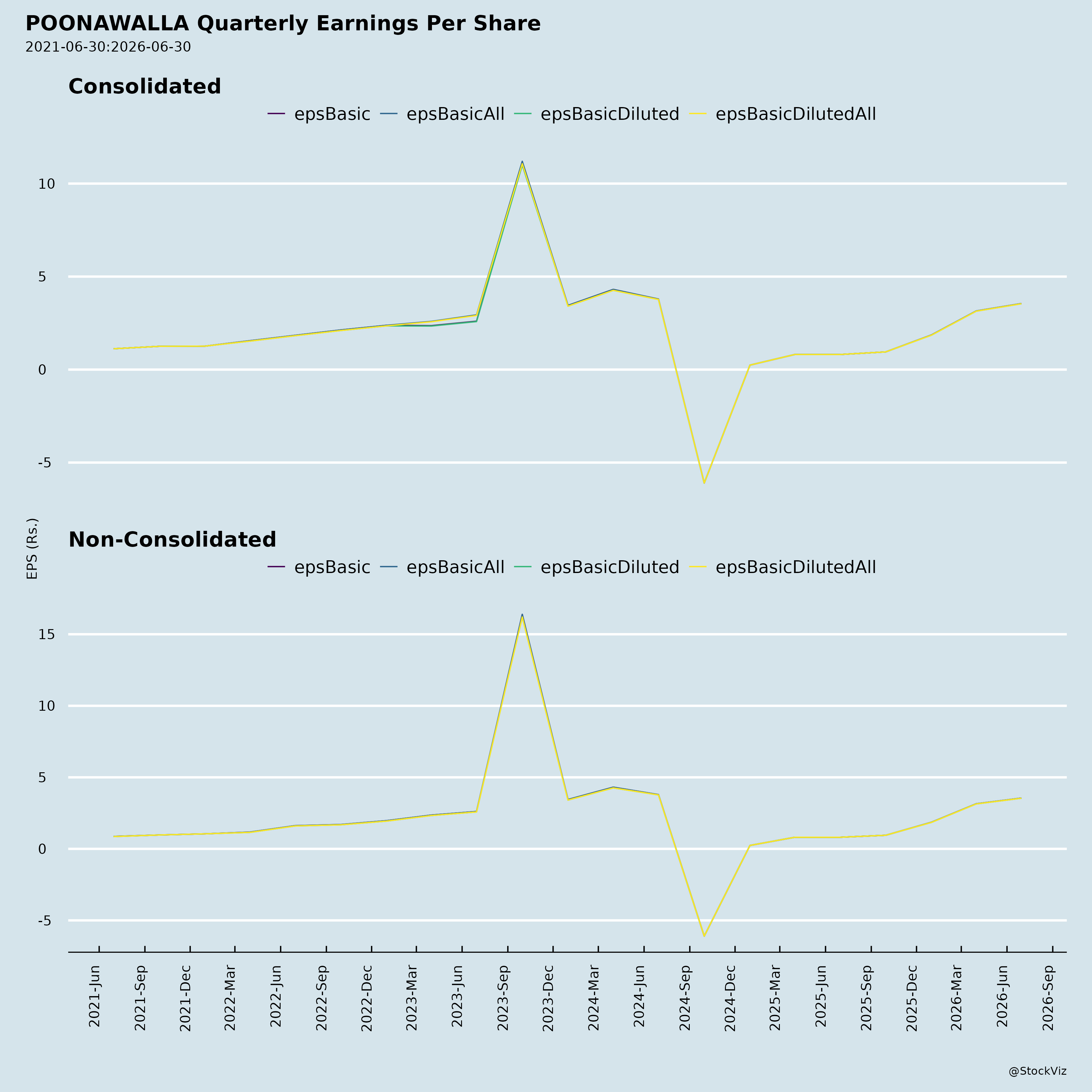
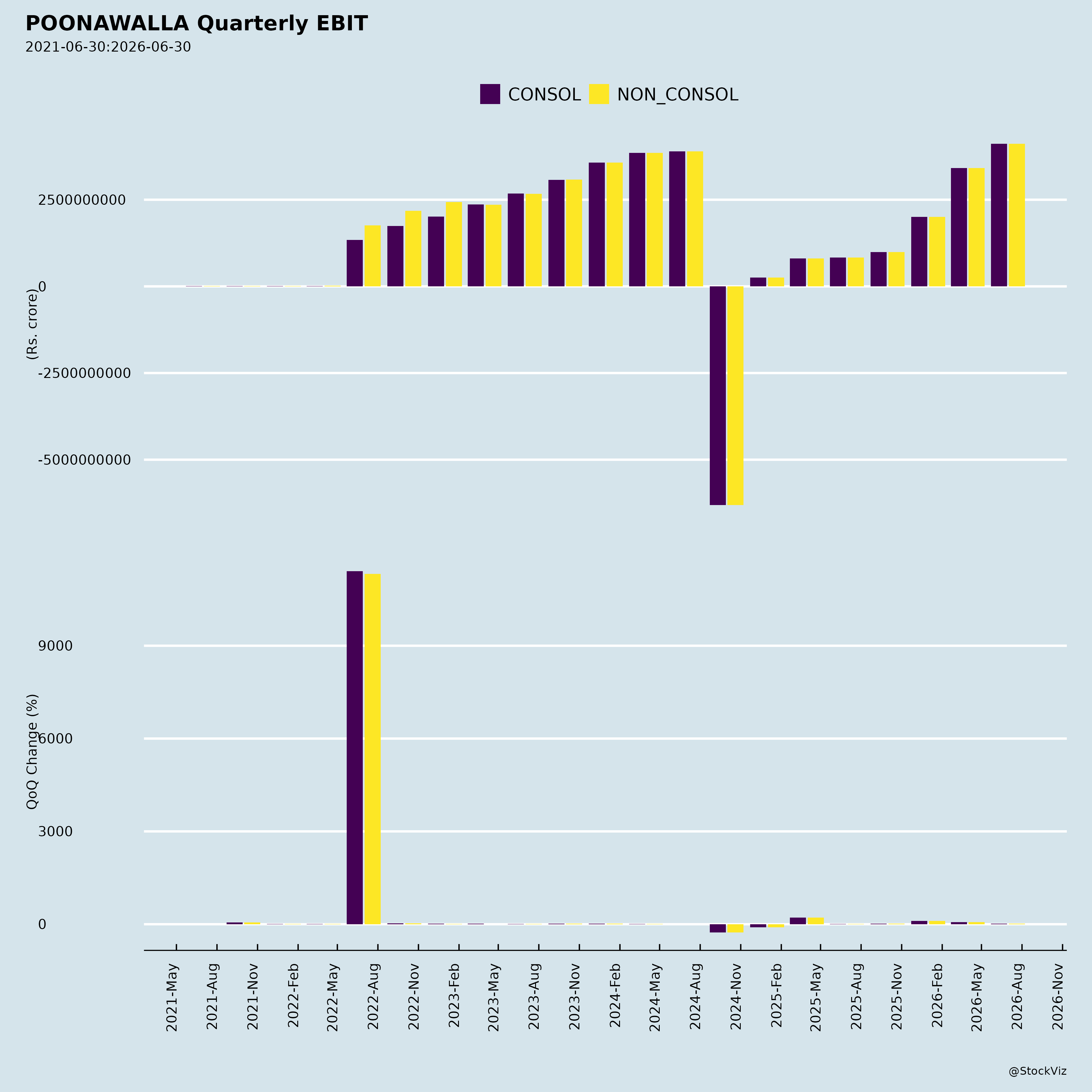
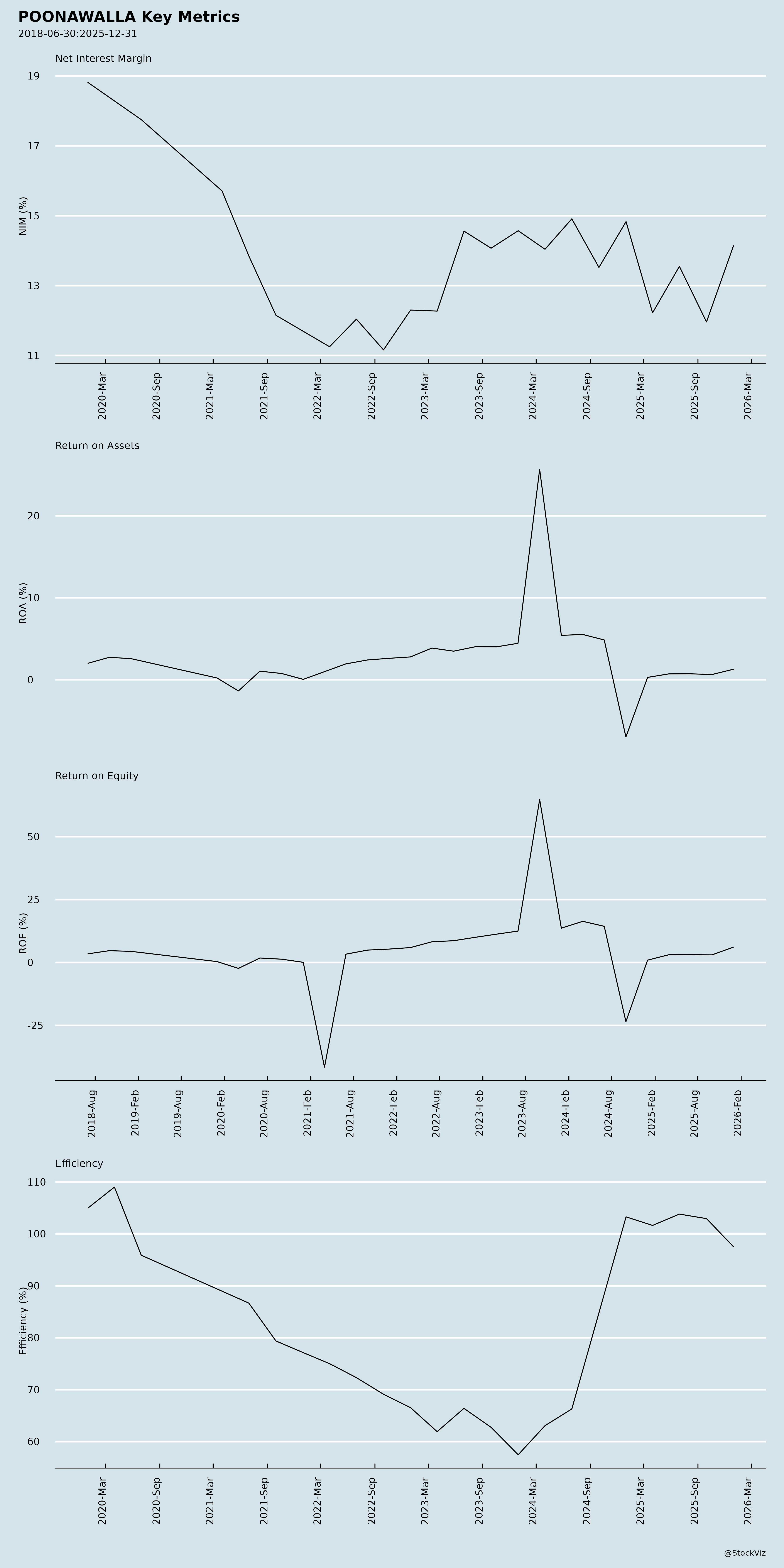
- Profitability inflection. Q1FY27 PAT was ₹308 crore, up 20.8% QoQ from ₹255 crore in Q4FY26 and up 391.5% YoY. PPoP rose 12.9% QoQ to ₹785 crore. RoA strengthened to 1.98% in Q1FY27 from 1.81% in Q4FY26 and 0.68% in Q1FY26.
- Margin improvement. NIM (incl. fees and other income) at 9.10% in Q1FY27 vs 9.05% in Q4FY26, up 5 bps QoQ. NII grew 10.9% QoQ to ₹1,415 crore.
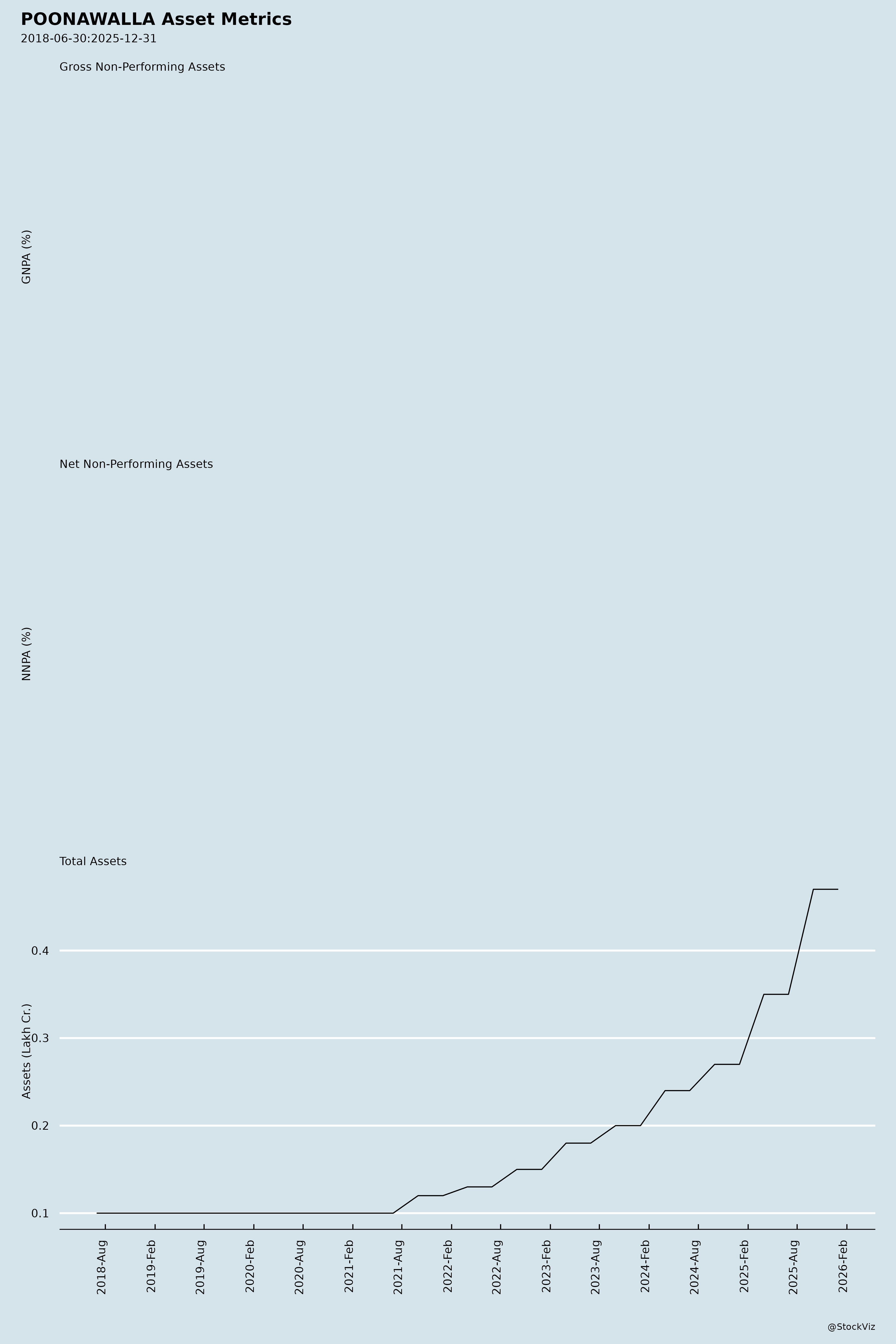
- Asset quality improvement. GNPA improved to 1.37% in Q1FY27 from 1.44% in Q4FY26 (and 1.84% in Q1FY26); NNPA at 0.70%. Stage 1 assets at 97.6% of on-book assets. No accelerated write-off during the quarter.
- Capital strength. ₹2,500 crore QIP raised in April 2026; CAR at 19.46% (Tier-1 at 18.37%), well above the 15% regulatory requirement. Debt-to-equity at 3.82x as on June 30, 2026. Liquidity buffer of ₹4,012 crore.
- New business scale-up. Gold loan branches expanded to 460, live across Gujarat, Haryana, Rajasthan, Maharashtra, Punjab, Odisha and Karnataka. Consumer durables has 17,300+ dealer points across 339 locations. CV business spans 70+ locations across 13 states with 1,100+ channel partners. Education loans have 300+ dedicated sales team and 600 partners across 50 locations.
- AI execution. 101 AI projects identified, 50 successfully delivered and 51 underway; 25 new projects added in Q1FY27. AI is embedded across underwriting, collections, customer service, audit and compliance.
- Credit rating strength. The perpetual NCDs carry an updated rating of CARE AA+; Stable (from BWR AA- at issuance). The Chairman referenced an AAA/Stable credit rating for the company.
- Strategic aspiration. Targeting 35–40% AUM growth over the near term, with an aspiration to scale AUM five to six times over five years beginning FY25.
Key Risks
- Interest rate volatility and cost of borrowing pressure.
- Regulatory changes and compliance with capital adequacy norms.
- Fluctuations in collateral value and management of NPAs.
- Fraud risk.
- Economic conditions in India and abroad, and general market/business conditions.
- Ability to attract and retain skilled professionals.
- Competition.
- Geopolitical and energy-related uncertainties affecting specific businesses (e.g., commercial vehicles).
- Forward-looking statements are subject to risks and uncertainties that may cause actual results to differ materially.
Management Guidance vs. Observed Performance
- AUM growth guidance. Management targets 35–40% AUM growth over the near term and an aspiration of 5–6x AUM over five years from FY25. Observed: FY26 AUM grew 69.4% to ₹60,348 crore; Q1FY27 AUM reached ₹67,054 crore, showing continued momentum above the stated near-term range.
- Profitability trajectory. Management stated FY26 was an inflection point and Q1FY27 marked another firm step toward sustained, predictable profitability. Observed: PAT rose 20.8% QoQ to ₹308 crore; RoA improved to 1.98%; PPoP up 12.9% QoQ — consistent with the stated direction.
- Asset quality. Management emphasized disciplined underwriting and collections. Observed: GNPA improved 7 bps QoQ to 1.37%; NNPA at 0.70%; credit cost improved to 2.40% from 2.51%; 6MoB30+ delinquency at 1.05% in FY26.
- AI delivery. Management stated 42 of 76 AI projects were delivered in FY26. Observed: the project count has since expanded to 101, with 50 delivered and 51 underway as of Q1FY27 — indicating the program is scaling beyond the original scope.
- Capital position. The ₹2,500 crore QIP strengthened the capital base, taking CAR to 20.74% at FY26; post-Q1FY27, CAR stands at 19.46% with Tier-1 at 18.37%, still well above regulatory requirements.
- New product contribution. Management guided new products to scale; observed contribution was 16% of AUM and 26% of disbursements in Q1FY27, with FY26 incremental disbursement contribution at 24% as of Q4FY26 (up from 20% in Q3FY26).
- NCD call option. The company decided to exercise the call option on ₹3 crore of 12.10% perpetual NCDs (ISIN INE511C08977) on September 09, 2026, with a record date of August 25, 2026, after receiving RBI approval — consistent with the terms permitting a call after 10 years from the September 09, 2016 deemed date of allotment.
Broker Narrative
The broker narrative shifted from a turnaround thesis centered on new management, digital sourcing, and legacy borrowings cleanup to a growth story still dogged by execution and funding costs. Early concerns about legacy book stress and poor new-book credit quality largely receded as GS3 fell to 1.2% and credit costs declined, but technology and collection investments kept driving opex higher, leaving cost pressure and bond-yield sensitivity as persistent themes alongside improving NIMs and AI-led scale.
Fears that came true
- Execution risk around technology and process investments materialized as opex rose 37% YoY and opex-to-AUM climbed to 4.15%, coinciding with sharp negative returns such as the -35.7% actual outcome in January 2024.
- High cost of legacy borrowing persisted into funding cost pressure from higher bond yields even as borrowings were contained at 7.76%, contributing to disappointing results like the -12.3% actual return in October 2025.
Optimism that failed
- Cost of funds optimization failed, since higher bond yields created funding cost pressure instead of the expected ~20 bps reduction from pre-closing legacy borrowings and commercial paper issuance.
- Cost-to-income and customer acquisition cost efficiencies did not sustain, as ongoing investment in branches, collections, and technology pushed opex up 37% YoY and opex-to-AUM to 4.15% rather than delivering structural operating leverage.
Broker Timeline
40 broker calls · 2023-07-25 to 2026-10-10
CNBC-TV18: ratings, targets and commentary
No recorded CNBC-TV18 statements for this ticker.
Management comments
No recorded management comments with an explicit designation and affiliation for this ticker.
Copyright © 2023 SAS Data Analytics Pvt. Ltd. All rights reserved.