PATANJALI
Equity Metrics
September 24, 2026
Patanjali Foods Limited
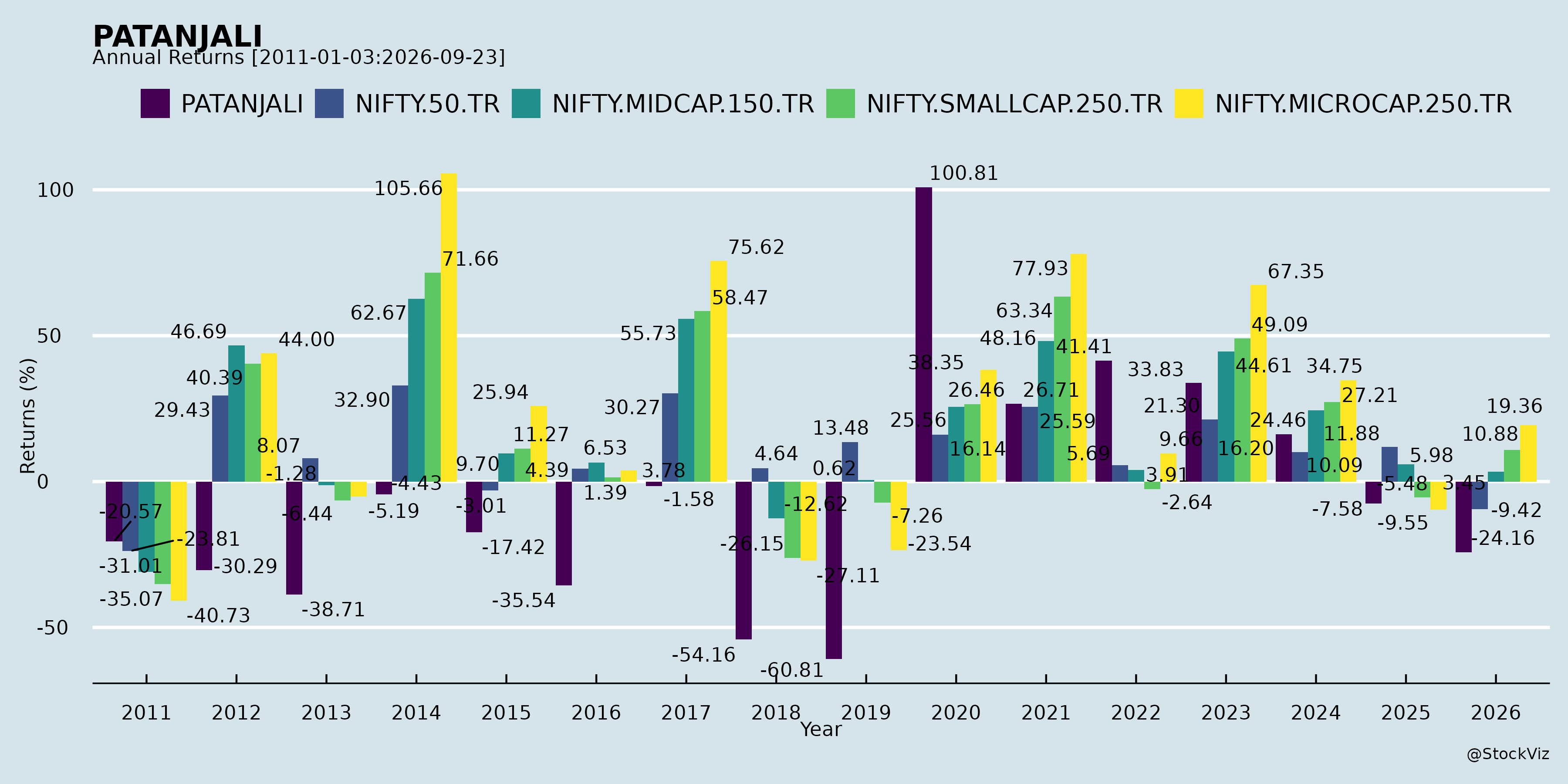
Annual Returns
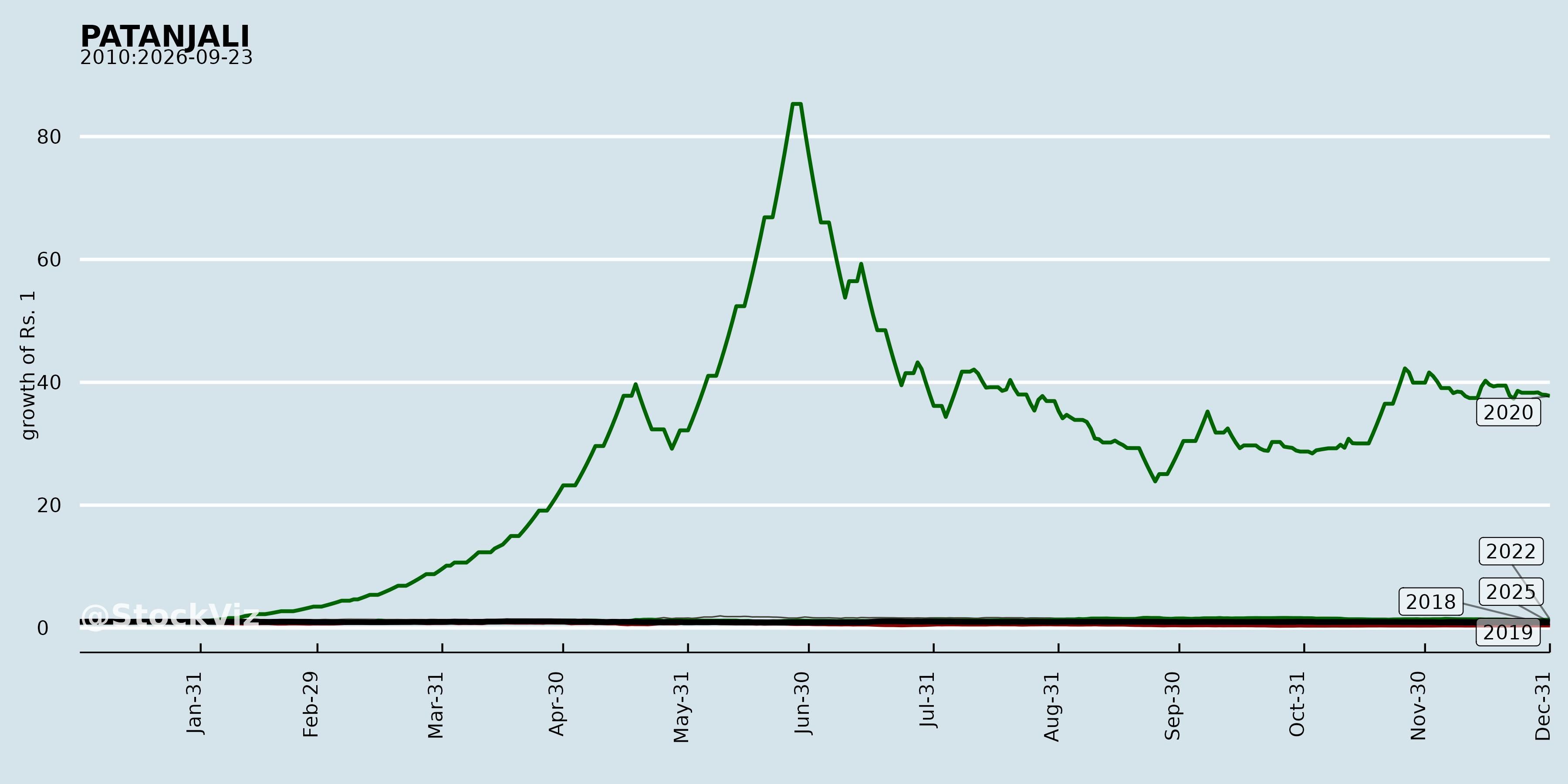
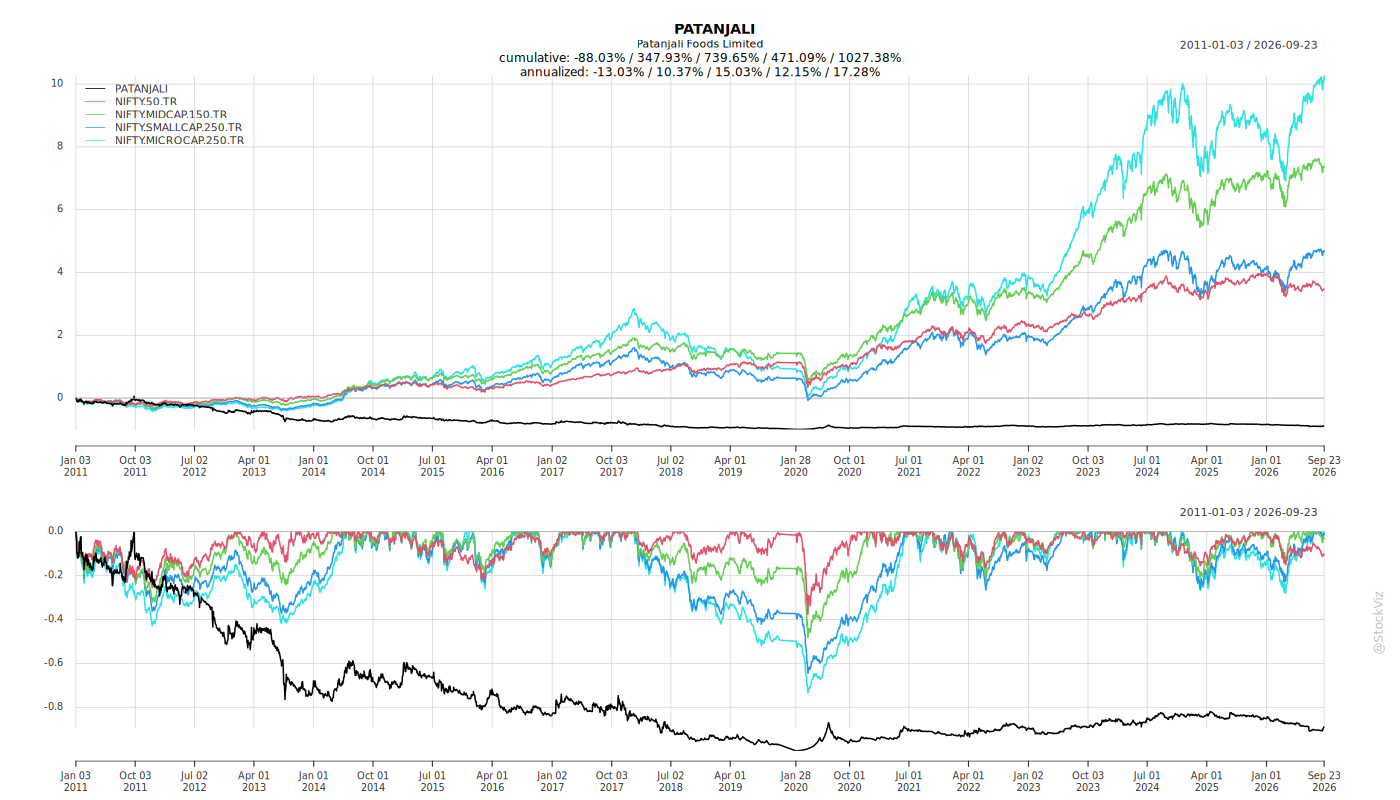
Cumulative Returns and Drawdowns
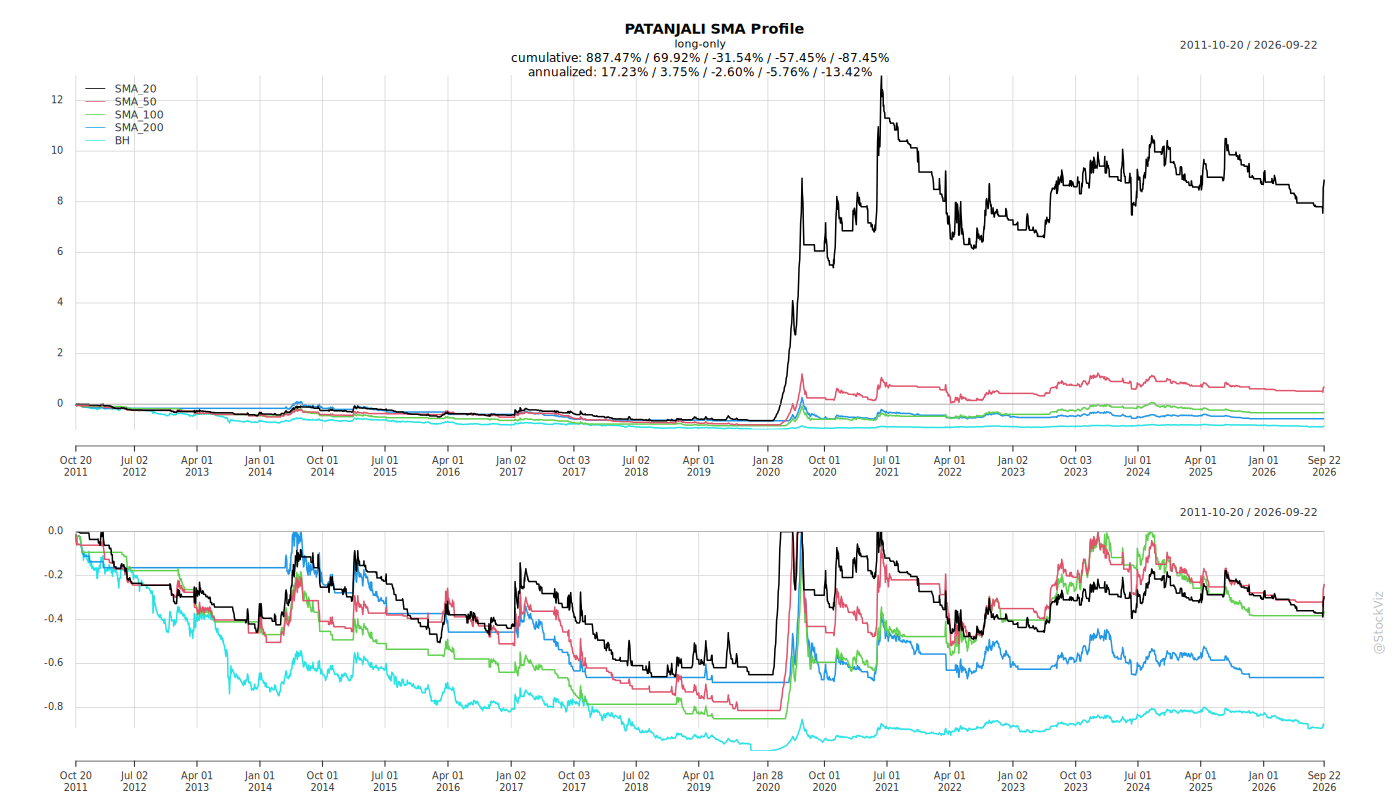
Fundamentals
Ownership
Margined
AI Summary
asof: 2026-09-16
Patanjali Foods Limited — Summary of Recent Announcements
1. Headwinds and Challenges
Inflation and demand environment: Retail inflation rose through the June 2026 quarter, from 3.48% in April 2026 to 3.93% in May and 4.38% in June 2026 — described as the sharpest rise in six months — with food inflation accelerating to 5.32% in June from 4.78% in May. Rural inflation outpaced urban inflation, even as rural consumption trends broadly continued to outpace urban markets.
Monsoon and agricultural output: A delayed monsoon and El Niño conditions were flagged as having a potential dual impact on rural demand and as a possible strain on agricultural output.
Commodity price volatility: Palm and soy oil prices remained volatile during the quarter. Palm oil prices moderated after initial firming, while soy oil futures rose ~40% towards end-March before stabilizing; soy oil FOB prices corrected ~6% amid softer demand. Domestic palm oil prices remained supported by ~2.5% rupee depreciation. The volatility was attributed to rising geopolitical tensions in the Middle East, firm global demand, and concerns about logistics and freight costs, alongside volatile crude prices.
Input cost pressures: Wheat prices remained largely stable, but milk prices witnessed an upward trend following procurement cost increases, and sugar prices remained firm amid lower domestic production and tighter inventory levels.
Export disruption: Export revenues stood at Rs. 29.82 crores for the quarter and were impacted by logistical challenges owing to war-related disruptions.
Seasonality: Ghee revenues of Rs. 219.09 crores were impacted by seasonality.
Segment-level weakness: The wind turbine power generation segment reported a segment result of Rs. 195.52 lakh for Q1FY27, compared with a loss of Rs. 838.64 lakh in the preceding quarter and a loss of Rs. 190.79 lakh in the corresponding quarter of the prior year.
2. Tailwinds and Growth Prospects
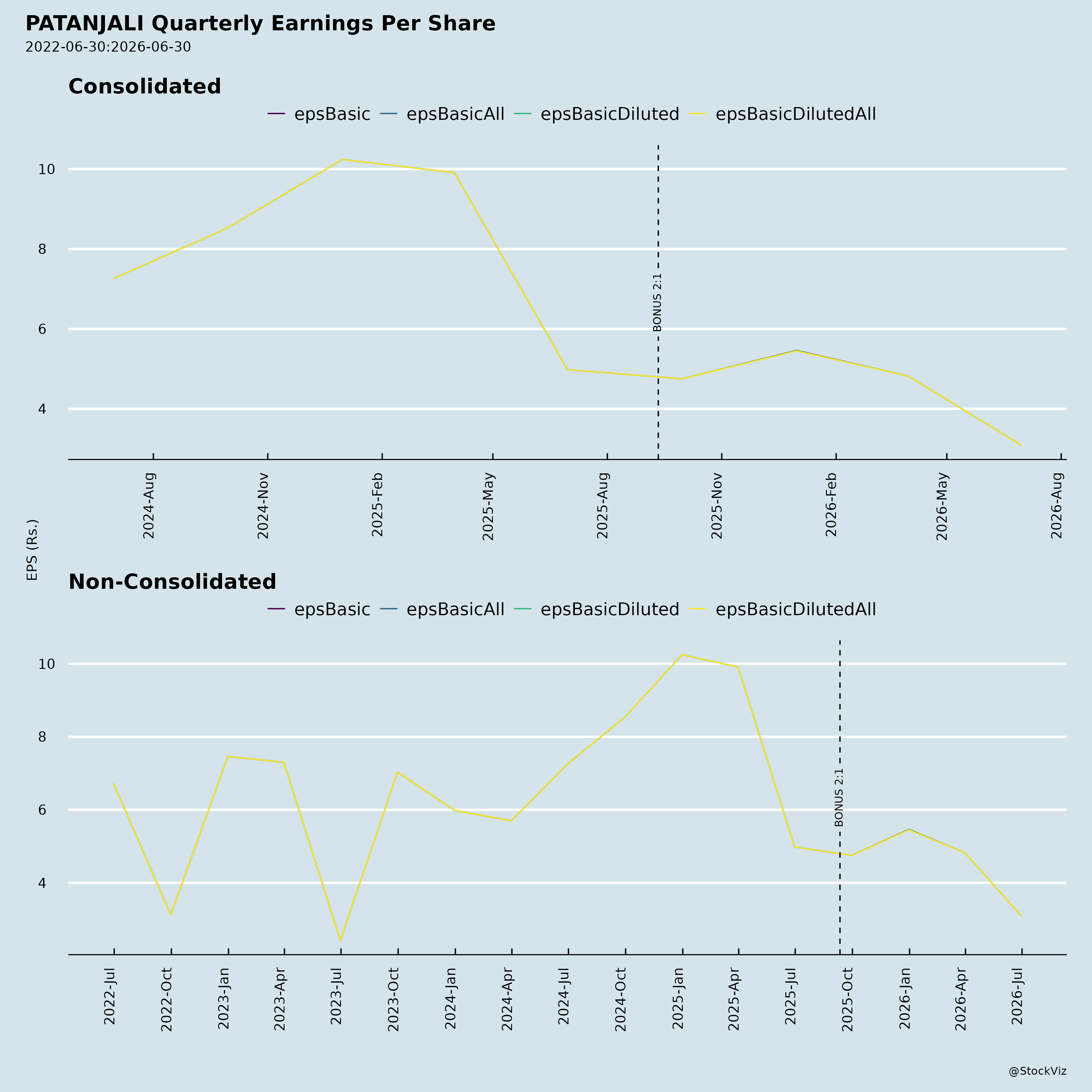
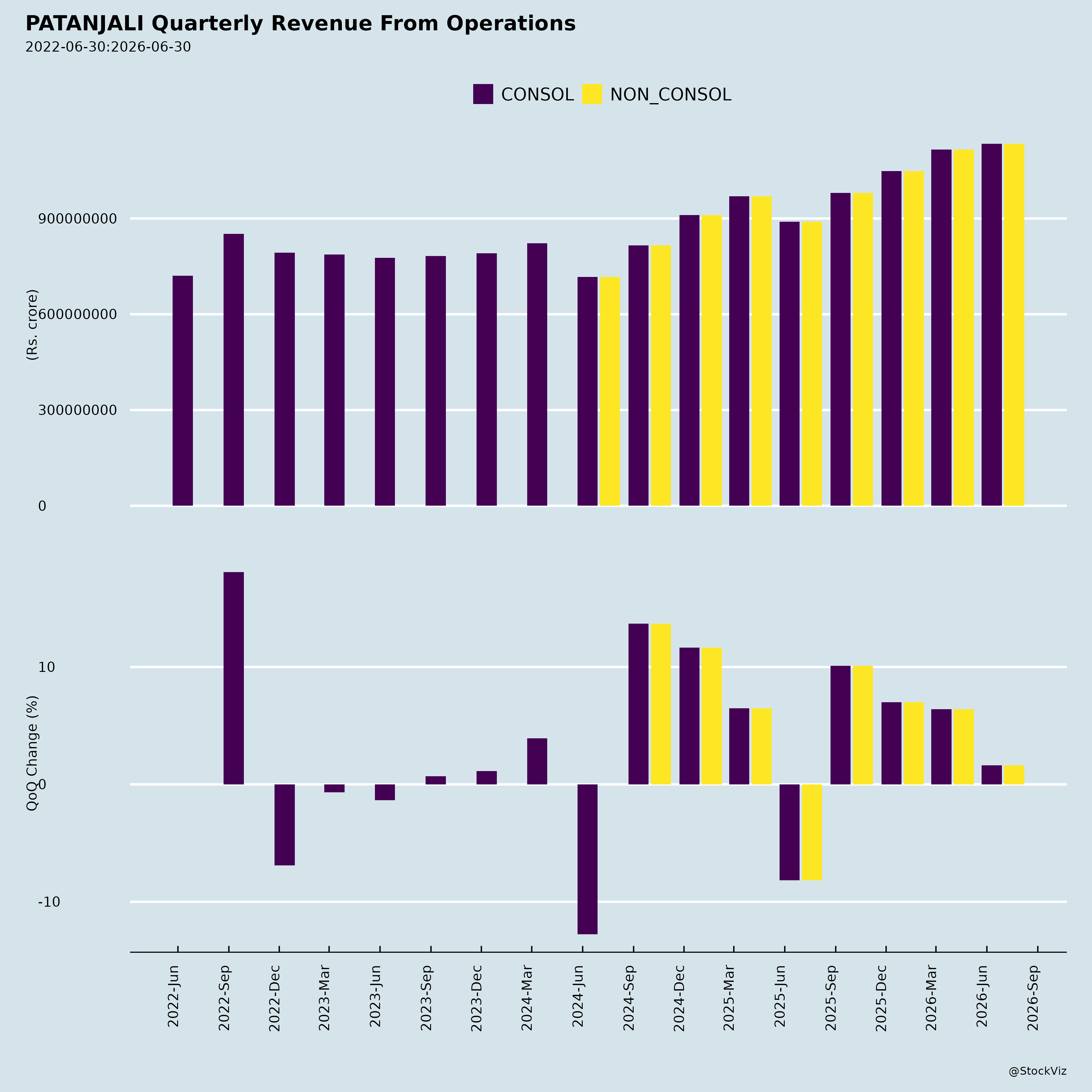
Record revenue momentum: Q1FY27 revenue from operations was Rs. 11,337.45 crores, against Rs. 8,766.03 crores in Q1FY26 and Rs. 11,155.60 crores in Q4FY26 — 29.33% YoY growth and 1.63% QoQ growth. Management described this as the fourth consecutive highest-ever quarterly revenue, and the highest-ever revenue in the Edible Oils and Biscuits businesses.
Segment growth: FMCG segment revenues were Rs. 2,937.75 crores, up 35.39% YoY. Edible Oil segment revenues were Rs. 8,504.72 crores, up 27.28% YoY and 2.17% QoQ, described as value-led growth.
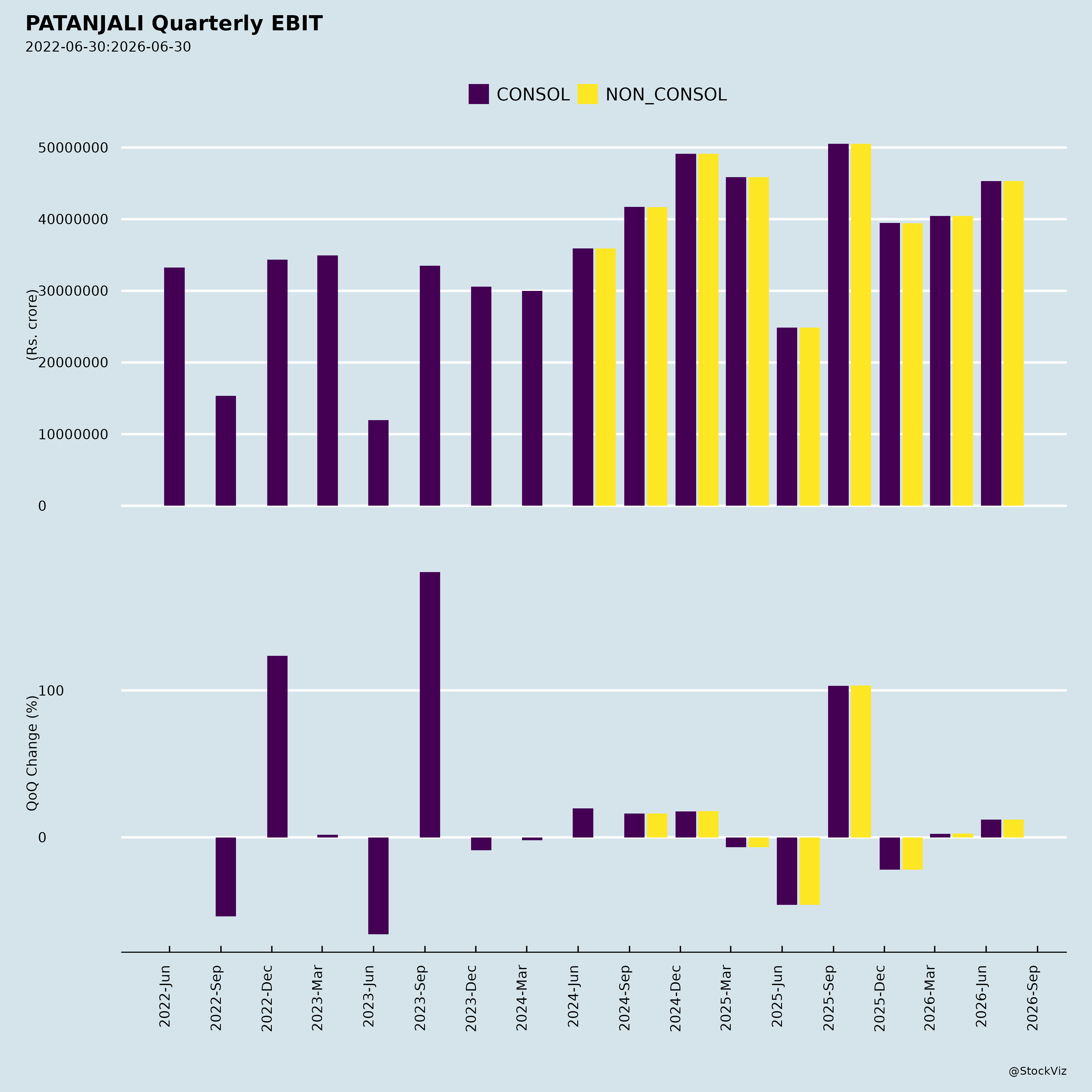
Profitability expansion: Gross profit grew 35.22% YoY to Rs. 1,521.97 crore, a 13.42% gross margin. Operating EBITDA (excluding exceptional items) was Rs. 543.40 crores, up 69.2% YoY, at a 4.80% margin. Profit before tax was Rs. 453.34 crores, up 82.36% YoY. EBITDA on a total income basis was Rs. 547.83 crores.
FMCG contribution: The FMCG segment contributed 25.65% to consolidated revenues (excluding inter-segment revenue) and 29.56% to consolidated EBITDA (excluding unallocable income), with segment EBITDA of Rs. 189.52 crores at a 6.45% margin.
Biscuits: The biscuits division generated its highest-ever quarterly revenues of Rs. 560.14 crores, up 27.33% YoY and 17.21% QoQ. The Rs. 1,300 crore brand ‘Doodh’ biscuit generated quarterly revenues of ~Rs. 400 crores, and value-added biscuits continued to gain traction.
Staples and Nutrela: Consumer staples reported quarterly revenues of over Rs. 1,000 crores. Nutrela textured soya products clocked revenues of Rs. 159.55 crores with EBITDA margins of over 18%; sales grew 14.31% YoY and 49.97% QoQ.
Home & Personal Care: The category generated Rs. 629.16 crores, comprising dental care Rs. 325.42 crores (up 13.82% YoY), skin care Rs. 164.82 crores (up 21.81% YoY), home care Rs. 82.98 crores (up 5.23% YoY), and hair care & other products Rs. 55.95 crores (up 12.06% YoY).
Other categories: Beverages generated Rs. 37.99 crores, with new summer launches including Mango Chutney, Mango Panna Juice, and Orange Juice. Other food categories (honey, dry fruits, spices & condiments, herbal products and others) collectively generated Rs. 202.94 crores. Nutraceuticals generated Rs. 17.85 crores, with sports nutrition the strongest growth driver. Wind turbine power generation generated Rs. 11.87 crores.
Oil palm plantation: As of June 30, 2026, area under cultivation was 1,15,861 hectares, with nearly ~37% in the prime yielding phase of 7–25 years; total allocated area stands at 6.63 lakh hectares. Farmer awareness seminars and outreach initiatives continue across India.
Brand and distribution investment: Advertising and sales promotion investments accounted for ~1% of revenue from operations, described as a focused approach to maximize effectiveness. Marketing initiatives included International Yoga Day campaigns, the Dhurandhar collaboration for cow ghee promotion, and “Operation Thunder” in West Bengal, Bihar, Uttar Pradesh, Maharashtra, Punjab, Haryana and Jharkhand using 30+ vans to expand Nutrela’s reach. New launches included Rose Kanti Soap, Dant Kanti Sensitive Toothpaste, Super Dishwash Liquid, Sweet Lemon Pickle, Almond Cookies and Chyawanprash Cookies.
Capital returns: The Board declared a 3rd interim dividend of Rs. 1.50 per equity share (75%) for FY 2025-26 and a 1st interim dividend of Rs. 0.80 per equity share (40%) for FY 2026-27, both payable on or before September 12, 2026, with a record date of August 21, 2026.
3. Key Risks
- Commodity price volatility in palm and soy oil, driven by geopolitical tensions, global demand, logistics and freight costs, and crude price movements.
- Rupee depreciation affecting domestic palm oil prices.
- Inflationary pressure on food prices and the resulting strain on consumption.
- Delayed monsoon and El Niño conditions affecting rural demand and agricultural output.
- Input cost inflation in milk and firm sugar prices amid lower domestic production and tighter inventories.
- Logistical challenges from war-related disruptions affecting export revenues.
- Seasonality affecting categories such as ghee.
- Continued losses in the wind turbine power generation segment.
- Reliance on other auditors for two subsidiaries in the consolidated results (total revenues of Nil, total net loss after tax of Rs. 5.89 lakh and total comprehensive loss of Rs. 5.89 lakh for the quarter), whose interim financial results were not reviewed by the statutory auditor.
- Ruchi J-Oil Private Limited (a Joint Venture) is under liquidation and is not considered in preparing the consolidated financial results.
4. Management Guidance Versus Observed Business Performance
Management commentary: The CEO stated that the company continued to set new revenue milestones, delivering its fourth consecutive highest-ever quarterly revenue despite a dynamic operating environment, and that Q1FY27 marked the highest-ever revenue in the Edible Oils and Biscuits businesses, supported by sustained brand-building and focused distribution expansion. Integrated sourcing, operational efficiencies, disciplined cost management, continued investments in manufacturing and supply chain capabilities, and improved execution were cited as enabling navigation of the evolving macroeconomic environment while delivering consistent performance.
Observed performance against that commentary: The reported results are consistent with the commentary — revenue grew 29.33% YoY and 1.63% QoQ to a record level; gross profit rose 35.22% YoY; operating EBITDA (excluding exceptional items) rose 69.2% YoY; and PBT rose 82.36% YoY. The company also adopted a calibrated pricing approach across the portfolio to address the operating environment.
Investor conference guidance: Officials will participate in an Investor Conference organised by Jefferies on September 18, 2026, starting at 09:00 A.M. onwards in Gurugram, involving 1x1/group meetings. No price sensitive information or forward-looking statements will be disclosed or discussed during the conference.
AGM-related guidance: The 40th AGM will be held on Tuesday, September 29, 2026, at 3:00 p.m. (IST) through Video Conferencing/Other Audio Visual Means. The cut-off date for e-voting entitlement is Tuesday, September 22, 2026, with remote e-voting from Saturday, September 26, 2026, at 9:00 a.m. (IST) to Monday, September 28, 2026, at 5:00 p.m. (IST). Key proposals include adoption of financial statements, confirmation of three interim dividends for FY 2025-26, re-appointment of Shri Acharya Balkrishna as Chairman & Non-Executive Non-Independent Director (liable to retire by rotation, subject to shareholder approval), ratification of the cost auditor’s remuneration for M/s. Balwinder & Associates for FY 2026-27, and approval of remuneration for several non-executive directors and a nominee director for FY 2026-27.
Audit status: The statutory auditors, M/s. Walker Chandiok & Co. LLP, issued a Limited Review Report with an unmodified opinion on both the standalone and consolidated unaudited financial results for the quarter ended June 30, 2026. The prior-year comparative review was carried out by Chaturvedi & Shah LLP, which expressed an unmodified conclusion dated August 14, 2025.
Broker Narrative
The narrative shifted from attributing near-term weakness to transient summer/election/heatwave factors toward recognizing sustained margin pressure from agri-commodity inflation and competitive intensity. Persistent themes were rural demand recovery hopes, distribution expansion, and high competition. Later reports added easing input costs, potential GST cuts, and a 2H26 volume recovery as offsets, while actual outcomes remained deeply negative.
Fears that came true
- High competitive intensity from smaller/emerging players and sustained brand/trade spends persisted, weighing on margins and contributing to negative actual returns.
- Pricing lagging input-cost inflation and utilization of high-cost inventory materialized as gross and operating margin contraction, correlating with DISAPPOINTMENT outcomes.
- Adverse seasonality—first harsh summers/heatwaves, then early monsoon—impacted key categories and sales, reflected in persistently negative price performance.
Optimism that failed
- Gradually unfolding rural demand recovery and distribution expansion did not prevent actual returns from collapsing to around -40%.
- Expected festive/wedding season channel stocking and demand pickup failed to translate into positive share price outcomes.
- Projected easing input costs and potential GST rate cuts did not materialize into margin recovery or improved returns, leaving most later calls as DISAPPOINTMENT.
Broker Timeline
9 broker calls · 2024-08-19 to 2025-08-18
Copyright © 2023 SAS Data Analytics Pvt. Ltd. All rights reserved.