OLAELEC
Equity Metrics
November 18, 2026
Ola Electric Mobility Limited
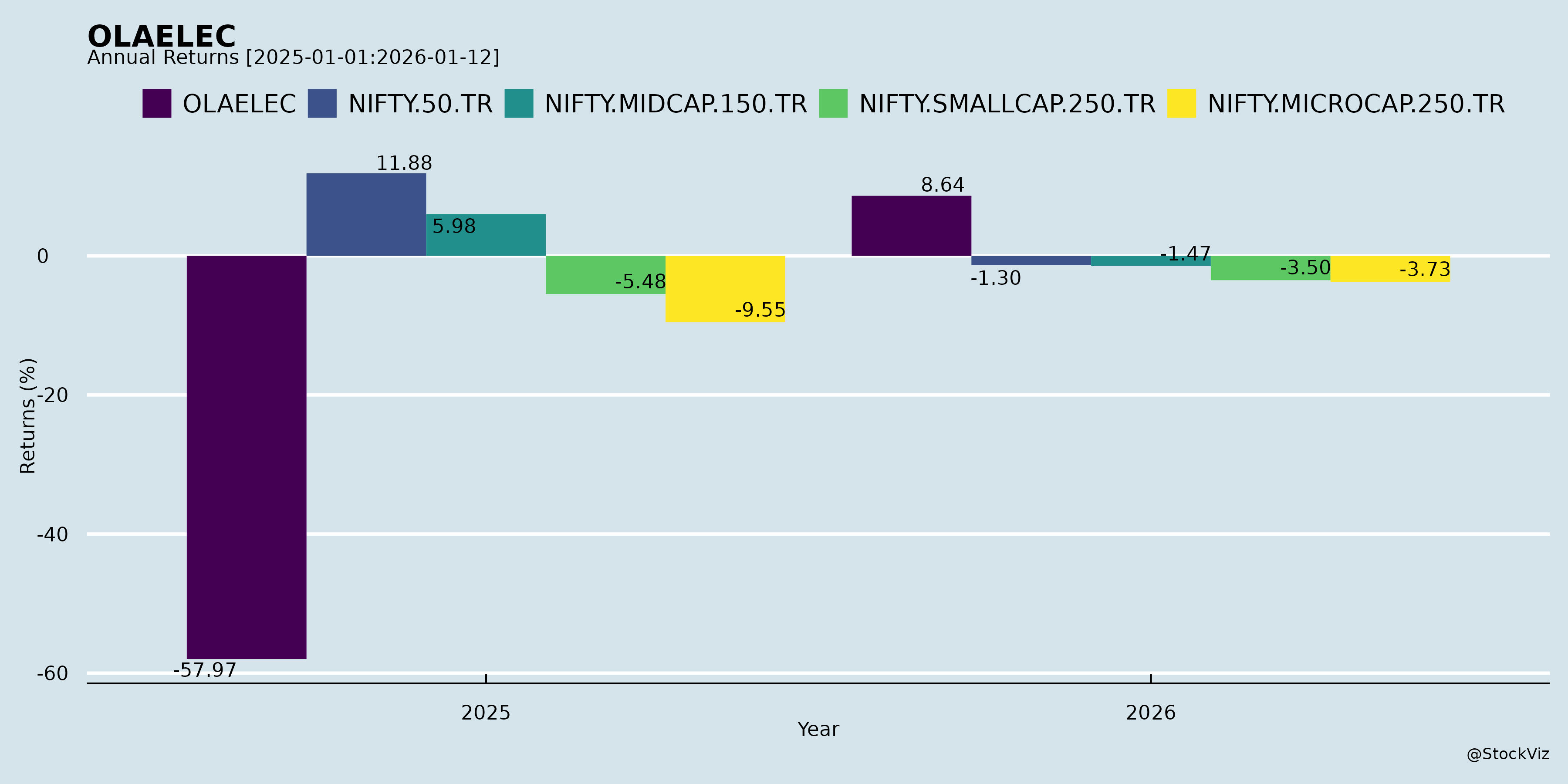
Annual Returns

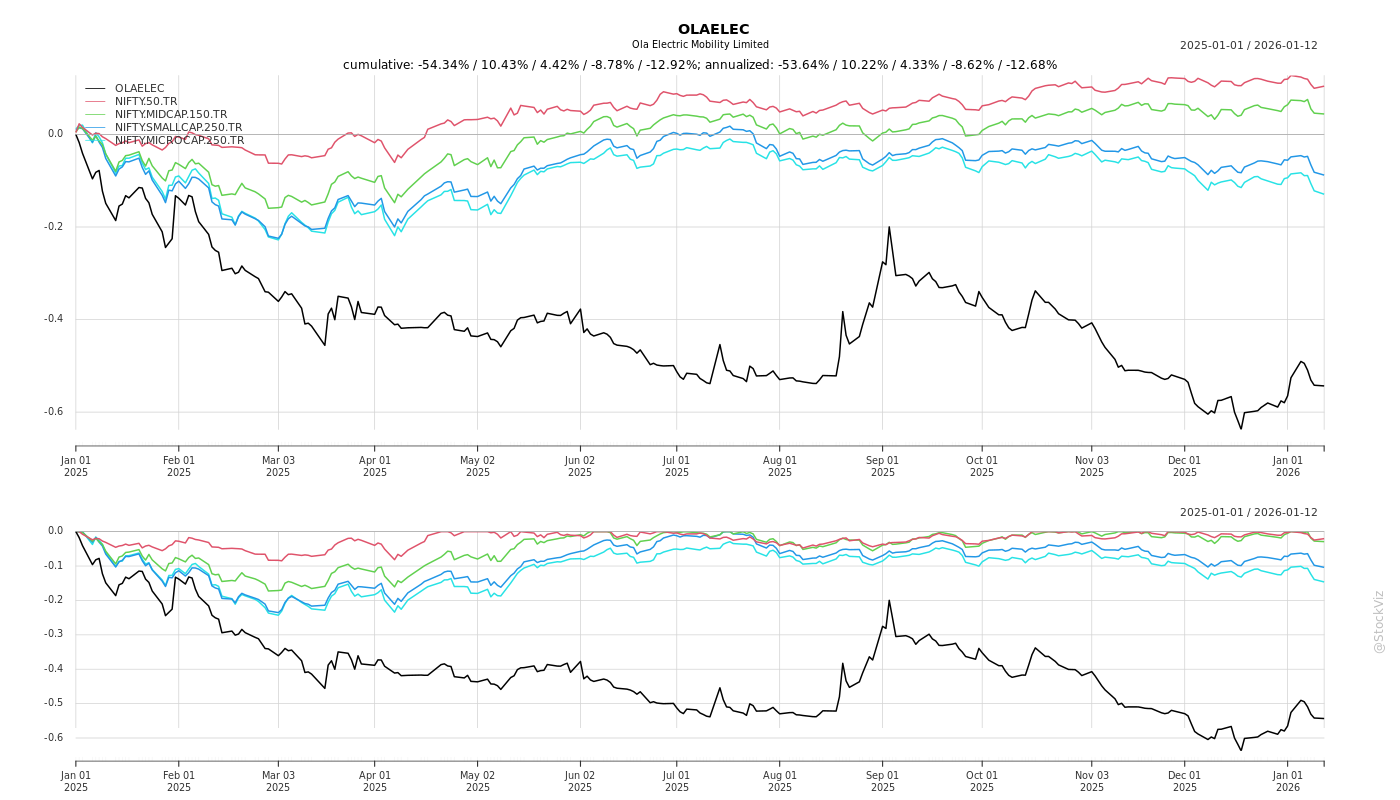
Cumulative Returns and Drawdowns
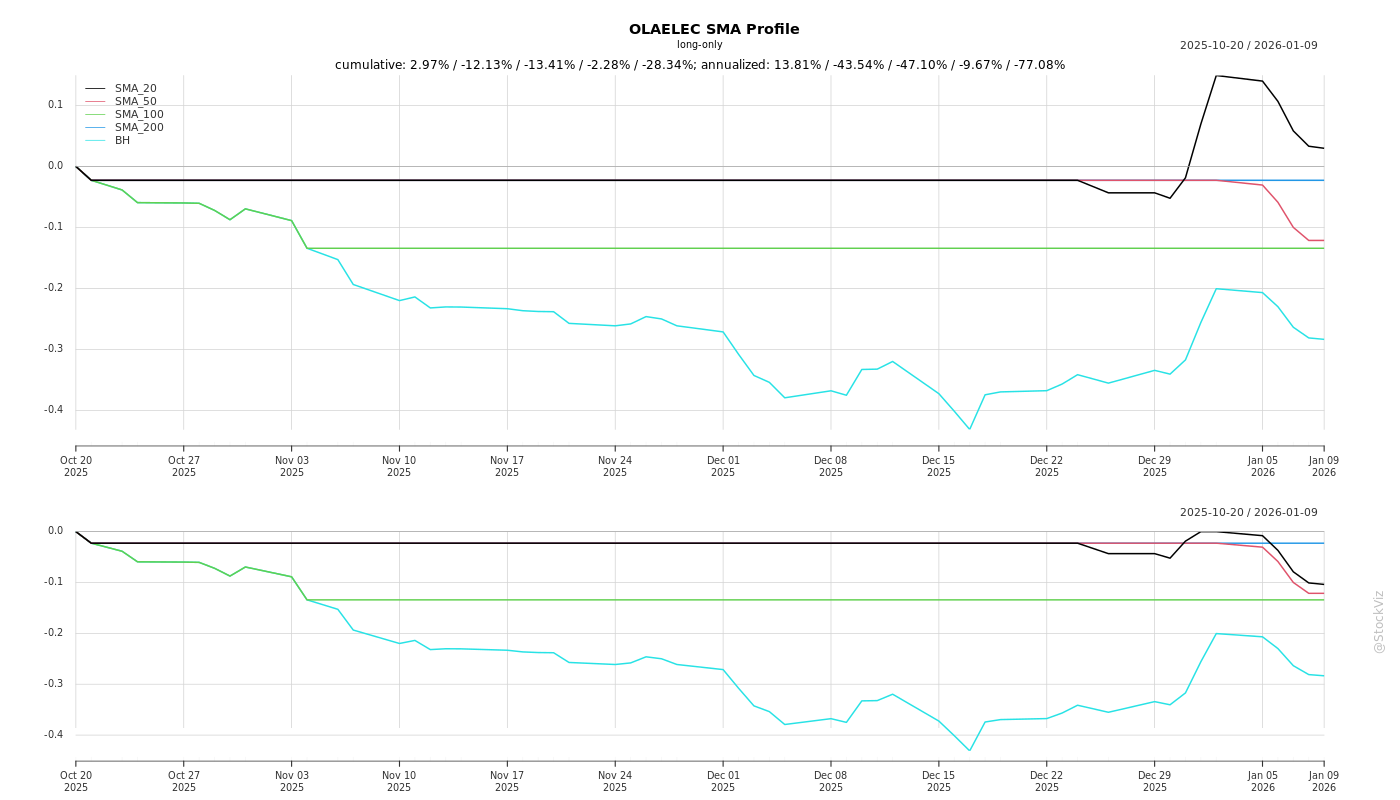
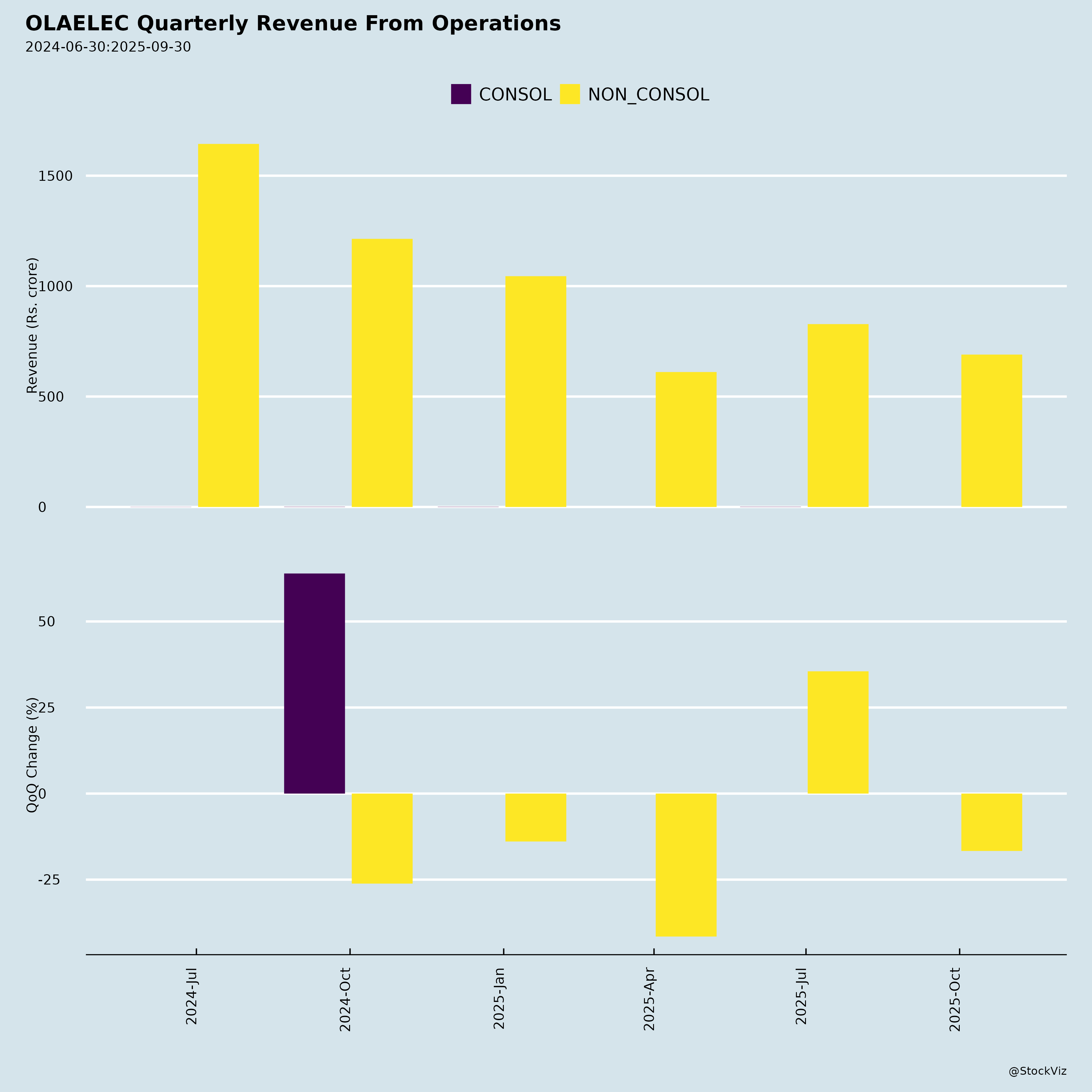
Fundamentals

Ownership
Margined
AI Summary
asof: 2026-09-16
Ola Electric Mobility — Q1 FY27 Announcements: Summary
1. Headwinds and Challenges
- Commodity cost inflation: Industry commodity costs rose approximately 11% during Q1 FY27, driven by higher copper and aluminium prices, lithium supply constraints in China, and elevated plastics and polymer costs following crude oil supply disruptions. Despite this, Ola sustained an Auto gross margin of 30.5%.
- Geopolitical volatility: The conflict in West Asia contributed to volatility in fuel availability and prices.
- Prior-year contraction and cash burn: FY26 saw a 50.1% contraction in revenue (from ₹4,514 crore in FY25 to ₹2,253 crore in FY26), a loss after tax of ₹1,833 crore, and negative cash flow from operations of ₹775 crore. Q1 FY27 consolidated CFO remained negative at ₹-215 crore and FCF at ₹-351 crore.
- Competitive intensity: Heightened competition from established and new manufacturers expanding portfolios and pricing activity.
- Service and execution challenges: Service-related execution challenges were cited among FY26 headwinds, alongside supply chain risks and price volatility of critical minerals such as cobalt and lithium.
- Market penetration risk: Slower-than-expected electric two-wheeler market penetration remains a stated risk.
- Senior management departure: Mr. Hyun Shik Park resigned as Chief Operations Officer with effect from closing business hours of September 5, 2026, due to personal reasons.
- Margin dilution from mix: Consolidated gross margin declined from 38.5% in Q4 FY26 to 30.5% in Q1 FY27, and Cell segment gross margin fell to 20.0% in Q1 FY27 from 42.3% in Q3 FY26.
2. Tailwinds and Growth Prospects
- Volume and share momentum: Ola registrations grew 97% QoQ in Q1 FY27 versus 17% for the broader E2W market; market share rose from 5.1% (Q4 FY26) to 8.4% (Q1 FY27). Orders rose to 44,071 (from 22,522), deliveries to 39,192 (from 20,256), and Auto revenue to approximately ₹455 crore, up 72% QoQ.
- Cost discipline: Consolidated operating expenses fell 22% QoQ to ₹333 crore, with a stated target steady-state operating cost base of approximately ₹300 crore per quarter.
- Category inflection: India’s E2W penetration crossed 10% for the first time in June 2026. Policy support cited includes Delhi’s pathway toward fully electric new two-wheeler registrations, Maharashtra’s EV policy, Haryana’s 100% motor-vehicle-tax concession, and Odisha’s penetration rising from 10% in Feb 2026 to 20%+ in June 2026.
- Capital raise: A ₹780 crore Qualified Institutional Placement was completed with 56% oversubscription. Separately, the Board approved an enabling resolution to raise up to ₹1,500 crore via equity shares and/or convertible securities.
- PLI benefit: A one-time benefit to the cost base from PLI-related levies was received, supported by a favourable government stance toward the Cell business.
- Roadster ramp: Bike deliveries increased 67% QoQ, led by the North and West, expanding the addressable market beyond scooters.
- Lifecycle monetisation: Service revenue is targeted to grow from ~₹130 crore in FY26 to ₹400–500 crore by FY28, with an expected gross margin of approximately 65%.
- Cell business commercialisation: The Gigafactory will be operational at 6 GWh by September. The 4680 NMC Bharat Cell is commercially deployed; the 46100 LFP cell is BIS-certified and vehicle-ready, to be progressively integrated into vehicles below 4 kWh.
- Energy storage: Mahashakti launches on 15 August; an MoU with Axis Energy covers potential deployment of up to 20 GWh of battery storage by 2032. India is expected to require more than 400 GWh of energy storage by 2032.
- New demand pools: MoUs across defence and UAV applications, near-space constellation platforms, and IPP-led Mahashakti applications.
- Distribution expansion: 1,200+ indications of interest from potential Dealer Partners were received within 24 hours; the company targets a 500+ dealership footprint over the next couple of quarters, with existing company-owned stores transitioning into brand product experience centres.
- AI-led productivity: AI-led calling delivered ~47% higher appointment conversion and ~17% higher sales conversion on connected calls versus manual inside-sales calling.
3. Key Risks
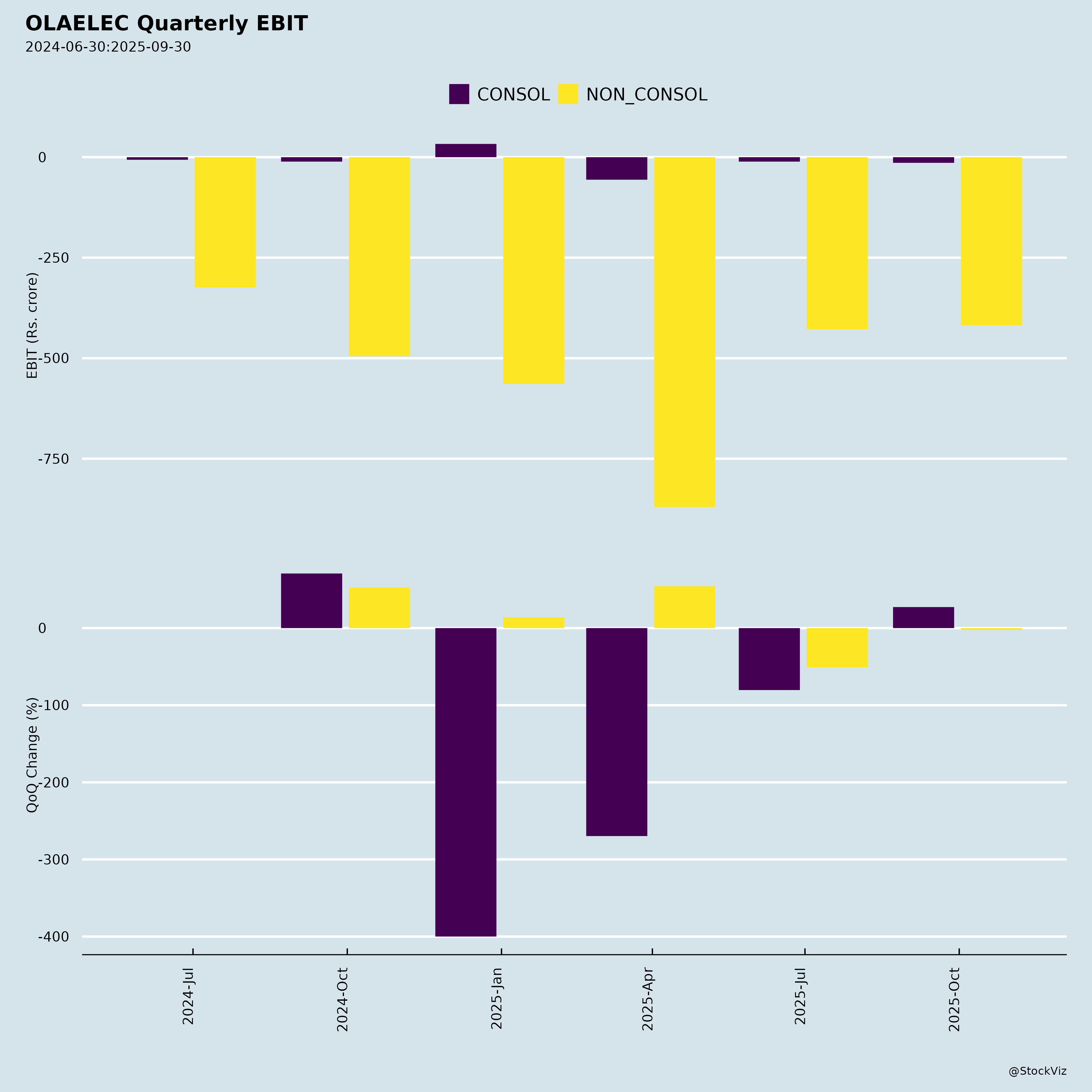
- Continued negative operating cash flow and adjusted operating EBITDA, with Q1 FY27 consolidated Adj. Operating EBITDA at ₹-195 crore (-42.8% margin).
- Dependence on commodity prices, lithium supply, and crude-linked input costs.
- Execution risk in scaling the dealer-partner model and integrating LFP cells into mass-market products.
- Cell segment revenue remains minimal (₹5 crore in Q1 FY27) relative to the scale of planned capacity.
- Reliance on converting signed non-binding MoUs (over 35 GWh cited in FY26 disclosures) into qualified commercial sales.
- Regulatory and policy dependence, including PLI support and state EV incentives.
- Loss of senior management personnel.
4. Management Guidance vs. Observed Performance
- Operating cost base: Management targets a lower steady-state operating cost base of approximately ₹300 crore per quarter. Observed: consolidated operating expenses reduced 22% QoQ to ₹333 crore in Q1 FY27, moving toward but not yet at the target.
- Operating leverage and breakeven: Management expects operating leverage and cost efficiencies to drive further expansion in adjusted operating EBITDA margins as monthly deliveries scale toward the previously communicated operating breakeven range. Observed: Adj. Operating EBITDA improved sequentially to ₹-195 crore in Q1 FY27 from ₹-326 crore in Q4 FY26, but remains negative.
- Dealer network: Management targets a 500+ dealership footprint over the next couple of quarters. Observed: first cohort of network-partner stores launched across Rajasthan, Tamil Nadu, Maharashtra, Bihar, Telangana, Uttar Pradesh, and Madhya Pradesh, with 1,200+ indications of interest received.
- Gigafactory: Management states the Gigafactory will be operational at 6 GWh by September. Observed: FY26 disclosures noted 2.5 GWh commissioned with 6 GWh installation largely completed.
- Service revenue: Management targets service revenue of ₹400–500 crore by FY28 at ~65% gross margin, from ~₹130 crore in FY26.
- FY27 priorities (from FY26 disclosures): Rebuilding volumes and market share, maintaining service consistency, expanding dealer-led distribution, fully commissioning and utilising the 6 GWh Cell platform, increasing own-cell integration, and converting identified demand opportunities into qualified commercial sales. Observed: Q1 FY27 registrations nearly doubled QoQ to 43,719 units (VAHAN), with June 2026 registrations of 16,144 units described as the strongest monthly performance in recent quarters.
- Capital position: The Board approved an enabling resolution to raise up to ₹1,500 crore, following the completed ₹780 crore QIP, and authorised share capital was increased from ₹8,318,499,885 to ₹8,721,873,442.
CNBC-TV18: ratings, targets and commentary
No recorded CNBC-TV18 statements for this ticker.
Management comments
No recorded management comments with an explicit designation and affiliation for this ticker.
Copyright © 2023 SAS Data Analytics Pvt. Ltd. All rights reserved.