NESTLEIND
Equity Metrics
November 18, 2026
Nestle India Limited
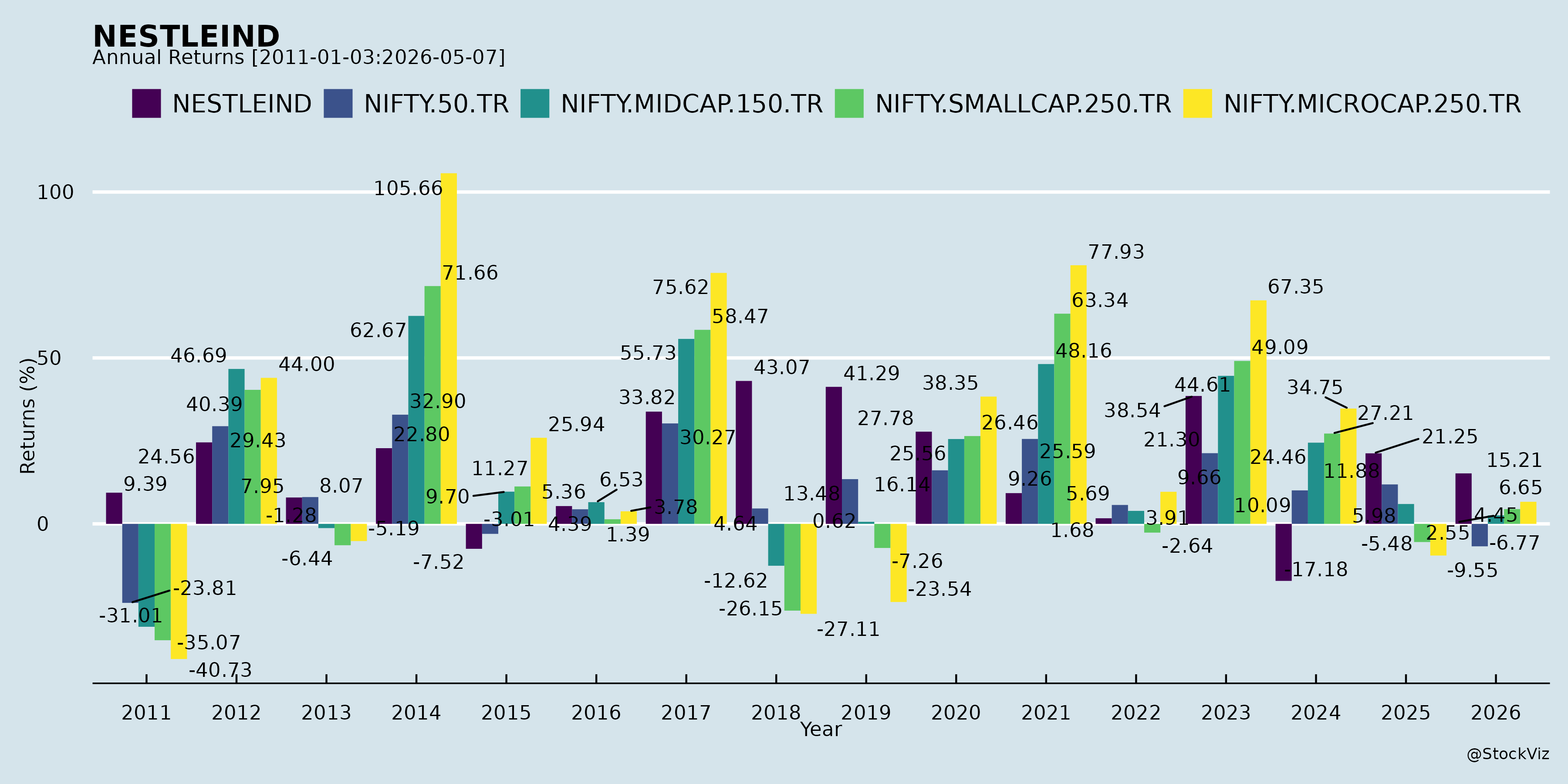
Annual Returns
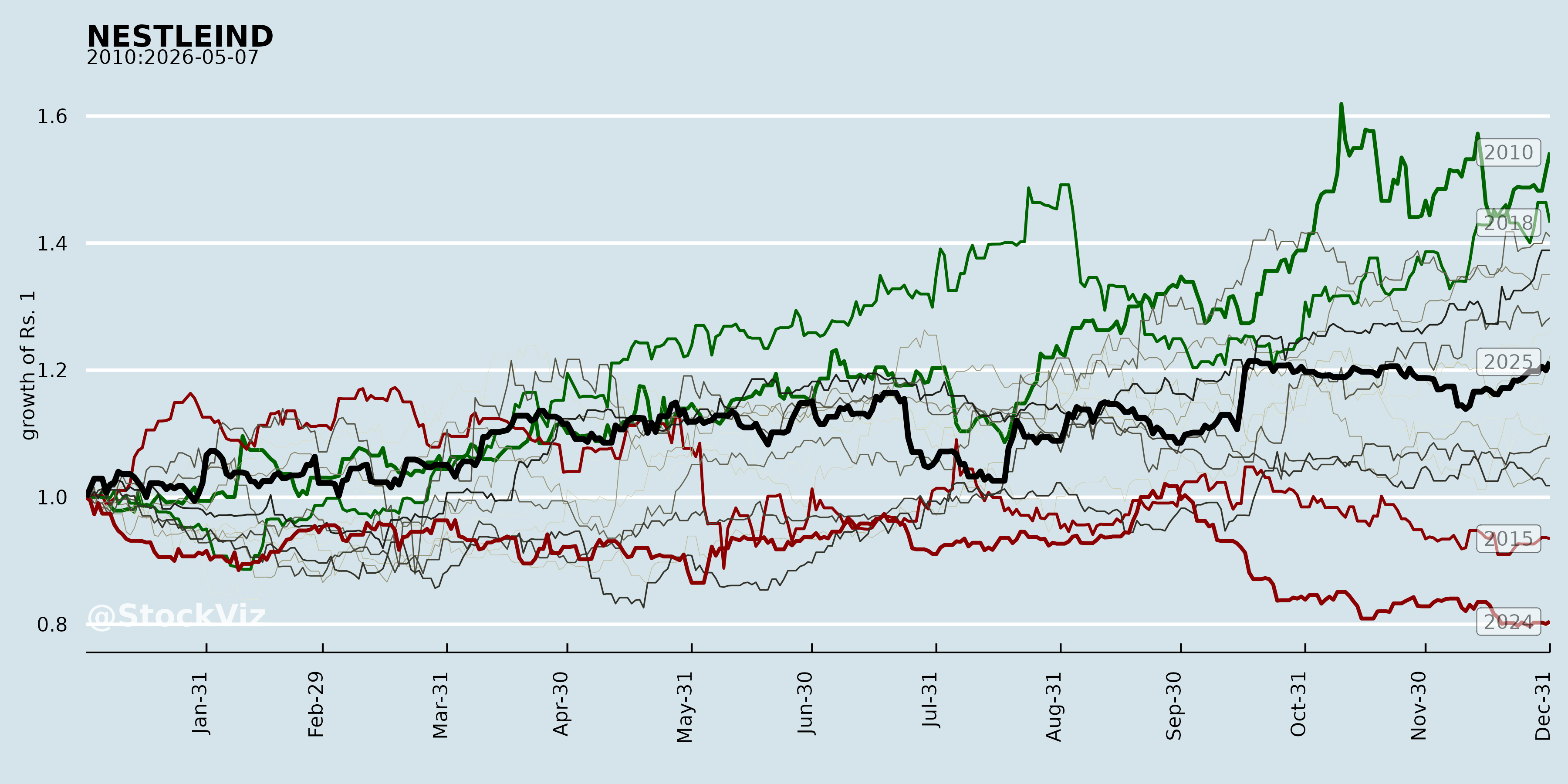
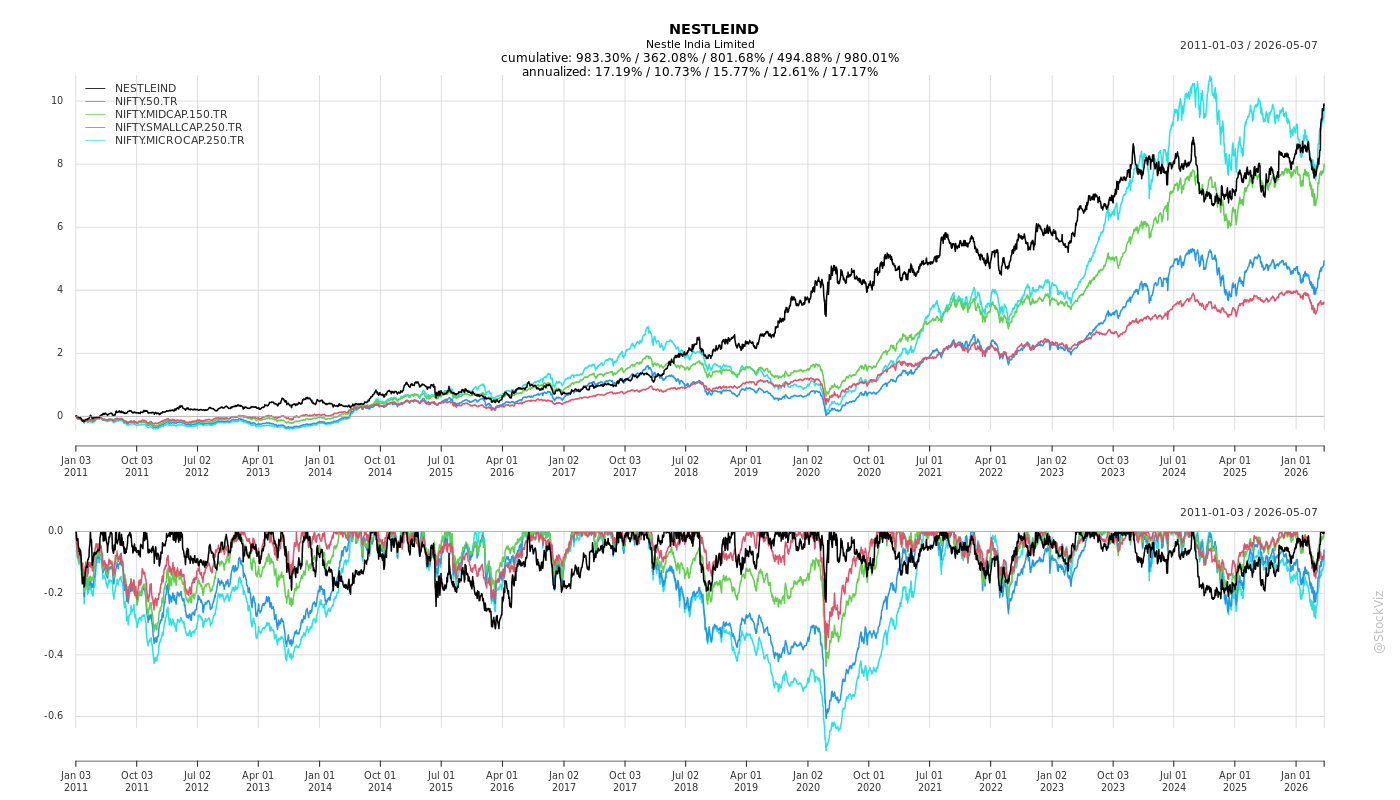
Cumulative Returns and Drawdowns
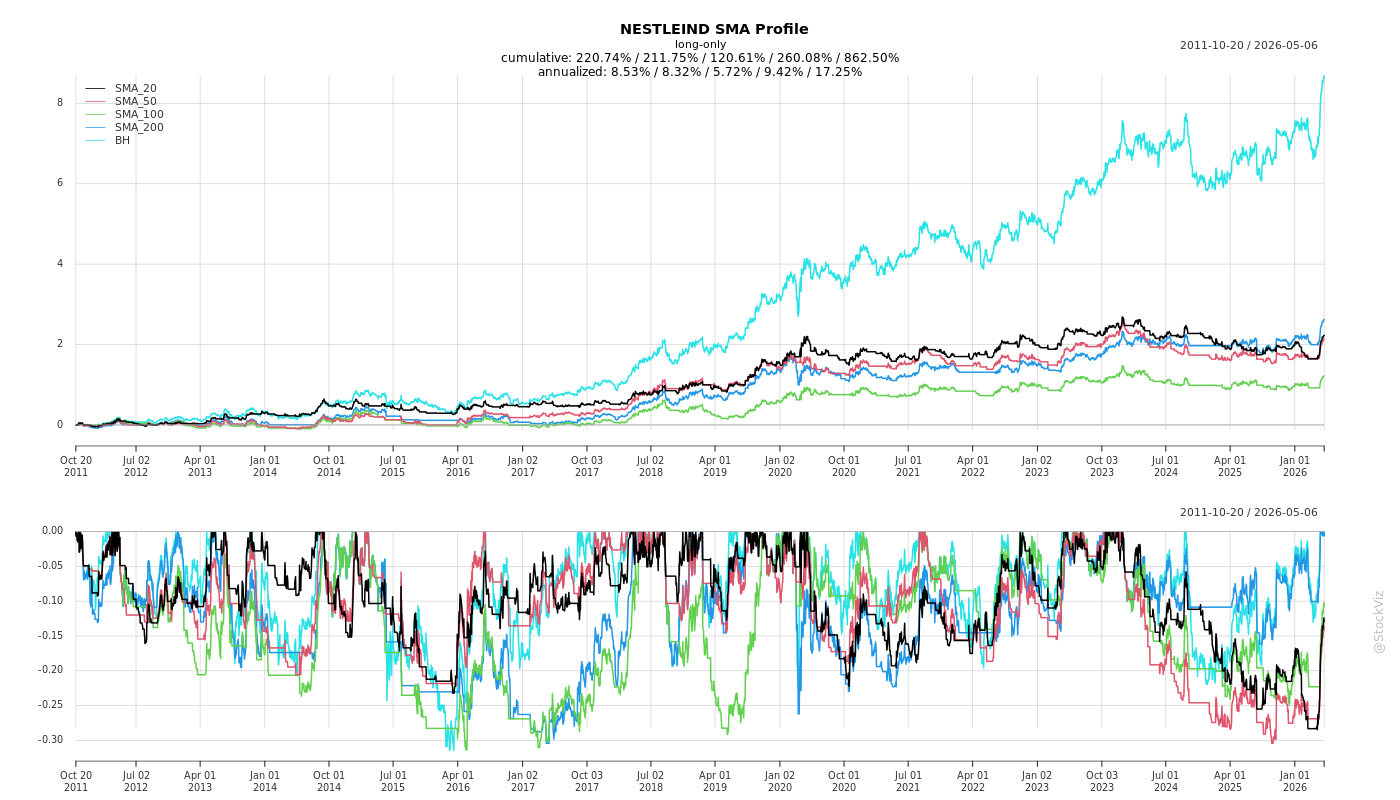
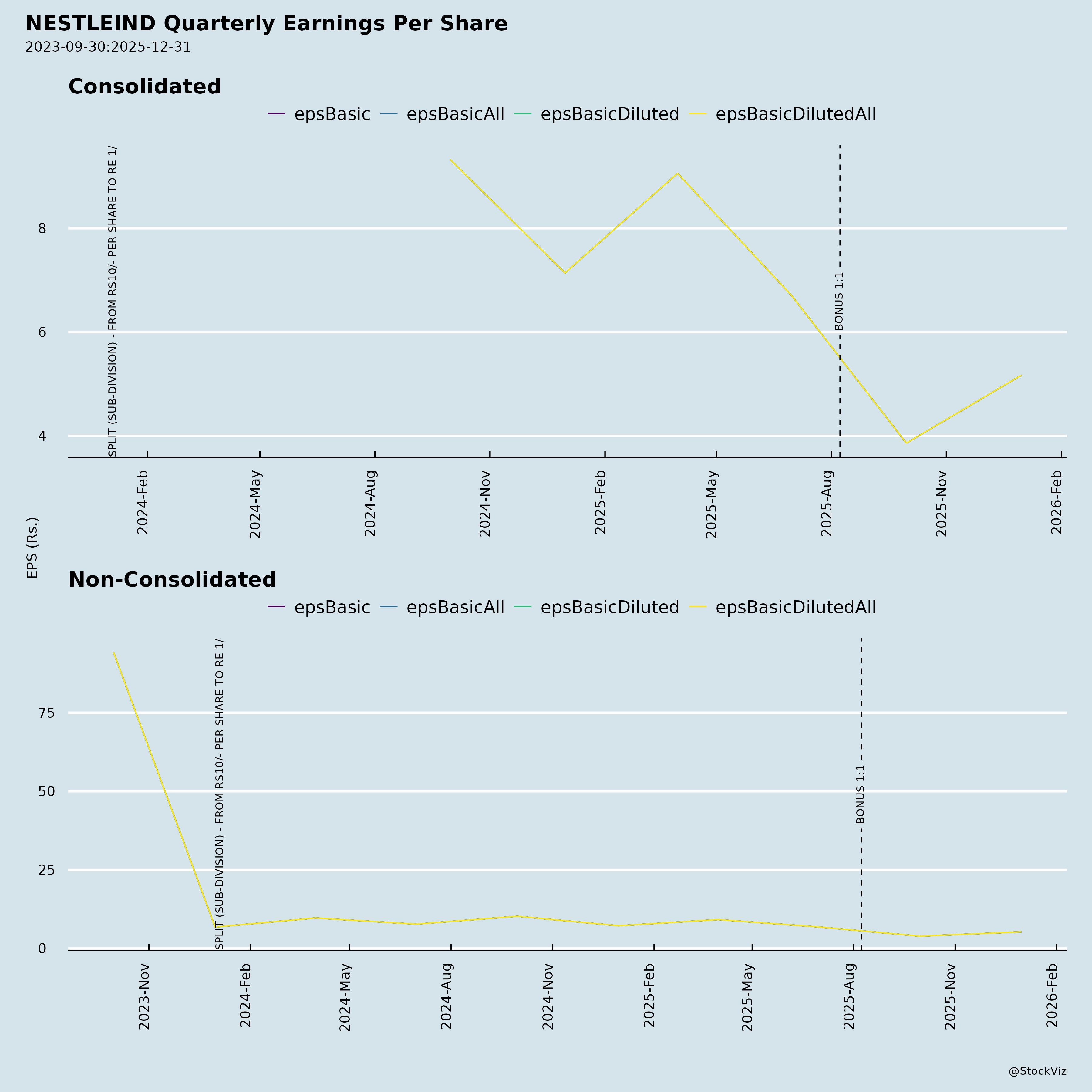
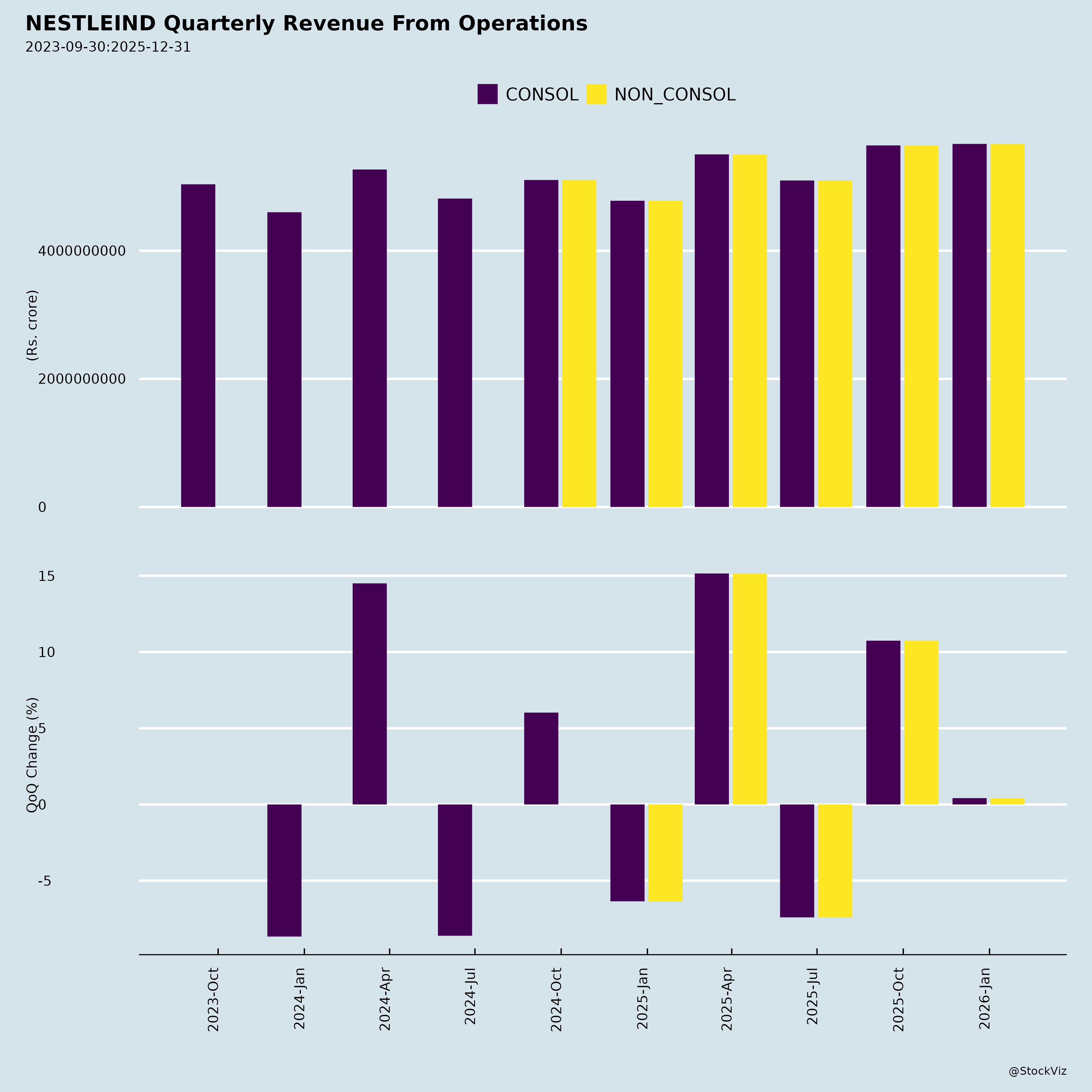
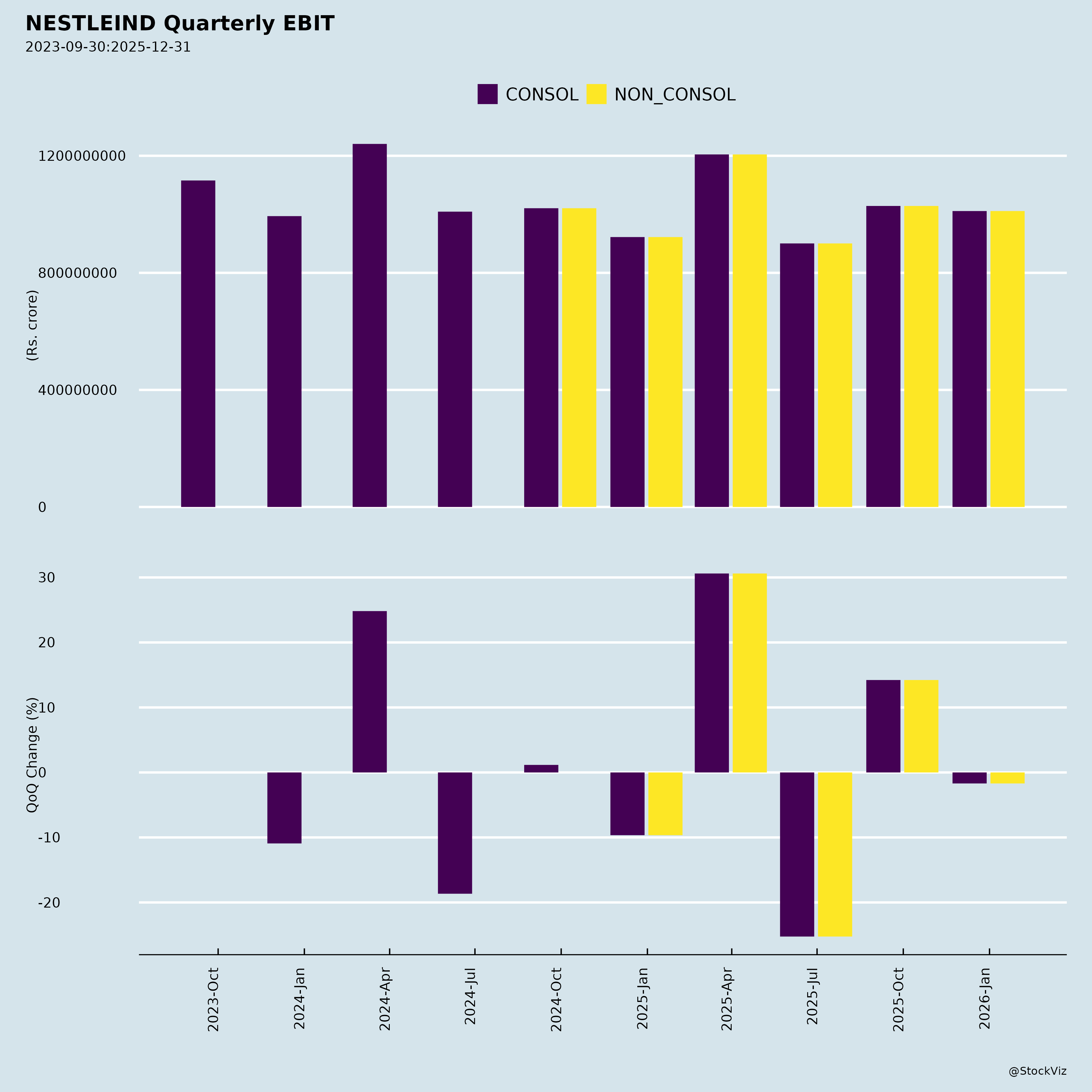
Fundamentals
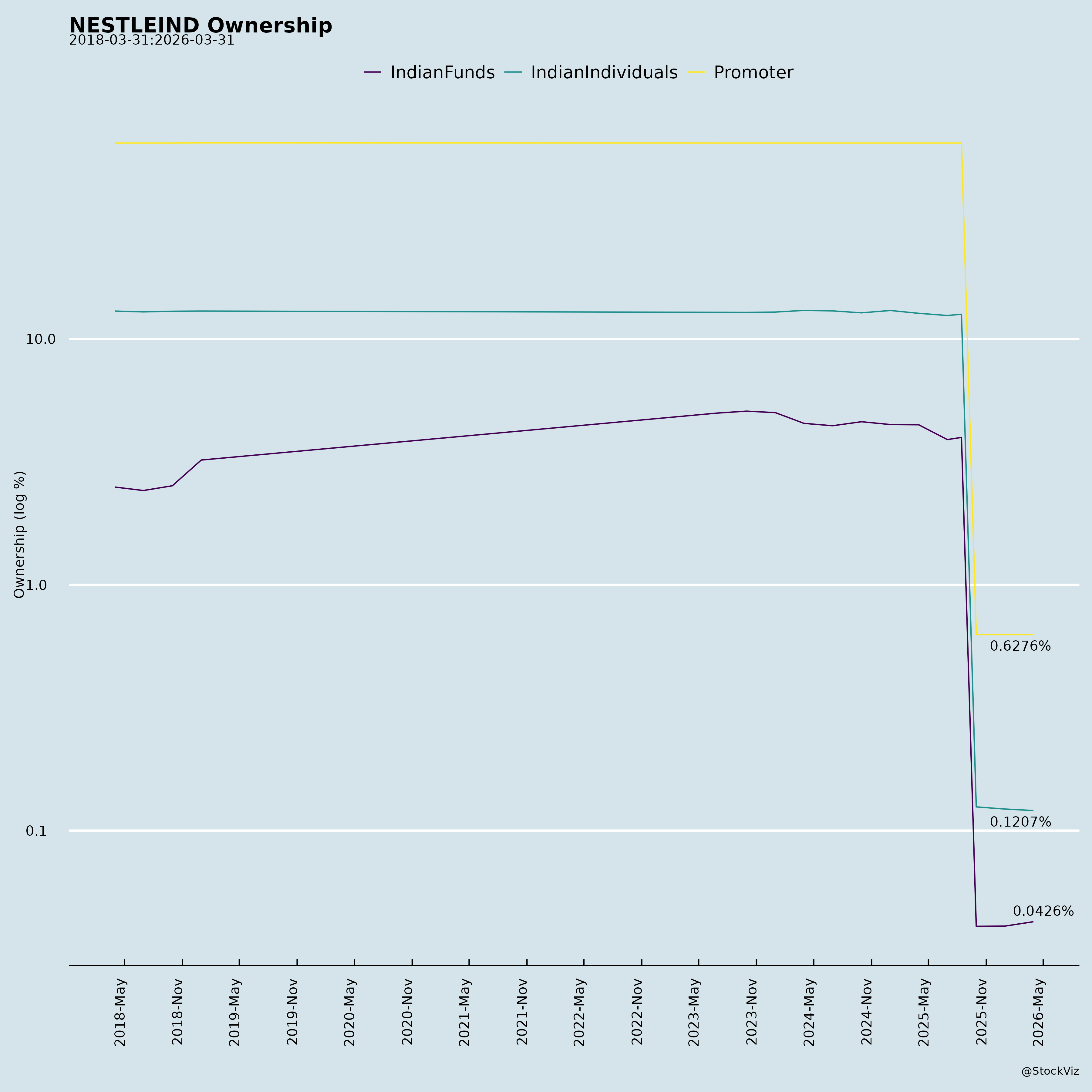
Ownership
Margined
AI Summary
asof: 2026-09-14
Nestlé India: Recent Corporate Announcements — Summary
1. Headwinds and Challenges
- Macro slowdown and food inflation: Management noted a slowdown in market growth as reported by Nielsen and some impact from food inflation. These were described as headwinds, though management argued their impact is more acute in categories with near-100% penetration than in Nestlé India’s low-penetration categories.
- Cost and geopolitical pressures: Rising costs of energy, packaging and oil, shipping disruptions and currency volatility were cited as challenges. Management said business continuity plans are in place to manage these.
- FY2025-26 consumption environment: The Chairman described FY2025-26 as a challenging year for India’s consumption economy, citing food inflation, evolving consumer behaviour, changing household consumption patterns, varying urban demand, rural demand’s dependence on monsoons and farm incomes, and global uncertainties.
- Milk & Nutrition (MPN) growth concerns: Analysts noted the segment had seen negative volume growth for four to five years historically. Management acknowledged the starting position differs from confectionery but pointed to sequential improvement, volume growth and market share gains in the second half of FY2025-26.
- CERELAC sugar issue: Management acknowledged consumer feedback on sugar in CERELAC even though the product met FSSAI standards, and responded with a zero-added-sucrose (ZAS) version. After “a little bit of disturbance,” CERELAC was described as back to where it should be.
- Capacity constraints: KITKAT ran out of capacity, prompting additional capacity investment.
- Other expenses increase: The rise in Other Expenses in FY2025-26 was attributed to higher advertising and sales promotion expenditure, distribution and logistics costs, and inflationary pressures, broadly in line with growth.
2. Tailwinds and Growth Prospects
- Volume-led growth: Five-year volume CAGR of approximately 4.2%, with a move into consistent double-digit volume growth in recent quarters. FY2026 volume growth was cited at close to 11%.
- Penetration headroom: MAGGI, NESCAFÉ and KITKAT household penetrations remain in the mid-50s annually. Noodles penetration was compared with biscuits (near 100% monthly penetration), indicating significant white space.
- Distribution expansion: Distribution points grew roughly four-fold from around 13,500 in 2021; approximately 500,000 retail outlets added over five years (per AC Nielsen); approximately 5.2 lakh outlets added since April 2023. Rural contribution was described as still about half that of some peer companies, indicating further runway.
- Premiumisation: Premium portfolio contribution rose from 11% to 14%, growing roughly 500 bps ahead of overall growth. Examples cited include NESCAFÉ Roastery, KITKAT Delight, Pro Plan for cats, and NESPRESSO (four boutiques across three cities).
- Coffee culture shift: NESCAFÉ recorded its 20th consecutive quarter of double-digit growth. Coffee consumption in offices was described as roughly 50:50 with tea. Cold coffee was cited as one in four coffee cups in summer and one in five in winter.
- Confectionery strength: India became the largest KITKAT market globally; MAGGI remains the largest globally for Nestlé. KITKAT innovations cited include Delight, Pops, Chunky and a One Piece anime collaboration.
- Out-of-home and new engines: Out-of-home business serves close to 535 million customers outside home and is Nestlé’s second-largest out-of-home business in Asia, Africa and Oceania. Pet food (Felix, Pro Plan, Supercoat, Friskies) and NESPRESSO were described as “Acons” with long runways.
- Cost savings funding brand investment: Cost savings accelerated from a normal 1.8–1.9% to 2.6% in 2025, with further acceleration in the current year. Advertising investment grew close to 40% in recent quarters, with 55–60% of spend going to digital.
- Technology as multiplier: Migration to SAP S/4HANA, touchless demand forecasting and technology-enabled replenishment were cited as improving service levels, productivity and cost efficiency despite volume growth.
- Capacity investment: Over ₹64 billion invested in the last five years; approximately ₹2,000 crore committed over the preceding two years; new MAGGI line (~₹170 crore+) and new Munch line (~₹225 crore); greenfield facility in Odisha planned.
- India opportunity: Affluent and aspiring households projected to increase significantly by 2034; India described as a priority market and strong growth driver for Nestlé worldwide.
3. Key Risks
- Commodity price volatility: Described as an inherent feature of the operating environment, managed through strategic sourcing, portfolio and capacity optimisation, productivity initiatives and selective pricing as a last resort.
- Macro and geopolitical uncertainty: Energy, packaging, oil costs, shipping disruptions and currency volatility cited as ongoing concerns.
- Execution risk in rural expansion: Management emphasised “controlled reach” — ensuring product freshness and quality in villages — as a reason for a measured approach, implying execution complexity.
- Price sensitivity: Management noted India remains very price-sensitive and that flexing pricing could jeopardise the penetration opportunity; roughly 80% of the snacking market is below ₹20.
- Category-specific context: Management stated each category operates in a distinct market context, making direct comparisons less meaningful — relevant to MPN’s historical underperformance.
- Dependence on monsoon and farm incomes for rural demand, as noted in the AGM address.
- Base effects: Management acknowledged that the 40% advertising growth would not continue every quarter due to base catching, and that GST would enter the base in a future quarter.
4. Management Guidance Versus Observed Business Performance
- Volume growth: Management declined to give forward projections but pointed to secular growth opportunity. Observed: FY2026 volume growth close to 11%; double-digit volume growth in recent quarters; NESCAFÉ’s 20th consecutive quarter of double-digit growth.
- Margins: Management stated it is “not chasing growth at the cost of margin” and expects to maintain margins in line with past track record, funded by efficiency programmes. Observed: highest-ever operational cost savings in FY2025-26; savings stepped up from 1.8–1.9% to 2.6% in 2025; return on equity of 75.2%.
- Advertising investment: Management said the trend of elevated ad spend would continue but not at 40% every quarter. Observed: close to 40% growth in advertising investment in recent quarters, with 55–60% digital.
- Rural expansion: Management described the journey as having “a long way to go,” with rural contribution still about half of some peers. Observed: approximately 5.2 lakh outlets added since April 2023; distribution points up roughly four-fold since 2021.
- MPN/Nutrition: Management expressed confidence in volume growth and cited better execution and science. Observed: sequential improvement during the year, volume growth and market share gains in H2 FY2025-26; NAN ExcellaPro and LACTOGEN relaunches; nationwide CERELAC no-refined-sugar rollout.
- GST transition: Management cited flawless execution with no downside in Q3 and Q4 of the prior calendar year, and an upside instead. Observed: benefits passed on through price reductions or increased grammage.
- Capital allocation: Management described a balanced approach of dividends, special dividend and bonus shares alongside reinvestment. Observed: highest-ever domestic sales of ₹23,071.5 crore; Special Dividend 2026 of ₹2.00 per equity share declared alongside Final Dividend 2025-26; approximately ₹47 billion contributed to the Indian exchequer in FY2025-26.
- M&A: Management stated 9 out of 10 points of focus is on building current businesses, with M&A opportunities scanned but not a priority. Observed: Drools described as a financial investment by the Nestlé worldwide group with no cross-synergy commentary; Dr. Reddy’s Laboratories joint venture performance in line with expectations.
- New product pipeline: Management said global portfolio opportunities are actively evaluated where there is strong market fit. Observed: NESPRESSO expansion, Purina/Friskies acceleration, ready-to-drink coffee (Vietnamese Latte, iced cappuccino), MAGGI Bowl, NESCAFÉ Duo Gusto dispensing machine.
Broker Narrative
Broker narrative moved from CY2022 milk inflation, Lumpy Skin Disease supply shocks and macro demand risk, with optimism anchored in milk deflation, pricing power and rural reinvestment, to a 2026 focus on urban demand slowdown, cocoa/sugar/edible-oil commodity inflation, new-brand competition and high-base tapering, while highlighting double-digit volume growth, gross and EBITDA margin expansion and e-commerce momentum. Input-cost volatility and consumer-demand slowdown persisted as enduring fears, but the cost basket shifted from milk to broader commodities and the growth lever shifted from rurban distribution to quick commerce. Despite a long run of DISAPPOINTMENT outcomes and negative actual returns from 2024 to 2026, the latest call turned Buy on H1FY27 strength.
Fears that came true
- Macroeconomic slowdown risk materialized as an urban demand slowdown expected to affect volume growth, consistent with repeated DISAPPOINTMENT outcomes and negative actual returns from 2024 to 2026.
- Input cost inflation persisted beyond milk, resurfacing as volatile cocoa prices and elevated sugar and edible-oil levels expected to moderate H2FY27 EBITDA margins, alongside frequent negative returns and DISAPPOINTMENT ratings.
Optimism that failed
- Pricing and retention power weakened as increased competition from new brands in key categories made it harder to hold retail prices steady.
- Reinvestment in rurban/rural growth did not offset demand weakness, with the narrative shifting to urban presence and e-commerce while an urban demand slowdown hurt volume growth.
- Sustained milk-deflation-led margin expansion did not persist, as rising commodity inflation in cocoa, sugar and edible oil is expected to moderate H2FY27 EBITDA margins to around 22% from 24%.
Broker Timeline
50 broker calls · 2023-06-13 to 2026-10-16
CNBC-TV18: ratings, targets and commentary
No recorded CNBC-TV18 statements for this ticker.
Management comments
No recorded management comments with an explicit designation and affiliation for this ticker.
Copyright © 2023 SAS Data Analytics Pvt. Ltd. All rights reserved.