MANAPPURAM
Equity Metrics
September 24, 2026
Manappuram Finance Limited
Non Banking Financial Company (NBFC)
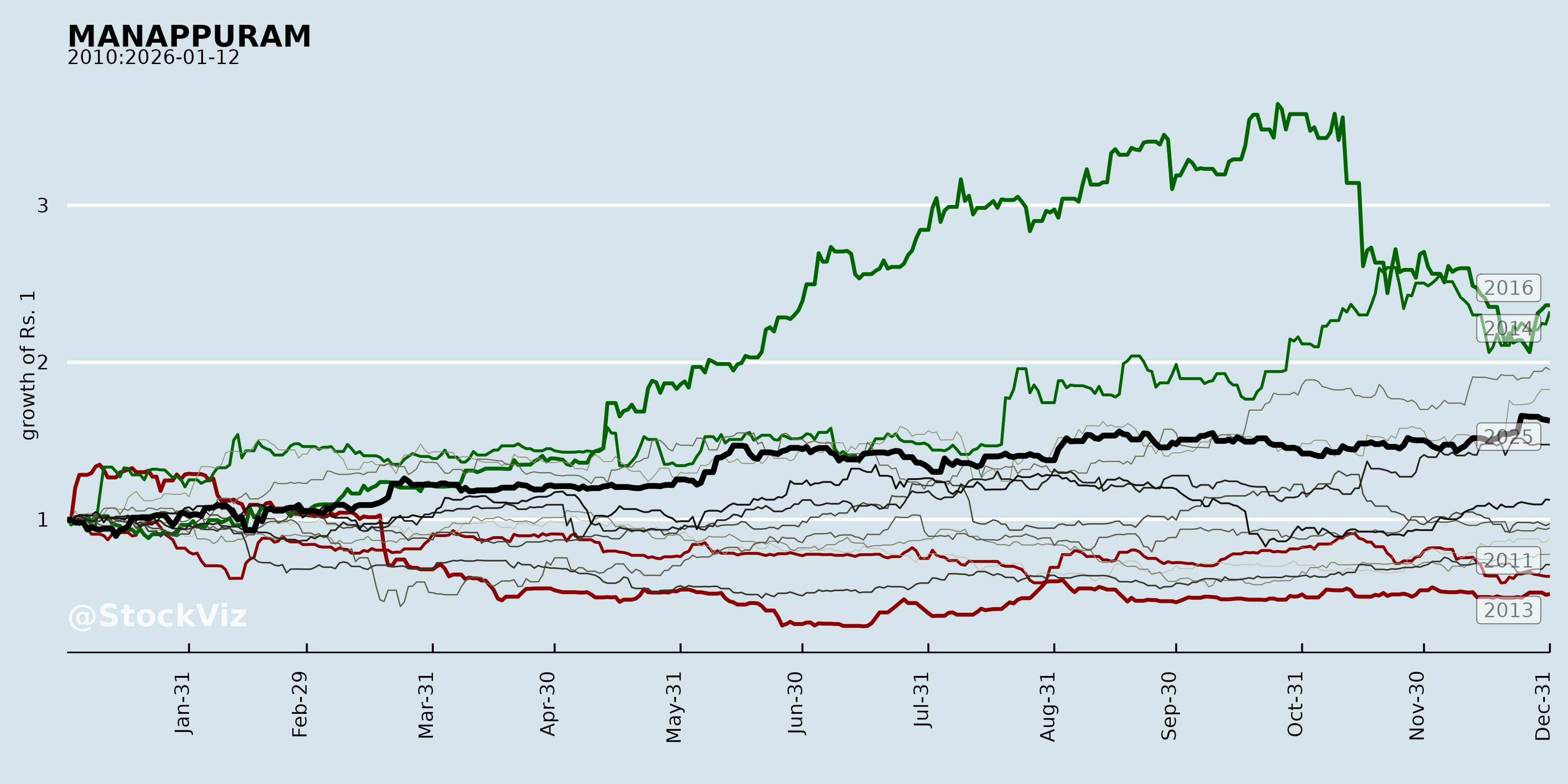
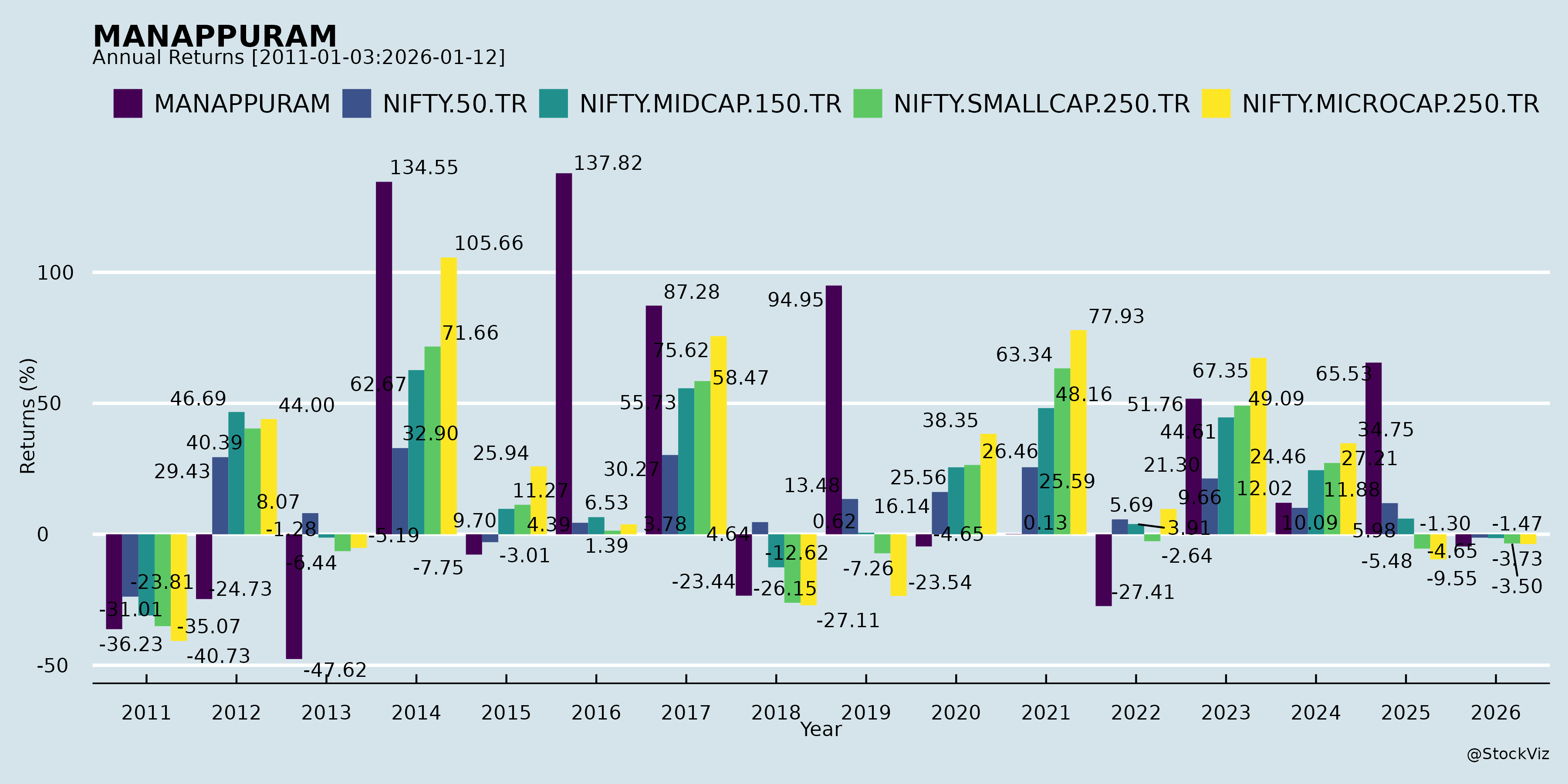
Annual Returns
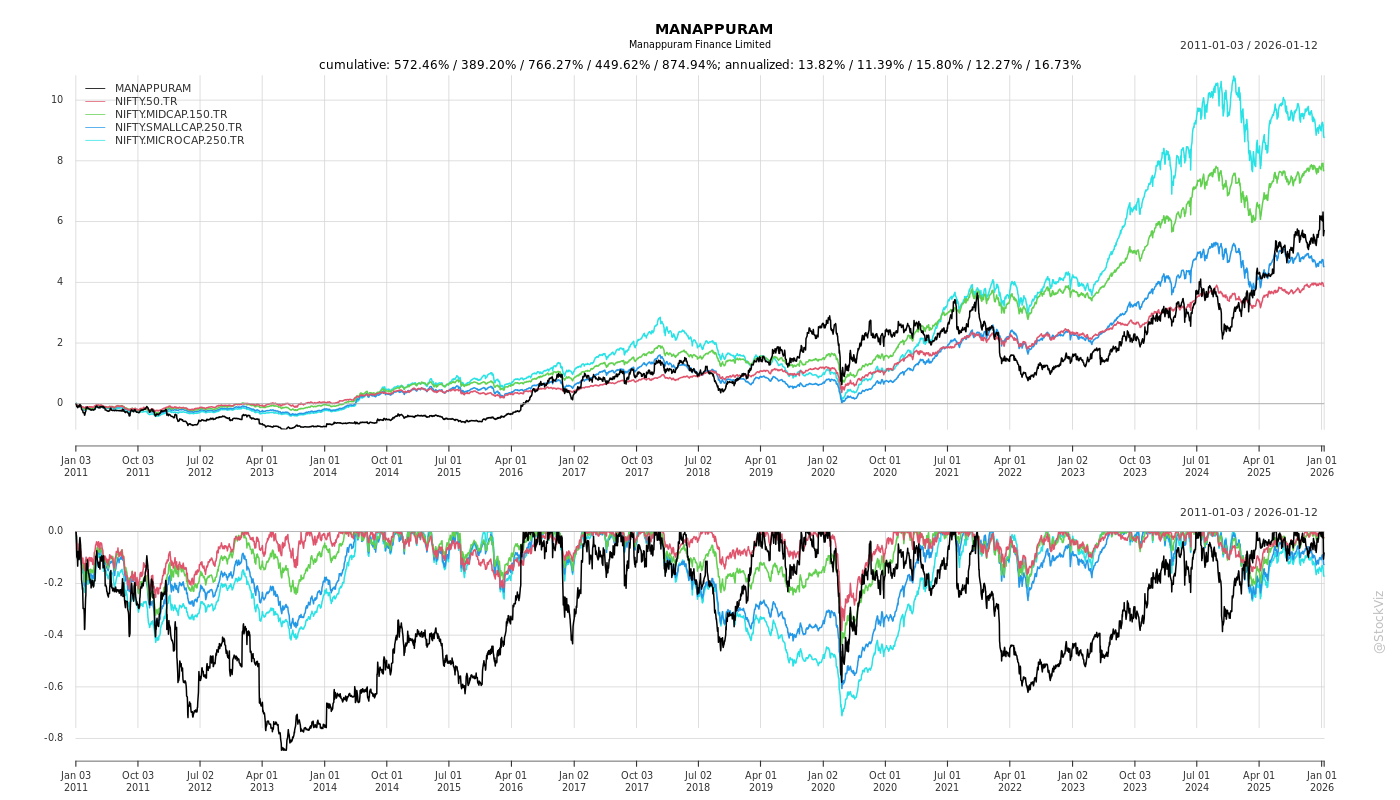
Cumulative Returns and Drawdowns
Fundamentals
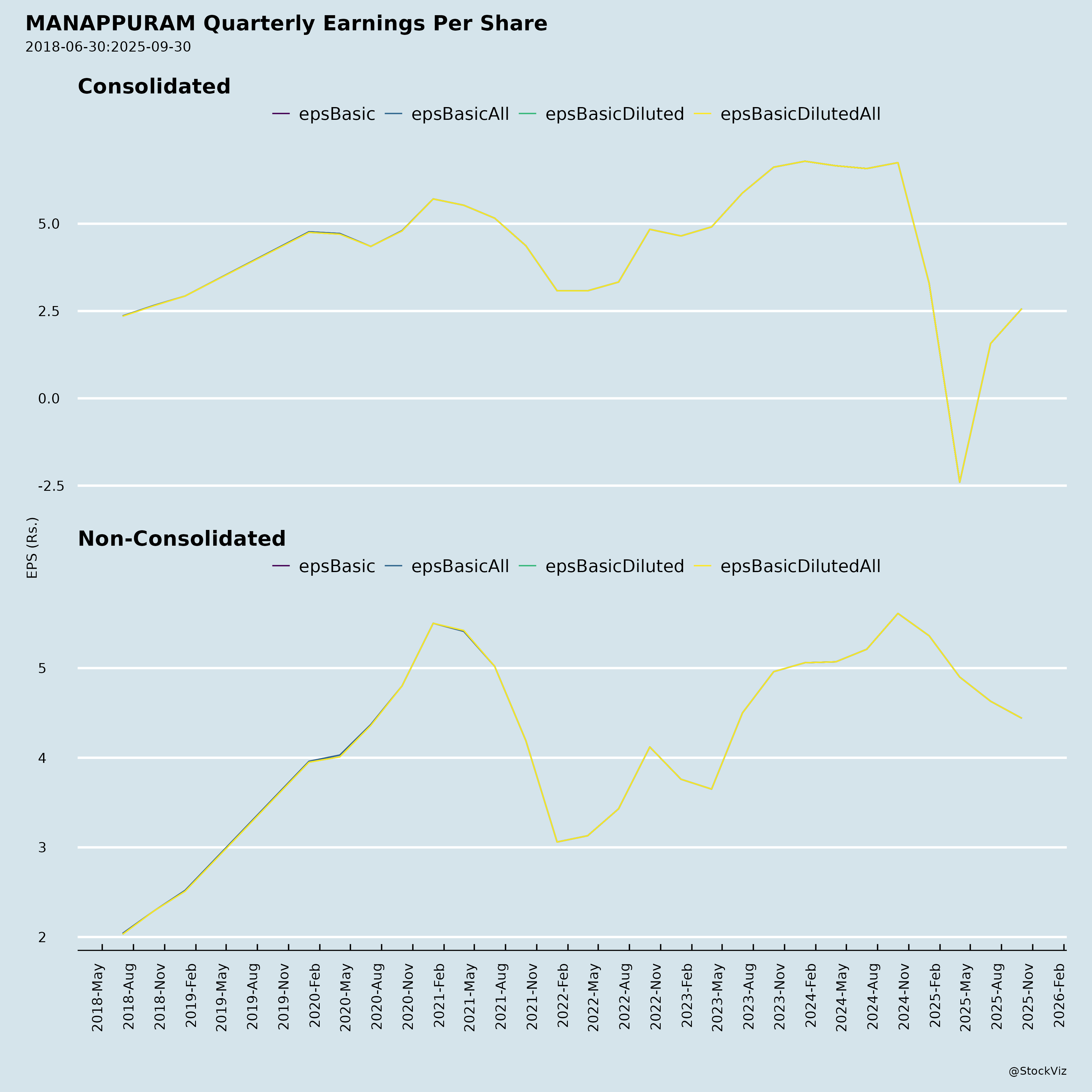
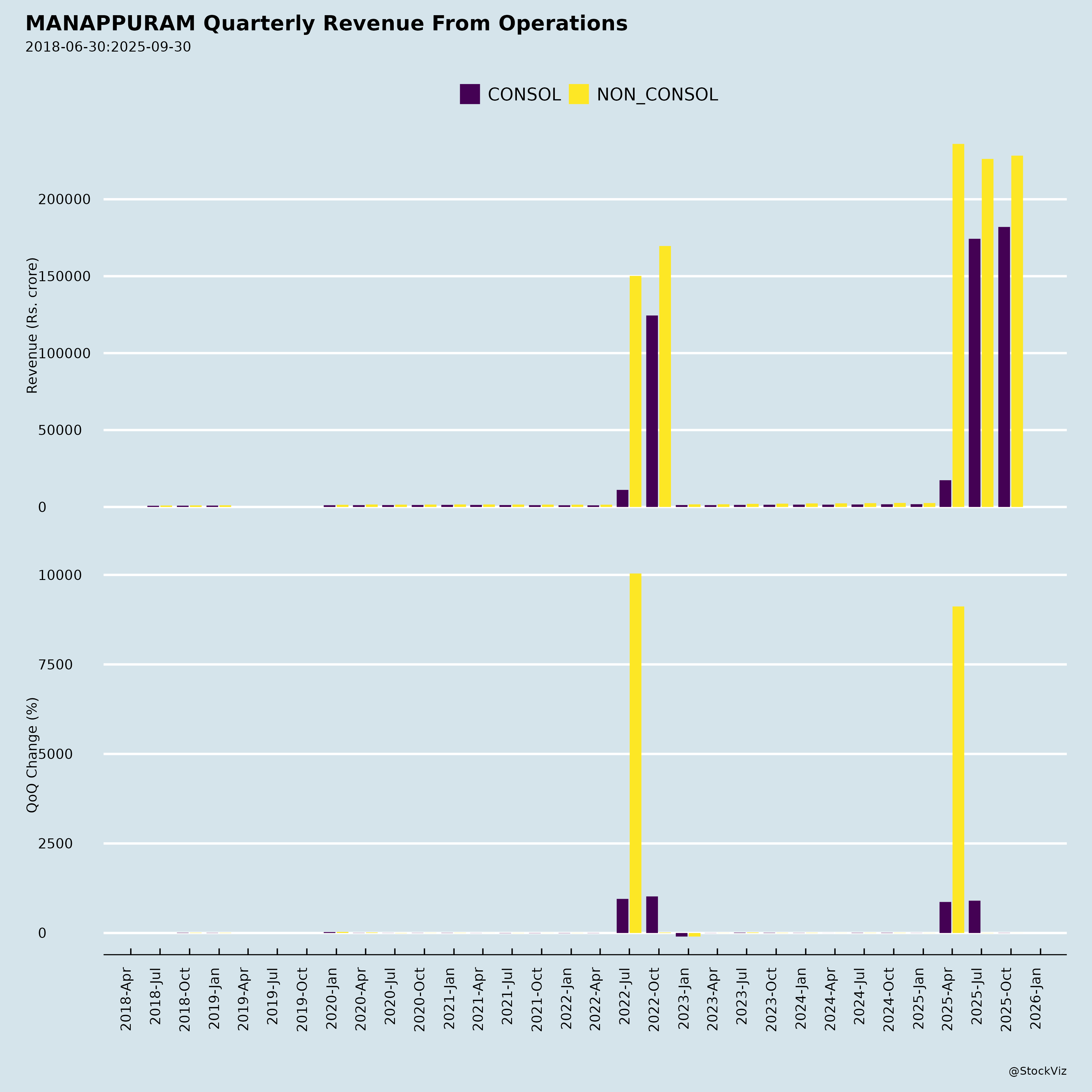
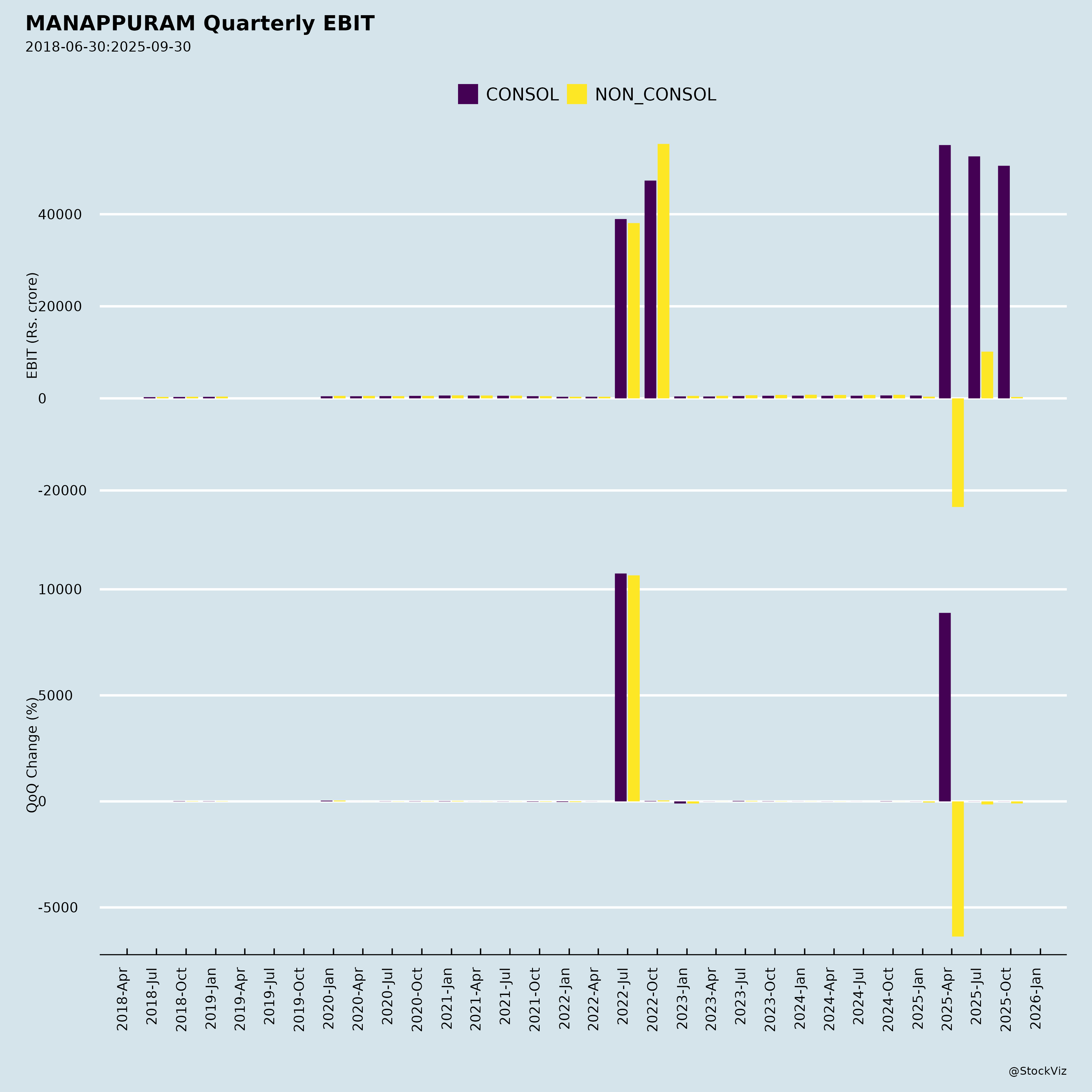
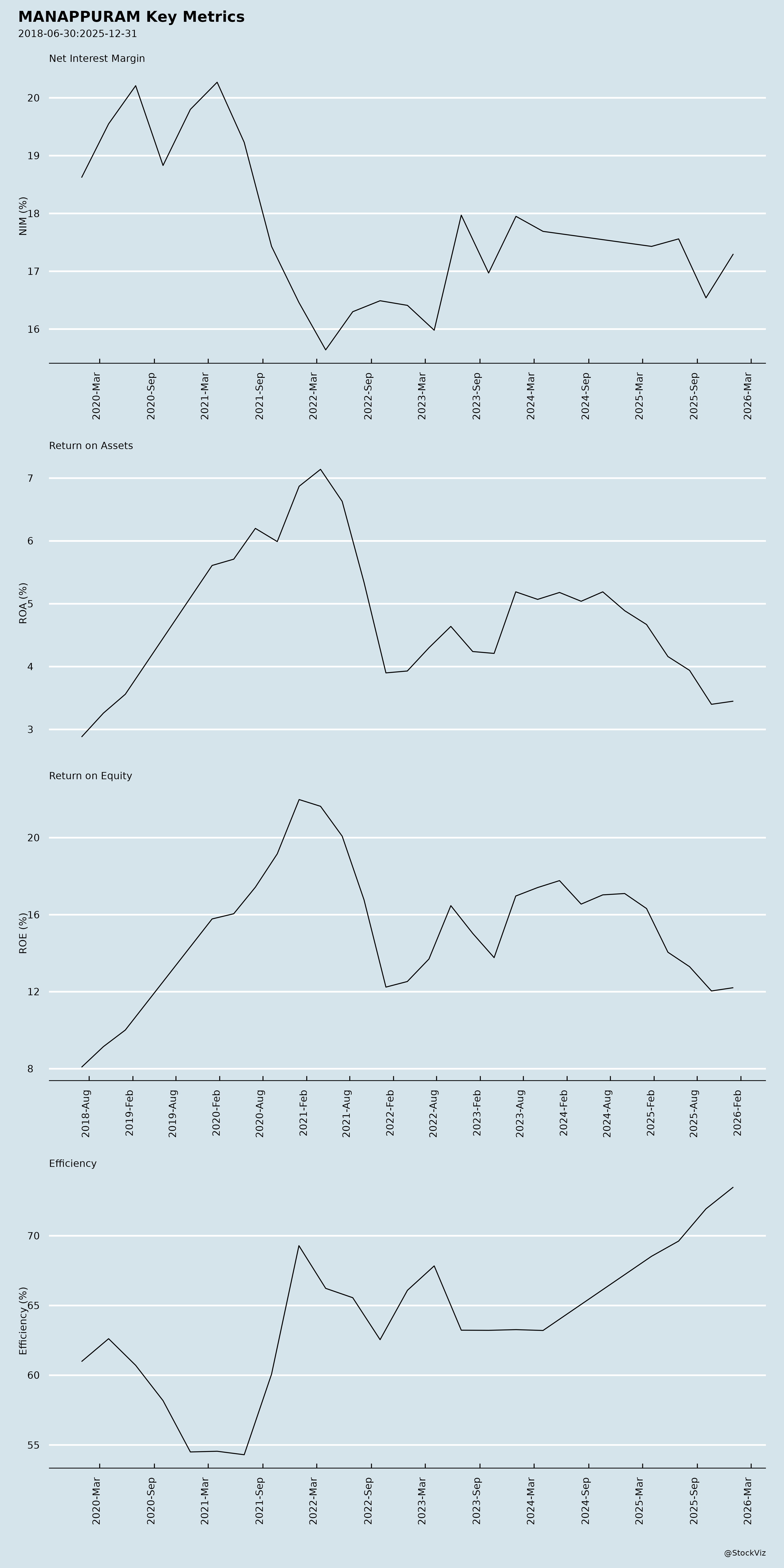
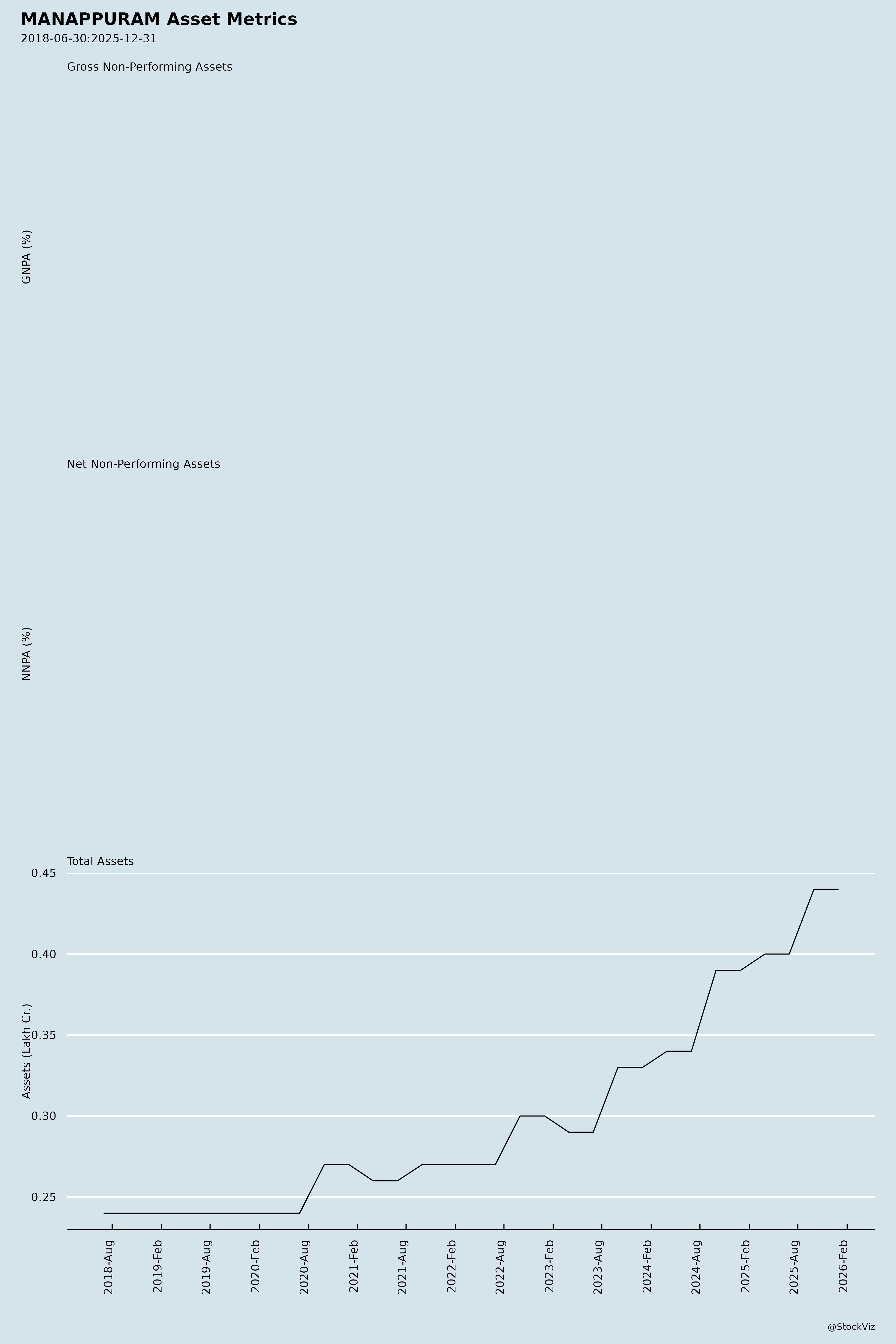
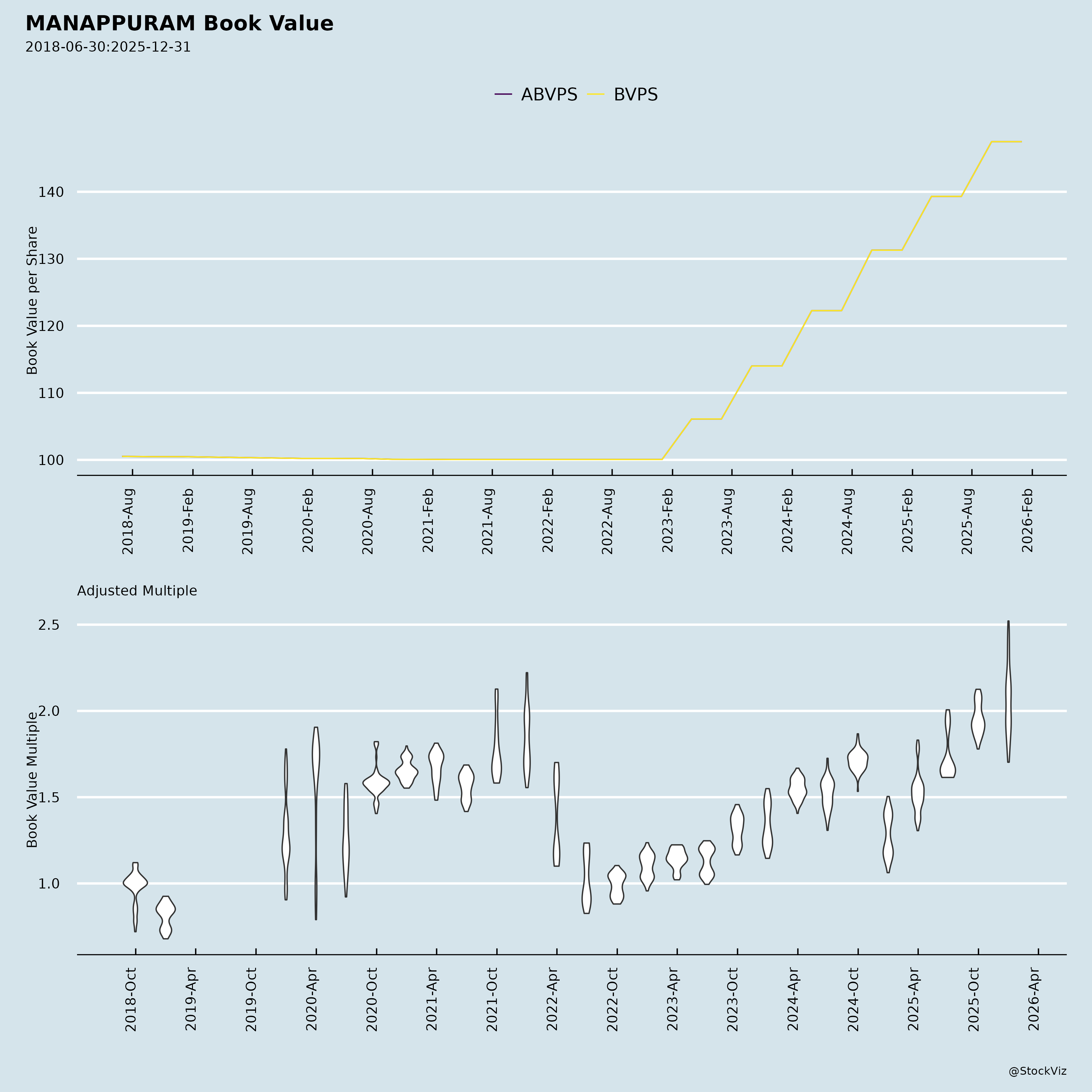
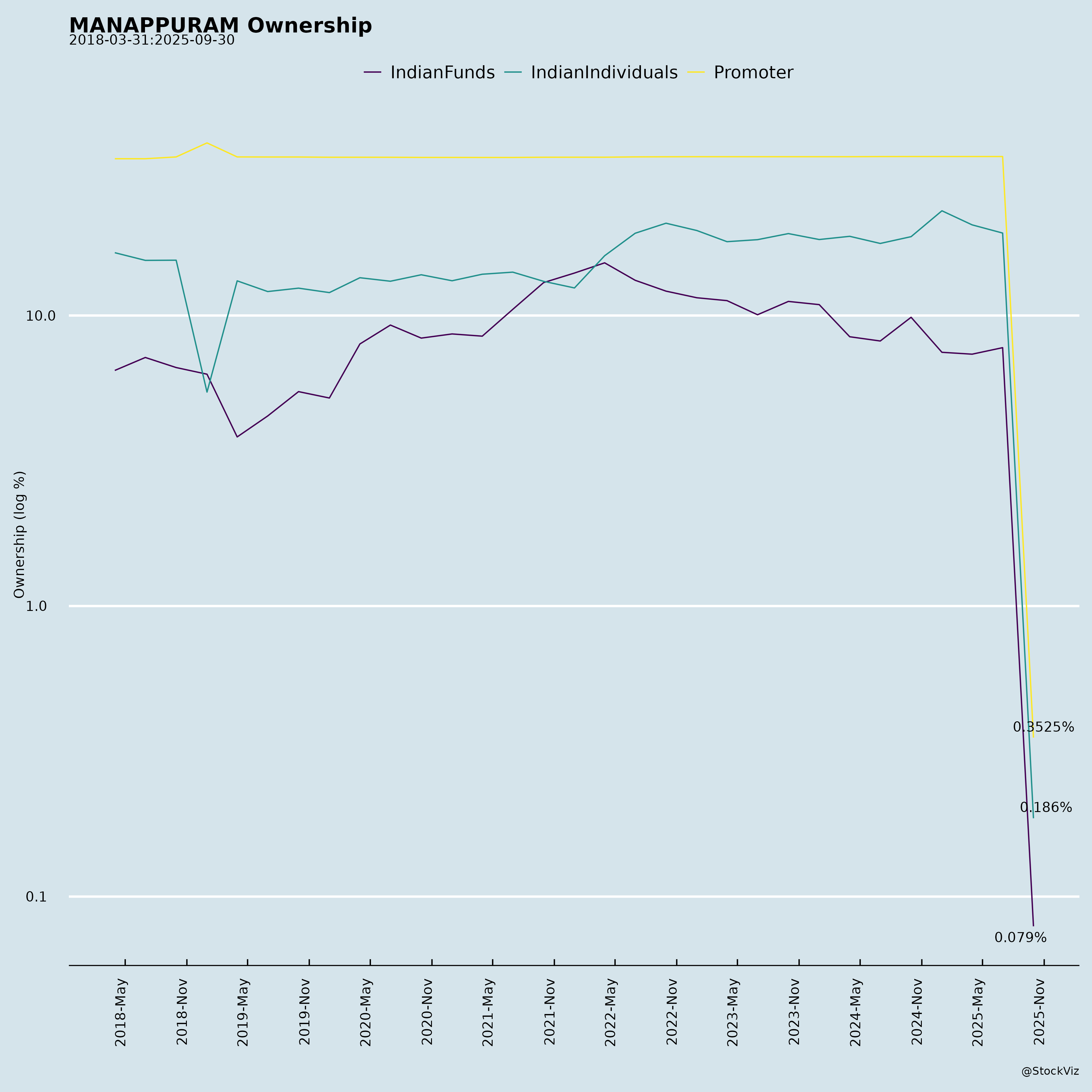
Ownership
Margined

AI Summary
asof: 2026-09-16
Manappuram Finance — Recent Corporate Developments
1. Headwinds and Challenges
Gold price volatility. Management described volatility in gold prices as “a serious concern that affected overall business sentiment.” The average gold loan LTV moved from 57.3% at March-end to 65.6% at June 30, 2026, which the CFO attributed largely to an approximately 8.5% drop in the gold price (from ₹14,161 to ₹12,954), describing it as “more of a denominator effect” rather than a change in numerator computation. Management indicated LTV would normally range between 64% and 67% in a stable price scenario.
Funding cost pressure. Standalone borrowing cost rose about 10 bps in Q1 FY27, and the CFO noted spikes in short-term rates and MIFOR at all-time high levels. Incremental funding cost was guided to an 8.8–9% handle, with some elevation expected to flow into overall cost of funds, though the company declined to give a specific settling number.
Microfinance stress. Management acknowledged that microfinance companies have witnessed industry-wide stress over the past few years. Asirvad’s Q1 FY27 provisions were described as a “normalized provision cycle” after Q4 FY26 benefited from one-off credits (around ₹9 crore), which makes the sequential provision comparison less favourable.
Vehicle finance deterioration. Vehicle finance AUM fell 14.3% QoQ and 43% YoY to ₹2,562 crore, with GNPA elevated at 13.3% versus 10.4% in the prior quarter. Disbursements have been temporarily stopped, with focus shifted to collections; management stated it does not want to disburse further vehicle loans this year and may consider restarting only in FY2028.
Competitive intensity. Management acknowledged significant competition on the ground in gold loans, stating the company cannot be “totally away from the market” on pricing and must balance margin versus growth.
Regulatory transition. The RBI framework effective April 1 required changes to product tenure, ticket-size bands (up to ₹2.5 lakh, ₹2.5–5 lakh, above ₹5 lakh), and inclusion of interest in LTV calculation. New products (monthly interest payment, monthly EMI, income-generating loans) were launched, requiring staff hiring and training that began roughly three months before implementation.
2. Tailwinds and Growth Prospects
Gold loan franchise momentum. Consolidated AUM reached ₹69,635 crore, up 9% QoQ and 57% YoY. Consolidated gold loan AUM was ₹57,006 crore (82% of consolidated AUM versus 80% in Q4 FY26 and 65% a year ago). Standalone gold loan AUM was ₹54,655 crore, up 12% QoQ and 97.4% YoY. Consolidated revenue from operations was ₹3,033 crore (up 16% QoQ, 34% YoY) and consolidated PAT was ₹585 crore (up 45% QoQ, 47% YoY). The press release reported consolidated net profit growth of 341.40% YoY against ₹132 crore in the year-ago quarter, NII of ₹1,759 crore (up 25% YoY), and branch count of 5,328 as of June 30, 2026.
Yield recovery. Gold loan yield improved 59 bps during the quarter, which the CFO attributed to pricing actions taken after prior overcorrection, not to disbursal or customer-segment mix shifts. Management guided to a steady-state gold loan yield around 18% (±25 bps).
Branch expansion. Removal of the RBI prior-approval requirement for branch openings facilitates expansion. Management plans approximately 500 new branches, with about 60% in South and Central India (five South Indian states plus Maharashtra), about 25% in eastern states (Bihar, West Bengal, Odisha), and the balance elsewhere. Only 10 branches were added in Q1, but management expressed confidence in reaching 500, with improvement expected from Q2.
Microfinance turnaround. Asirvad AUM was ₹7,188 crore (up 5.8% QoQ, 7.2% YoY), including gold loan AUM of ₹2,344 crore. Asirvad PAT was ₹21 crore versus ₹13 crore in the prior quarter and a loss of ₹269 crore in Q1 FY26 — a swing of ₹290 crore YoY. Net NPA was 1.4% and CRAR 31%. With over 30% of Asirvad’s book in secured gold loans, management sees a window to negotiate better borrowing costs with lenders.
New income-generating gold loan products. Income-generating asset (IGA) loans are underwritten on assessed cash flows, with LTV up to 85% for monthly EMI products (lower for quarterly schemes), and interest rates of 14–16%. Management noted the regulator permits no LTV cap on IGA, but the company has internally capped at 85%. Yield on IGA is 50–75 bps higher than consumer gold loans. The portfolio remains small relative to the overall book, and management is monitoring it closely with good early experience.
Customer profile shift. Management observed a gradual shift toward business-class/MSME customers using gold as collateral, supported by regulatory encouragement to bring idle gold into MSME funding.
Capital position. Consolidated net worth was ₹16,552 crore as of June 30, 2026, book value per share ₹176.20, and capital adequacy ratio 21.29%. Standalone GNPA improved to 1.56% from 1.8% in the prior quarter, with standalone credit cost of 1% for the quarter. An interim dividend of ₹1 per equity share (face value ₹2) was declared, with a record date of August 17, 2026.
Funding actions. The Board approved enhancement of borrowing limits to ₹1,00,000 crore, subject to shareholder approval under Section 180(1)(c), including listed NCDs/bonds and commercial papers. On August 17, 2026, the company allotted NCDs on a private placement basis: Series A of 25,000 NCDs (₹250 crore, 6-year tenure, 9.05% coupon, maturing August 14, 2032) and Series B of 60,000 NCDs (₹600 crore, 3650-day tenure, 9.10% coupon, maturing August 14, 2036). Both series are rated, subordinated, unsecured, listed, transferable, redeemable NCDs of ₹1,00,000 face value each, with nil charge on assets and no defaults or delays reported.
3. Key Risks
- Gold price sensitivity: LTV and collateral coverage move with gold prices; an 8.5% price decline drove the LTV increase from 57.3% to 65.6%.
- Vehicle finance asset quality: GNPA at 13.3% and rising, with disbursements halted.
- Microfinance asset quality: Industry-wide stress persists; Q1 provisions described as normalized after prior one-off releases.
- MSME asset quality: GNPA at 5.9%, though improved from 7.1% in the prior quarter.
- Funding cost uncertainty: Management could not predict where cost of funds will settle given elevated short-term rates and MIFOR.
- Execution risk on branch expansion: Only 10 branches added in Q1 against a 500-branch annual target, though management expects acceleration.
- Regulatory change: New RBI LTV and product norms required operational and underwriting adjustments.
- General business risks cited in disclosure: global and Indian demand-supply conditions, finished goods prices, feedstock availability and prices, cyclical demand and pricing in principal markets, changes in government regulations and tax regimes, economic developments in India and operating countries, litigation, and labour negotiations.
- Forward-looking statement uncertainty: The company states it cannot guarantee that assumptions and expectations regarding strategies, business development, market position, expenditures, and financial results will be accurate or realized, and assumes no responsibility to publicly amend or revise forward-looking statements.
4. Management Guidance Versus Observed Performance
| Guidance / Statement | Observed Performance |
|---|---|
| Gold loan yield guided around 18% (±25 bps) | Yield improved 59 bps in Q1 FY27; CFO stated pricing actions are yielding results and similar trends expected |
| Gold loan growth expectation of 25–30% for FY27 | Q1 standalone gold loan AUM grew 12% QoQ and 97.4% YoY; management cited good momentum continuing into July and August despite a seasonally slow quarter |
| ~500 new branches planned for FY27 | 10 branches added in Q1; management attributed slow start to the timing of the RBI circular removing prior approval, and expects Q2 improvement |
| Microfinance to be contained below 10% of consolidated AUM (8–10% cap) | Asirvad AUM of ₹7,188 crore against consolidated AUM of ₹69,635 crore; non-gold businesses were 18.14% of total AUM |
| MFI disbursement run-rate of ₹400–500 crore | Not quantified against actual Q1 disbursements in the transcript |
| ROA target of 3.5–4%, ROE target of 15–18%, with ROE reaching ~18% in three years | Q1 FY27 consolidated ROAA was 3.54% and consolidated ROE was 14.3% per the press release |
| Vehicle finance disbursements halted for the year; restart possibly in FY2028 | Vehicle finance AUM declined 14.3% QoQ and 43% YoY; GNPA rose to 13.3% |
| Incremental funding cost around 8.8–9% | Standalone borrowing cost rose ~10 bps in Q1 FY27; CFO noted elevated short-term rates and MIFOR |
| LTV expected to range 64–67% in normal scenarios | Q1 FY27 average LTV was 65.6%; management noted it would have fallen further after recent gold price increases |
| Asirvad to negotiate better borrowing costs given >30% secured gold book | Management stated negotiations are actively in place; no outcome quantified |
Leadership transition. Mr. Ashish Singh was appointed Managing Director & CEO and Key Managerial Personnel for five years effective January 1, 2027, subject to shareholder approval. He has over 25 years of retail banking experience, most recently as Head of Retail Liabilities at IDFC FIRST Bank, previously leading its Bharat Banking business, and prior senior roles at Fullerton India and ICICI Bank. Mr. V.P. Nandakumar will continue as Managing Director and Chairperson until December 31, 2026, and be redesignated Non-Executive Chairperson effective January 1, 2027. The Board also approved variation in objects relating to utilization of funds from the preferential issue of 9,29,01,373 equity shares to BC Asia Investments XXV Limited and 9,29,01,373 warrants to BC Asia Investments XIV Limited, originally approved at the EGM held April 16, 2025.
Broker Narrative
The broker narrative evolved from early concerns about the ED investigation freezing the CEO’s assets and near-term regulatory-driven volatility to later operational headwinds including subdued non-gold portfolio growth, sharp vehicle finance contraction, and elevated funding costs. Gold loan franchise strength and earnings growth remained a consistent optimistic theme throughout, while the regulatory overhang dissolved and the gold lending business significantly outperformed expectations, though the latest report turned Neutral amid recent underperformance.
Fears that came true
- Near-term stock volatility flagged due to the ED investigation and legal uncertainty persisted over the years and culminated in the -11.1% actual return in the most recent period (2026-08-11, PENDING outcome).
Broker Timeline
60 broker calls · 2023-05-07 to 2026-08-11
Copyright © 2023 SAS Data Analytics Pvt. Ltd. All rights reserved.