INDIGO
Equity Metrics
September 24, 2026
InterGlobe Aviation Limited
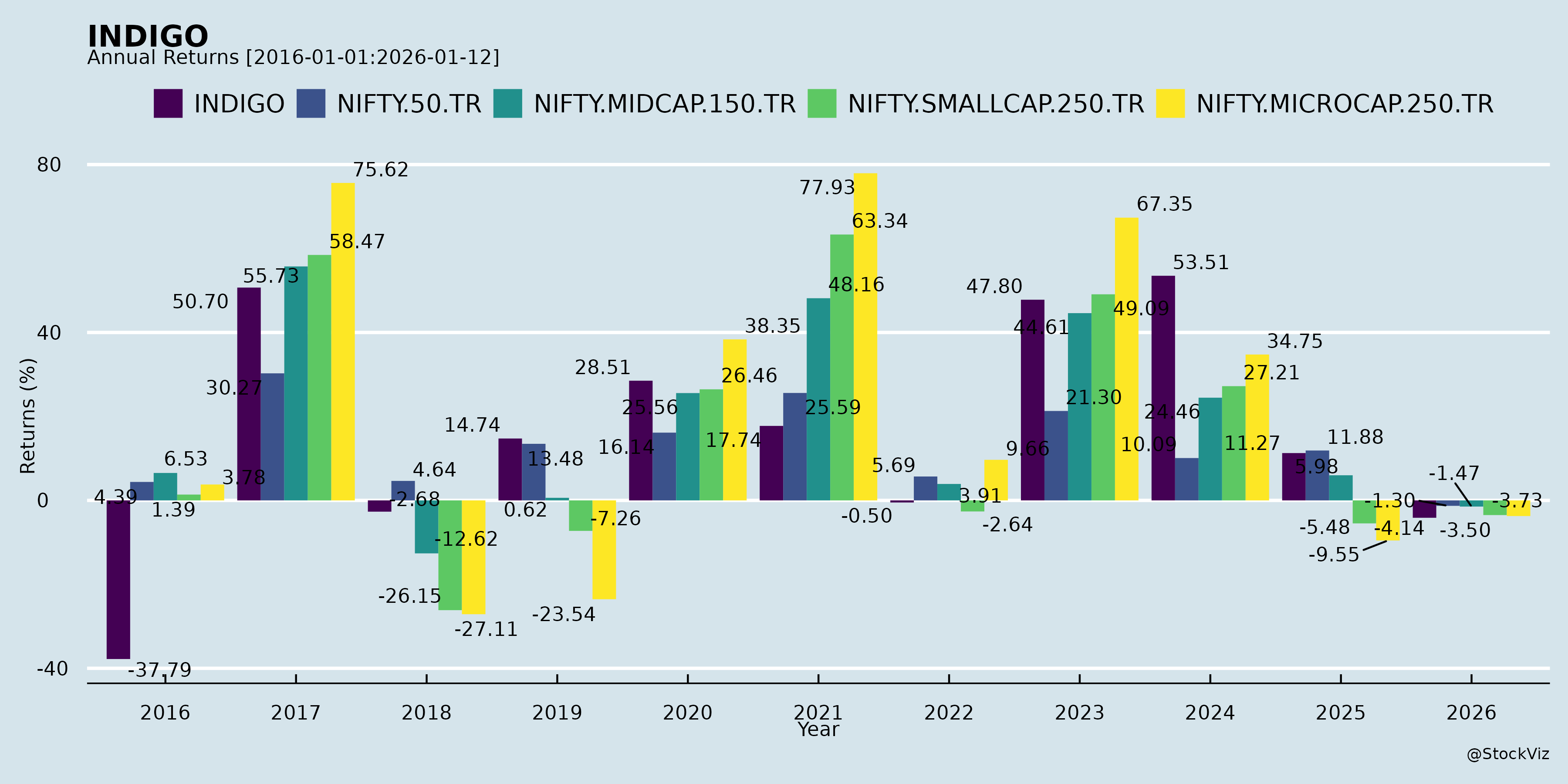
Annual Returns
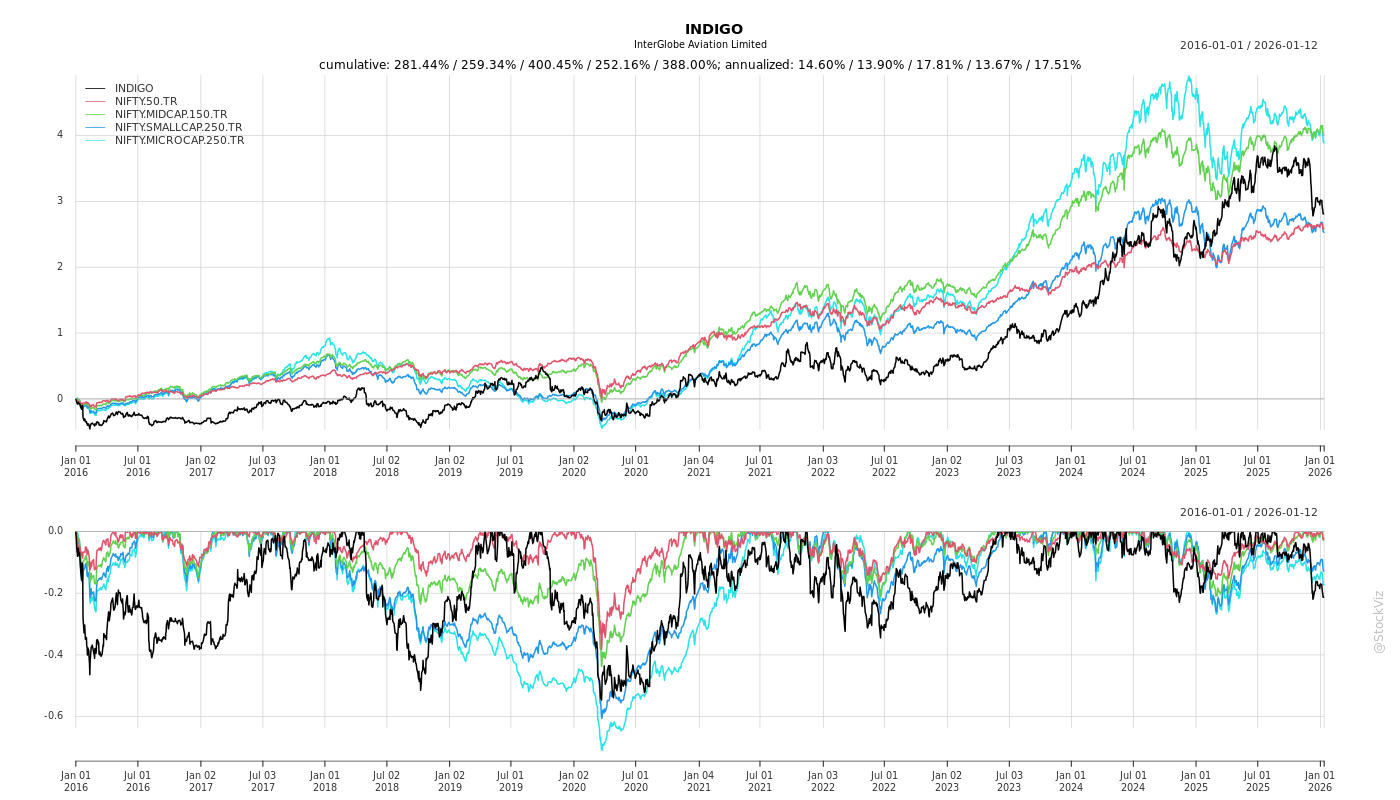
Cumulative Returns and Drawdowns
Fundamentals
Ownership
Margined
AI Summary
asof: 2026-09-14
IndiGo — Recent Corporate Announcements: Analysis
1. Headwinds and Challenges
Fuel cost escalation. The June 2026 quarter was dominated by an unprecedented rise in aviation fuel costs. Average Brent prices rose roughly 50% year-on-year, while elevated crack spreads pushed benchmark Singapore jet fuel prices up nearly 120%. IndiGo’s fuel CASK rose about 80% year-on-year, and aircraft fuel expenses climbed to INR 108,329 million from INR 58,326 million a year earlier. Management described fuel as the largest source of pressure and noted that the cost environment had begun to rise again after a period of moderation, with Brent back above USD 90 and MOPAG levels around USD 140–150.
Currency depreciation. The Indian rupee depreciated by more than 11% year-on-year (average exchange rate moved from 85.29 to 95.02 INR/USD). This inflated dollar-denominated costs and contributed to the 11% year-on-year rise in CASK ex fuel ex forex to INR 3.20.
Geopolitical and airspace disruption. Developments in the Middle East constrained capacity deployment, particularly airspace-related constraints and disruption in certain international corridors. Middle East departures fell from roughly 150 per day before the conflict to 20–30 at the peak, recovering to 90%+ levels by late June, though management noted the crisis had flared up again.
Capacity and utilization pressure. Q1 capacity growth was 3% year-on-year, broadly in line with guidance, but lower utilization in parts of the quarter reduced the ASK base. For Q2 FY27, management expects flattish capacity growth, with selective route-level rationalization and temporary international suspensions (Langkawi, Ho Chi Minh City, Hong Kong, Shanghai, restarting in October).
Cost inflation beyond fuel. CASK ex fuel ex forex rose 11% year-on-year on account of rupee depreciation, lower utilization, and annual contractual escalations. Employee costs rose 11.2% year-on-year, partly due to higher gratuity run-rate and headcount increases. Management deferred annual increments for senior management employees.
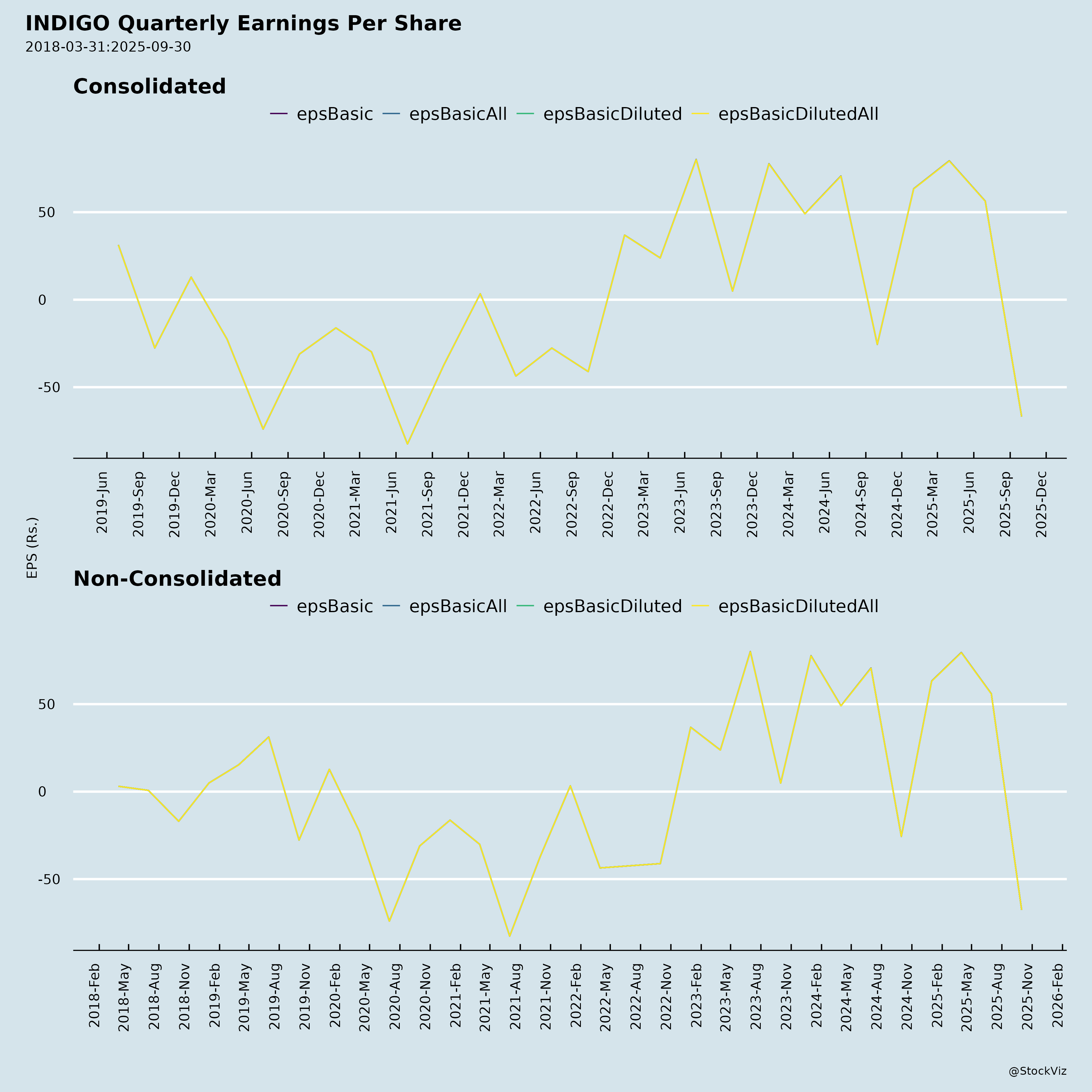
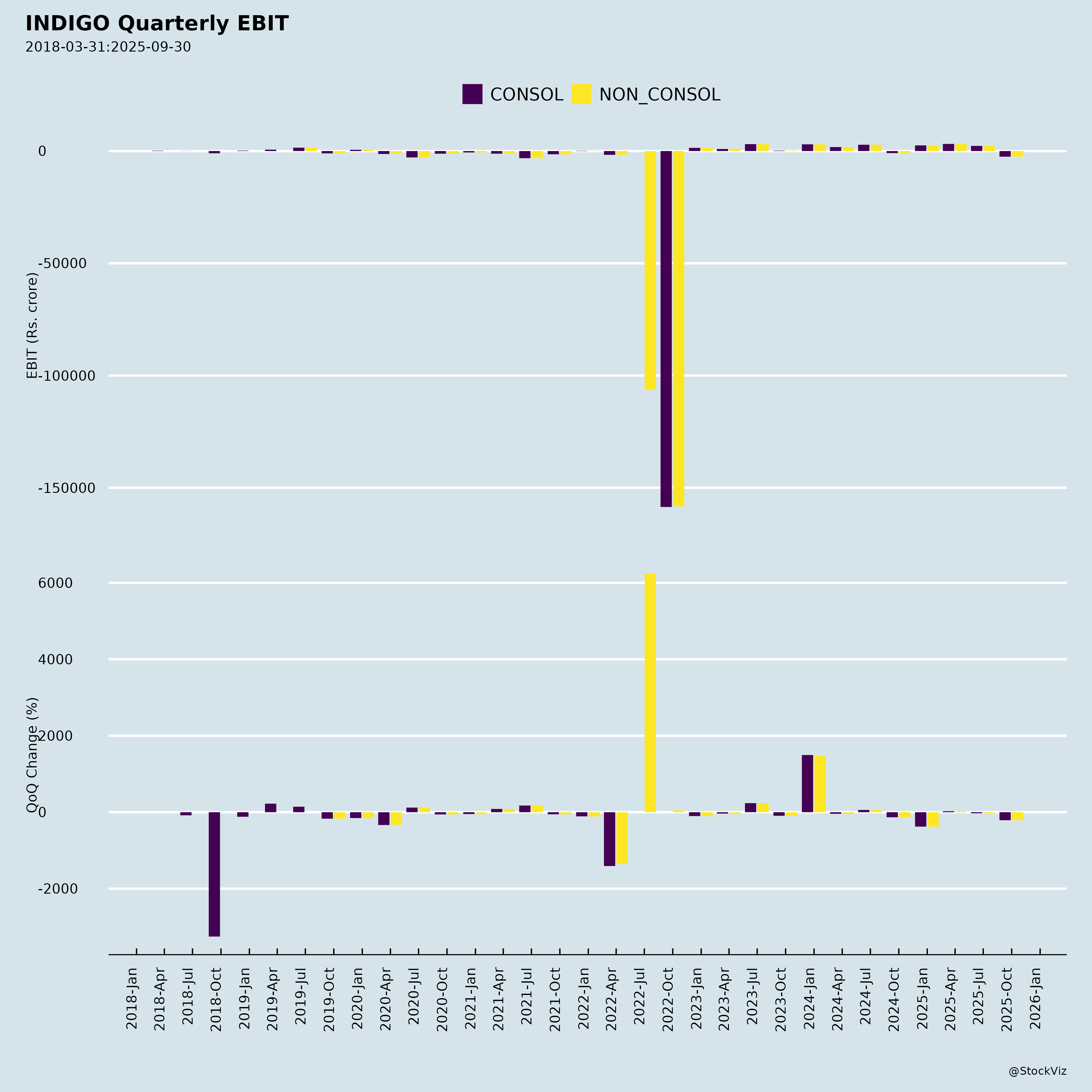
Profitability deterioration. Q1 FY27 total income was INR 256,141 million (up ~19% year-on-year), but total expenses rose 34.4% to INR 258,525 million. EBITDAR fell to INR 38,325 million (15.6% margin) from INR 57,386 million (28.0% margin). The quarter reported a net loss of INR 2,380 million versus a profit of INR 21,763 million a year earlier; excluding forex, the net loss was about INR 56 million.
Regulatory and legal matters. The DGCA ordered bank guarantees of INR 500 million (furnished) related to December 2025 operational disruptions. The Competition Commission of India ordered an investigation into domestic operations following a passenger complaint relating to those cancellations; no provision has been made as the outcome is awaited. A GST authority order dated August 18, 2026 imposed a penalty of INR 19,65,736 for alleged documentary deficiency during transportation of goods, which the Company will contest. Income tax exposure up to AY 2022-23 (excluding interest and penalty) is stated at INR 24,185 million if manufacturer incentives are held taxable. Cumulative IGST paid under protest on re-import of repaired aircraft/engines/parts is INR 22,932 million.
Management changes. Head – Global Sales Vinay Malhotra resigned effective July 3, 2026, and Chief Human Resources Officer Sukhjit S. Pasricha resigned effective July 19, 2026; Kanwal Jeet Singh Bakshi was appointed CHRO effective July 20, 2026.
2. Tailwinds and Growth Prospects
Structural demand story. Management characterized Indian aviation as one of the most compelling structural growth stories, citing a severely under-penetrated market, rising incomes, greater mobility, a young population, and continued aviation infrastructure investment.
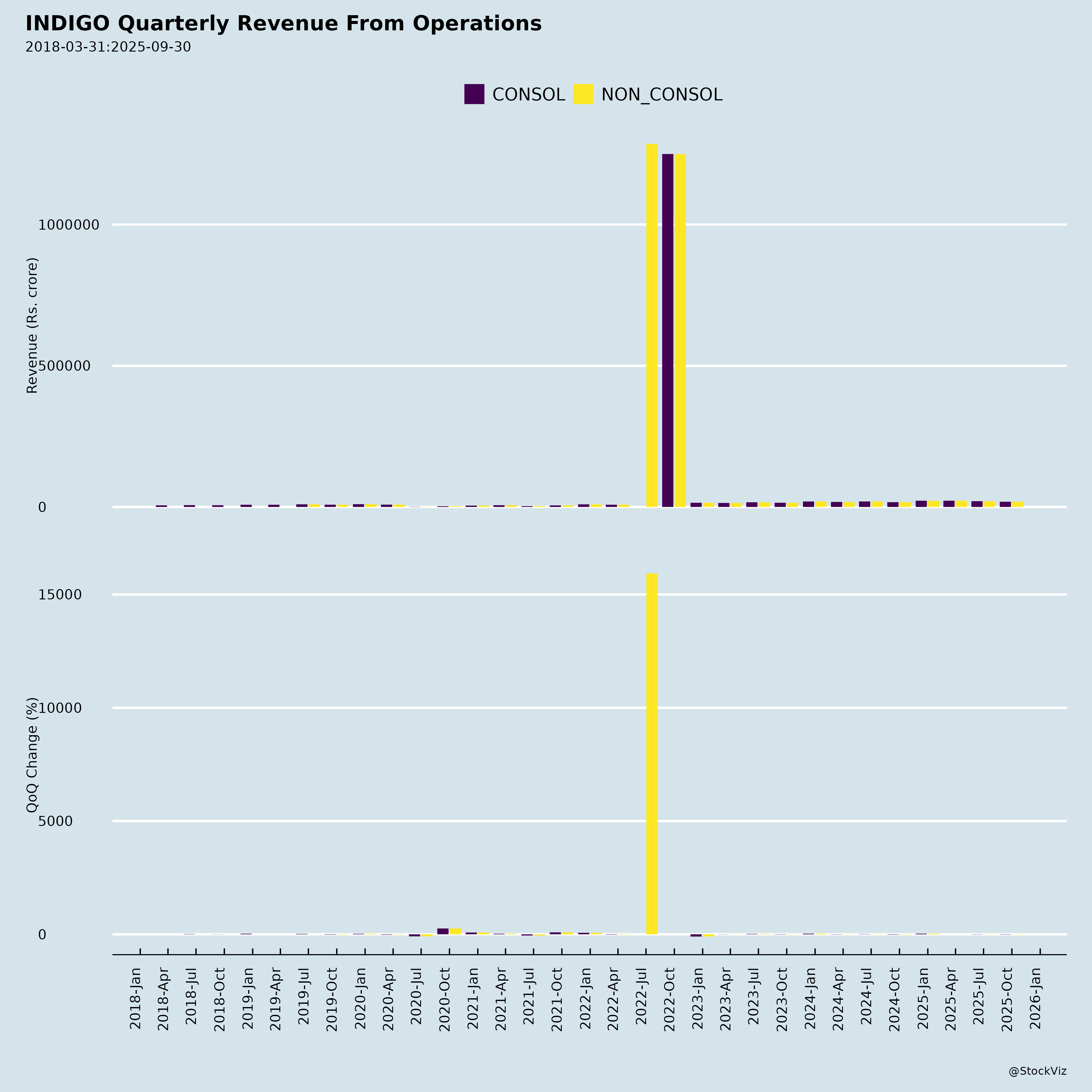
Strong revenue environment. Q1 FY27 saw a constructive pricing environment: yield rose 21.3% year-on-year to INR 6.04, passenger unit revenue (RASK) rose 19% to INR 5.03 (slightly better than guidance), and load factor was 83.3% (down 1.3 points). May 2026 was described as the best month ever for the domestic industry, with IndiGo carrying over 10 million domestic passengers in a month for the first time.
Government and OMC fuel support. The MoPNG introduced a price capping mechanism (25% over March 2026 declared prices) for ATF supplied for domestic operations from April 1 to June 8, 2026, implemented by OMCs. This enabled IndiGo to operate planned schedules and pass on calibrated fuel surcharge benefits to domestic passengers. From June 9, 2026, a Price Stabilisation Fund was announced; IndiGo is awaiting detailed guidelines and has not decided on participation, recognizing fuel at market prices from that date.
Fleet and network expansion. IndiGo signed an MoU with CFM International for over 1,000 LEAP-1A engines for future deliveries, supporting engine MRO and long-term material services. The closing fleet was 432 aircraft (including 3 A321 freighters and 7 damp leases). During the quarter it inducted 13 aircraft (all via the GIFT City entity), redelivered 9 from the original orderbook and 13 damp-leased aircraft. It commenced flights to Jamnagar and became the first airline to operate from Jewar airport in Noida. It served 97 additional international destinations through strategic partnerships.
Product and ancillary initiatives. IndiGo introduced a “Lite Fare” for customers without check-in baggage, went live with the Accor ALL loyalty collaboration, and tested SITA’s OptiClimb AI-powered flight optimization solution.
International expansion ambition. Management reaffirmed guidance of international capacity reaching 40% of the total by 2030 (having touched close to 33%), supported by A321 XLR and wide-body deliveries. Willie Walsh assumed charge as CEO on August 3, 2026 (announced March 2026), with the mandate to accelerate international expansion and global growth.
Balance sheet strength. Total cash at quarter end was INR 529 billion (free cash INR 390 billion, restricted INR 139 billion). Capitalized operating lease liabilities were INR 538 billion; total debt including these was INR 815 billion; right-of-use assets were INR 553 billion.
3. Key Risks
- Fuel price and crack spread volatility, with forward curves changing and the possibility of Q2 fuel costs matching Q1 levels if Middle East disruption escalates (e.g., Hormuz-related blockage).
- Currency risk, with continued rupee depreciation raising dollar-denominated costs.
- Geopolitical/airspace risk affecting Middle East and international corridors, driving capacity cuts and route suspensions.
- Pricing sustainability risk: management noted it must keep testing higher yields to offset elevated costs, with no defined spread target given external volatility.
- Regulatory/legal risk: CCI investigation, DGCA bank guarantee conditions, GST penalty order, income tax exposure on manufacturer incentives, and IGST litigation on re-imports.
- Competitive/structural risk: management commented on news of potential airport-airline cross-holdings, noting no global precedents and potential conflict of interest, and said it would monitor developments.
- Execution risk in capacity planning, damp-lease decisions (to be assessed in Q3), and cost control amid inflation.
4. Management Guidance vs. Observed Performance
Q1 FY27 capacity guidance: Management stated June quarter capacity growth came in at 3% year-on-year, “broadly in line with our guidance.”
Q1 FY27 PRASK guidance: Passenger unit revenue of INR 5.03 (19% higher year-on-year) was described as “slightly better than our guidance,” as June sustained positive revenue momentum.
Full-year FY27 capacity guidance: Management reaffirmed single-digit capacity growth, holding to guidance given at the analyst meet, despite Q1 weakness and flattish Q2 expectations.
Q2 FY27 guidance: Flattish capacity growth year-on-year; PRASK growth of more than 25% year-on-year, with loads expected flattish or slightly down similar to Q1.
Cost guidance revision: CASK ex fuel ex forex, which rose 11% year-on-year in Q1, is now expected at the higher side of single digits, “possibly even lower end of the early double-digit ranges” for the year — a revision reflecting the cost environment and lower utilization.
Post-FY27 capacity guidance: Management reaffirmed early double-digit to mid-teens growth from FY2028 to FY2030, and the 40% international ASK share target by 2030.
Fuel cost expectations: Management had anticipated Q2 fuel would be better than Q1 as forwards moderated, but noted an uptick had resumed, making the outcome uncertain; it did not provide a spread (RASK minus CASK) guidance due to volatility.
AGM outcomes (August 20, 2026): Three resolutions passed with requisite majority — adoption of standalone and consolidated financial statements, appointment of Gregg Albert Saretsky as Director, and approval for increase in borrowing limits and creation of charges against borrowings.
Broker Narrative
The broker narrative shifted from operational concerns (fuel costs, competition, grounded aircraft) in 2023 to macro/commodity risks (crude/ATF, geopolitics) in 2026, while travel demand and yield optimism persisted. The call stance evolved from Neutral to Buy despite persistent fuel volatility, and the risk focus moved from internal fleet issues to external crude exposure. However, later Buy calls resulted in DISAPPOINTMENT as negative returns materialized, suggesting macro fears eventually outweighed operational tailwinds.
Fears that came true
- Higher-than-expected fuel costs flagged in 2023 materialized as ATF remaining higher for longer, correlating with DISAPPOINTMENT outcomes on Buy calls from 2025-2026 which recorded negative returns.
Broker Timeline
41 broker calls · 2023-05-19 to 2026-08-31
Copyright © 2023 SAS Data Analytics Pvt. Ltd. All rights reserved.