GODREJAGRO
Equity Metrics
September 24, 2026
Godrej Agrovet Limited
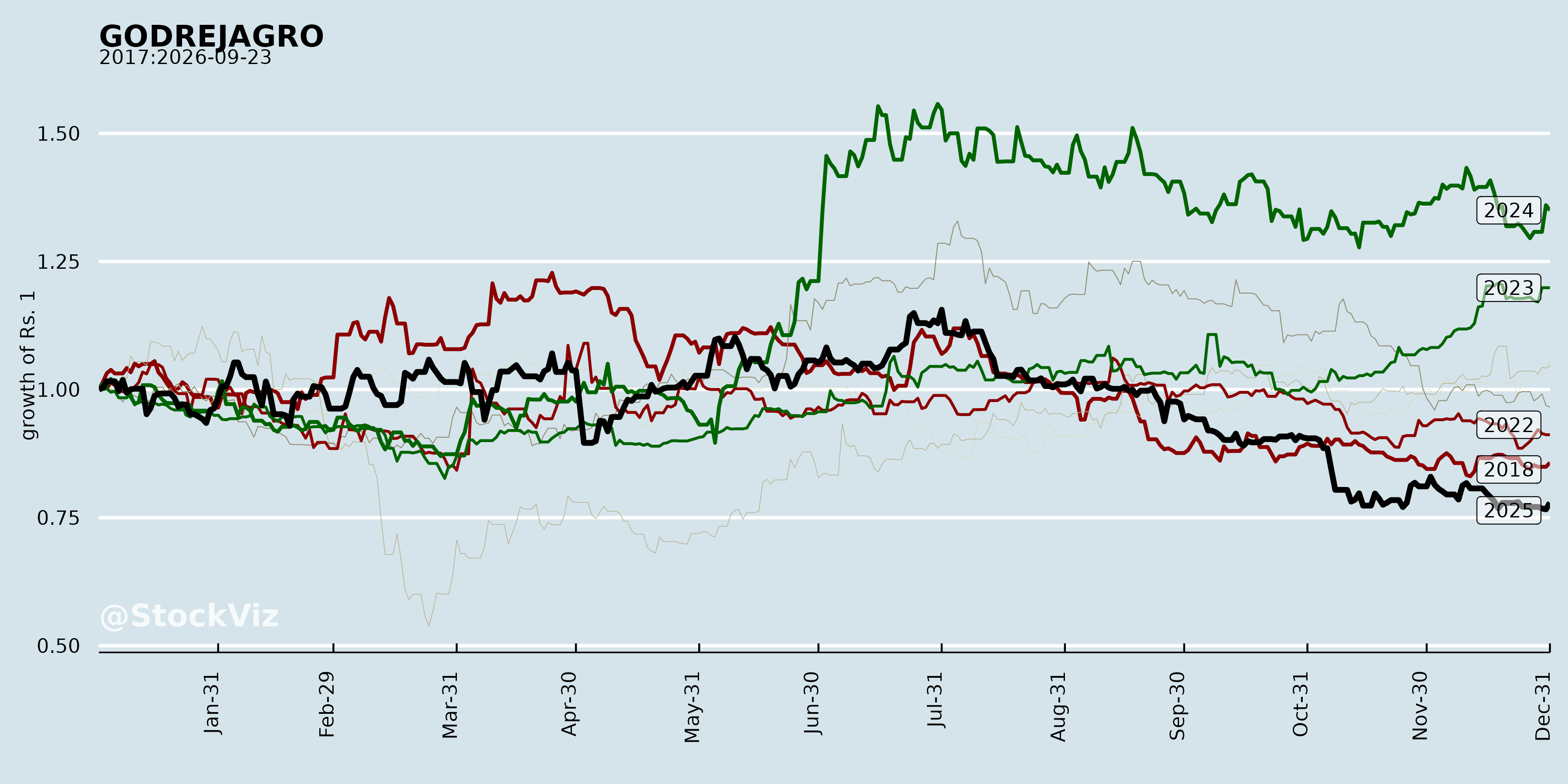
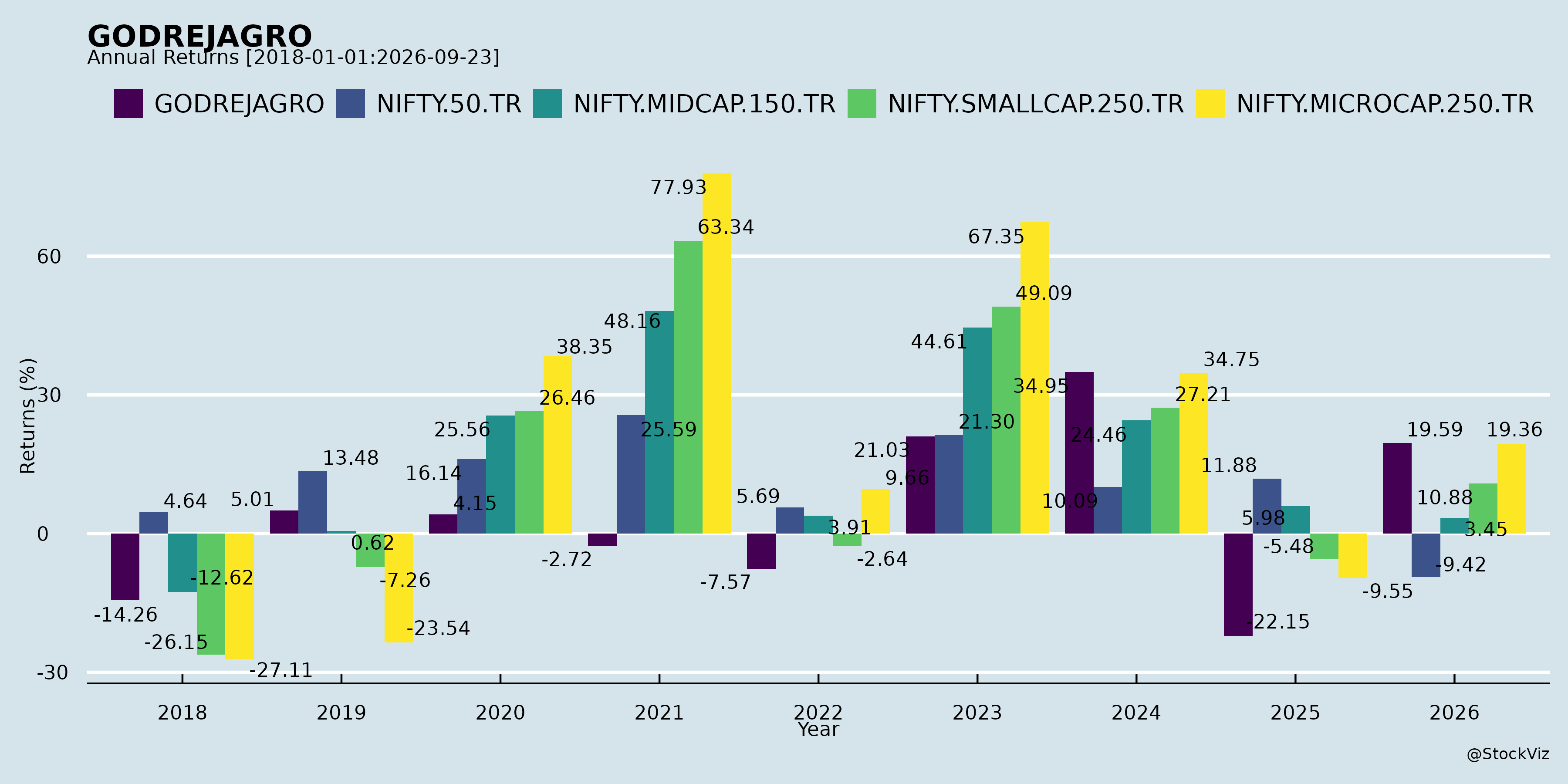
Annual Returns
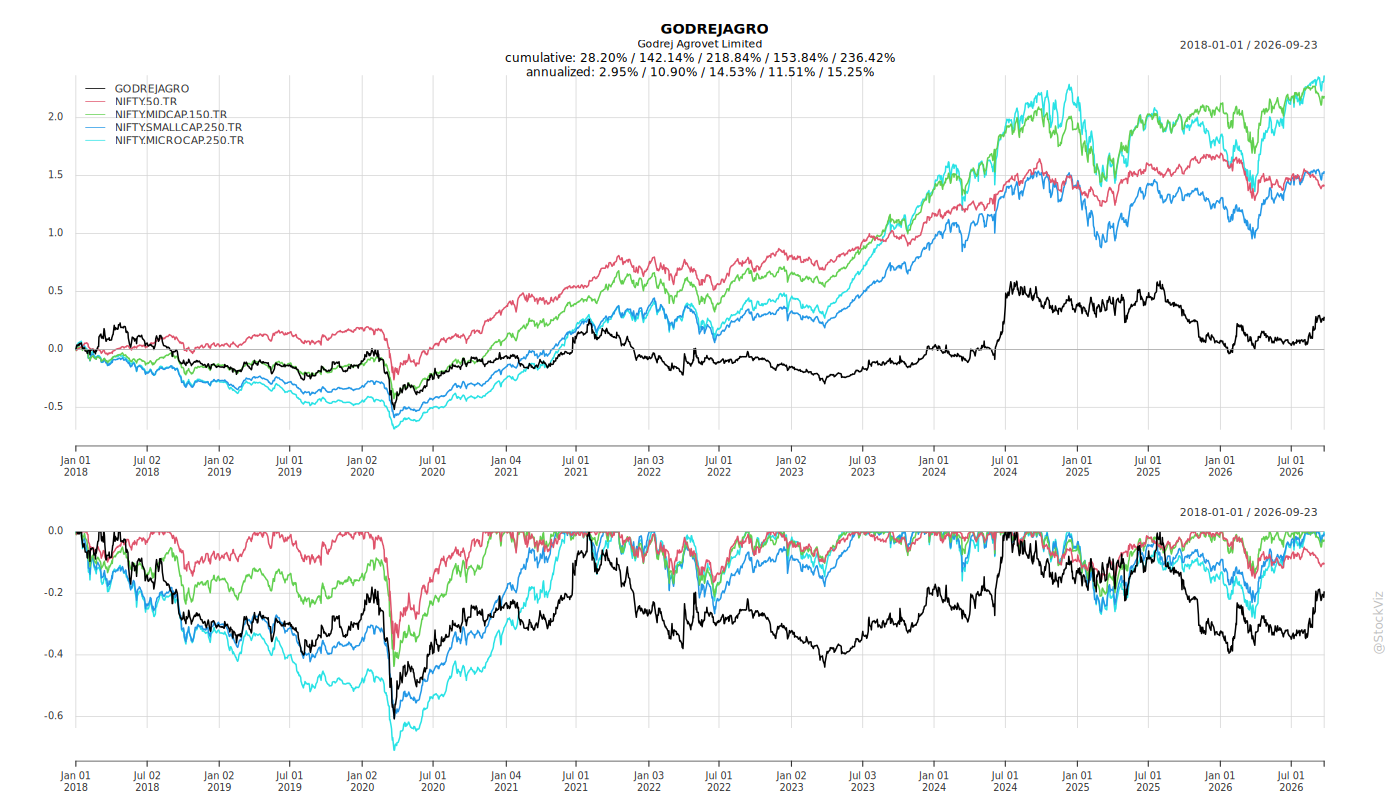
Cumulative Returns and Drawdowns
Fundamentals
Ownership
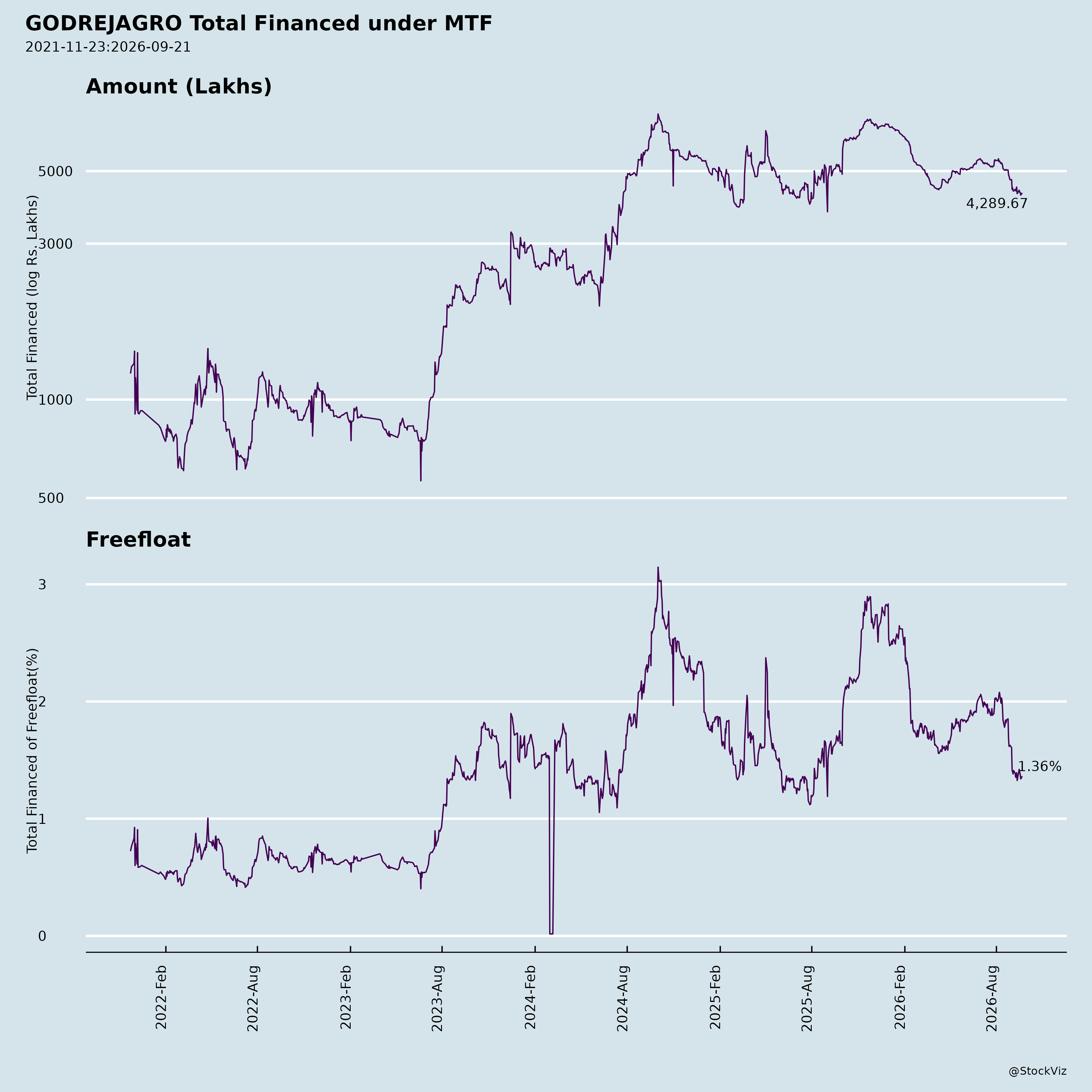
Margined
AI Summary
asof: 2026-09-17
Godrej Agrovet — Q1 FY27 Announcements: Headwinds, Tailwinds, Risks and Guidance
1. Headwinds and Challenges
Monsoon and kharif disruption in Crop Care. The quarter was marked by a significantly delayed monsoon and slower kharif sowings following one of the driest Junes in over a decade. This muted demand led to de-growth in Crop Care segment revenue, predominantly from lower volumes of the in-house cotton herbicide, and caused segment margin contraction in Q1 FY27. Reported figures indicate Crop Care revenue declined ~17% with margins down ~38%.
Input cost and geopolitical inflation. Management described the operating environment as challenging, citing delayed monsoon conditions and geopolitical tensions that produced inflationary pressures. Profitability was impacted by temporary cost headwinds in select businesses.
Dairy profitability pressure. Elevated milk procurement prices amid industry-wide constraints in milk availability, together with war-led inflation in certain other inputs, weighed on Creamline Dairy EBITDA. Management pointed to calibrated pricing actions, procurement efficiencies and cost optimisation as mitigants.
Godrej Foods margin moderation. Higher input costs and inflationary pressure from geopolitical disruptions moderated EBITDA margins. Calibrated pricing actions only partially mitigated the cost increase.
ACI Godrej tax impact. While the Bangladesh joint venture returned to growth with PBT up 12% YoY, profit after tax declined due to a higher effective tax rate following a change in the applicable rate from 15% to 27.5% with effect from July 1, 2025. This was described as tax-related rather than a deterioration in operating performance.
Astec revenue mix. Astec LifeSciences saw marginal revenue de-growth due to a change in product mix, even as it achieved another quarter of EBITDA break-even and significantly reduced losses.
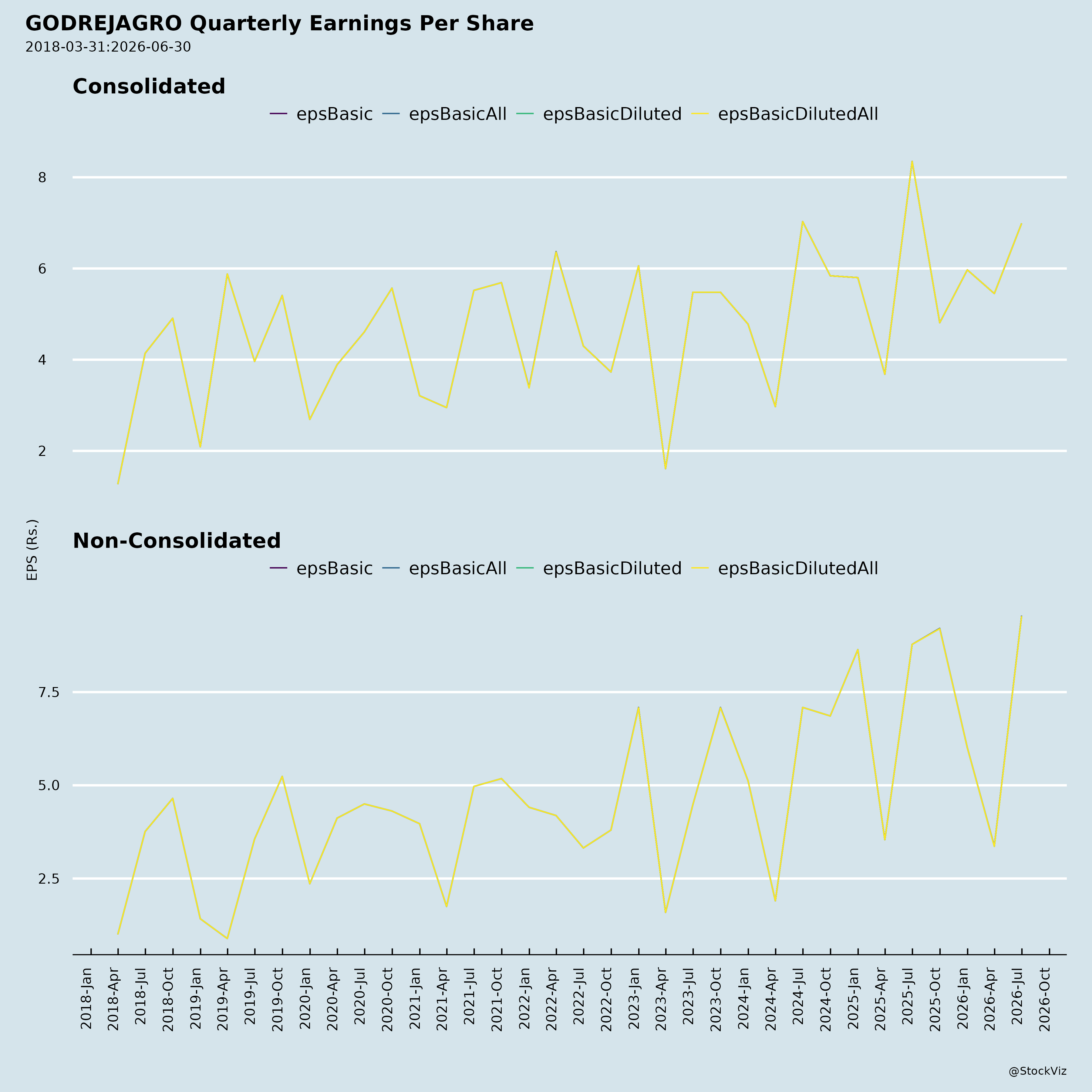
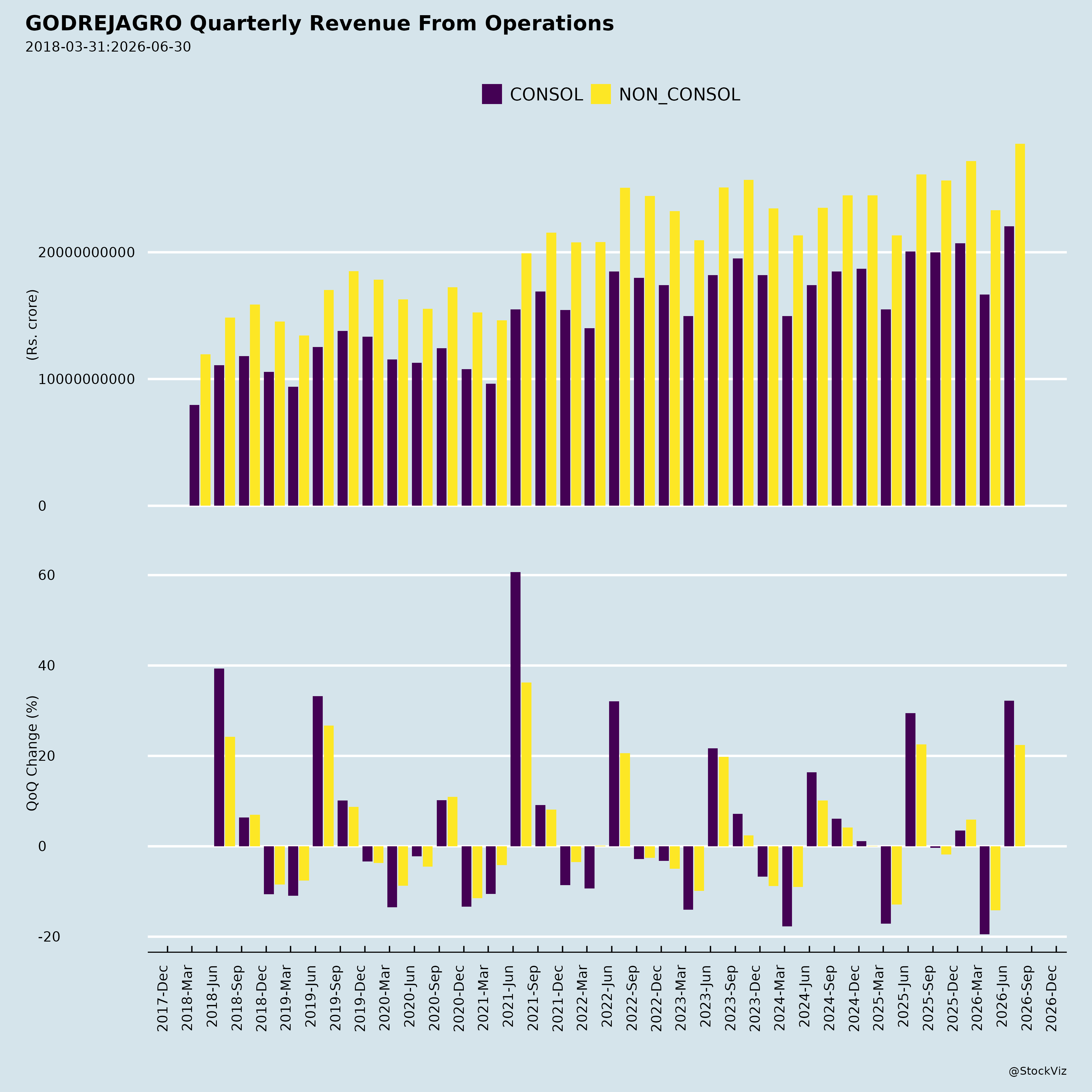
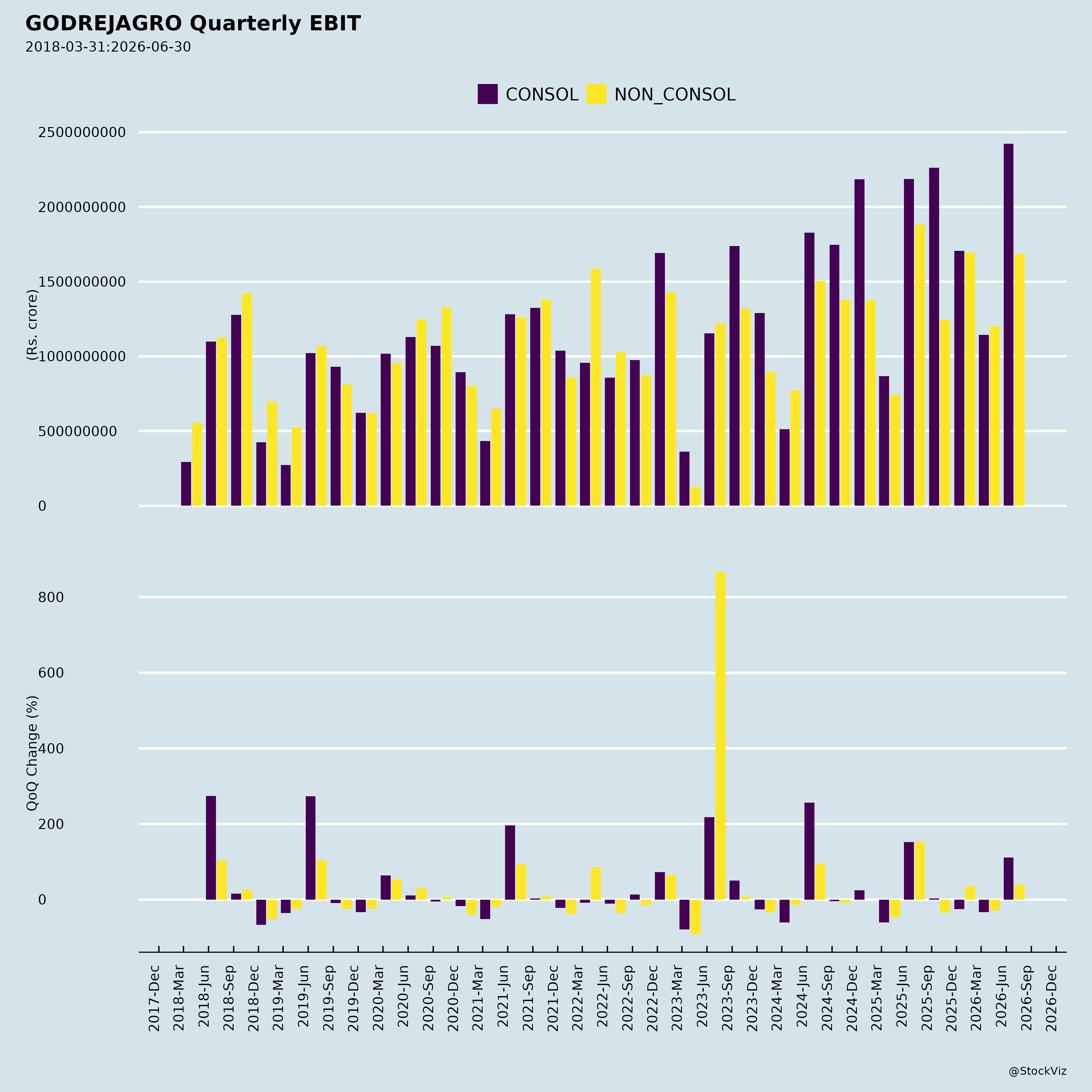
Overall profitability decline. Consolidated sales grew to Rs. 2,852 crore in Q1 FY27 from Rs. 2,603 crore in Q1 FY26, but profit before tax excluding non-recurring items fell to Rs. 172 crore from Rs. 188 crore. Reported EBITDA was Rs. 255 crore (down 9% YoY) and reported PAT was Rs. 128 crore (down 14% YoY); excluding non-recurring and exceptional items, EBITDA was Rs. 259 crore (down 8%) and PAT Rs. 126 crore (down 15%).
2. Tailwinds and Growth Prospects
Animal Nutrition momentum. The business delivered robust topline growth on strong demand-led volume expansion and improved realisations, with cattle feed volumes up ~15% YoY. Underlying segment results improved ~36% YoY, reflecting strategic commodity sourcing, operating leverage and cost discipline.
Oil Palm strength. Segment revenue was driven by improved realisations and higher sales volumes, with Fresh Fruit Bunch volumes broadly flat against a high comparable base (Q1 FY26 had benefited from an early monsoon). Segment result increased YoY on enhanced oil extraction efficiency (OER growth of 43 bps) and higher realisations.
Crop Care innovation offset. Despite the cotton herbicide drag, Ashitaka (a new maize herbicide) and Takai (a paddy insecticide) gained strong market traction, and a soybean herbicide, Ghassnash, was launched. These partially mitigated the adverse market conditions and support the innovation-led diversification strategy.
Astec turnaround. Astec sustained its recovery, reporting substantial improvement in EBITDA over Q1 FY26 driven by margin expansion across both Enterprise and CDMO categories, building on the operational turnaround achieved in FY26.
Dairy value-added mix. Creamline Dairy delivered healthy revenue growth on strong volume growth in value-added products, with the salience of value-added products rising from 42% in Q1 FY26 to 49% in Q1 FY27.
Godrej Foods branded shift. Branded volume salience grew ~6% YoY, offsetting a deliberate reduction in live bird volumes and enabling stable revenues with improved quality of earnings.
ACI Godrej comeback. The Bangladesh joint venture returned to a strong growth path with robust topline growth from broad-based volume expansion and PBT up 12% YoY on operational leverage.
Working capital efficiency. Average net working capital in days dropped from 54 days in Q1 FY25 and 31 days in Q1 FY26 to 21 days in Q1 FY27, reflecting disciplined capital allocation and cash generation.
3. Key Risks
- Monsoon variability and kharif sowing timing, which materially affect Crop Care volumes and margins.
- Geopolitical tensions feeding into input cost inflation across Dairy, Godrej Foods and other businesses.
- Industry-wide milk availability constraints and elevated procurement prices pressuring Dairy profitability.
- Tax rate changes in overseas operations, as illustrated by the ACI Godrej Bangladesh rate moving from 15% to 27.5% effective July 1, 2025.
- Product mix shifts affecting revenue, as seen at Astec.
- Dependence on new product scale-up (Ashitaka, Takai, Ghassnash) to offset declines in established products such as the in-house cotton herbicide.
- Execution risk on the stated portfolio actions, including rebooting CDPL, ACI Godrej and Astec, and closing Live Bird Trading.
- Key managerial transition risk: Mr. S. Varadaraj is superannuating as CFO & Head – Finance & Legal effective close of business on September 30, 2026, with Mr. Ravishankar A. appointed CFO – Designate from September 21, 2026 and CFO from October 1, 2026.
- Shareholder-related compliance risk: dividend payments are now permitted only through electronic mode per SEBI notification dated November 18, 2025, and non-compliance with KYC requirements could result in non-payment of dividend.
4. Management Guidance vs. Observed Performance
Capex. Management plans to continue capital expenditure at Rs. 300–350 crore per year, funded through internal accruals, with the majority of growth capex allocated towards high-margin, high-ROCE businesses. No deviation from this plan is disclosed in the material.
Portfolio priorities. Management intends to prioritise growth for Cattle Feed, Oil Palm, Crop Care and GFL branded products; reboot CDPL, ACI Godrej and Astec; reduce revenue and restrict capex for RGC B2B and Broiler Feed; and close Live Bird Trading. Observed performance is consistent with parts of this: Animal Nutrition and Oil Palm delivered growth, Astec and ACI Godrej showed recovery, and GFL grew branded volumes while deliberately reducing live bird volumes.
Margin and cost outlook. Management expressed confidence in navigating cost headwinds through operational excellence and focused cost management. Observed Q1 FY27 performance shows margin expansion in Animal Nutrition and Oil Palm, but margin contraction in Crop Care and moderation in Dairy and Godrej Foods, with overall PBT declining YoY.
Working capital and returns. Management highlighted significant improvement in net working capital over the past two years and a focus on building a customer- and market-centric organisation with sharp execution to build a stronger, higher-return portfolio. Observed NWC days fell to 21 in Q1 FY27 from 31 in Q1 FY26 and 54 in Q1 FY25, consistent with that stated focus.
Investor engagement. Management will interact with analysts and investors between September 8, 2026 and September 18, 2026 through one-on-one physical or video conference meetings, with the schedule subject to change due to exigencies.
5. Other Key Facts for Investors
- The Board approved standalone and consolidated unaudited results for the quarter ended June 30, 2026 at its meeting on August 5, 2026; the limited review reports carry an unmodified opinion.
- The 35th AGM was held on August 5, 2026 via video conferencing; all six resolutions (five ordinary, one special) passed with the requisite majority.
- A final dividend of 110% (Rs. 11 per equity share of face value Rs. 10) was declared for FY 2025-26, as recommended by the Board on April 30, 2026.
- Ms. Nisaba Godrej and Mr. Pirojsha Godrej were re-appointed as Directors liable to retire by rotation; M/s. R. Nanabhoy & Co. were ratified as Cost Auditors for FY 2027; and Mr. Burjis Godrej’s remuneration as Chairperson & Executive Director was approved effective August 14, 2026.
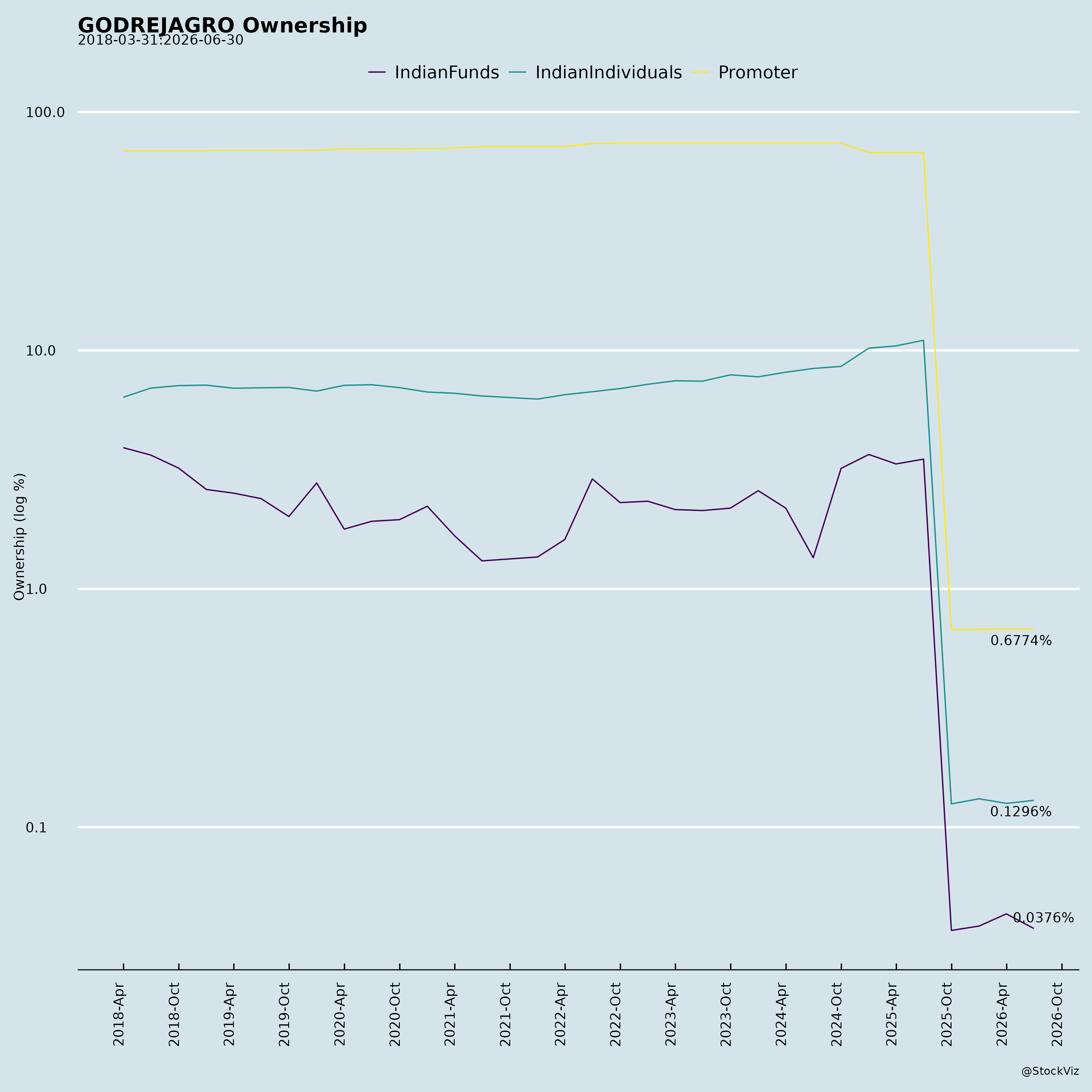
- Promoters held 67.7% of the company as of June 30, 2026.
- The record date for the final dividend was July 29, 2026, with the register of members closed from July 30, 2026 to August 4, 2026.
- TDS documentation for the dividend had to be submitted to KFintech by August 3, 2026, 11:59 p.m. IST.
Broker Narrative
The first report was an Add that acknowledged raw-material cost pressure and expected a FY24 recovery from animal feed, crop protection, and palm oil. By the last report, the framing was still Buy but had shifted to portfolio realignment - Astec ramp-up, Crop Protection diversification, and consumer brands - while the same input-cost and milk-procurement margin pressures persisted. The earlier high-growth Revenue/PAT CAGR expectations were also scaled down to 11%/18% Revenue/Adj PAT CAGRs, and 2025-26 Buy calls were followed by negative actual returns.
Fears that came true
- High raw-material/inventory costs compressed margins, as shown by the last report’s 275bp gross-margin and 190bp EBITDA-margin contractions.
- Erratic monsoon/delayed kharif sowing hurt Crop Protection: revenue fell 13% YoY and EBIT fell 35% YoY, contributing to DISAPPOINTMENT outcomes after later Buy calls.
- Elevated milk procurement costs and milk-availability constraints kept dairy margins under pressure, continuing the worry flagged in 2023.
- Revenue mix/new-product drag persisted: new Crop Protection products had lower margins and processed-food profit fell to INR9m, matching the early negative-operating-leverage warning.
Optimism that failed
- The expected FY24 recovery in Crop Protection did not materialize; by 1QFY27 Crop Protection/Crop Care revenue was still down 13% YoY.
- The high Revenue/PAT CAGR optimism faded: the last report replaced the earlier 12.5%/23.4% FY23-25E forecasts with lower 11%/18% FY26-28E projections.
- Crop Protection diversification did not offset the base-business decline - overall CP EBIT fell 35% YoY despite new product launches.
Broker Timeline
17 broker calls · 2023-05-11 to 2026-08-06
Copyright © 2023 SAS Data Analytics Pvt. Ltd. All rights reserved.