BAJFINANCE
Equity Metrics
September 24, 2026
Bajaj Finance Limited
Non Banking Financial Company (NBFC)
Annual Returns
Cumulative Returns and Drawdowns

Fundamentals

Ownership
Margined
AI Summary
asof: 2026-09-14
Headwinds and Challenges
- Elevated operating expenses relative to income. Opex to Net Total Income was 33.4% in Q1 FY27 versus 33.1% in Q1 FY26, with operating expenses rising 23% year-on-year against a 22% rise in Net Total Income. Management nonetheless expressed confidence in delivering a 25–40 bps improvement in Opex to NTI in FY27.
- Rising loan loss provisions on a reported basis. Consolidated loan losses and provisions were ₹1,993 crore in Q1 FY27 versus ₹1,969 crore in Q1 FY26, a 1% increase. This included a prudent management and macroeconomic provision of ₹296 crore; excluding it, provisions were ₹1,697 crore, a 14% decline.
- Segment-level asset quality stress. Captive 2W & 3W Finance GNPA rose to 15.37% as of 30 June 2026 from 14.35% as of 31 March 2026 and 9.78% as of 30 June 2025, with a provisioning coverage ratio of 46%. MSME Lending GNPA rose to 2.82% from 2.65% sequentially and 1.83% a year earlier. Commercial Lending GNPA rose to 0.18% from 0.08% sequentially. Car Loans GNPA was 1.12%, up from 1.04% a year earlier.
- Gold Loans provisioning coverage remains low. GNPA PCR for Gold Loans was 5% as of 30 June 2026, with GNPA at 0.35% and NNPA at 0.33%.
- Decline in physical footprint. Total Bajaj Finance presence fell to 4,073 locations as of 30 June 2026 from 4,098 as of 31 March 2026 and 4,192 as of 30 June 2025, with a net reduction of 25 locations in the quarter. Urban lending locations declined to 1,515 from 1,527 sequentially.
- Some digital and distribution metrics softened. EMI cards acquired declined 6% year-on-year to 0.16 MM; EMI cards acquired digitally declined 21% to 0.71 MM; bill pay transactions declined 7% to 6.97 MM; rewards issued declined 1% to 25.4 MM. DSA/Independent Financial Agents fell to 6,500+ from 9,200+ a year earlier.
- BFSL return on equity declined. Bajaj Financial Securities reported annualised ROE of 9.45% in Q1 FY27 against 12.38% in Q1 FY26, despite PAT growing 22% to ₹50 crore.
- Governance and board changes. Rajiv Bajaj, Non-Executive Director, did not offer himself for re-appointment at the 39th AGM held on 30 July 2026 due to increased professional commitments at Bajaj Auto Limited. Shareholders approved the change in status of Sanjiv Bajaj from a director not liable to retire by rotation to a director liable to retire by rotation.
- Credit cost outlook is conditional. Management stated its optimism on the FY27 credit cost outlook “remains contingent on no material adverse effects from geopolitical events.”
Tailwinds and Growth Prospects
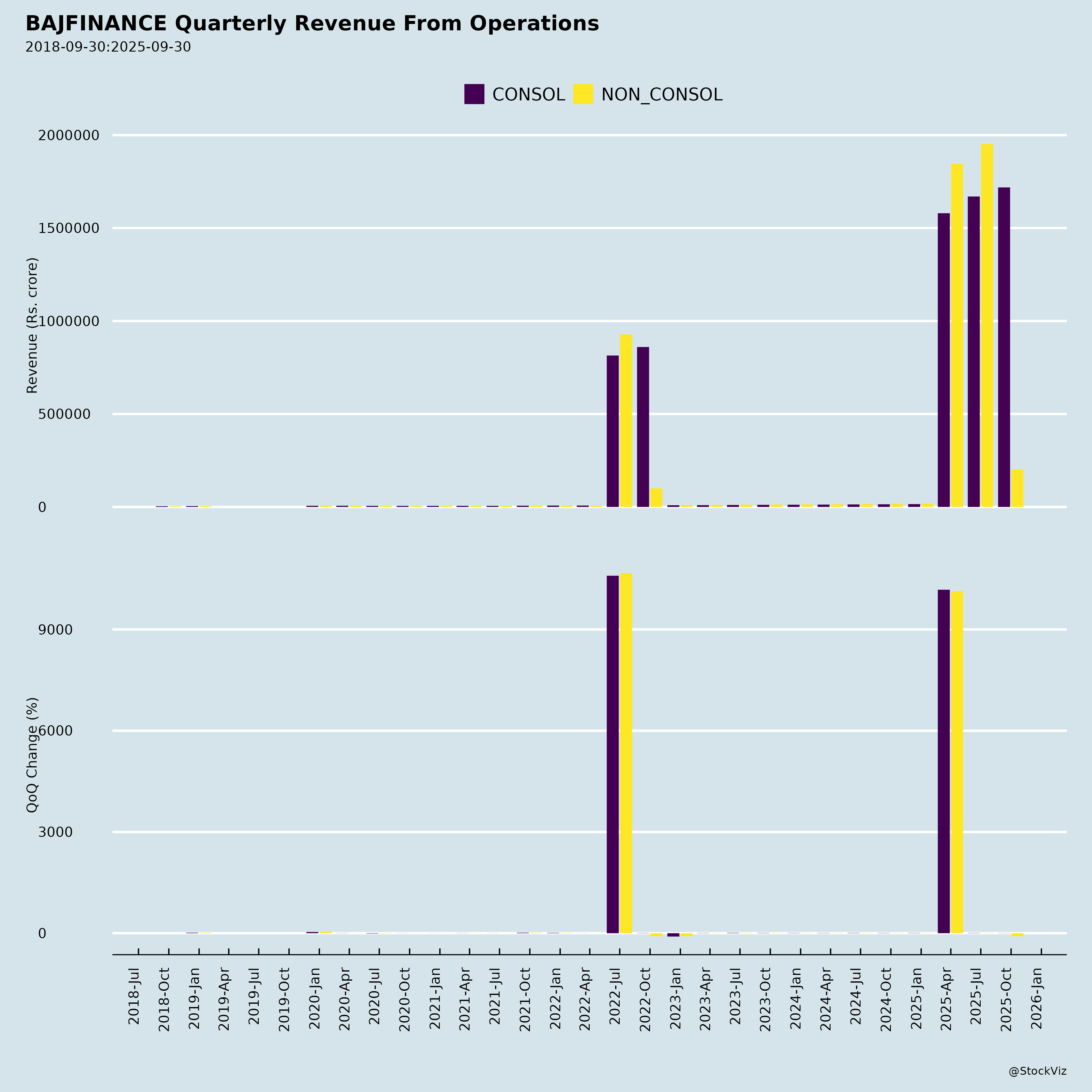
- Strong AUM and profit growth. Consolidated AUM grew 24% to ₹546,944 crore as of 30 June 2026 from ₹441,450 crore a year earlier, with AUM addition of ₹36,969 crore in Q1 FY27. Consolidated PBT grew 28% to ₹8,149 crore and PAT grew 28% to ₹6,081 crore.
- Customer franchise expansion. The company added 5.10 MM new customers in Q1 FY27, taking the franchise to 124.43 MM, with a cross-sell franchise of 79.22 MM. Management expects to add 18–20 MM new customers in FY27.
- Disbursement momentum. New loans booked grew 20% to 16.13 MM in Q1 FY27. Management expects to disburse 60–62 MM new loans in FY27.
- Improving cost of funds. Consolidated cost of funds was 7.40% in Q1 FY27, improving 1 bp over Q4 FY26. Deposits stood at ₹68,534 crore, contributing 15% of consolidated borrowings.
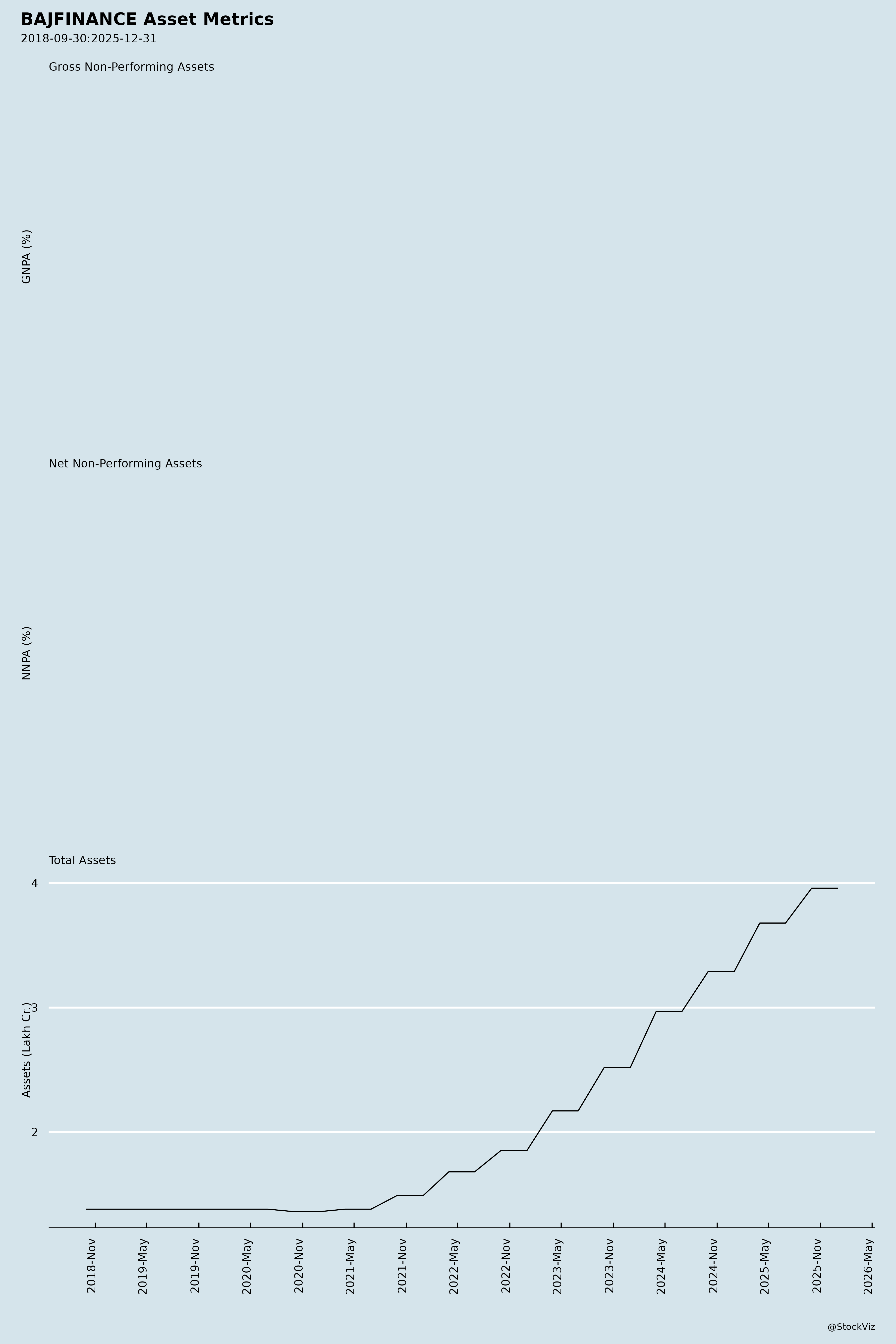
- Asset quality improvement at the consolidated level. GNPA and NNPA improved to 0.96% and 0.39% as of 30 June 2026 from 1.03% and 0.50% a year earlier. Stage 2 & 3 assets declined to 1.87% of loans from 1.94% in Q4 FY26. Vintage credit performance across 3MOB, 6MOB and 9MOB continued to show significant improvement.
- Gold Loan and MFI branch expansion. The company added 194 Gold Loan branches in Q1, reaching 1,701 Gold Loan and 447 MFI branches, and expects to close FY27 with 2,700–2,800 Gold Loan branches and 520–550 MFI branches. Gold Loans AUM grew 112% year-on-year to ₹21,152 crore.
- FINAI transformation scaling. The company is doubling down with 400 dedicated people in the AI unit and adding another 300 in digital platforms. Dedicated AI unit employees rose 115% year-on-year to 230. Disbursals from leads generated by Voice & Text AI BOTs grew 235% to ₹2,551 crore. AI agents increased to 62 from 27 sequentially, with 23 agentic AI use case deployments. Management targets 600+ autonomous AI agents and 118 agentic AI use cases in FY27.
- BHFL performance. Bajaj Housing Finance AUM grew 24% to ₹149,624 crore, PBT grew 23% to ₹929 crore, disbursements grew 33%, and annualised credit cost was 5 bps. GNPA and NNPA were 0.29% and 0.12%.
- BFSL growth. Bajaj Financial Securities AUM grew 60% to ₹9,770 crore and PAT grew 22% to ₹50 crore. Customer franchise stood at 1.49 MM.
- Shareholder approvals for capital raising flexibility. Shareholders approved increasing borrowing powers, creation of charge/security on assets with respect to borrowing, and issuance of non-convertible debentures through private placement.
- Long-term guidance corridors reaffirmed. AUM growth of 23–25%, profit growth of 23–24%, ROA of 4.3–4.7%, ROE of 19–21%, GNPA below 1.4%, and NNPA below 0.5%.
Key Risks
- Credit cost sensitivity to geopolitics. Management’s FY27 credit cost outlook is explicitly contingent on no material adverse effects from geopolitical events.
- Segment concentration in stressed portfolios. Captive 2W & 3W Finance GNPA at 15.37% and MSME Lending GNPA at 2.82% represent elevated pockets relative to the consolidated GNPA of 0.96%.
- Low provisioning coverage in Gold Loans. At 5% GNPA PCR, the Gold Loans book has limited buffer relative to other segments.
- Regulatory and compliance exposure. The company is regulated by RBI, SEBI and IRDAI. The New Labour Codes notified on 21 November 2025 resulted in an estimated one-time gratuity past service cost increase of ₹250 crore, presented as an exceptional item, with the company continuing to monitor finalisation of Central and State Rules.
- Forward-looking statement risk. The presentation notes known and unknown risks including material changes in regulations, ability to comply with capital adequacy norms, collateral value decreases, NPA control, fraud, operational errors, systems malfunctions, cyber security incidents, interest rate volatility, and adverse changes to the Indian economy.
- ALM structural mismatch at longer tenors. BFL’s behaviouralized ALM as of 30 June 2026 shows a cumulative mismatch of -₹99,193 crore in the >5Y bucket, with cumulative mismatch as a percentage of outflows at 29% in the >3-5Y bucket. BHFL shows a cumulative mismatch of -₹897 crore in the >3-5Y bucket.
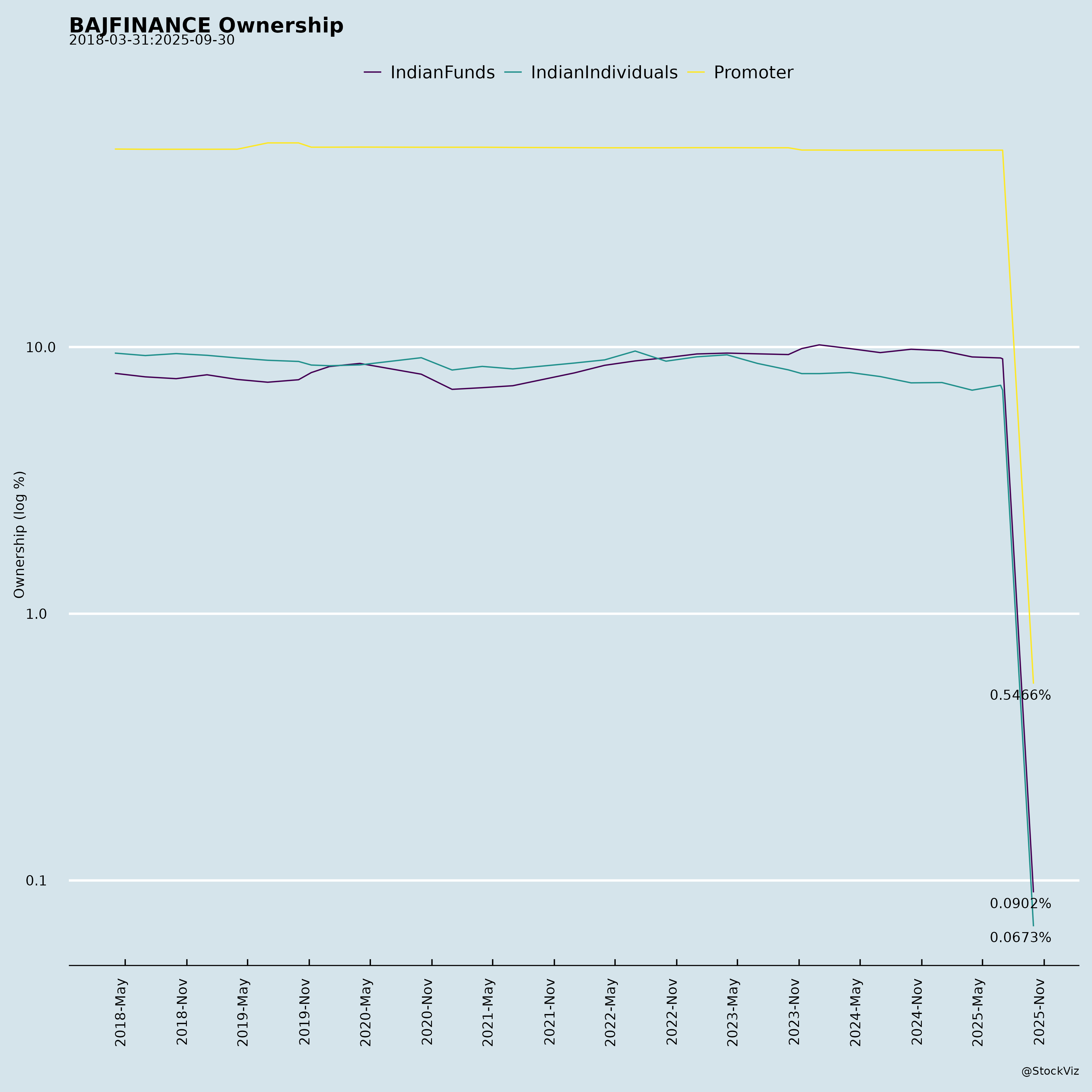
- Dependence on parent and group entities. Bajaj Finserv Ltd holds 51.30% as of 30 June 2026. Material related party transactions with Bajaj Housing Finance Limited were approved by shareholders, with 3,40,47,80,259 e-votes abstained on that resolution.
Management Guidance Versus Observed Performance
- New loans: Management expects 60–62 MM new loans in FY27. Q1 FY27 delivered 16.13 MM, up 20% year-on-year.
- New customers: Management expects 18–20 MM new customer additions in FY27. Q1 FY27 added 5.10 MM.
- Opex to NTI: Management is confident of 25–40 bps improvement in FY27. Q1 FY27 Opex to NTI was 33.4%, versus 33.1% in Q1 FY26 — a 30 bps deterioration year-on-year, though FY26 full-year Opex to NTI was 33.3%.
- Locations: Management plans to open 150–175 new locations in FY27. Q1 FY27 saw a net reduction of 25 locations.
- Gold Loan branches: Management expects to close FY27 with 2,700–2,800 branches. Q1 FY27 ended at 1,701, up 194 in the quarter.
- MFI branches: Management expects to close FY27 with 520–550 branches. Q1 FY27 ended at 447, unchanged sequentially.
- Credit cost: Management is optimistic about the FY27 credit cost outlook, contingent on geopolitics. Q1 FY27 loan loss to average AUF was 1.54% versus 1.87% in Q1 FY26; excluding the ₹296 crore prudent provision, it was 1.31%.
- Long-term AUM growth corridor of 23–25%: Q1 FY27 consolidated AUM grew 24%, within corridor.
- Long-term profit growth corridor of 23–24%: Q1 FY27 consolidated PBT grew 28% and PAT grew 28%, above corridor.
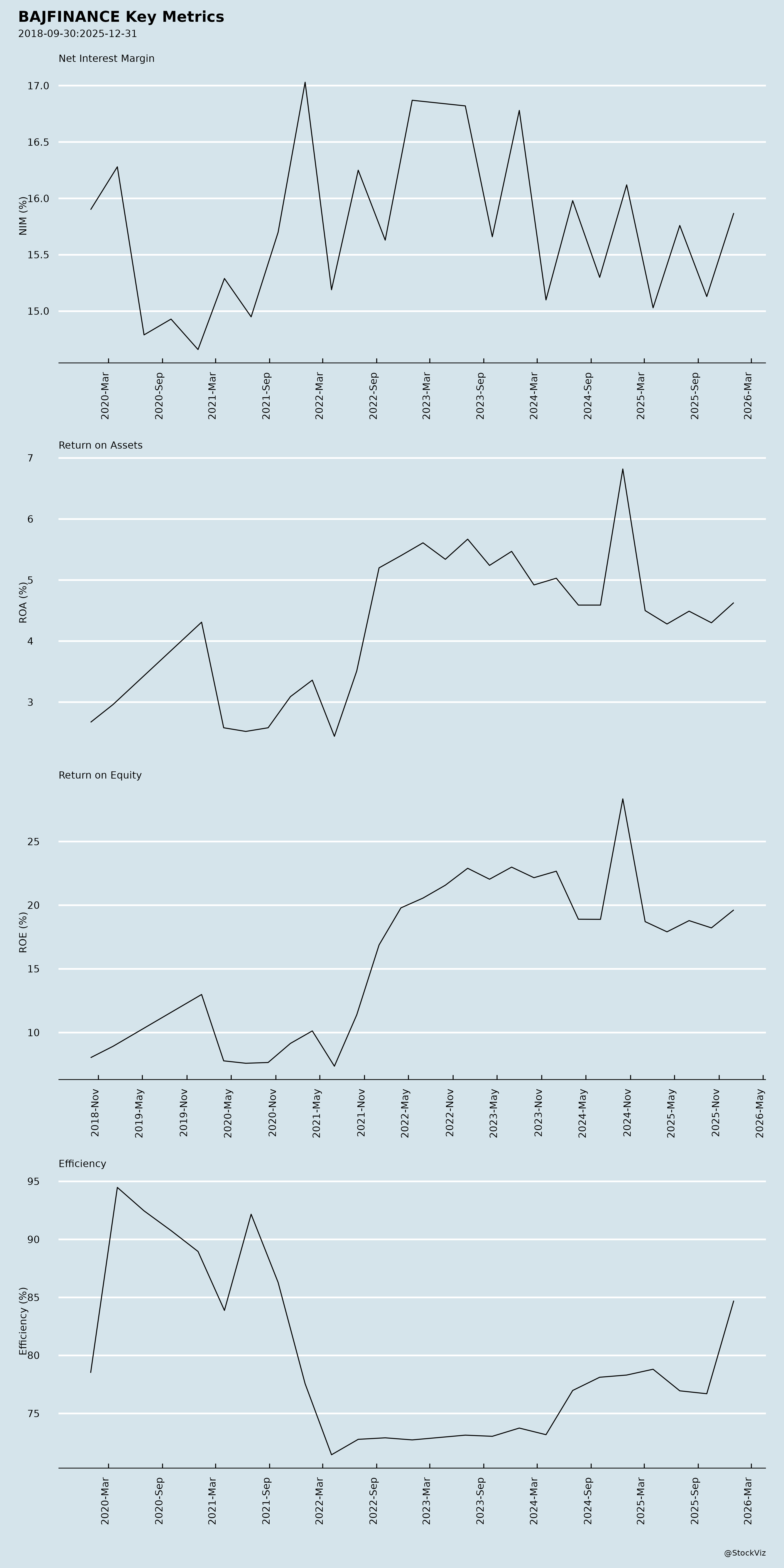
- Long-term ROA corridor of 4.3–4.7%: Q1 FY27 annualised ROA was 4.7%, at the top of the corridor.
- Long-term ROE corridor of 19–21%: Q1 FY27 annualised ROE was 20.4%, within corridor.
- Long-term GNPA corridor of <1.4%: Consolidated GNPA was 0.96% as of 30 June 2026, within corridor.
- Long-term NNPA corridor of <0.5%: Consolidated NNPA was 0.39% as of 30 June 2026, within corridor.
- FINAI targets: Management targets 600+ autonomous AI agents and 118 agentic AI use cases in FY27; 62 AI agents and 23 agentic AI use case deployments were in place as of Q1 FY27. AI governance policy deployment across all 08 AI domains is marked completed; red teaming is initiated.
Broker Narrative
The broker narrative evolved from broad optimism about 15.4% YoY credit growth, RBI pause, and NBFC momentum to a more cautious stance acknowledging elevated competitive intensity, MSME weakness, and macro uncertainty requiring a INR3bn overlay. NIM concerns persisted throughout but transformed from ‘moderation fears’ to ‘resilience at ~9.6%’, while cost pressures shifted from general cost-to-income worries to specific opex/compliance burdens like the labour code impact. AMC/TER regulation fears and treasury gains tailwinds from the first report disappeared entirely, replaced by AI-led growth as the new central optimism.
Fears that came true
- NIM moderation fears materialized as cost of funds faced marginal uptick risk from hardening bond yields and inflationary pressures in the last report.
- Cost pressure fears materialized as an elevated opex ratio in Q1FY27 driven by new labour code impact and continued branch expansion investments.
- HFC non-individual segment competition from banks materialized as broad elevated competitive intensity across personal loans, MSME, and consumer finance, with MSME growth collapsing to +2% YoY.
- The early headwinds were validated by DISAPPOINTMENT outcomes on 2023-07-26 and 2023-10-18 (Yes Securities, actual -6.3% and -10.0%) and the first report itself receiving a NEUTRAL rating despite a Buy call.
- Seasonal and near-term weakness fears were validated by the 2026-07-31 Prabhudas Lilladher DISAPPOINTMENT with actual return of -8.8%.
- AMC regulation concerns were partially realized as the strong AMC growth narrative faded and was absent from the last report’s tailwinds.
Optimism that failed
- Healthy 15.4% YoY industry credit growth optimism failed broadly as MSME growth remained subdued at only +2% YoY due to risk-led portfolio pruning amid elevated delinquencies.
- Treasury gains from moderating bond yields and strong equity markets were not mentioned as a tailwind in the last report, indicating this driver faded.
- RBI pause and macro tailwinds optimism was undermined as management created an INR3bn macro-economic overlay amid uncertain global conditions.
- Stable asset quality optimism was tempered by the need for a macro-economic overlay and MSME delinquencies, despite headline GNPA/NNPA improvement.
- NBFC momentum optimism narrowed as the last report focused on Bajaj Finance-specific AUM growth rather than industry-wide NBFC diversification tailwinds.
Broker Timeline
81 broker calls · 2023-07-11 to 2026-07-31
Copyright © 2023 SAS Data Analytics Pvt. Ltd. All rights reserved.