Telecom - Equipment & Accessories
Industry Metrics
September 24, 2026
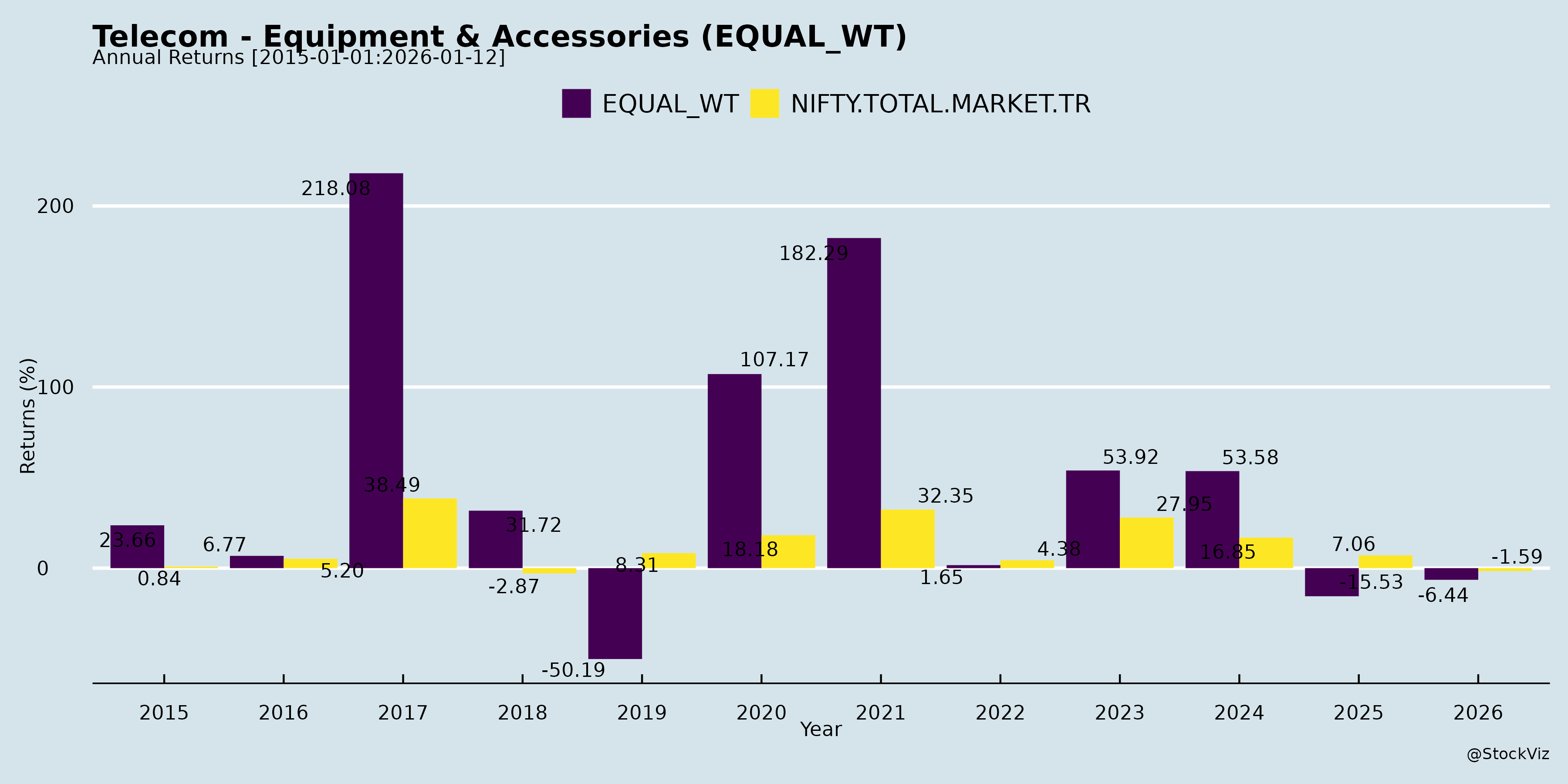
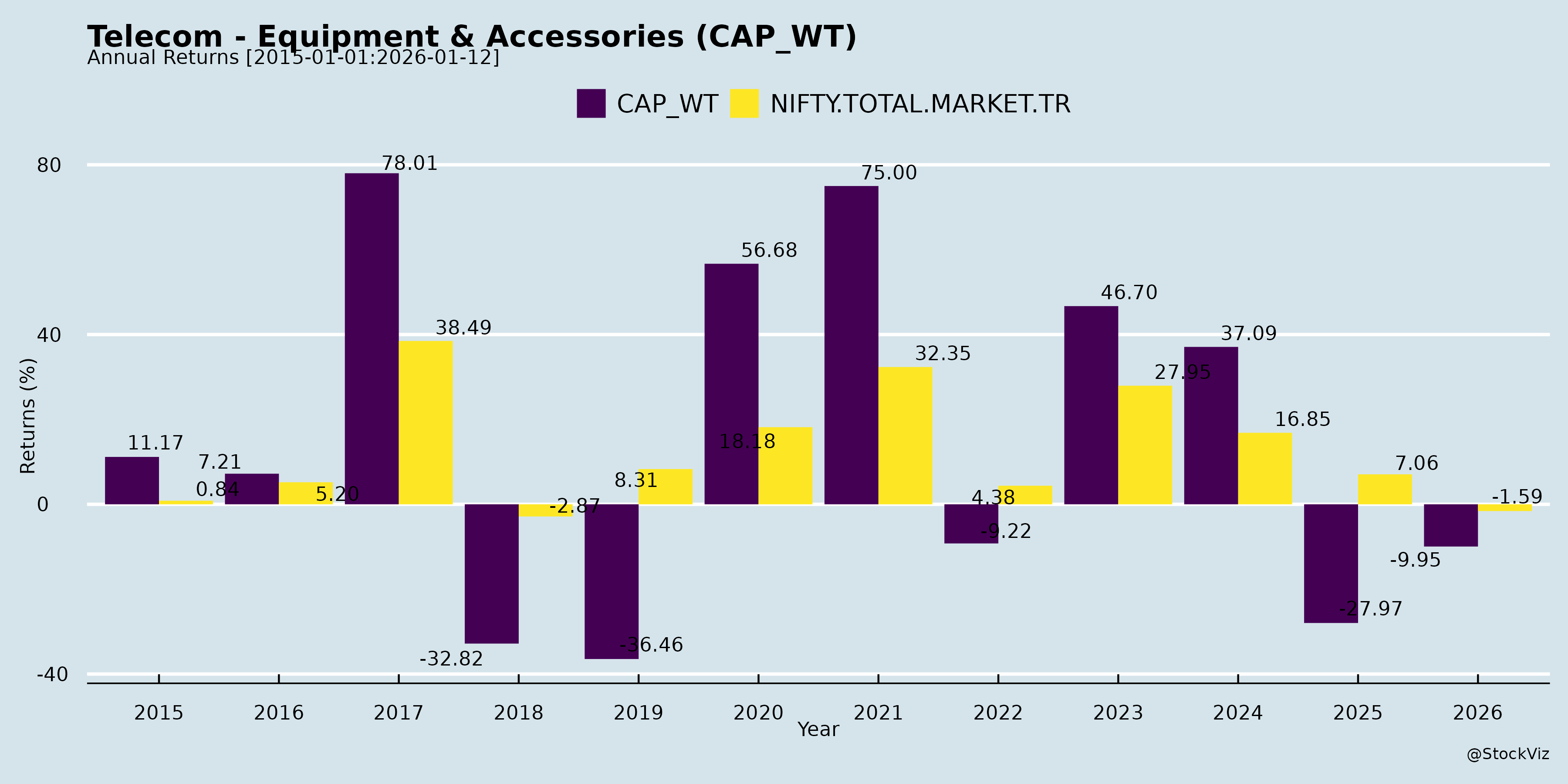
Annual Returns
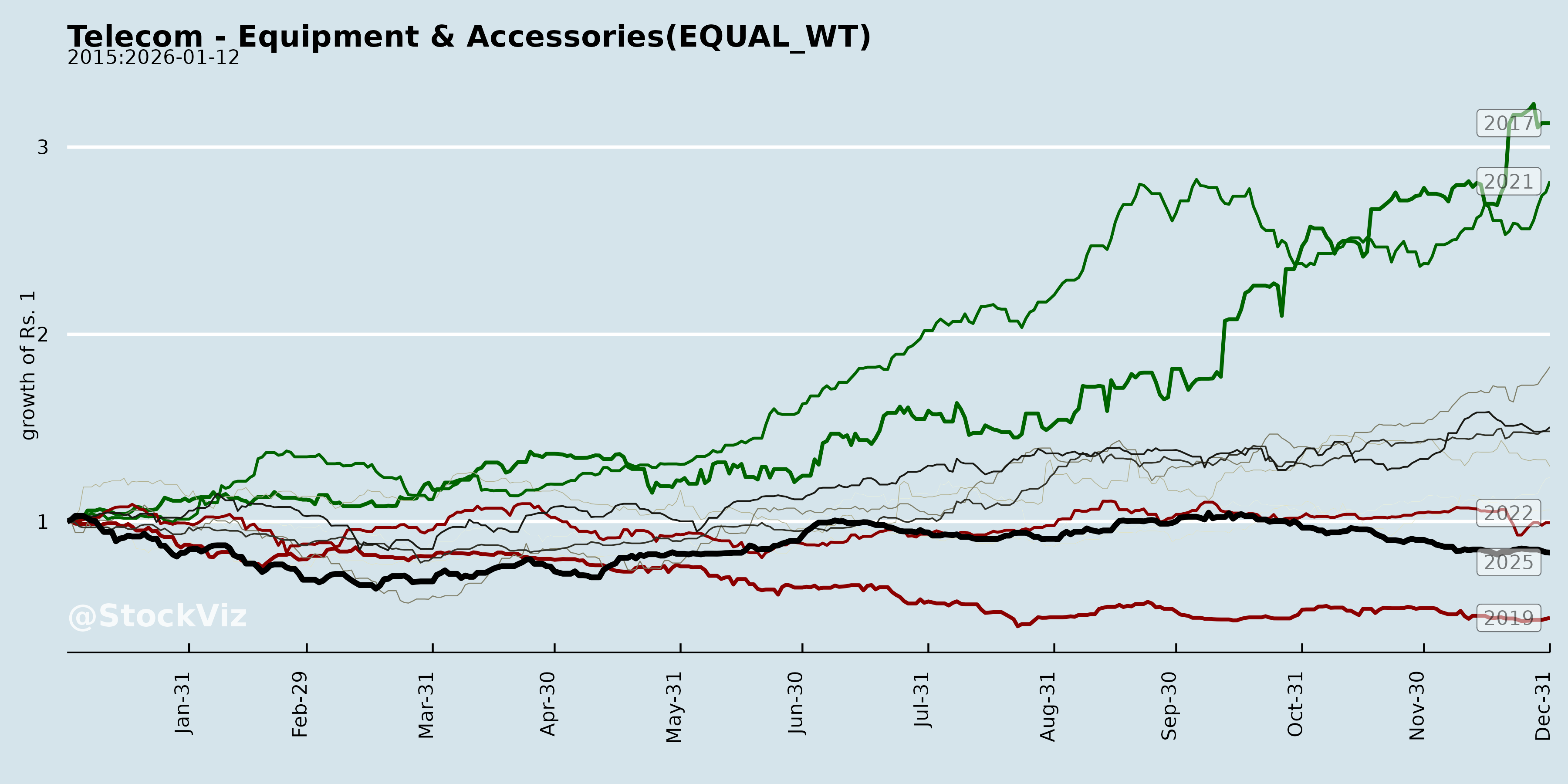
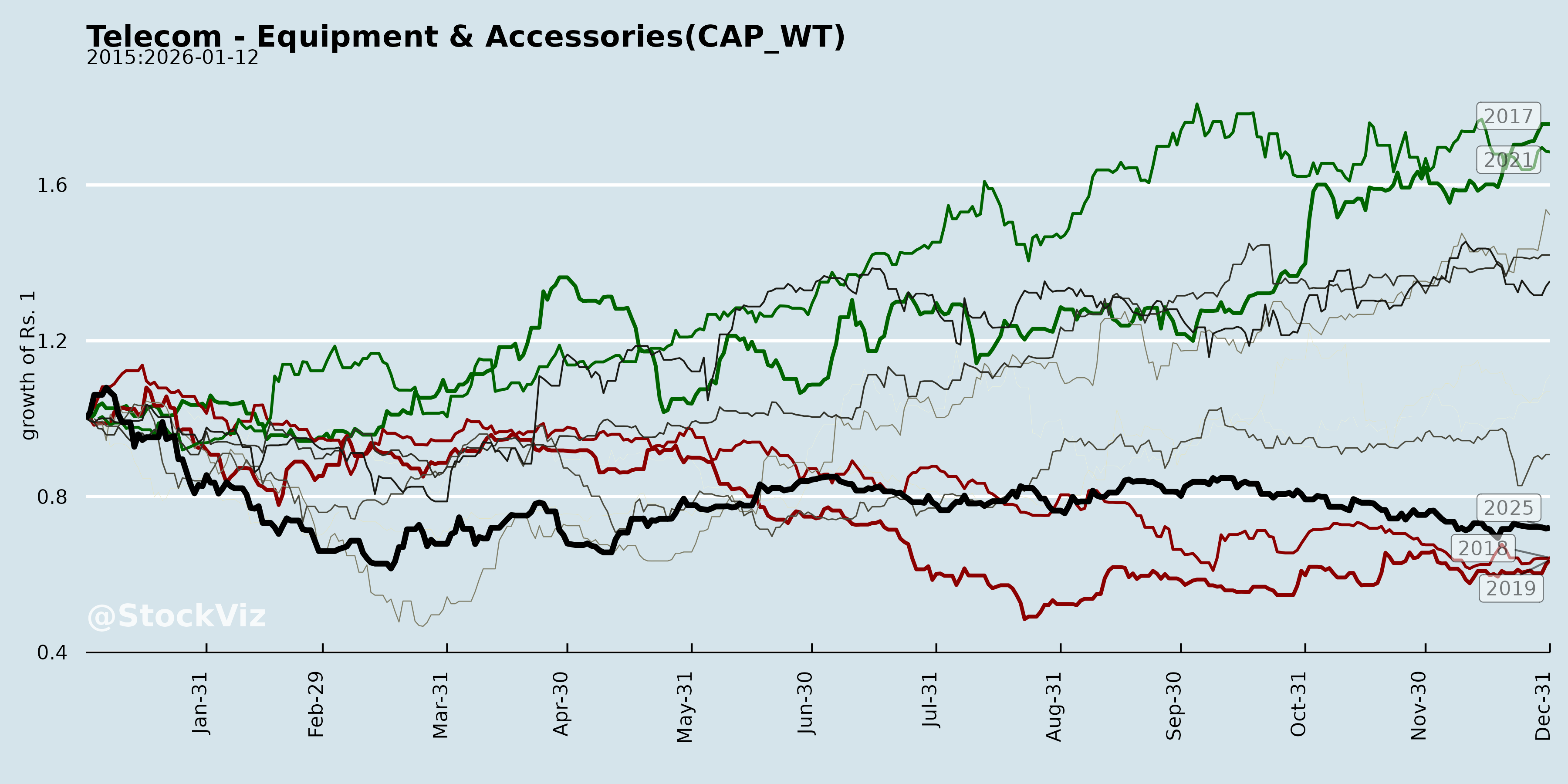
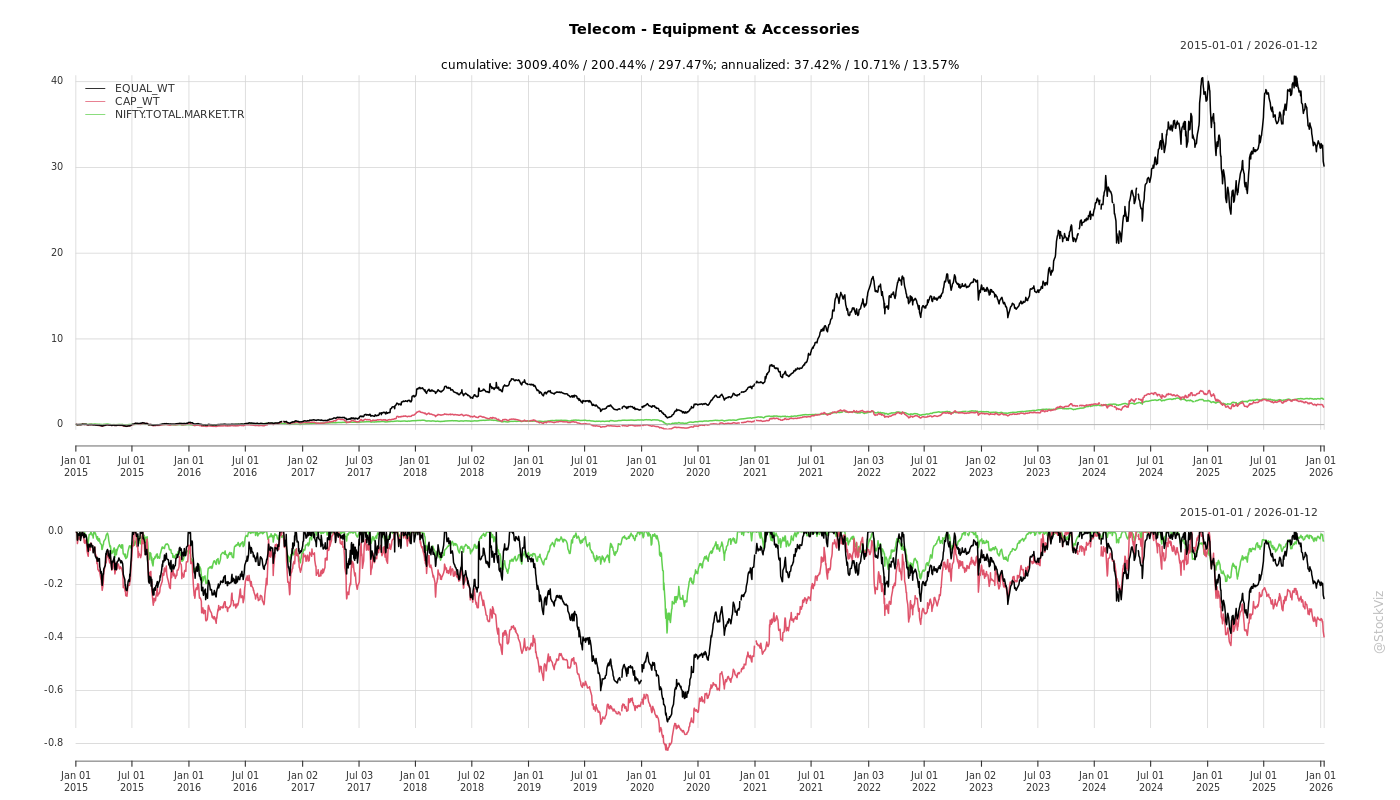
Cumulative Returns and Drawdowns
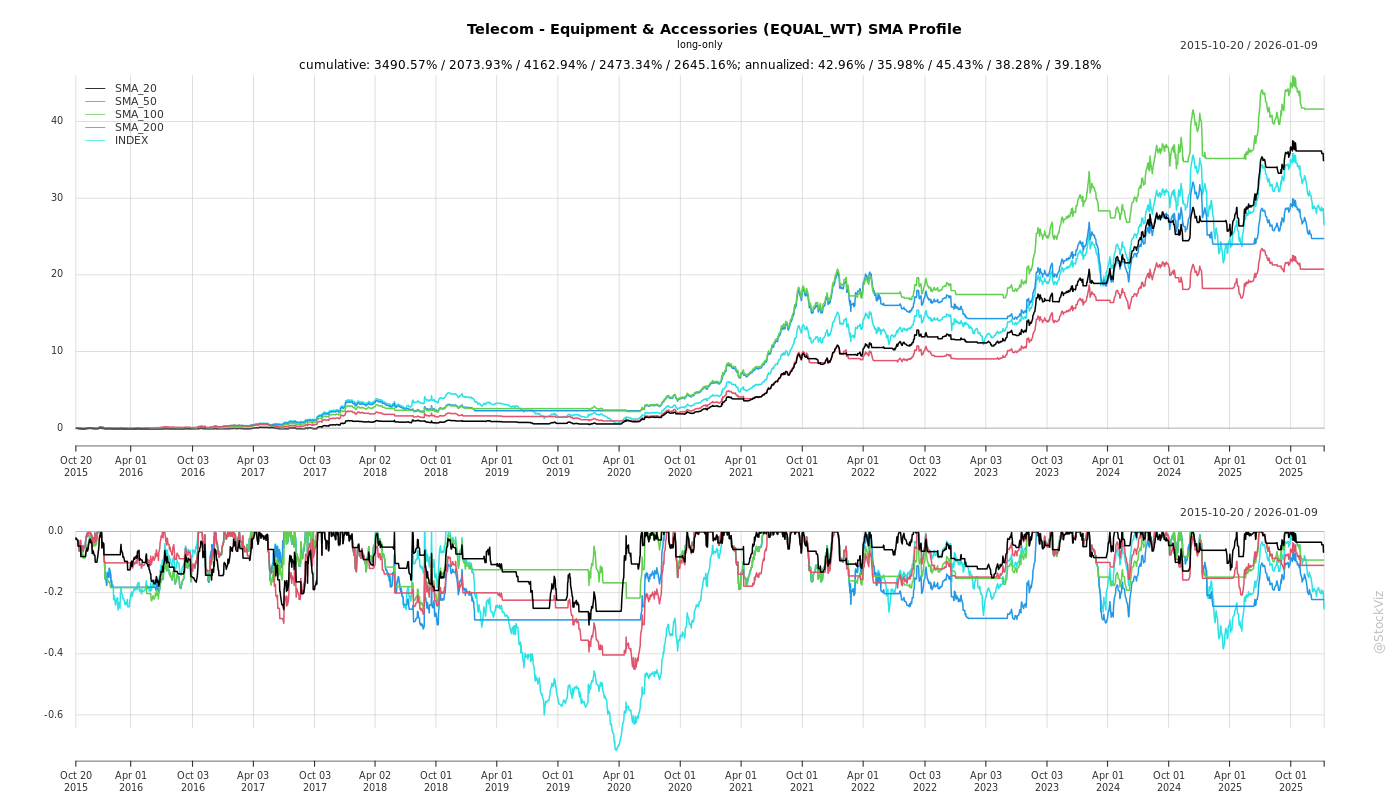
SMA Scenarios
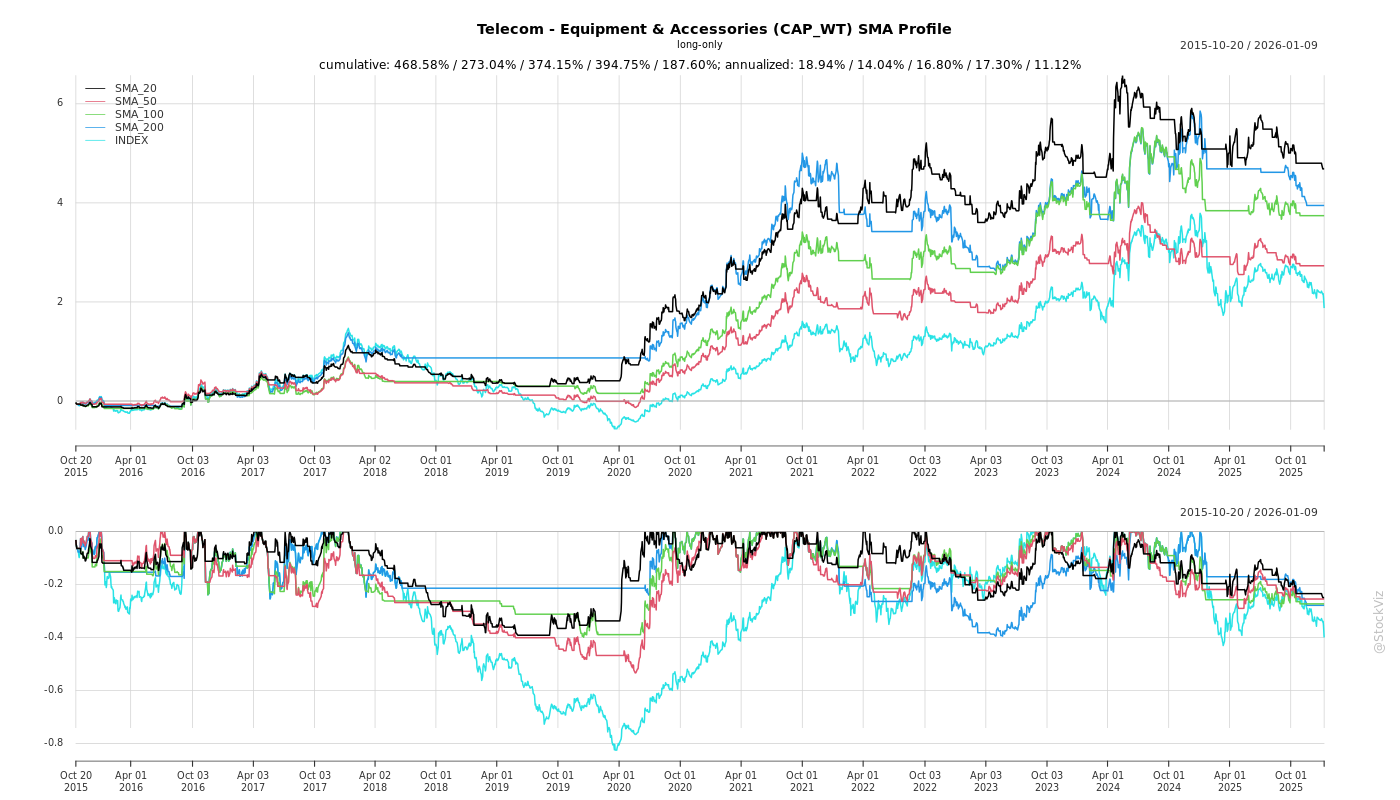
Current Distance from SMA
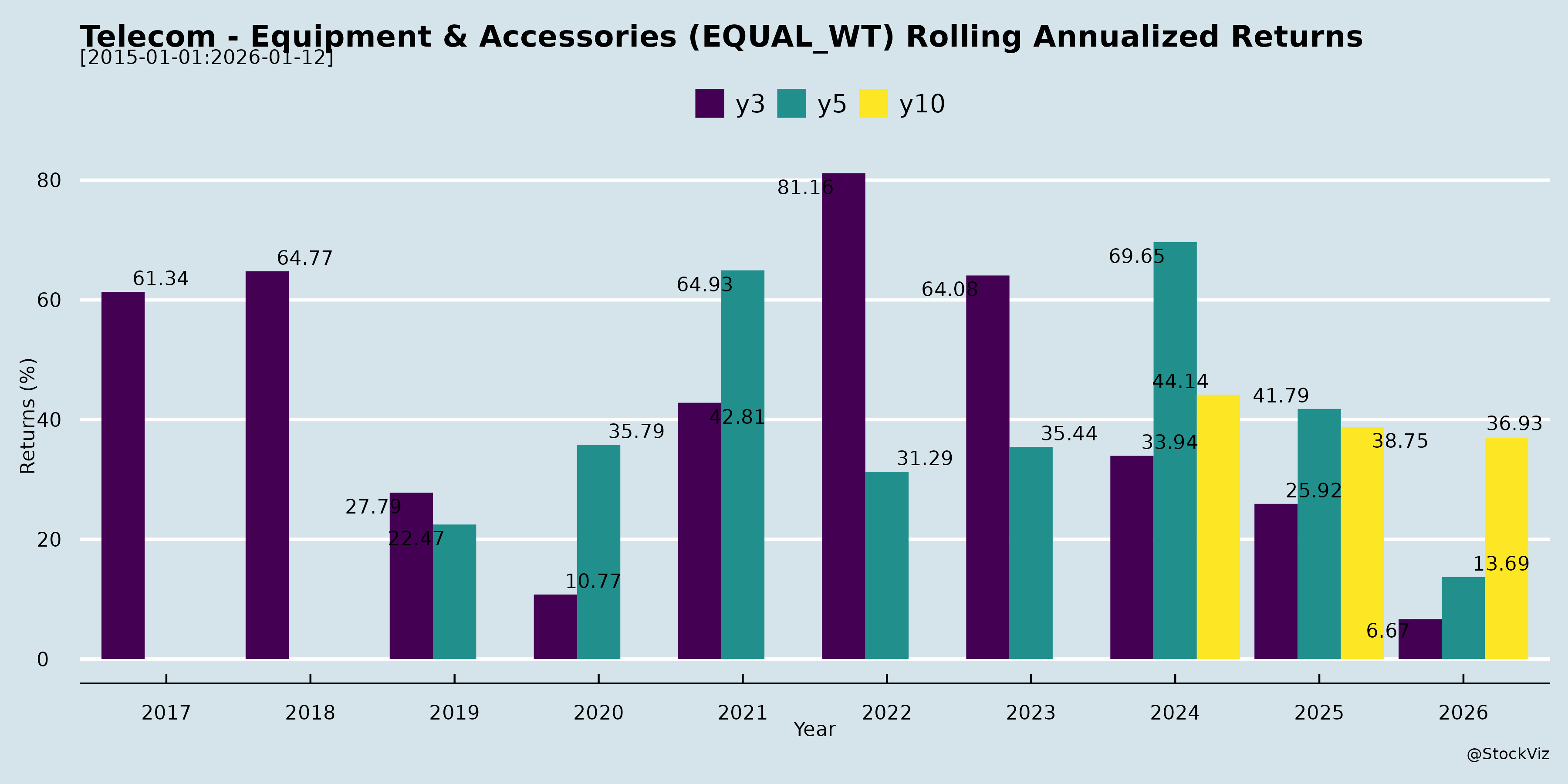
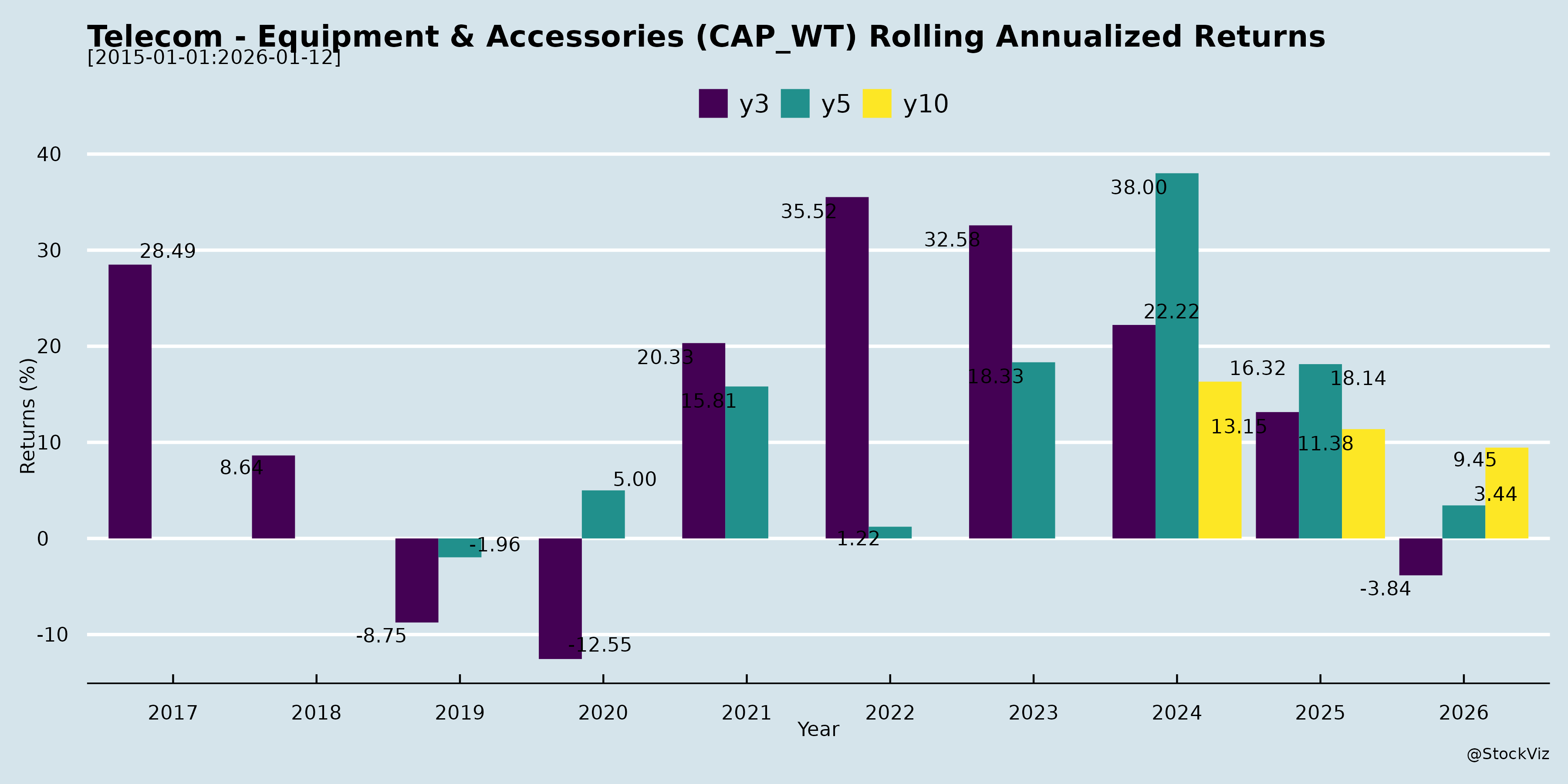
Rolling Returns
Fundamental Ratios
AI Summaries
How have the challenges and oppurtunities evolved over time?
asof: 2026-04-15
Based on the provided sources, the telecommunications, electronics manufacturing, and networking companies have experienced a significant evolution over time. They have broadly transitioned from a period characterized by severe financial distress, operational inefficiencies, and over-reliance on legacy government contracts, towards a future focused on technological innovation, diversification, indigenous manufacturing (“Make in India”), and global expansion.
Here is a detailed breakdown of how their challenges and opportunities have evolved:
Evolving Challenges
1. Financial Distress, Debt, and Working Capital Constraints Historically, several of these companies have struggled with sustained financial losses and severe liquidity issues. * Tejas Networks has reported significant cumulative losses over the last five years and negative EBIT in recent quarters [1, 2]. The company faced a massive inventory buildup (around INR 2,363 crores) and a stretched working capital cycle due to prolonged delays in receiving a massive 4G add-on purchase order from the government-backed BSNL for 18,000 sites [3-5]. * Kavveri Defence & Wireless Technologies historically faced a rapid increase in telecommunication competitors, leading to declining revenues, eroded subsidiary net worth, and accumulated losses of Rs. 8,974.09 lakhs, which cast a material uncertainty on its ability to continue as a going concern [6-9]. Certain subsidiaries even faced insolvency and bankruptcy proceedings [7]. * ITI Limited, a sick company referred to the BIFR and undergoing a revival plan, has faced massive continuous net losses, including a total comprehensive loss of Rs. 21,880 lakhs for the nine months ended December 2025 [10-12]. * Tamilnadu Telecommunications Limited has continued to struggle with negative cash flows from operating activities and operating losses [13-15].
2. Dependency on Single Customers and Government Red Tape Companies heavily reliant on government contracts have faced bureaucratic delays and margin pressures. * Tejas Networks acknowledged the risk of heavy dependence on a single anchor customer (BSNL) [16, 17]. The Indian government market is highly competitive, leading to challenging price levels and squeezed gross margins compared to international markets [18, 19]. * ITI Limited faces immense challenges with overdue receivables from the Government and Public Sector Undertakings amounting to Rs. 27,167.33 lakhs (overdue for more than 3 years), alongside defaults on statutory payments like Provident Fund and Gratuity, resulting in hefty late payment interest charges [20-23].
3. Legacy Liabilities, Compliance, and Litigation * Aksh Optifibre Limited has been battling Non-Performing Asset (NPA) status and has received SARFAESI notices from banks like Union Bank of India and HDFC Bank [24]. Furthermore, the company carries significant contingent liabilities, including unaccounted interest (Rs. 2,082.09 lakhs) and cenvatable duty (Rs. 840.19 lakhs) due to the non-fulfillment of export obligations under the Advance Authorization and EPCG schemes [25-27]. * Optiemus Infracom faced a major legal battle initiated in 2017 by BlackBerry over a claim of US$22.52 million in unpaid software license fees, though recent court rulings have favored Optiemus, terming BlackBerry’s conduct an abuse of process [28-31]. * Umiya Buildcon (formerly MRO-TEK) faced such severe operational challenges that its Board decided to entirely discontinue its Electronic Contract Manufacturing Services (EMS) segment [32, 33].
Evolving Opportunities
1. Market Diversification and Global Expansion To escape the low-margin, high-delay domestic government sector, companies are aggressively pivoting to private and international markets. * Tejas Networks is shifting its focus to Indian private telcos and international customers across Europe, Latin America, Africa, and the Asia Pacific [34-38]. The company is seeing increased traction for its 4G and 5G RAN equipment, with multiple Proof of Concepts (POCs) reaching the commercial negotiation stage [39-42]. They are also securing strategic partnerships with global players like NEC and Rakuten [34, 38, 43]. * Kavveri Defence & Wireless Technologies recently secured a major breakthrough via its North American subsidiary, Til-Tek, which replaced a long-standing incumbent to become an approved vendor for a leading US-based multinational. This provides an immediate $2 million revenue opportunity with room to scale as a comprehensive RF subsystem partner [44, 45].
2. Embracing the “Make in India” Initiative and PLI Schemes Companies are actively utilizing government incentives to build domestic manufacturing ecosystems. * Optiemus Infracom is heavily leaning into domestic manufacturing, having filed for incentive claims aggregating Rs. 53.01 crores under the UP Electronics Manufacturing Policy and the Telecom & Networking PLI Scheme [46]. They also entered a joint venture with Corning to launch India’s first cover-glass finishing facility for mobile consumer electronics, replacing import dependence [47-49]. * Optiemus further signed an agreement with Ai+ Smartphone to invest INR 125 crores to manufacture 3 million sovereign, secure smartphones, tablets, and IoT devices running on the Indian-authored NxtQuantum OS [50-52]. * Umiya Buildcon recently appointed a highly experienced Chief Technology Officer to lead the development of a fully indigenous Network Operating System and hardware systems, cementing its commitment to “Design and Make in India” for telecom gear [53-55].
3. Tapping into Next-Generation Technologies (5G, AI, and Data Centers) The explosion of data demand, largely driven by Artificial Intelligence, is creating massive new revenue streams. * Sterlite Technologies Limited (STL) achieved a major technological breakthrough by launching India’s first Hollow Core Fibre (HCF) cable. By guiding light through an air-filled core rather than solid glass, this cable transmits signals 46% faster, specifically targeting the ultra-low latency requirements of AI-ready Data Centers and Hyperscalers [56-58]. * Tejas Networks is capitalizing on massive connectivity requirements driven by AI data centers. While historically focused on interconnecting data centers, they recently won their first sovereign data center networking application for switching products inside a data center [59-63]. They are also winning contracts for private 5G deployments in specialized industrial sectors like ports and mines [40, 42, 64].
4. Expansion into Adjacent Hardware Verticals * Optiemus Infracom has significantly diversified its Electronic Manufacturing Services (EMS) portfolio. Moving beyond basic mobile phones, they have secured partnerships to manufacture fintech hardware (like the PhonePe Soundbox and Mosambee POS devices for major banks), telecom networking equipment (Access Points for Accton), and consumer accessories like Realme PowerBanks [47, 65-68]. * ITI Limited, leveraging its vast infrastructure, has expanded beyond telecom into civil and sports infrastructure, winning a Rs. 72.76 crore project to build an Ice-Hockey Rink with a 500-kW solar power backup in the high-altitude region of Spiti Valley, Himachal Pradesh [69, 70].
What are the headwinds affecting this industry?
asof: 2026-04-15
Delayed Project Rollouts and Lack of Operational Readiness A major headwind facing companies in this sector is the significant delay in the receipt and execution of large-scale purchase orders, particularly from government-backed entities. For example, the industry has experienced prolonged delays in the rollout of massive projects like the BSNL 4G network expansion, which involves tens of thousands of sites [1, 2]. These delays are often not due to product or integration issues from the suppliers, but rather the customer’s lack of operational readiness, including bottlenecks in site preparation and deployment capabilities [3, 4]. Consequently, these holdups severely derail the revenue and growth targets of equipment manufacturers who have scaled their operations in anticipation of these deployments [2, 5, 6].
Severe Inventory Accumulation and Strained Working Capital Directly tied to project delays is the massive accumulation of inventory, which drastically extends working capital cycles. Companies have proactively procured raw materials and built up inventory to ensure rapid execution once expected purchase orders formally arrive [7, 8]. Because government clients take their own time to finalize orders and release payments, manufacturers are forced to sit on this inventory for multiple quarters, tying up vital capital and prompting investor concerns regarding long working capital cycles [9-11]. Furthermore, as projects stall, some companies face the added burden of managing old or obsolete inventory stored across various sites without proper assessments of its net realizable value or serviceability [12, 13].
Intense Price Competition and Margin Pressures The Indian telecommunications market is characterized by severe Average Revenue Per User (ARPU) challenges, making it a highly price-sensitive and intensely competitive environment [14, 15]. Because the domestic market demands aggressive pricing, equipment manufacturers struggle to maintain healthy gross margins compared to what they might achieve in international markets [14, 15].
High R&D Burdens Amidst “Bottom-Line Bleeding” Operating in the telecommunications and networking industry requires companies to remain on a relentless “technology treadmill,” necessitating constant, heavy investments in Research and Development (R&D) to keep up with evolving standards like 5G Advanced and 6G [16, 17]. However, the combination of aggressive R&D spending, delayed major project executions, and tight margins means that companies are struggling to achieve profitability, often reporting significant net losses and bleeding bottom lines over multiple quarters while waiting for international and private business to reach a critical, profitable scale [18-21].
Over-Reliance on Single Anchor Customers A critical structural risk and headwind for some industry players is a heavy reliance on a single anchor customer, often a government sector undertaking [22, 23]. While large government contracts provide an excellent platform to mature products and scale operations, depending disproportionately on one entity exposes suppliers to immense financial vulnerability if that specific customer alters its plans, delays orders, or experiences internal operational hurdles [3, 24, 25].
Increased Regulatory and Compliance Costs New regulatory frameworks are increasing the operational expenses for companies in this sector. Specifically, the Government of India’s notification of four new Labour Codes (such as the Code on Wages, 2019, and the Code on Social Security, 2020) has forced companies to reassess their employee benefit obligations [26, 27]. This has required companies to recognize new financial provisions and incur incremental past service costs related to employee gratuity and compensated absences, which directly cuts into their quarterly earnings [28-32].
Severe Financial Distress, Insolvency, and Legal Liabilities Beyond operational hurdles, several companies within the industry are battling existential financial and legal crises: * Going Concern Doubts and Insolvency: Some entities are grappling with a historical trend of declining revenues and massive accumulated losses, casting significant doubt on their ability to continue as a going concern [33, 34]. There are instances of companies being forced to discontinue operations, referring themselves to the Board for Industrial and Financial Reconstruction (BIFR) as sick companies in need of revival plans, or having subsidiaries undergo formal bankruptcy and insolvency proceedings [35-37]. * Debt Recovery and NPA Actions: Financial instability has led to severe banking actions, with companies receiving notices under the SARFAESI Act from major banks due to Non-Performing Asset (NPA) classifications and outstanding loan claims running into thousands of lakhs [38, 39]. * Major Litigation: Companies are also exposed to substantial legal headwinds, such as multi-million dollar lawsuits. For instance, one company is facing a claim of approximately US$22.52 million from a partner for allegedly unpaid software license fees, leading to ongoing, complex international legal disputes [40, 41].
What are the key things to understand about this industry?
asof: 2026-04-15
The telecommunications equipment, optical networking, and electronics manufacturing industry is currently undergoing a massive transformation driven by technological upgrades and domestic manufacturing initiatives. Based on the provided sources, here are the key things to understand about the industry:
1. The Rapid Transition to 4G, 5G, and AI-Ready Infrastructure A primary driver of growth in the industry is the rollout of 4G and 5G networks, alongside the explosive data demands generated by Artificial Intelligence (AI). * Companies like Tejas Networks are heavily engaged in supplying 4G and 5G Radio Access Network (RAN) equipment, securing wins for private 5G deployments in ports, mines, and campuses, as well as pilot projects for railway safety systems like Kavach [1-3]. * The surge in AI applications is driving massive traffic growth, creating a need for high-speed data center interconnects and optical products [4]. To address this, companies like Sterlite Technologies Limited (STL) are innovating with products like India’s first Hollow Core Fibre (HCF) cable, which guides light through an air-filled core to reduce latency and signal loss for hyperscalers and high-frequency transmission [5, 6].
2. A Strong Push for “Make in India” and Sovereign Technology There is a concerted effort across the industry to shift from simply assembling imported parts to developing deep, indigenous technology stacks and establishing sovereign digital platforms. * Optiemus Electronics Limited recently partnered with Nxtquantum Shift Technologies to manufacture Ai+ smartphones, tablets, and IoT devices [7, 8]. A key differentiator here is the use of NxtQuantum OS, India’s first sovereign mobile operating system built for security and compliance with Indian data laws, aiming to retain more industry value domestically rather than relying on Chinese or global brands [8, 9]. * Umiya Buildcon Limited (formerly MRO-TEK) appointed a new Chief Technology Officer specifically to deepen indigenous product engineering, with a mandate to develop a fully indigenous telecom Network Operating System (OS) and hardware systems [10, 11]. * This push for domestic value addition is further evidenced by Optiemus and Corning inaugurating India’s first cover-glass finishing facility for mobile consumer electronics [12, 13].
3. Diversification into Electronics Manufacturing Services (EMS) and Fintech Hardware Telecom and electronics manufacturers are successfully diversifying their portfolios by securing large-scale Electronic Manufacturing Services (EMS) partnerships across various consumer and enterprise segments. Optiemus Infracom, for instance, has expanded into long-term manufacturing of IoT modules, PowerBanks for brands like Realme, and critical fintech hardware [14, 15]. They have secured competitive bids to manufacture PhonePe Soundboxes and Point of Sale (POS) devices for Mosambee (Pine Labs), which are deployed across major banks like SBI, deeply embedding them into India’s digital payment infrastructure [16, 17].
4. High Working Capital Intensity and Vulnerability to Project Delays The industry requires continuous, heavy investments in R&D because technology is a “treadmill that keeps on evolving” [18]. Furthermore, businesses frequently face long working capital cycles and rely on massive, sometimes slow-moving, government or anchor projects. * Tejas Networks, for example, built up massive inventory (valued at Rs. 2,363 crores) in anticipation of a massive 18,000-site 4G add-on order from the state-run telecom BSNL [2, 19-21]. Delays in BSNL’s operational and site readiness caused this inventory to sit idle, significantly stretching the company’s working capital cycle and impacting short-term profitability [22-24]. Tejas is also a major supplier for the government’s BharatNet Phase 3 project, planning to deploy over 50,000 routers [25]. * Companies that fail to secure adequate orders or adapt to these capital demands face severe financial distress. Tamil Nadu Telecommunications Limited has suffered from a lack of Optical Fiber Cable (OFC) orders, resulting in accumulated losses that have completely eroded its net worth, casting serious doubt on its ability to continue as a going concern [26, 27].
5. Growing Global Competitiveness and Export Opportunities Indian telecommunications and RF (Radio Frequency) technology firms are increasingly winning global market share against established international incumbents by offering competitive, application-specific products. * Kavveri Defence & Wireless Technologies, through its North American subsidiary Til-Tek, recently became an exclusive vendor for a leading US-based multinational, securing a $2 million initial revenue opportunity. This deal notably displaced a long-standing international incumbent due to Kavveri’s superior cost structure and engineering capabilities [28]. * Similarly, Tejas Networks is leveraging its experience with large domestic rollouts to expand internationally, engaging in 4G/5G trials in Europe, Latin America, and Africa, often through strategic global partnerships with companies like NEC and Rakuten [29-32].
What are the tailwinds affecting this industry?
asof: 2026-04-15
The rapid surge in Artificial Intelligence (AI) applications is a massive growth driver for the telecommunications and digital infrastructure industry. AI is fueling an unprecedented explosion in network traffic and data consumption [1, 2]. To support this, hyperscalers and AI data centers require next-generation connectivity solutions that offer ultra-low latency and high bandwidth [3, 4]. This urgent need is accelerating investments in advanced optical networking equipment, such as Hollow Core Fibre cables, which act as the “speed-of-light” infrastructure essential for the AI revolution [5-7].
Ongoing technology transitions, particularly the expansion of 4G and the rollout of 5G networks, are creating significant market opportunities. There is a continuous push for 4G network expansions and widespread new 5G deployments, especially across emerging markets in Asia, Africa, and Latin America [1, 2, 5, 6]. Additionally, the industry is seeing high traction for private 5G deployments tailored to specific industrial applications, such as enhancing operations in ports, mines, and large campuses [8-11].
Favorable government policies and the “Make in India” initiative are heavily incentivizing domestic manufacturing and indigenous product engineering. Companies are actively capitalizing on programs like the Production Linked Incentive (PLI) scheme for telecom and networking products [12]. The push for a self-reliant digital ecosystem is driving the development of entirely indigenous hardware, secure firmware, and even sovereign mobile operating systems designed to comply with local data and security laws [13-16]. This localization of the supply chain shifts value creation directly into the domestic market and sets the stage for future export-led growth [17].
The explosive growth of the fintech hardware and Internet of Things (IoT) ecosystems is opening lucrative new avenues for electronic manufacturing services. There is surging demand for cellular IoT modules, connected devices, and specialized payment infrastructure like POS (Point of Sale) devices and smart soundboxes used by major digital payment providers and banks [18-20]. As the market diversifies beyond traditional handsets, the integration of advanced electronics into everyday commercial applications is creating large-scale, recurring manufacturing programs [21, 22].
Critical infrastructure modernization and industrial automation are generating specialized demand for robust, high-performance networking gear. Telecom products are increasingly being embedded into national safety and utility projects. For example, 5G Radio Access Network (RAN) equipment is being utilized in the “Kavach” project to enhance the safety of railway operations, while optical and switching products are being paired with cybersecurity solutions to build smart grids for the power sector [8, 10, 23, 24]. Globally, multinational industrial providers are upgrading their complex systems to rely on technologically advanced, application-specific RF (Radio Frequency) antenna products, replacing legacy incumbents with more cost-effective and innovative alternatives [25].
What is the general outlook of this industry?
asof: 2026-04-15
The long-term outlook for the telecommunications, networking, and digital infrastructure industry is highly positive, driven by rapid technological transitions and a massive global surge in data demand [1]. Based on the financial and operational updates from various companies in the sector, the industry’s trajectory is defined by several key growth drivers, alongside notable operational challenges.
AI Applications and Data Center Growth A significant portion of the massive growth in network traffic is currently being fueled by Artificial Intelligence (AI) applications [1]. This surge necessitates substantial investments in AI data centers, generating huge connectivity requirements and driving strong business for optical and networking products [2]. To cater to the AI revolution and the specific needs of Hyperscalers, the industry is pushing the boundaries of deep-tech innovation. For example, the development of India’s first Hollow Core Fibre (HCF) cable provides the ultra-low latency, high-power delivery, and “speed-of-light” infrastructure required by modern data centers and high-frequency transmission networks [3-5].
4G/5G Network Expansion and Broadband Build-Outs There is widespread expansion of 4G networks and fresh deployments of 5G networks, particularly across emerging markets in Europe, Latin America, Africa, and the Asia-Pacific [2, 6]. Telecommunications equipment providers are seeing increased global traction for their Radio Access Network (RAN) equipment through direct engagements and strategic partnerships with international players [2, 7]. Domestically, the industry is benefiting from major government infrastructure projects, such as the BharatNet Phase 3 rollout, which requires extensive deployment of IP/MPLS routers and optical fiber to connect remote regions [8-10]. Furthermore, a new market is opening up for private 5G network deployments tailored for specialized industrial applications, such as in mining, ports, and smart campuses [11, 12].
“Make in India” and Indigenous R&D There is a robust, industry-wide push toward local manufacturing and indigenous product engineering, heavily aligned with the government’s “Make in India” vision [13-15]. Companies are significantly scaling their electronics manufacturing services (EMS). For instance, massive capital is being invested to produce millions of smartphones, tablets, and advanced wearables domestically, keeping supply chains local and creating scalable production backbones [16-18]. The industry is also establishing advanced component manufacturing, such as India’s first cover-glass finishing facility for consumer electronics [19]. Simultaneously, firms are expanding their R&D talent pools to develop fully indigenous, carrier-grade Network Operating Systems and hardware for next-generation routing, 4G/5G, and secure firmware [15, 20, 21].
Diversification into IoT and Fintech Hardware Beyond traditional telecom operator contracts, infrastructure and manufacturing companies are diversifying into high-growth sectors like the Internet of Things (IoT) and fintech hardware [22]. Manufacturers are securing large-scale, recurring orders through competitive bidding to produce digital payment infrastructure, including smart soundboxes and Point-of-Sale (POS) devices for major digital payment players and banks [23, 24]. Companies are also securing strategic wins in sovereign data center networking, smart grid teleprotection for power sectors, and specialized RF antenna subsystems for global industrial automation [25-28].
Challenges and Intense Competition Despite these strong growth drivers, the industry faces distinct operational hurdles. The telecommunications business has experienced a rapid increase in competitors, which has historically pressured company operations and forced businesses to aggressively restructure to improve profitability [29]. The Indian market, in particular, is highly competitive and marked by Average Revenue Per User (ARPU) challenges, making domestic pricing much tighter and less lucrative than international markets [30]. Additionally, companies executing large-scale government or anchor-customer projects often face prolonged working capital cycles, high inventory accumulation, and financial strain due to delays in customer site readiness and the delayed issuance of purchase orders [31-33].
Copyright © 2023 SAS Data Analytics Pvt. Ltd. All rights reserved.