Film Production Distribution & Exhibition
Industry Metrics
September 24, 2026
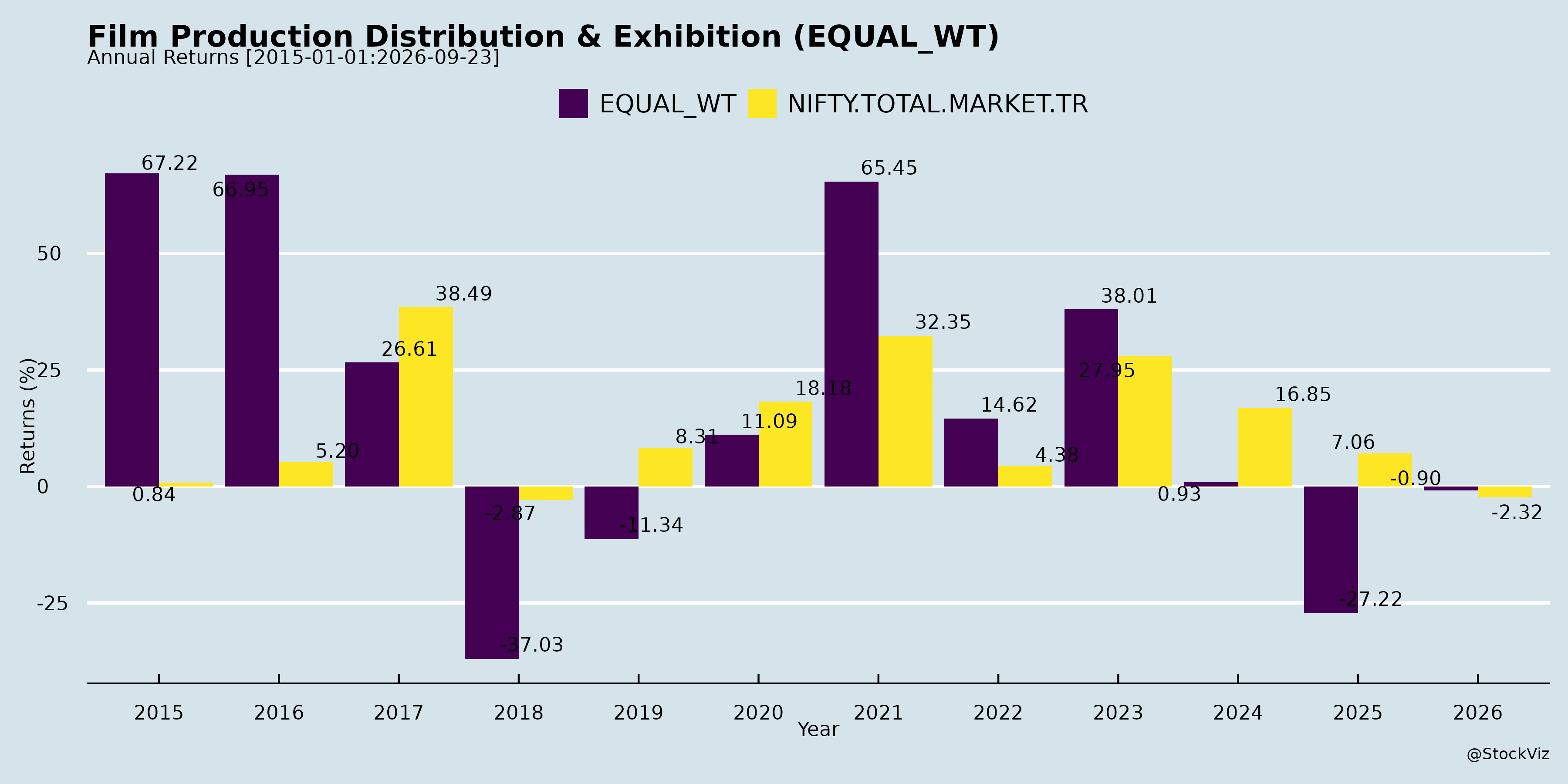
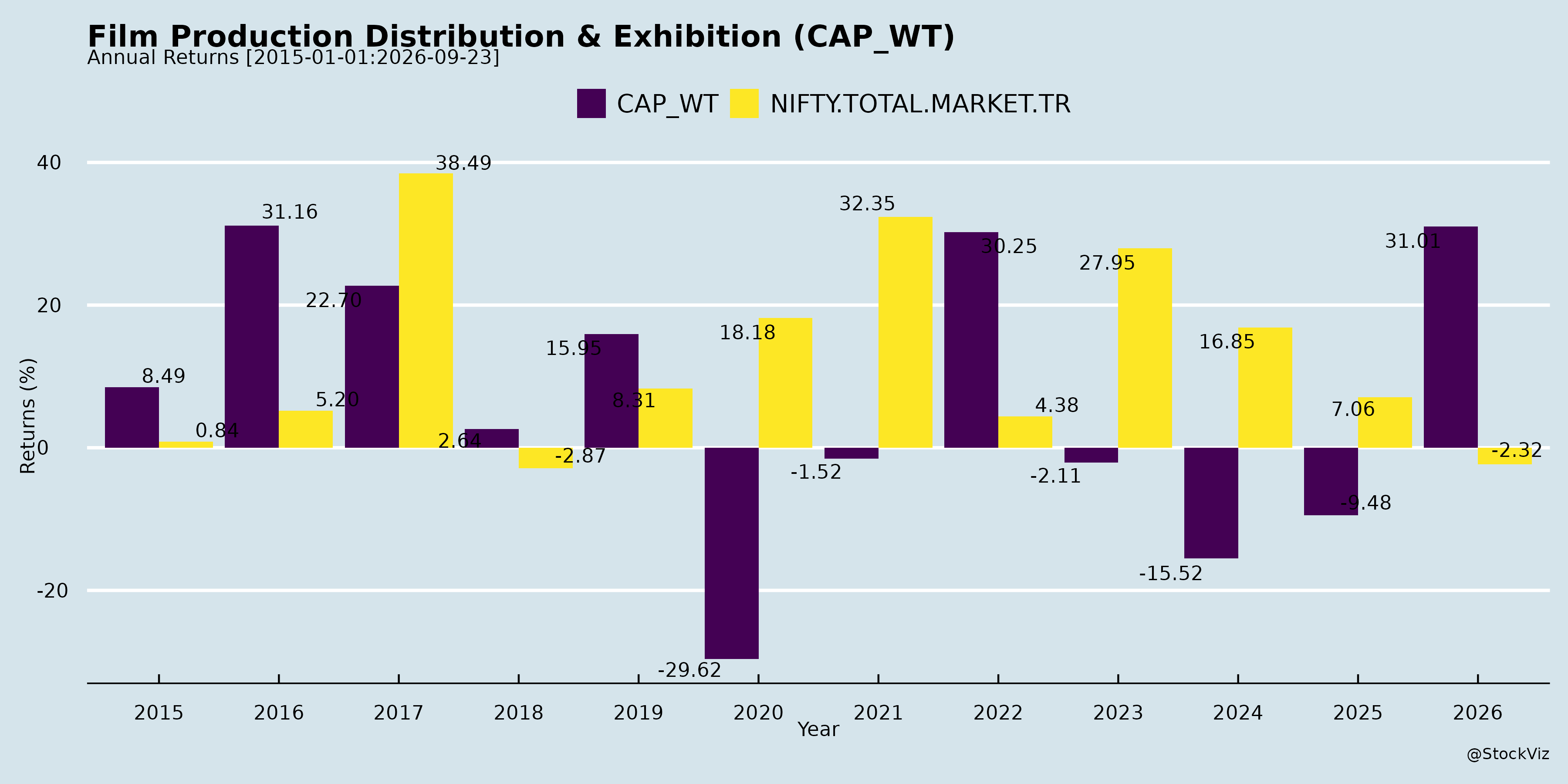
Annual Returns
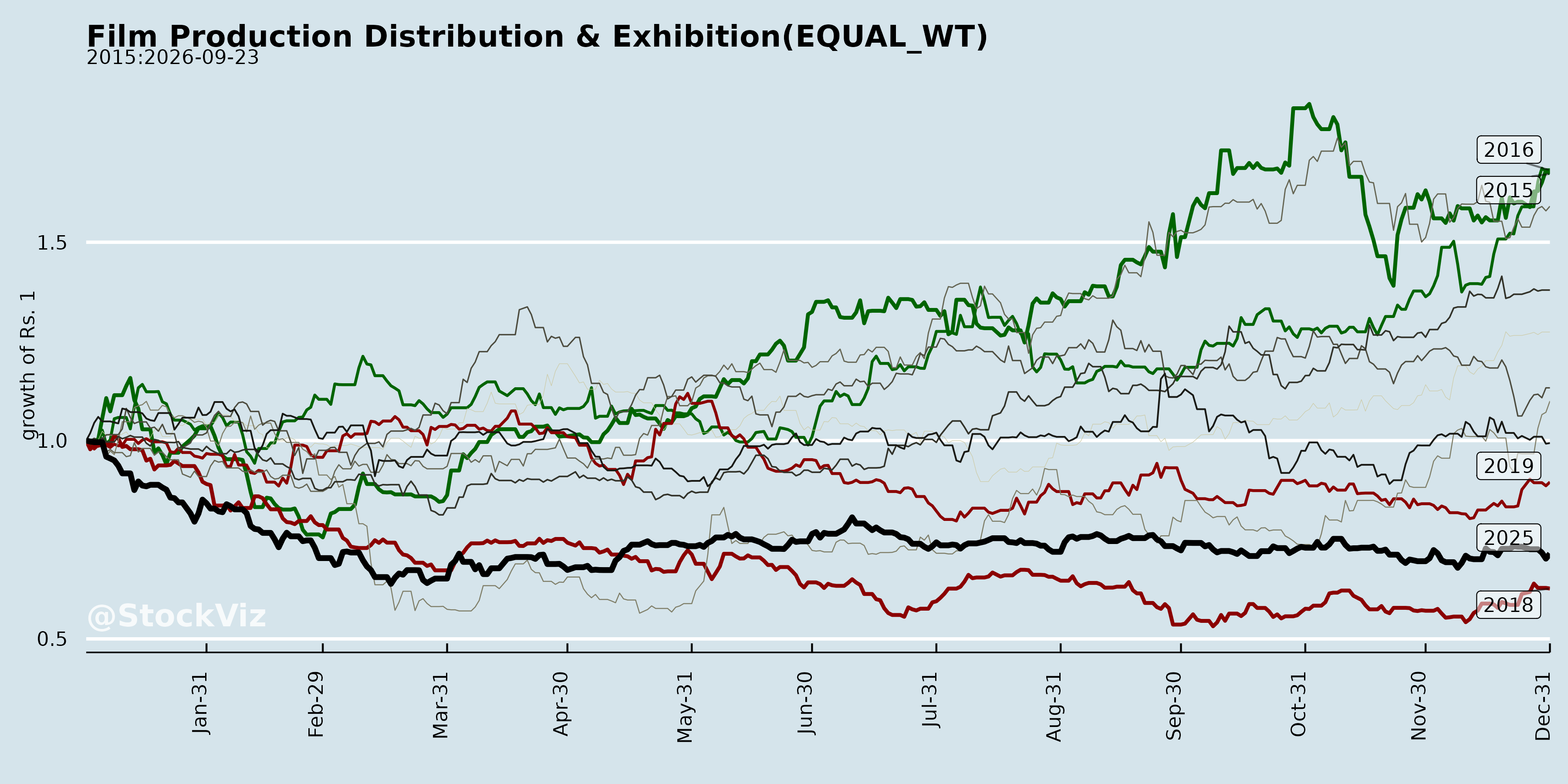
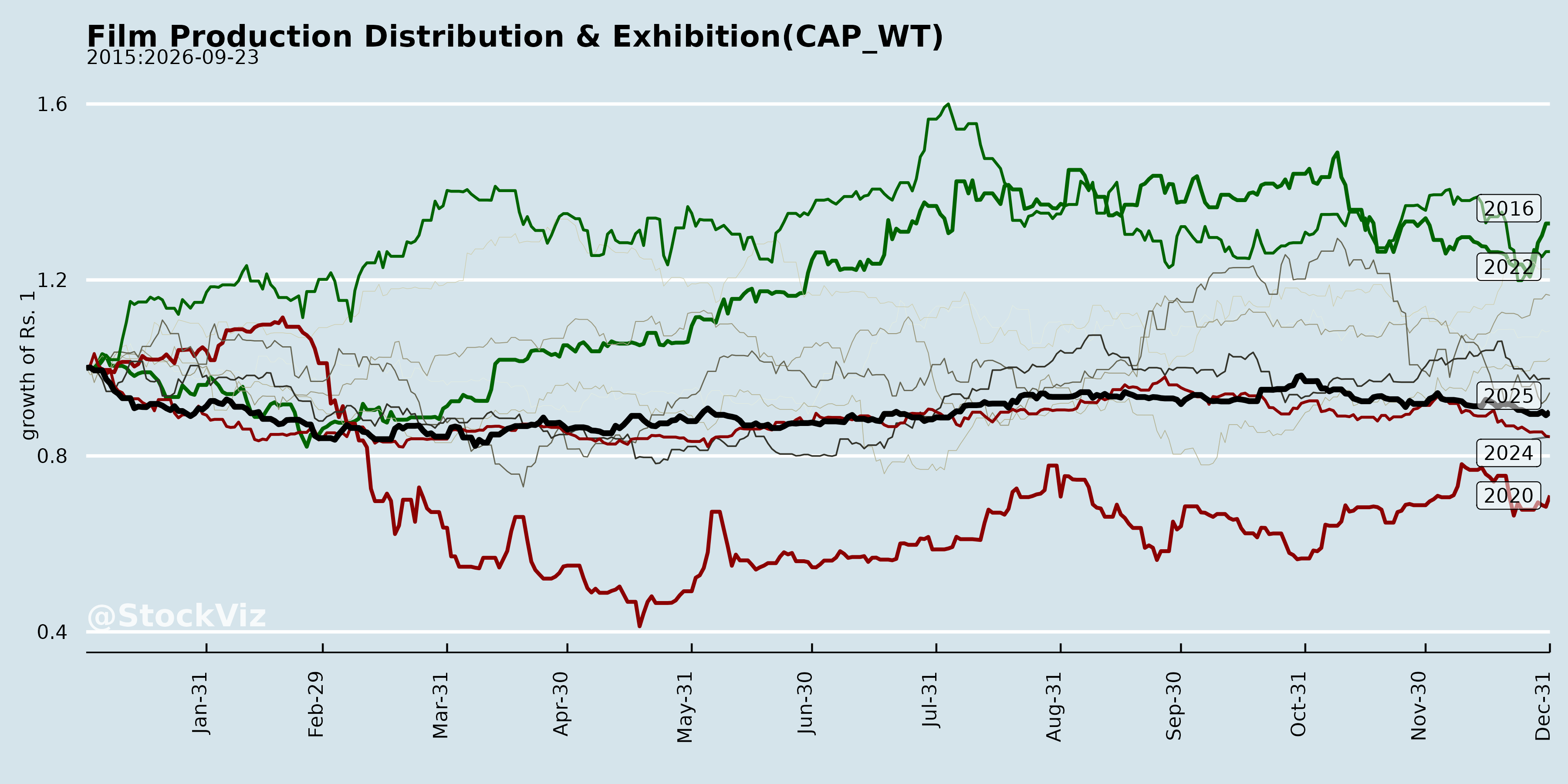
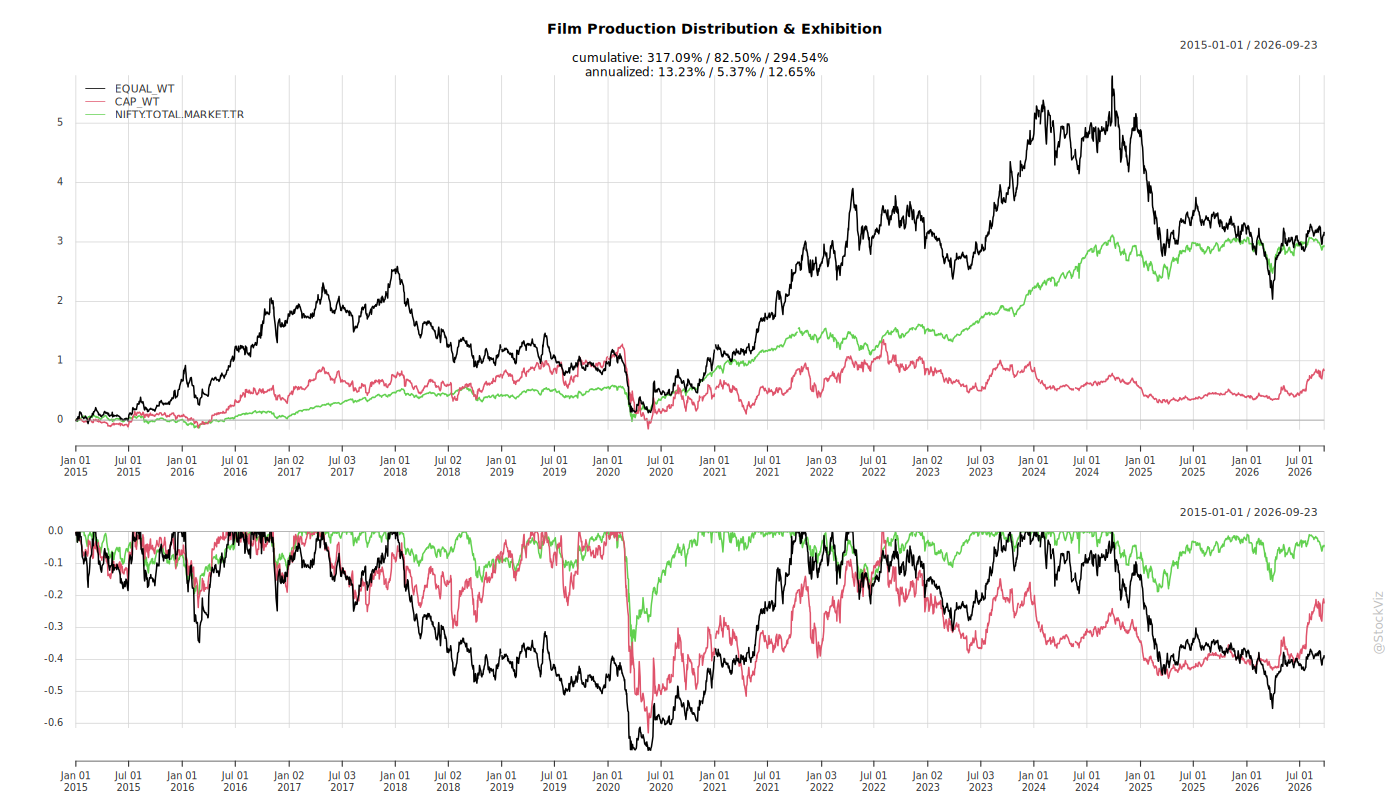
Cumulative Returns and Drawdowns
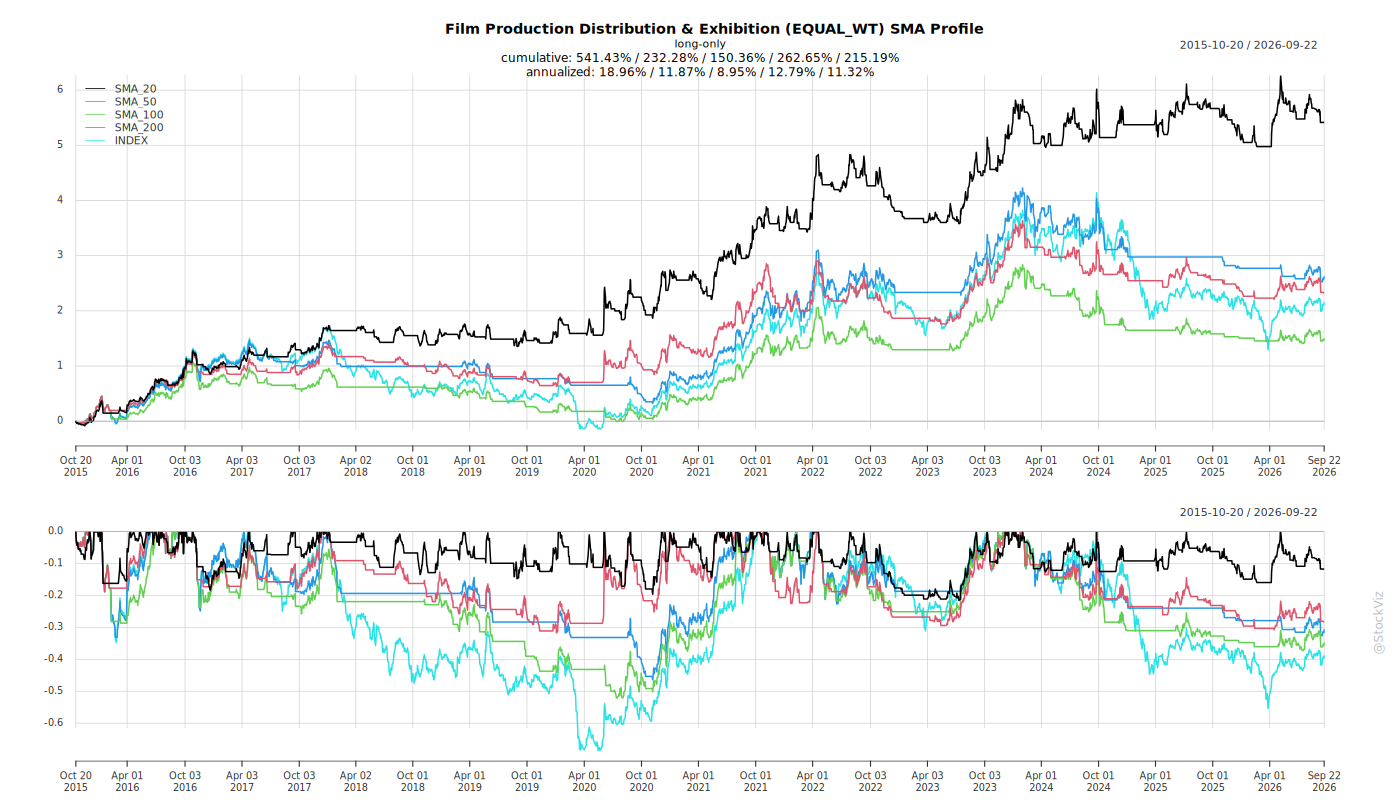
SMA Scenarios
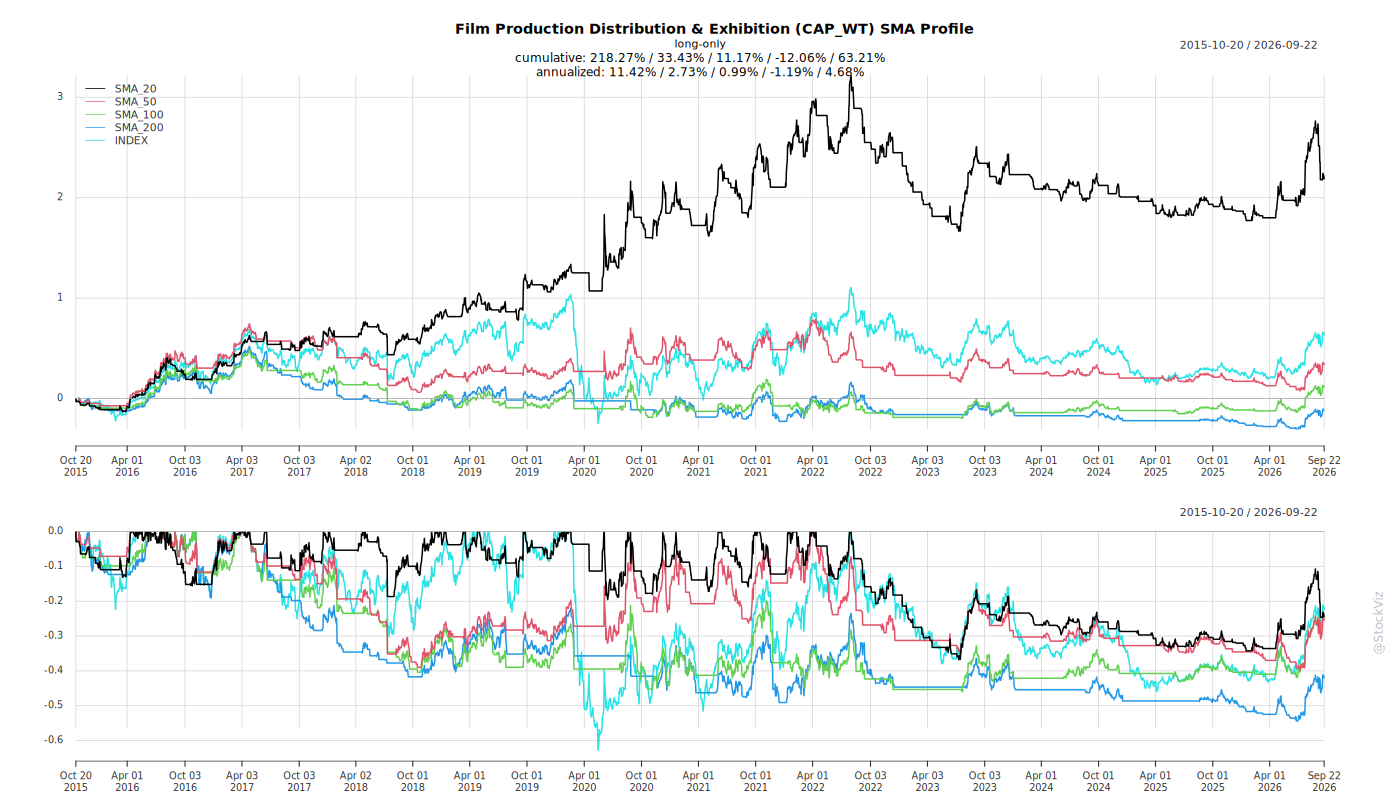
Current Distance from SMA
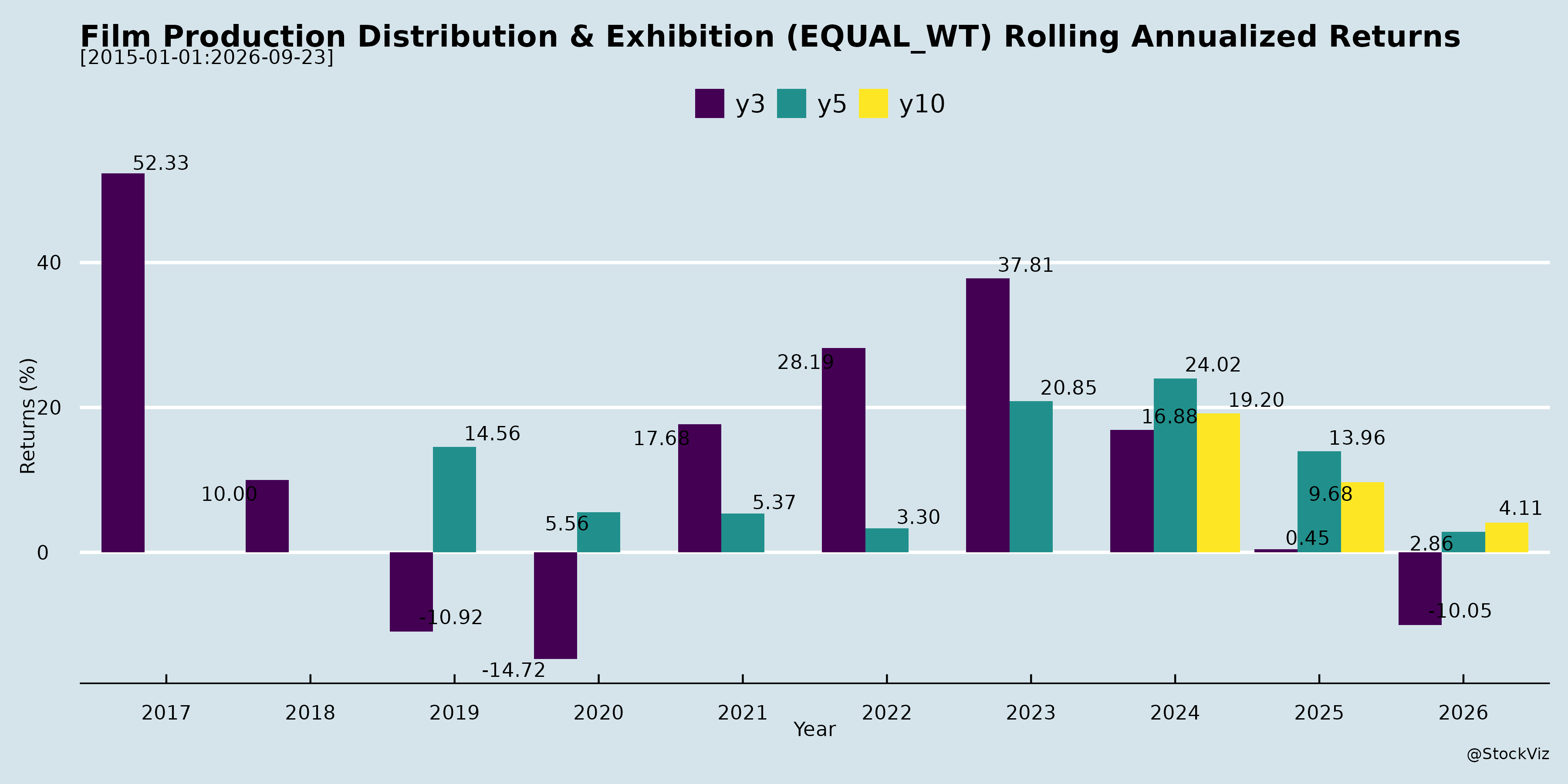
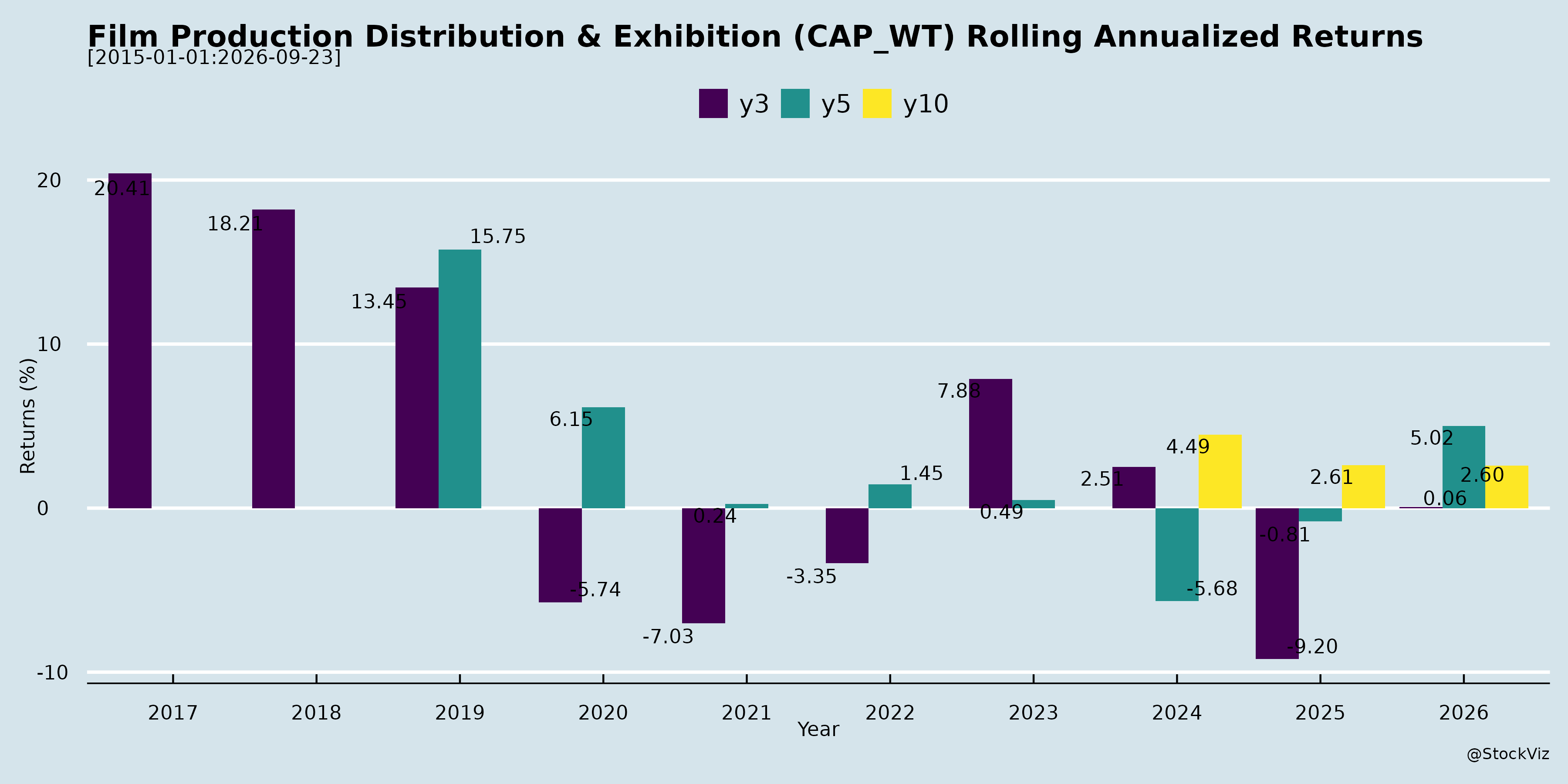
Rolling Returns
Fundamental Ratios
AI Summaries
How have the challenges and oppurtunities evolved over time?
asof: 2026-04-16
The entertainment and media exhibition industry has experienced a significant evolution in its challenges and opportunities, driven by shifts in consumer behavior, regulatory changes, and the need for more resilient business models.
Evolving Challenges
1. Shifting Content Consumption and OTT Competition Over time, audience preferences have shifted heavily toward original, high-volume, and cost-efficient content on Over-The-Top (OTT) platforms [1, 2]. This has created an oversupply of older movie content and led to tighter acquisition budgets and selective curation among digital platforms and broadcasters [2]. As a result, media companies like Pritish Nandy Communications have faced reduced demand, lower commercial valuations, and fewer renewal opportunities for their legacy film libraries [1-3].
In the theatrical space, performance has become heavily reliant on the release of mega, star-led blockbusters. For example, UFO Moviez noted that an uneven festive calendar and the absence of massive tentpole releases during traditionally lucrative periods, like Diwali and Christmas, significantly curtailed audience momentum and advertiser traction [4-8].
2. Advertising Market Pressures The advertising landscape has faced prolonged headwinds. UFO Moviez reported that post-COVID, consistent corporate advertisers took much longer to return to cinemas compared to “tactical” advertisers who only capitalize on the temporary buzz of specific blockbusters [9, 10]. Furthermore, government advertisement revenue—which historically contributed over ₹100 crore annually prior to 2020—has drastically underperformed, dropping to around ₹30 crore levels, causing substantial margin contractions [11-14].
3. Regulatory, Statutory, and Legal Hurdles Companies have had to navigate an evolving and complex legal landscape: * Labor Laws: The implementation of India’s ‘New Labour Codes’ resulted in increased statutory obligations for companies. Both Cineline India and Tips Films had to recognize significant financial impacts due to increased provisions for employee benefits, such as additional gratuity and compensated absences stemming from revised definitions of wages [15-19]. * Antitrust Actions: The Competition Commission of India (CCI) has increasingly scrutinized the exhibition sector. PVR INOX faced an investigation initiated by the CCI regarding the levy of Virtual Print Fees (VPF) [20]. Similarly, UFO Moviez and its merged subsidiary were penalized ₹1.04 crore by the CCI for anti-competitive restrictions in lease agreements with cinema operators [21, 22]. * Legacy Litigations: Companies like Mukta Arts have had their financials strained by prolonged legal battles, such as a major dispute over rent arrears with the Maharashtra State Government, which resulted in the complete erosion of their joint venture subsidiary’s net worth [23-27].
Evolving Opportunities
1. Transitioning to “Capital-Light” and Revenue-Share Models To mitigate heavy capital expenditure and fixed rental burdens, exhibitors are aggressively pivoting toward agile business models. Cineline India is adopting a “Capital-Light” growth model by partnering with developers for joint investments in infrastructure and shifting toward revenue-sharing agreements to enhance financial flexibility and free cash flow [28]. Similarly, PVR INOX has successfully focused on a Capital-Light expansion strategy, adding new screens primarily under FOCO (Franchise Owned Company Operated) and Asset-Light models, which helped them reduce their net debt to its lowest level since their merger [29-31].
2. Reinventing and Monetizing Intellectual Property (IP) Instead of relying solely on traditional distribution, companies are finding innovative ways to leverage their intellectual property for modern audiences: * Animation and Gaming: Mukta Arts launched SGM Animation Studio and signed an MOU with Green Gold Animation (creators of Chhota Bheem) to transform its classic 40-year film catalog—including IPs like Karz, Hero, and Ram Lakhan—into animated shows, films, and games tailored for a younger, global audience [32, 33]. * Streaming Originals: To combat the decline of legacy libraries, producers like Pritish Nandy Communications have successfully pivoted to creating high-quality streaming originals, winning awards for hit shows like The Royals on Netflix and Ziddi Girls on Amazon Prime [34, 35].
3. Premiumizing the Theatrical Experience To draw audiences out of their homes, exhibitors are transforming cinemas into luxurious, holistic social destinations. Cineline India is expanding with premium formats, introducing live kitchen concepts, pure vegetarian offerings, and 4K laser projection [36, 37]. PVR INOX is designing properties with hospitality-inspired social spaces, lounge-style environments, curated gourmet food, and dedicated gaming zones to encourage longer visitor engagement and cater to affluent micro-markets [38-41]. This strategy has proven successful, with the Indian theatrical industry reaching a historic high of ₹13,395 crore in box office collections in 2025 [42].
4. Untapped Hyper-Local Advertising To counter the volatility of corporate advertising, platforms like UFO Moviez are tapping into hyper-local advertising. By utilizing digital platforms to source audio-visual content from “mom-and-pop” stores and local retailers in the immediate catchment areas of specific screens, they are cultivating a highly relevant, consistent revenue stream that is expected to contribute substantially to growth over the next five years [43-48].
What are the headwinds affecting this industry?
asof: 2026-04-16
Shifting Audience Preferences and OTT Dominance A major headwind facing the film and entertainment industry is the profound shift in content consumption patterns, with audiences increasingly favoring original, high-volume, and cost-efficient content available on Over-The-Top (OTT) streaming platforms [1], [2]. This shift has severely reduced the demand and monetization potential for older, legacy film libraries [2]. Consequently, digital platforms and satellite broadcasters have altered their content acquisition strategies by adopting much more selective curation approaches and assigning lower commercial valuations to legacy titles [2]. Furthermore, an oversupply of older movie content, combined with the consolidation among broadcasters and OTT platforms and tighter content acquisition budgets, has adversely impacted pricing and renewal opportunities for movie rights [2].
Dependence on Marquee Content and Release Timing The theatrical and in-cinema advertising segments remain highly volatile and dependent on the success of specific content and release timing [3], [4]. The industry frequently suffers when the festive calendar is uneven or when highly anticipated releases fail to pan out [3], [5], [4], [6]. For instance, the absence of mega, star-led blockbusters during crucial festive windows like Diwali and Christmas can heavily curtail audience turnout, theatrical momentum, and advertising traction [7]. Additionally, films with a limited, single-language release footprint naturally offer fewer opportunities for advertisers to capitalize on compared to highly hyped, multilingual, pan-India releases, which restricts revenue potential [5], [8], [9], [6], [10], [11].
Advertising Revenue Volatility and Spending Cuts The cinema advertising business faces challenges with advertiser stickiness. Many “tactical” or “impact” advertisers only rely on the buzz surrounding major tentpole movies and quickly pull their spending when the hype diminishes [12], [13], [14], [15]. This creates erratic and unpredictable operating margins for cinema ad networks [16], [17]. Compounding this issue is a severe reduction in government advertising spending. For example, the government and state vertical for in-cinema advertising, which previously brought in over ₹100 crore annually prior to 2020, has plummeted to the range of just ₹30 crore, representing a significant and ongoing loss of revenue [18], [19].
Regulatory and Legal Scrutiny The industry is also navigating headwinds from regulatory bodies, particularly the Competition Commission of India (CCI). Companies in the exhibition and digital cinema space have faced legal scrutiny and financial penalties [20], [21]. For instance, investigations have been initiated regarding the levy of Virtual Print Fees (VPF) [21]. Additionally, the CCI has issued orders levying substantial financial penalties and directing companies to modify existing lease agreements with cinema theatre operators to remove restrictions on the supply of content from competing entities [20], [22].
What are the key things to understand about this industry?
asof: 2026-04-16
The success of the film and exhibition industry is heavily dependent on content quality, release timing, and marquee titles. Theatrical performance is driven by a consistent pipeline of highly anticipated “tentpole” or event-led movies [1, 2]. For example, the absence of star-led blockbusters during key festive windows like Diwali and Christmas can significantly curtail audience momentum and advertising traction [3]. However, when the content slate is strong, the results are massive; calendar year 2025 was a historic milestone for the Indian theatrical industry, emerging as the highest-grossing year ever with ₹13,395 crore in box office collections [4]. The industry relies on a mix of Hindi tentpoles, a recovering Hollywood market, and rapidly growing regional cinema (with massive surges in Gujarati, Kannada, and Malayalam films) to sustain box office momentum [5-7]. Furthermore, multilingual films with sustained pre-release hype generate much wider footprints and higher advertiser interest compared to single-language hits [8-10].
There is a major shift towards a “Capital-Light” and “Revenue-Share” expansion model. To reduce debt and enhance financial flexibility, major film exhibition companies are pivoting away from heavy capital expenditures [11, 12]. Instead of fully funding new theatres, companies are partnering with real estate developers for joint investments in new screen infrastructure [12]. Expansion is now primarily following an “Asset-Light” or Franchise Owned Company Operated (FOCO) model [11, 13]. Exhibitors are increasingly signing “revenue-share” agreements with property owners to reduce fixed rental obligations [12]. Coupled with merger synergies and structural cost optimizations, these strategies allow cinema chains to expand their footprint and achieve strong EBITDA margins even at lower occupancies than were required pre-pandemic [7, 11, 14].
The cinema experience is undergoing aggressive premiumization. Theatres are moving beyond the traditional movie-viewing format to become holistic, hospitality-inspired social destinations [15, 16]. To attract audiences, exhibitors are investing heavily in luxury amenities such as premium recliner seating, 4K laser projection, next-generation 3D systems, and Dolby 7.1 surround sound [17, 18]. Food and Beverage (F&B) has become a critical revenue driver and differentiator. Cinemas are introducing global gourmet flavors, live kitchen concepts, and even specialized pure-vegetarian venues to cater to local demographics [19-21]. Consequently, companies closely monitor and drive growth in their Average Ticket Price (ATP) and Average F&B Spend per Head (SPH) [13, 22].
Cinema advertising is highly volatile and driven by movie buzz, but hyper-local advertising presents a new growth frontier. Operating margins for in-cinema advertising networks can be erratic because the revenue shared with exhibitors involves high fixed costs; thus, a drop in ad revenue disproportionately shrinks profit margins, while an increase heavily boosts them [23-25]. Advertisers generally fall into two categories: “consistent” advertisers who commit to long-term or seasonal deals, and “tactical” (or impact) advertisers who only spend money to capitalize on the hype of specific blockbuster releases [26-28]. To build a more stable revenue stream, the industry is targeting “hyper-local” advertising [29]. By utilizing digital scheduling platforms, cinema networks are empowering local mom-and-pop stores and neighborhood retailers—who now have access to audio-visual content tools—to advertise on screens in their immediate catchment areas, establishing a highly relevant and consistent advertising base [30, 31].
OTT platforms have drastically altered content consumption and the valuation of legacy film libraries. Audiences are increasingly favoring original, high-volume, and cost-efficient content on streaming platforms [32, 33]. This shift, combined with an oversupply of older movie content and consolidation among broadcasters and OTT platforms, has led to tighter content acquisition budgets [33]. As a result, older film libraries and legacy titles are facing reduced demand and lower commercial valuations for broadcasting rights [33].
Studios are reinventing classic Intellectual Property (IP) to engage modern audiences. To bypass the declining value of traditional legacy broadcasting, production houses are finding innovative ways to monetize their existing IP libraries. For instance, studios are partnering with animation companies to develop animated shows, films, comic books, and games based on iconic, classic film franchises, thereby extending these legendary stories to the next generation of global audiences [34, 35].
What are the tailwinds affecting this industry?
asof: 2026-04-16
Record-Breaking Box Office Performance and Resilient Demand The Indian theatrical industry reached a historic milestone in calendar year 2025, generating its highest-grossing year ever with total box office collections of INR 13,395 crore [1]. This represents a 32% increase over pre-pandemic levels and a 13% year-on-year growth [1]. Demonstrating the depth, resilience, and long-term relevance of the theatrical medium, a record-breaking 37 movies crossed the INR 100 crore box office mark in a single year [1].
Strong and Diverse Content Pipeline A major driver of recent industry success is a more consistent, balanced, and robust content pipeline across multiple languages and genres [2, 3]. * Hindi Cinema: Delivered its strongest year ever with collections exceeding ₹5,500 crore, reflecting an 18% year-on-year growth supported by large tentpole releases [2]. * Hollywood: Staged a massive recovery with a 49% year-on-year growth, making it the second-best year ever for Hollywood in India after 2019 [4]. * Regional Cinema: Continued to strengthen, reaching an all-time high of INR 6,488 crore, with sharp growth in Gujarati and Kannada cinema, while Malayalam cinema crossed the INR 1,000 crore milestone for the second consecutive year [4, 5]. The industry outlook remains highly positive as the upcoming slate is packed with high-profile franchise extensions, event films, and mass-appeal entertainers that continue to drive footfalls and occupancies [6-9].
Evolving Consumer Lifestyles and Elevated Cinema Experiences Consumers are increasingly seeking a holistic and elevated out-of-home entertainment experience that blends comfort, community, and aspiration [10]. Cinemas are transforming from simple movie-viewing halls into vibrant social and cultural anchors within their communities [10, 11]. To capture this demand, exhibitors are investing in hospitality-inspired social spaces, cutting-edge 4K laser projection, Dolby 7.1 surround sound, premium recliner seating, and highly curated gourmet food and beverage offerings [12-15].
Improving Advertiser Sentiment and Hyper-Local Opportunities Advertisers are heavily re-engaging with cinema. Mature advertisers have realized that cinema has successfully bounced back and have returned to using it as a consistent, year-round advertising medium [16, 17]. Furthermore, there is a massive emerging opportunity in hyper-local advertising [18, 19]. In the past, local “mom-and-pop” retailers lacked the audio-visual (AV) content needed for cinema screens, but thanks to digital media tools, they now possess the capability to create and run AV campaigns [20-23]. Exhibition companies are actively building digital platforms to attract these local catchment retailers, which is expected to mature into a substantial, stable revenue stream over the next five years [21, 23].
Shift Towards “Capital-Light” and Revenue-Sharing Models To enhance financial flexibility and improve returns on capital, the exhibition industry is increasingly adopting “capital-light” growth strategies [24, 25]. Instead of absorbing heavy upfront costs, cinema chains are partnering with real estate developers for joint investments in new screen infrastructure [25]. Future screen additions are primarily being structured around revenue-sharing models rather than fixed minimum guarantees, which significantly reduces fixed rental obligations and accelerates expansion [25, 26]. This reduced capital expenditure intensity has allowed companies to generate strong free cash flows and significantly reduce their net debt [25, 27].
Structural Margin Expansion and Cost Efficiencies The industry is benefiting from a continued focus on operational efficiencies and the enduring benefits of merger synergies [5, 28, 29]. These structural cost optimizations have created a highly resilient operating model, allowing companies to achieve EBITDA margins of around 18% at occupancies of 28%—margins that previously required 350–400 basis points higher occupancy during the pre-COVID era [5, 24].
Rapid Growth in the Streaming (OTT) Sector Parallel to the theatrical exhibition industry, the streaming sector continues to act as a powerful tailwind for content creators. There is a rapidly growing streaming industry in India, driven by shifting consumption patterns where audiences increasingly favor original, high-volume, and cost-efficient content on OTT platforms [30-32].
What is the general outlook of this industry?
asof: 2026-04-16
The general outlook for the Indian entertainment and film industry is mixed, characterized by a highly positive and record-breaking trajectory for theatrical cinema exhibition, juxtaposed with significant challenges in the monetization of legacy film libraries due to shifting OTT consumption patterns.
Theatrical Exhibition and Cinema: Historic Highs and Strong Growth The theatrical segment is experiencing a massive resurgence. Calendar year 2025 marked a historic milestone for the Indian theatrical industry, emerging as the highest-grossing year ever with total box office collections of INR 13,395 crore [1]. This represents a 32% increase over pre-pandemic levels and a 13% year-on-year growth [1]. The outlook for 2026 remains highly positive, encouraging, and increasingly visible, driven by the following factors:
- Robust Content Pipeline: The upcoming quarters are supported by a strong, balanced slate of high-profile tentpole releases across Hindi, Regional, and Hollywood markets [2-4]. Anticipated major releases like Dhurandhar 2, Toxic, Ramayana Part 1, and Avengers: Doomsday are expected to sustain audience footfalls and maintain theatrical momentum [2-5].
- Improving Advertiser Sentiment: Advertiser confidence has bounced back [5, 6]. While some advertisers tactically target specific blockbuster releases, mature advertisers have returned to utilizing cinema as a consistent, year-round medium [6, 7]. Additionally, cinema advertising networks are focusing heavily on “hyper-local” advertising, leveraging digital platforms to source ads from local mom-and-pop stores within a cinema’s specific catchment area, which is expected to provide stable, substantial growth over the next five years [8-10].
- Capital-Light Expansion Strategies: Major cinema chains like PVR INOX and Cineline are focusing on a “capital-light” growth model [11, 12]. By partnering with developers for joint investments and expanding through revenue-sharing models rather than fixed rentals, these companies are reducing upfront capital expenditures, enhancing capital efficiency, and generating sustainable free cash flow [11-14].
- Elevated Consumer Experiences: Cinemas are repositioning themselves from traditional movie theaters to premium social and cultural destinations [15, 16]. Operators are investing heavily in luxury formats, such as premium recliner seating, 4K laser projection, Dolby 7.1 surround sound, lounge-style lobbies, and gourmet food and beverage (F&B) offerings with live kitchen concepts [17-22].
OTT Streaming and Legacy Content Monetization: Shifting Patterns Conversely, the outlook for monetizing older, legacy film libraries is facing headwinds due to changing viewer habits: * Preference for Original Content: Content consumption patterns have shifted heavily toward OTT platforms, with audiences showing a strong preference for original, high-volume, and cost-efficient content [23, 24]. * Devaluation of Legacy Titles: This shift has significantly reduced the demand and monetization potential for older movie libraries [24]. Digital platforms and satellite broadcasters have tightened their content acquisition budgets, adopted more selective curation approaches, and assigned lower commercial valuations to legacy titles [24]. An oversupply of older movie content and consolidation among OTT platforms has further depressed pricing and renewal opportunities for these rights [24].
Adaptation and IP Extension To navigate these changes and maximize the value of their existing intellectual property, entertainment companies are exploring new mediums. For instance, companies are venturing into animation and gaming to develop animated shows, feature films, and character-led spin-offs based on their iconic legacy film catalogs [25]. This allows studios to extend their classic stories into new formats designed to connect with a younger, global audience [25, 26].
Copyright © 2023 SAS Data Analytics Pvt. Ltd. All rights reserved.