Electronic Media
Industry Metrics
September 24, 2026
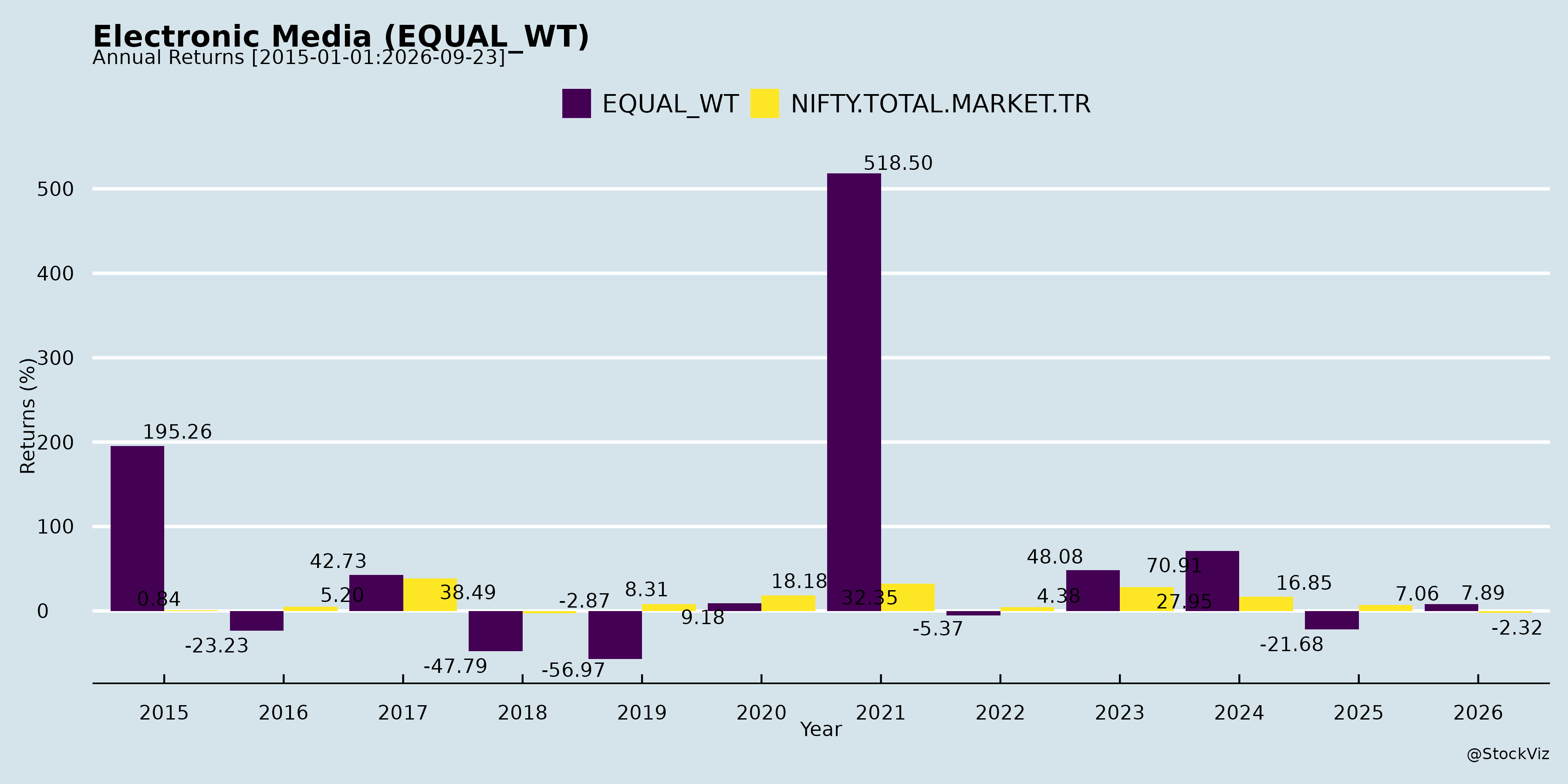
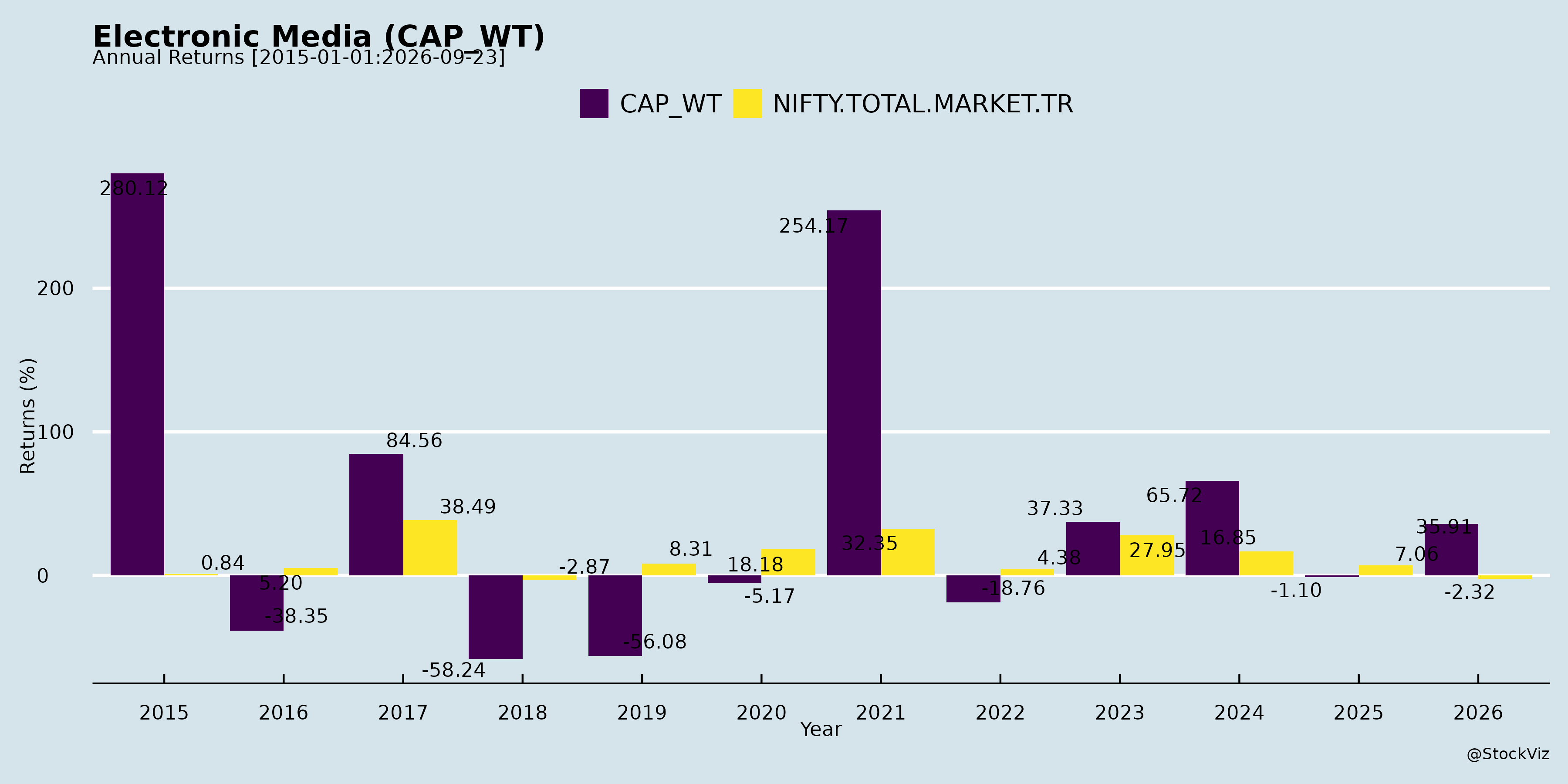
Annual Returns
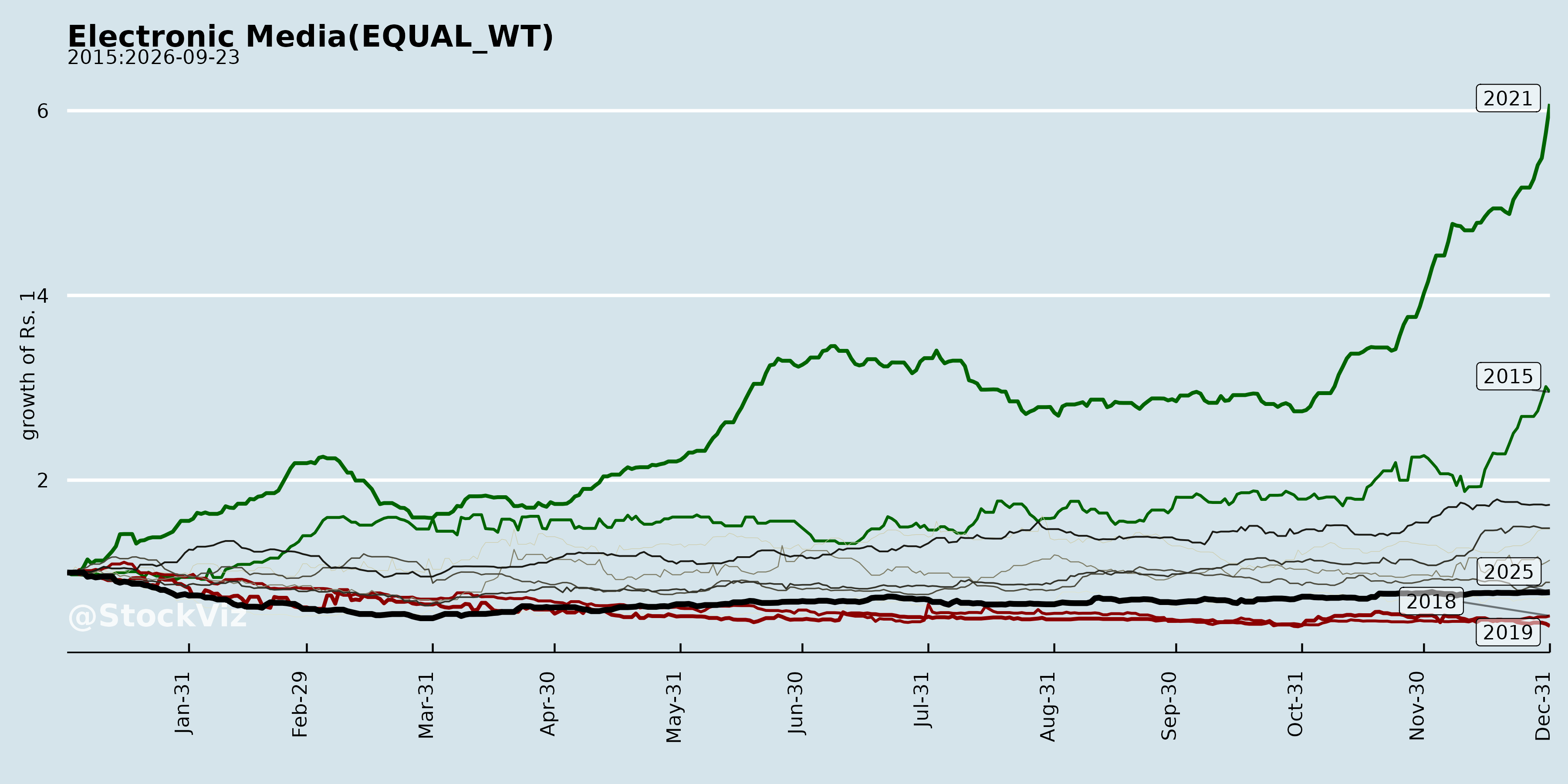
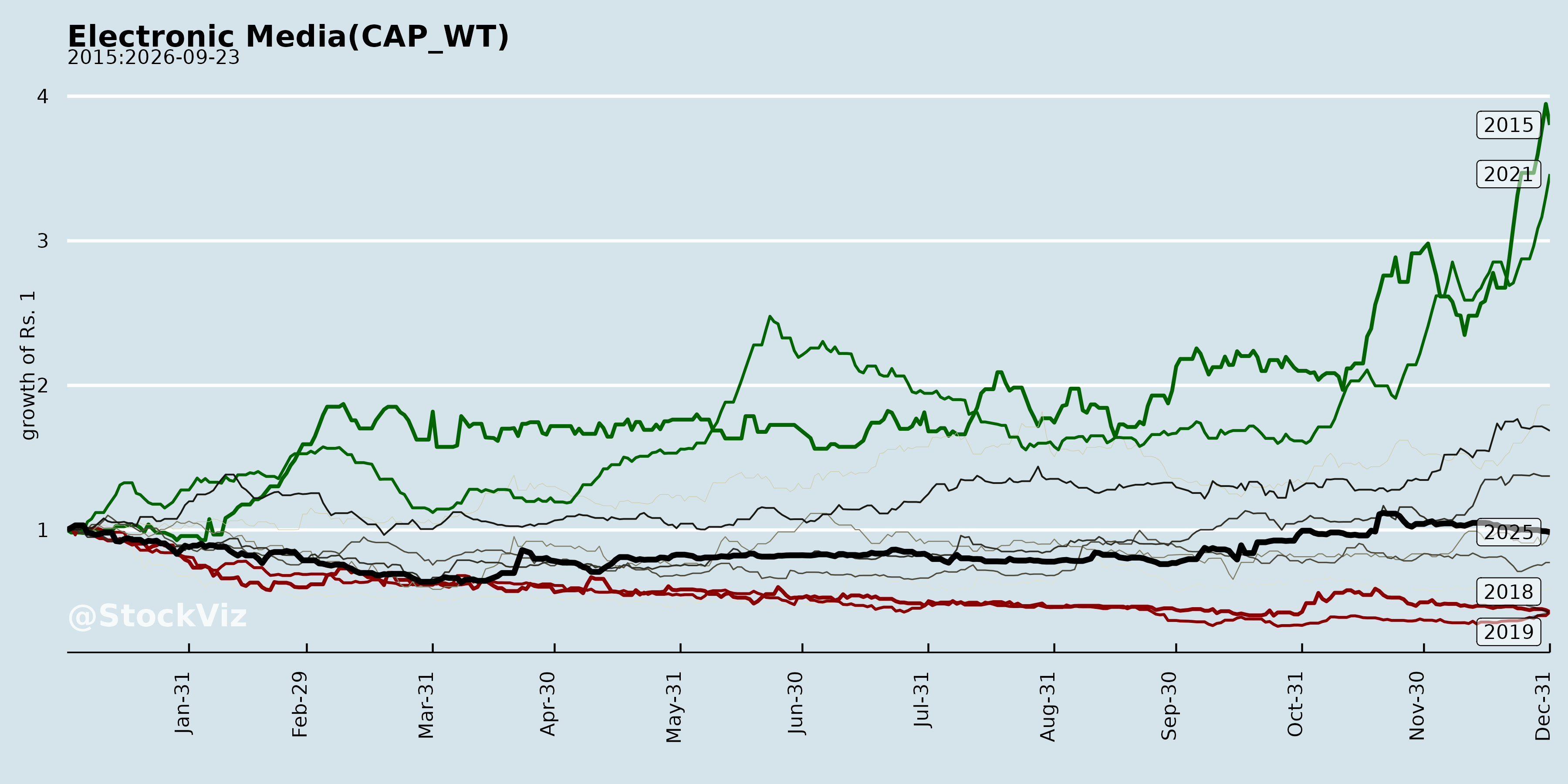
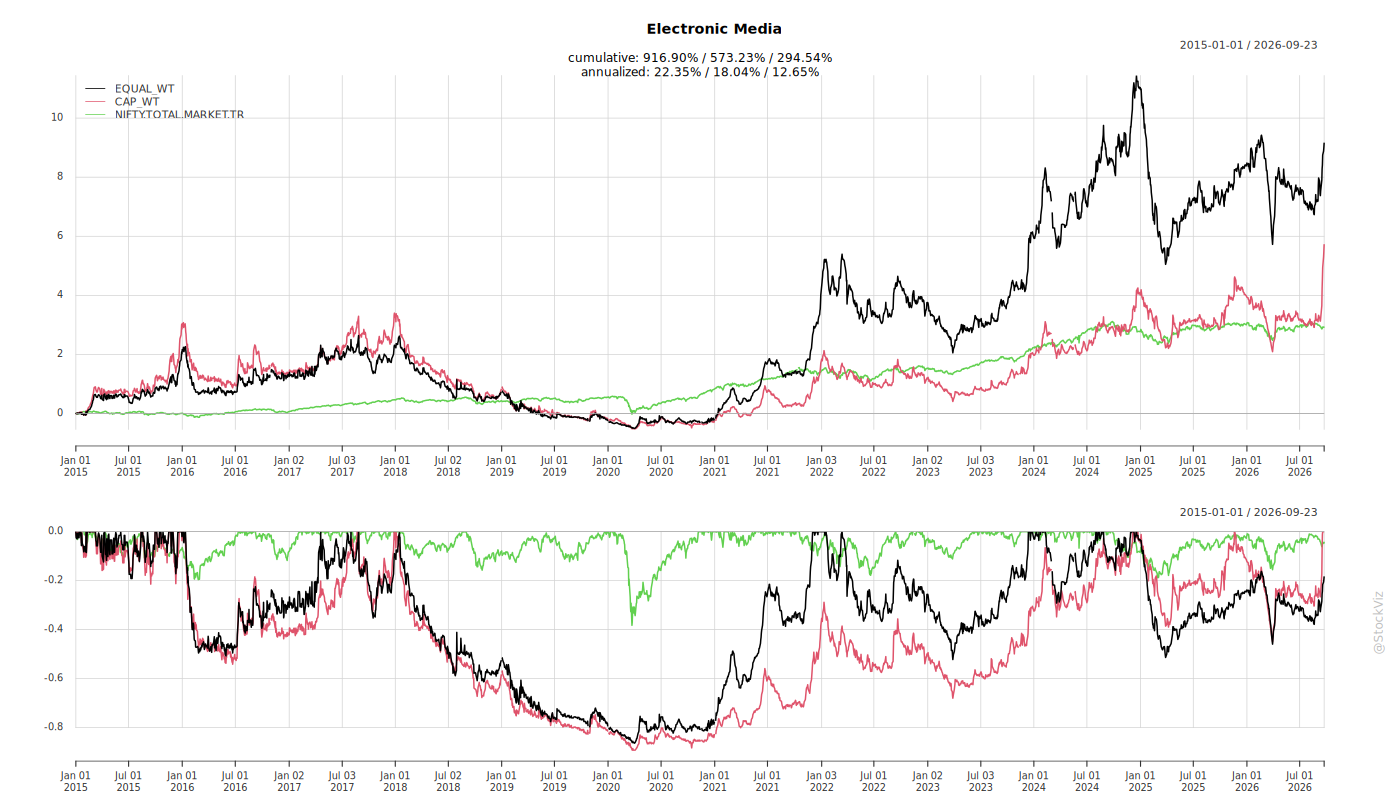
Cumulative Returns and Drawdowns
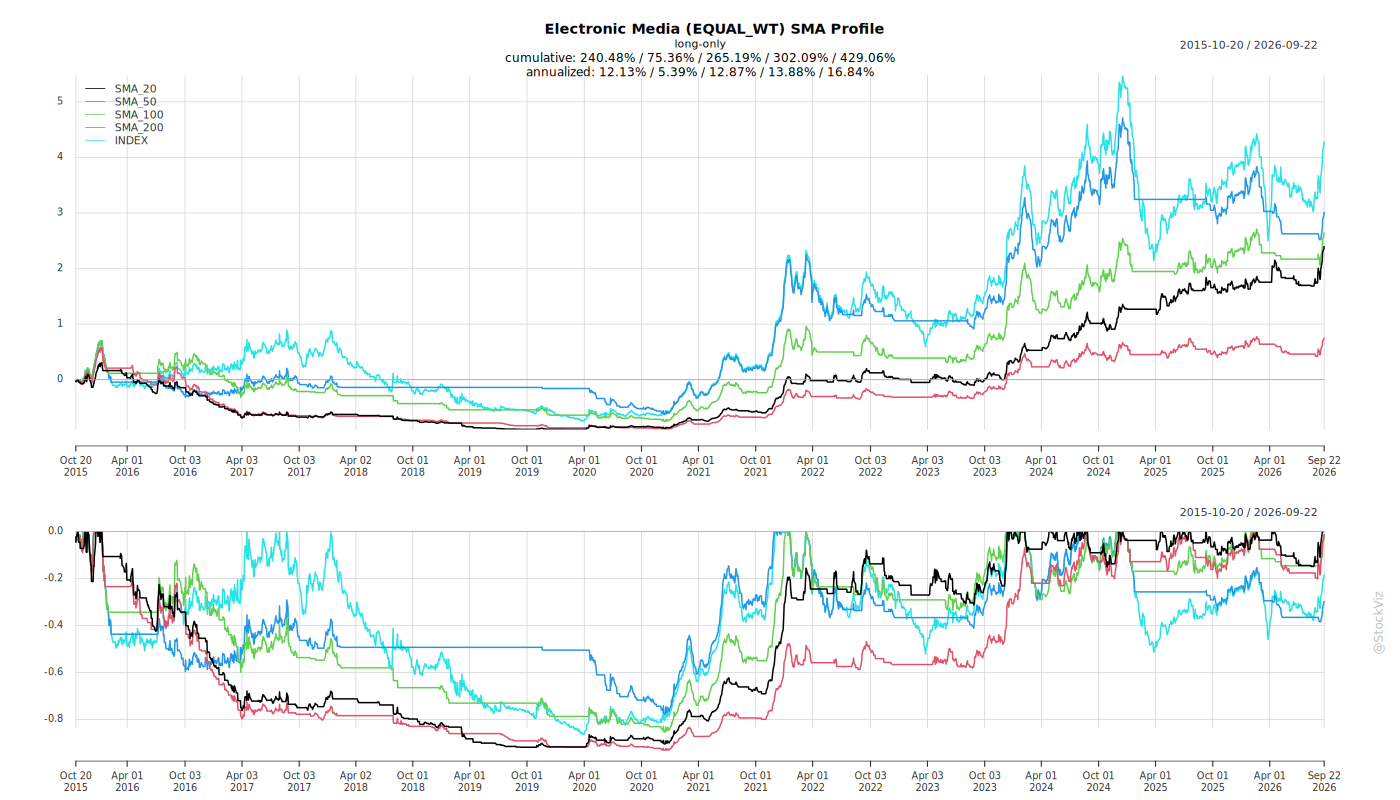
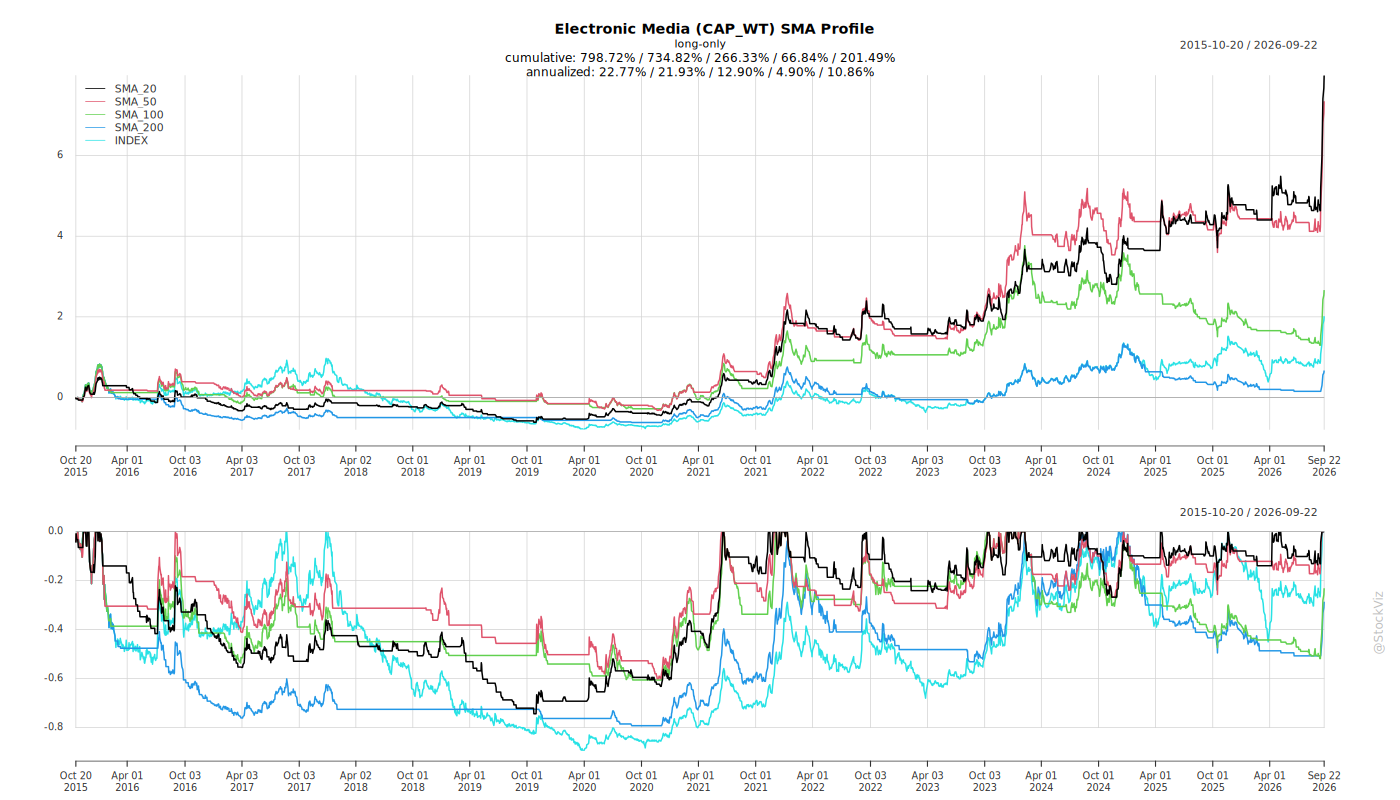
SMA Scenarios
Current Distance from SMA
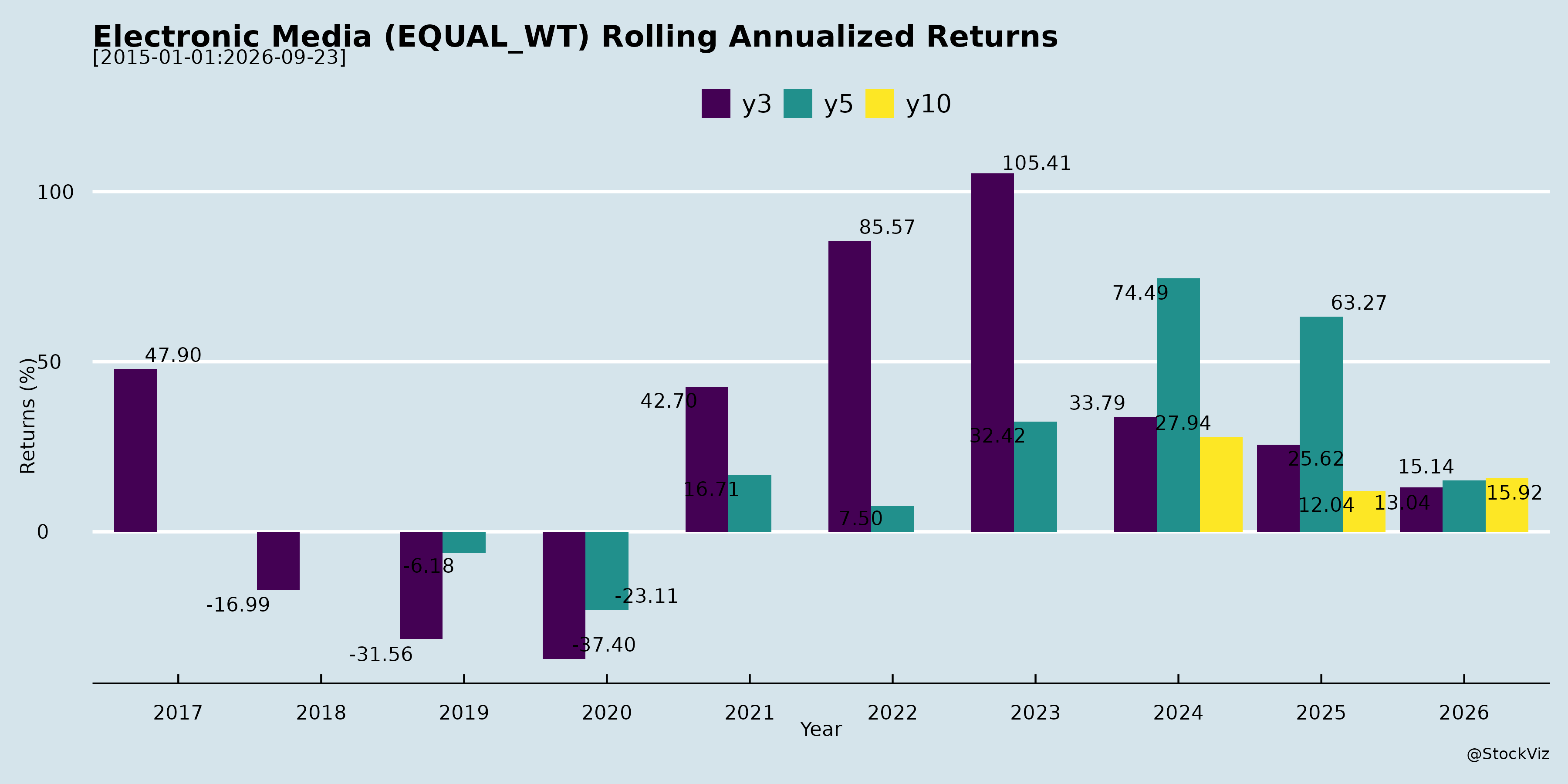
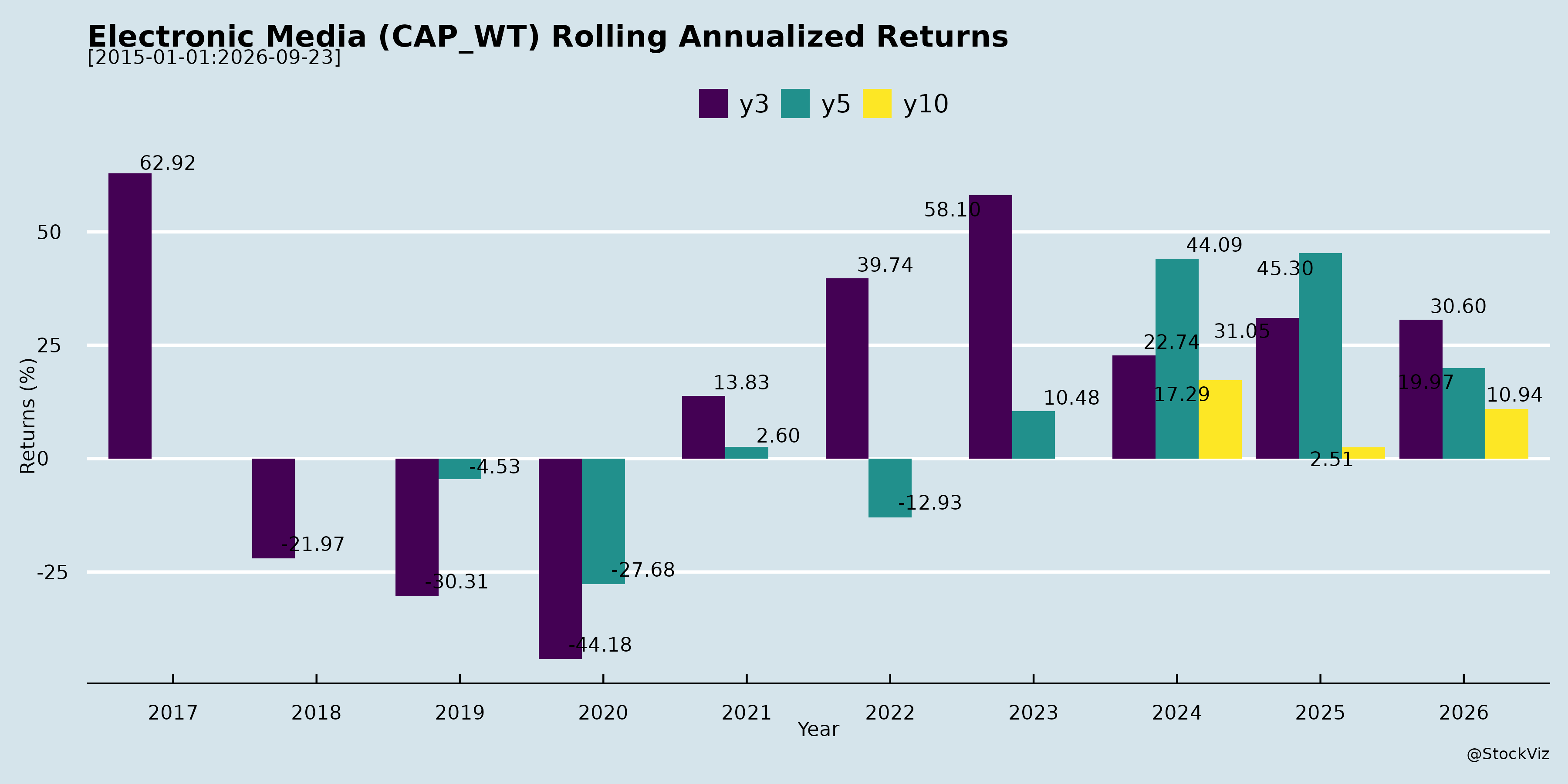
Rolling Returns
Fundamental Ratios
AI Summaries
How have the challenges and oppurtunities evolved over time?
asof: 2026-04-16
The companies detailed in the sources have navigated significant financial, legal, and operational hurdles over time, ultimately evolving to capitalize on new digital and strategic opportunities.
Cyber Media (India) Limited * Past Challenges: Historically, the company faced severe difficulties primarily stemming from its international operations, suffering significant losses due to “US business challenges” [1]. These issues triggered a cascade of problems, including major litigations involving the Debt Recovery Tribunal (DRT), the National Company Law Tribunal (NCLT), and tax authorities [2]. Dealing with these legacy issues consumed significant management bandwidth, which placed immense pressure on their core business and stalled revenue growth for several years [3, 4]. * Evolution: Over time, the management systematically addressed these legacy issues. The US business was closed, all associated losses were booked, and the major litigations and tax issues were successfully settled [1, 2]. The company’s financial position significantly improved, bringing debtors and creditors under control and allowing the management to finally refocus on organizational growth [2, 3, 5]. * New Opportunities: Having cleared its historical hurdles, Cyber Media has aggressively pivoted toward digital transformation. The company has evolved from a traditional print business into a multi-form integrated media house, distributing content across websites, podcasts, videos, and social media platforms [6-8]. They are heavily leveraging Artificial Intelligence (AI) and Machine Learning (ML) in their internal processes and through digital marketing products like CM Galaxy and AuxoAds [7, 9, 10]. Furthermore, the company has found new opportunities in data analytics for emerging tech sectors, launching market research and tracking services specifically for the semiconductor and autonomous vehicle industries [11-13]. They are also successfully monetizing their 43-year legacy of archival content by selling digital subscriptions to international universities like MIT and exploring corporate solutions and OTT platform integrations [14-19].
Diligent Media Corporation Limited * Past Challenges: Diligent Media faced an existential threat as its accumulated losses far exceeded its paid-up capital and reserves [20]. The company was locked in a massive financial dispute with Veena Investments Private Limited (VIPL). VIPL held Rs. 43,626.56 lakhs in 6% Non-Cumulative, Non-Convertible Redeemable Preference Shares (NCRPS) and demanded early redemption, while Diligent Media simultaneously demanded VIPL repay Rs. 17,340.27 lakhs in outstanding Inter Corporate Deposits (ICDs) [21]. The company has also been fighting heavy tax demands, including a Rs. 3,390.68 lakhs GST demand [22] and an Income Tax demand of Rs. 41,34,44,563 for the 2013-14 assessment year [23, 24]. * Evolution: The company managed to turn a massive financial liability into a resolved issue through arbitration. The arbitrator ruled that Diligent Media could utilize a non-cash settlement by setting off the entire ICD outstanding amount against the NCRPS value [25-27]. The Board approved a scheme to cancel the remaining preference shares entirely, which successfully preserved the company’s liquidity, removed future contingent liabilities, and brought commercial finality to a highly burdensome debt [25, 27]. * New Opportunities: With its preference share liability drastically reduced, the company’s path forward relies entirely on the successful expansion of its digital media operations [20, 28]. The management is continuously making efforts to grow this digital segment, which they project will generate the adequate cash flows necessary to maintain the company as a going concern and meet future obligations [20, 28].
Sambhaav Media Limited * Challenges and Evolution: The sources indicate that Sambhaav Media is currently managing regulatory challenges, specifically a recent Income Tax Notice of Demand for the 2018-19 assessment year resulting in a tax and interest liability of INR 43,22,980 [29-31]. However, the company’s operations have evolved to be resilient against such hurdles; they reported that this financial penalty will result in no other operational impact, and they are actively consulting with advisors to take appropriate action [31].
What are the headwinds affecting this industry?
asof: 2026-04-16
The provided sources do not explicitly outline macroeconomic or broad, industry-wide headwinds for the media, digital marketing, and data analytics sectors. However, they extensively detail the specific operational, financial, and regulatory challenges that individual companies within this industry are currently navigating.
Based on the operations of Cyber Media, Diligent Media, and Sambhaav Media, the primary headwinds affecting businesses in this space include:
1. Severe Financial Constraints and Accumulated Losses A major challenge highlighted in the industry is the struggle to maintain profitability and positive cash flow. For example, Diligent Media Corporation Limited has faced severe financial headwinds, with its accumulated losses exceeding its paid-up capital and reserves by the end of December 2025 [1, 2]. This financial strain created a material uncertainty regarding the company’s ability to continue as a “going concern,” making its survival highly dependent on successfully expanding its digital media operations to generate sufficient cash flow [1, 2].
2. Legacy Issues and International Business Challenges Companies expanding globally or dealing with historical debts have found that “legacy issues” can severely restrict growth and consume significant management bandwidth [3, 4]. Cyber Media, for instance, suffered substantial losses due to challenges in its US business, which ultimately forced the company to close its international operations [5, 6]. The fallout from these international challenges led to complex litigations involving the Debt Recovery Tribunal (DRT), the National Company Law Tribunal (NCLT), and tax authorities, forcing the company’s senior management to focus on clearing up past problems rather than driving core business growth [3, 4, 7, 8]. To survive these issues, the company had to rely on loans from related parties and its founders [9, 10].
3. Complex Corporate Debt and Arbitration The sources indicate that complex financial entanglements and disputes over corporate debt are significant hurdles. Diligent Media became involved in a protracted arbitration process regarding unsecured inter-corporate deposits (ICDs) it had granted, which were tied up with the early redemption demands of Non-Convertible Redeemable Preference Shares (NCRPS) [11, 12]. Resolving this headwind required a formal arbitration award and a complex scheme to reduce and cancel over Rs. 173 crores of preference share capital to settle the outstanding obligations [13-16].
4. Intense Tax and Regulatory Scrutiny Businesses in this sector face significant headwinds from stringent tax enforcement and regulatory demands, which can lead to unexpected financial liabilities: * Income Tax Demands: Diligent Media received an Income Tax demand of over Rs. 41.34 crores for the 2013-14 assessment year due to the alleged non-inclusion of Long-Term Capital Gains (LTCG) in the computation of Minimum Alternate Tax (MAT), accompanied by threats of coercive recovery measures [17, 18]. Similarly, Sambhaav Media Limited received a Notice of Demand for an additional tax and interest payment of over Rs. 43.22 lakhs pertaining to the 2018-19 assessment year [19-21]. * GST Disputes: Diligent Media also had to navigate an order from the State Tax Authority in Mumbai demanding Rs. 3,390.68 lakhs (including interest and penalties) due to alleged non-payment of GST on the assignment of leasehold rights for an industrial plot [22].
5. Adapting to Overhauled Labour Regulations Companies are also being forced to adapt their financial planning to accommodate major regulatory shifts. The Government of India’s decision to merge 29 existing labor laws into four unified Labour Codes (covering wages, industrial relations, social security, and occupational safety) requires companies to reassess their employee benefit measurements [23-25]. For Cyber Media, the transition to these new codes resulted in an incremental statutory financial impact (specifically regarding gratuity and leave encashment) due to changes in how wages are defined under the new laws [24, 25].
What are the key things to understand about this industry?
asof: 2026-04-16
The media, digital marketing, and data analytics industry is undergoing a significant transformation driven by technological advancements and shifting consumer habits. Understanding this industry requires looking at several key operational and strategic pillars:
The Shift to Multi-Form Integrated Media The future of the media industry is rooted in multi-form integrated media, meaning companies are no longer confining themselves to a single medium such as print, television, or a standalone website [1, 2]. Instead, modern media strategies revolve around creating core content and making it accessible across a diverse ecosystem of platforms [1]. This includes distributing content simultaneously through websites, podcasts, video platforms, print products, and interactive webinars [1].
Rapid Growth in Digital and Performance Marketing Digital marketing is the fastest-growing segment within the media and advertising industry [3]. To capture this market, companies function as digital agencies that manage search engine optimization (SEO), social media, real-time bidding, and performance marketing [4]. There is also a major opportunity in transitioning traditional advertising into programmatic solutions [5, 6]. This involves utilizing e-commerce automation, programmatic targeting on the demand side, and deriving traffic arbitrage on the supply side [6].
Integration of Artificial Intelligence and Data Analytics Within this sector, data is considered the “new oil,” and artificial intelligence represents a massive growth driver [7]. Companies are embedding AI and Machine Learning (ML) into their internal processes to generate richer content and streamline operations [2, 5]. Furthermore, media entities are heavily leveraging their own first-party data to conduct market research, develop custom dashboards, and provide consulting and advisory services [8]. Data analytics operations are also expanding globally to capture international projects [3].
Monetization of Legacy Content and Subscriptions Media companies are discovering new revenue streams by digitizing their historical archives [9]. This accumulated legacy content is being repackaged and monetized through digital subscriptions offered to international universities, academic partners, and corporations [9, 10]. Because these subscriptions renew annually, they provide a steady, predictable stream of revenue [10]. To further boost subscription numbers, publishers are expanding their distribution networks to include platforms like ONDC, Amazon, and LinkedIn, while also exploring potential partnerships with OTT (over-the-top) platforms [11, 12].
Focus on Emerging Technology Sectors As technology evolves, B2B media and analytics companies are expanding their coverage into high-growth, adjacent technical areas [13]. There is significant demand for information, market research reports, and newsletters focused on emerging sectors such as semiconductors, autonomous vehicles, electric vehicles (EVs), and drones [13-15]. Covering these areas allows media houses to stay relevant and capture new audiences [14, 15].
Financial Resilience and Digital Expansion The media industry can be financially volatile, with some companies facing significant legacy challenges, international business losses, or accumulated deficits that exceed their paid-up capital and reserves [16, 17]. To navigate these challenges and meet their ongoing financial obligations, organizations are heavily dependent on continuously expanding their digital media operations [17]. The ability to successfully pivot toward a “digital-first” solution is critical for generating sufficient cash flows and ensuring long-term operational stability [7, 18].
What are the tailwinds affecting this industry?
asof: 2026-04-16
The media, digital marketing, and data analytics industry is currently benefiting from several powerful tailwinds that are driving growth and transforming how content and advertising are consumed.
The Shift Toward Multi-Form Integrated Media A major driver of resurgence in the media industry is the transition toward multi-form integrated media [1], [2]. Rather than being confined to a single traditional format like print, television, or a standalone website, modern media companies are building ecosystems around their content [1], [2]. This integrated approach means that a single piece of content can be simultaneously distributed across websites, expanded into podcasts, visualized in videos, featured in print products, and discussed in interactive webinars [1], [2]. This multi-form factor allows companies to engage broader audiences across different mediums and prevents them from being restricted to outdated legacy categories [1], [3], [2], [4].
Rapid Expansion of Digital Marketing and Advertising Digital marketing is currently the fastest-growing segment within the broader media and advertising industry [5], [6]. As the market increasingly recognizes that digital channels are dominating, there is a distinct shift toward prioritizing digital-first solutions and digital media expansion [7], [8], [9], [10], [11]. Media companies are transitioning their core operations to focus heavily on digital marketing as a primary product, capitalizing on services like social media management, search engine optimization (SEO), and real-time bidding [12], [7], [13], [9].
The Integration of Artificial Intelligence (AI) and Machine Learning (ML) The adoption of AI and ML is a massive tailwind, fundamentally altering both internal operations and client-facing products. Internally, media companies are heavily integrating AI technologies to streamline processes and generate richer, more compelling content for their readers [3], [4]. Externally, AI and ML are powering new monetization tools and programmatic advertising solutions [5], [6]. The industry is leveraging AI to offer sophisticated platforms that assist clients with programmatic targeting, e-commerce automation, and AI-enabled media buying, making it a vital pillar for future growth and operational efficiency [14], [8], [15], [10].
Programmatic Advertising Opportunities There is a significant market opportunity in the shift from traditional advertising models to programmatic advertising [16], [17]. This transition allows media businesses to offer highly targeted, automated ad placements. By capturing both the demand side (helping clients buy media more efficiently) and the supply side (monetizing publisher traffic through traffic arbitrage and data operations), companies are uniquely positioned to offer highly effective, end-to-end solutions to advertisers [14], [15].
Data Analytics and the Monetization of First-Party Data Operating on the premise that “data is the new oil,” the ability to capture, analyze, and monetize data serves as a powerful industry tailwind [8], [10]. There is increasing market demand for data analytics built on first-party data, custom dashboards, independent surveys, and consulting services [18], [19]. Media companies are leveraging years of accumulated consumer and industry data to offer valuable “on-demand data” services, trackers, and strategic insights to enterprise clients [20], [21], [8], [22], [23], [10]. Furthermore, companies are successfully monetizing deep archival content through subscriptions to educational institutions and corporate clients [24], [25], [26], [27].
Emergence of High-Demand Technology Verticals The media and research sectors are benefiting immensely from the rapid development of new technology fields, such as semiconductors, autonomous vehicles, electric vehicles (EVs), and drones [28], [29], [30], [31]. The growth in these adjacent tech areas creates lucrative opportunities for specialized market research, dedicated newsletters, consulting, and the potential launch of entirely new publications tailored to highly engaged, niche audiences [21], [28], [29], [23], [30], [31].
What is the general outlook of this industry?
asof: 2026-04-16
The general outlook for the media and digital marketing industry is highly optimistic, characterized by a rapid shift toward digital dominance, the integration of artificial intelligence, and the diversification of content delivery.
The Shift Toward Multi-Form Integrated Media The media industry is currently experiencing a significant resurgence, which is primarily being driven by a transition into “multi-form integrated media” [1, 2]. Companies in this space are moving away from traditional, single-medium identities, meaning they no longer restrict themselves to being strictly a print company, a television company, or a website company [1-4]. Instead, the future of the industry revolves around building ecosystems around content [1, 2]. A single piece of content is now adapted and made available across various formats, including websites, podcasts, videos, print products, and interactive webinars [1, 2, 5, 6].
Dominance of Digital Marketing and Advertising It is clear that “digital is dominating” the current business landscape, making digital-first solutions a key pillar for future growth [7-10]. Within the broader media sector, the digital marketing, media, and advertising industry is identified as the fastest-growing segment [11, 12]. To ensure long-term viability and generate sufficient cash flows, media corporations are continuously making efforts to heavily expand their digital media operations [13, 14]. Furthermore, there is a major programmatic opportunity emerging from the transition away from traditional ads, allowing companies to offer highly targeted, AI-enabled media buying and e-commerce automation [15-18].
Integration of AI and Data Analytics Data is viewed as the “new oil” for the industry, and Artificial Intelligence (AI) represents a massive avenue for growth [8, 10]. Media companies are leveraging these technologies in several distinct ways: * Internal Process Optimization: Media houses are increasingly incorporating AI technologies into their internal processes to improve efficiency and make richer content available to their readers [3, 4]. * Monetization and Ad Tech: The industry is developing and utilizing AI and Machine Learning (ML) based solutions to assist clients with programmatic advertising and digital monetization [11, 12, 15, 17]. * Data Analytics and Consulting: The industry is heavily leaning into first-party data collection to offer B2B clients custom dashboards, market research, insights, and advisory consulting [19-22]. This on-demand data is becoming a crucial offering for corporate clients [8, 10].
Expansion into Emerging Technology Niches The outlook is additionally bolstered by the demand for specialized content covering rapidly growing high-tech sectors. There is great market demand for information, newsletters, and market research reports focused on emerging areas such as semiconductors, autonomous vehicles, electric vehicles (EVs), and drone technology [23-28]. This sustained demand provides media companies with lucrative opportunities to launch new publications, educational materials, and targeted data analytics services to capture a specialized audience [24, 25, 27-30].
Copyright © 2023 SAS Data Analytics Pvt. Ltd. All rights reserved.