Compressors Pumps & Diesel Engines
Industry Metrics
November 18, 2026
Annual Returns
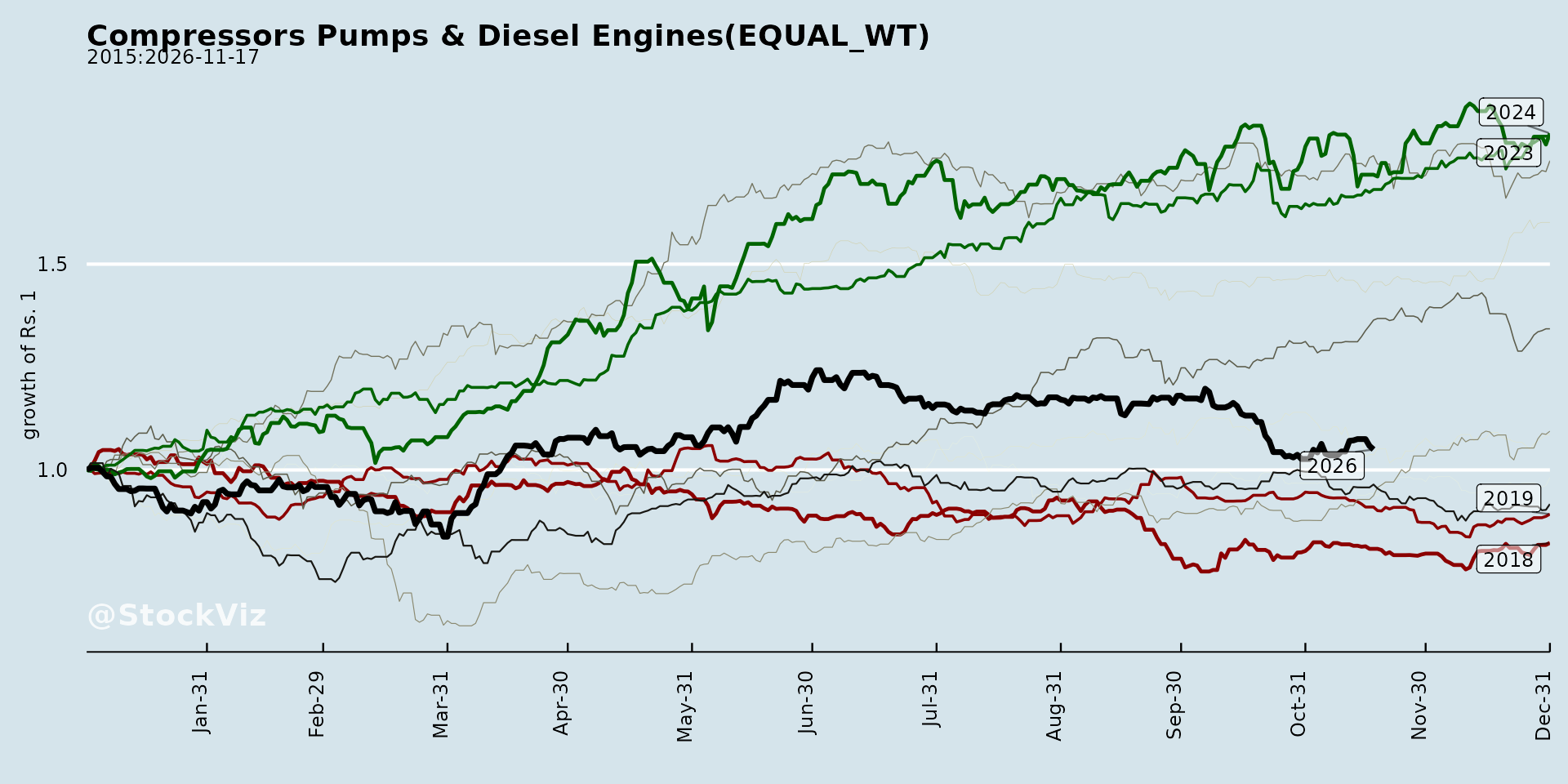
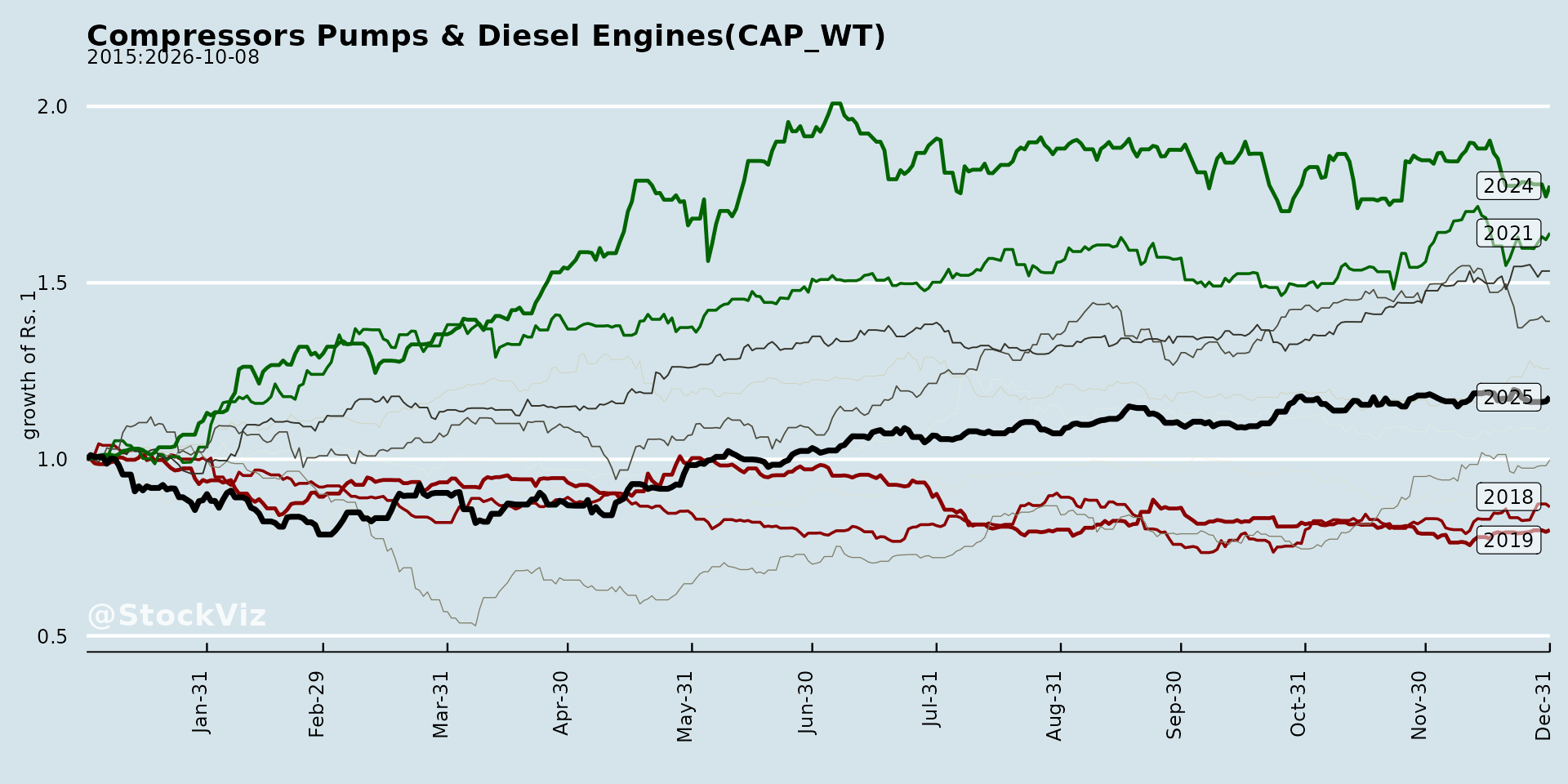
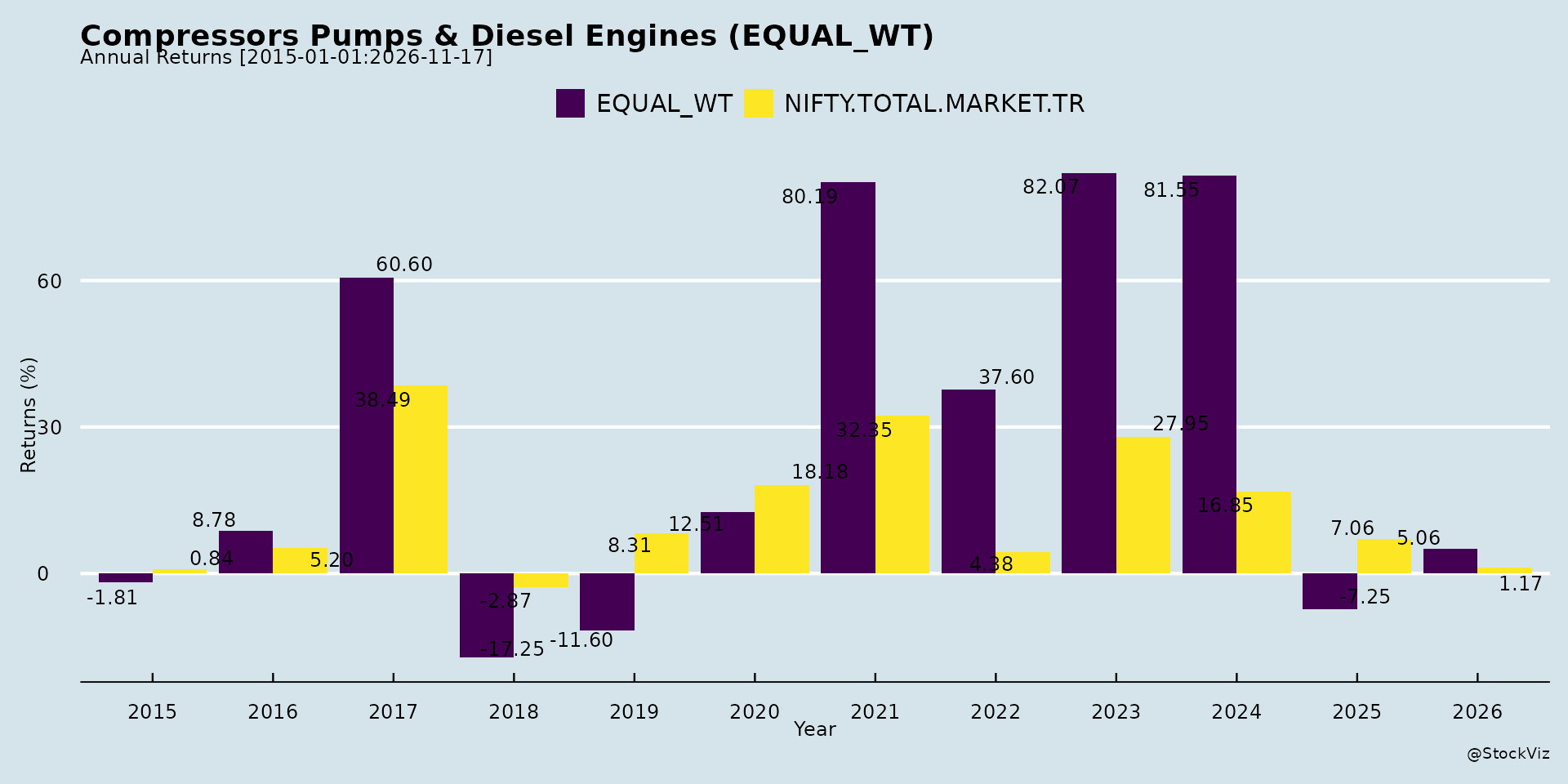
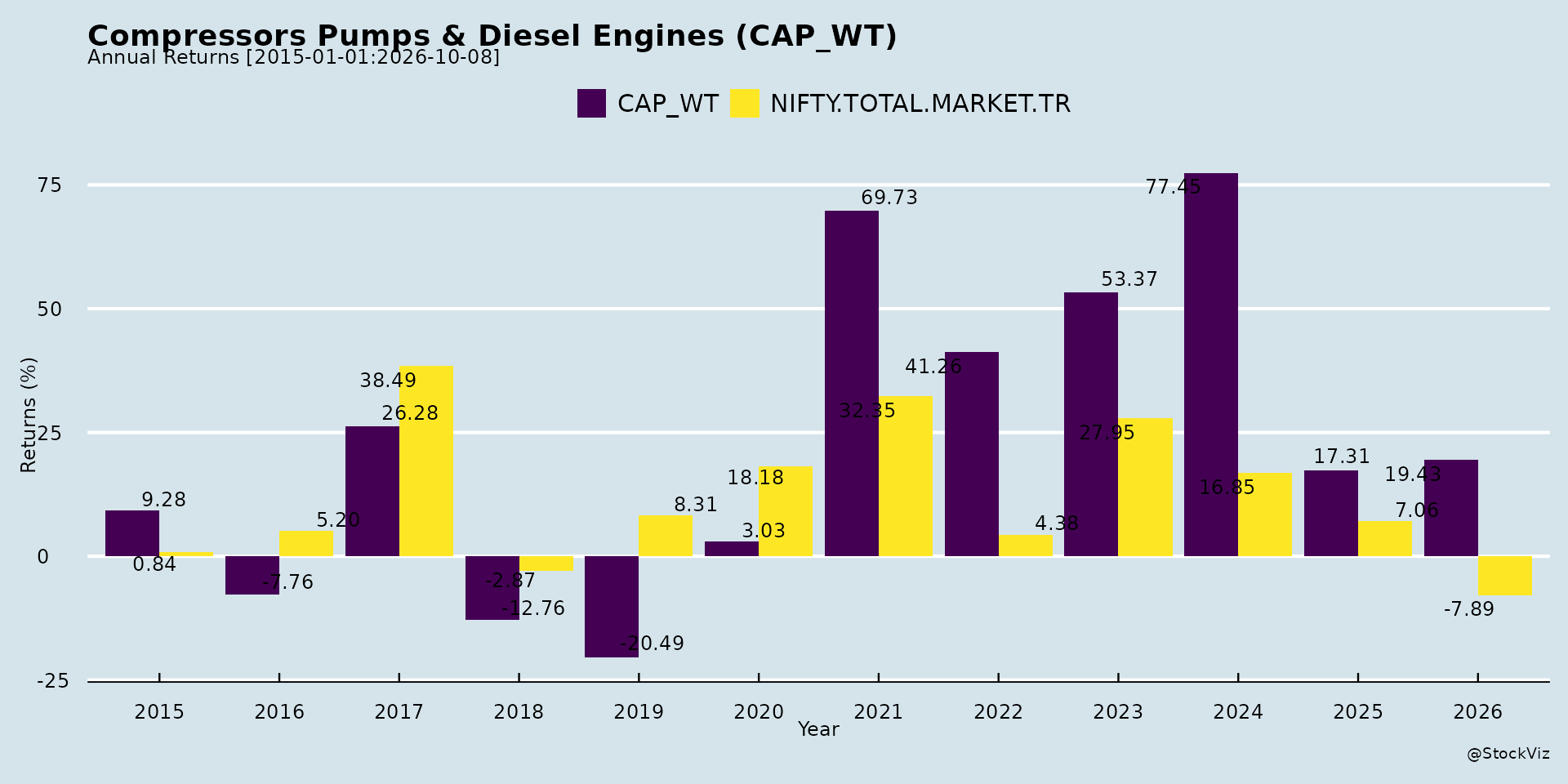
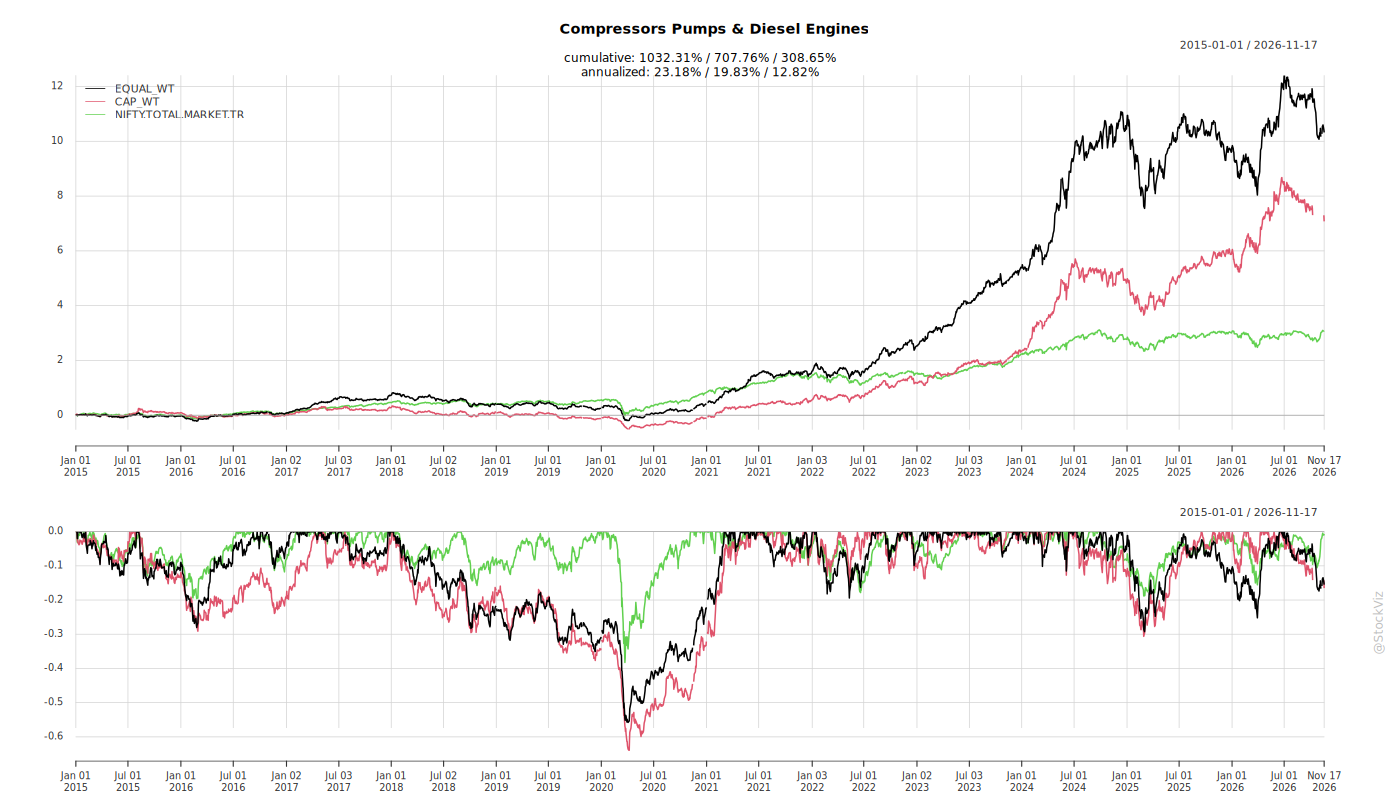
Cumulative Returns and Drawdowns
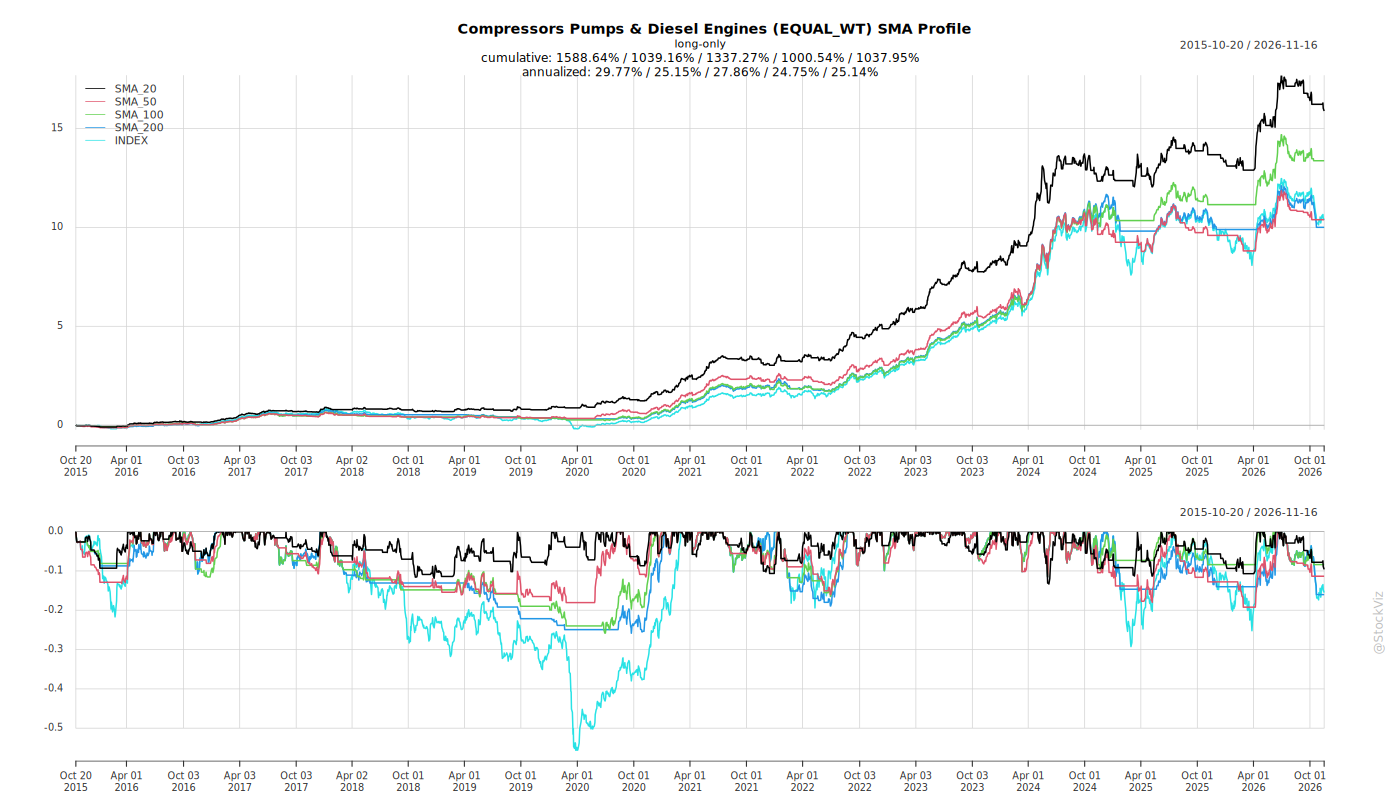
SMA Scenarios
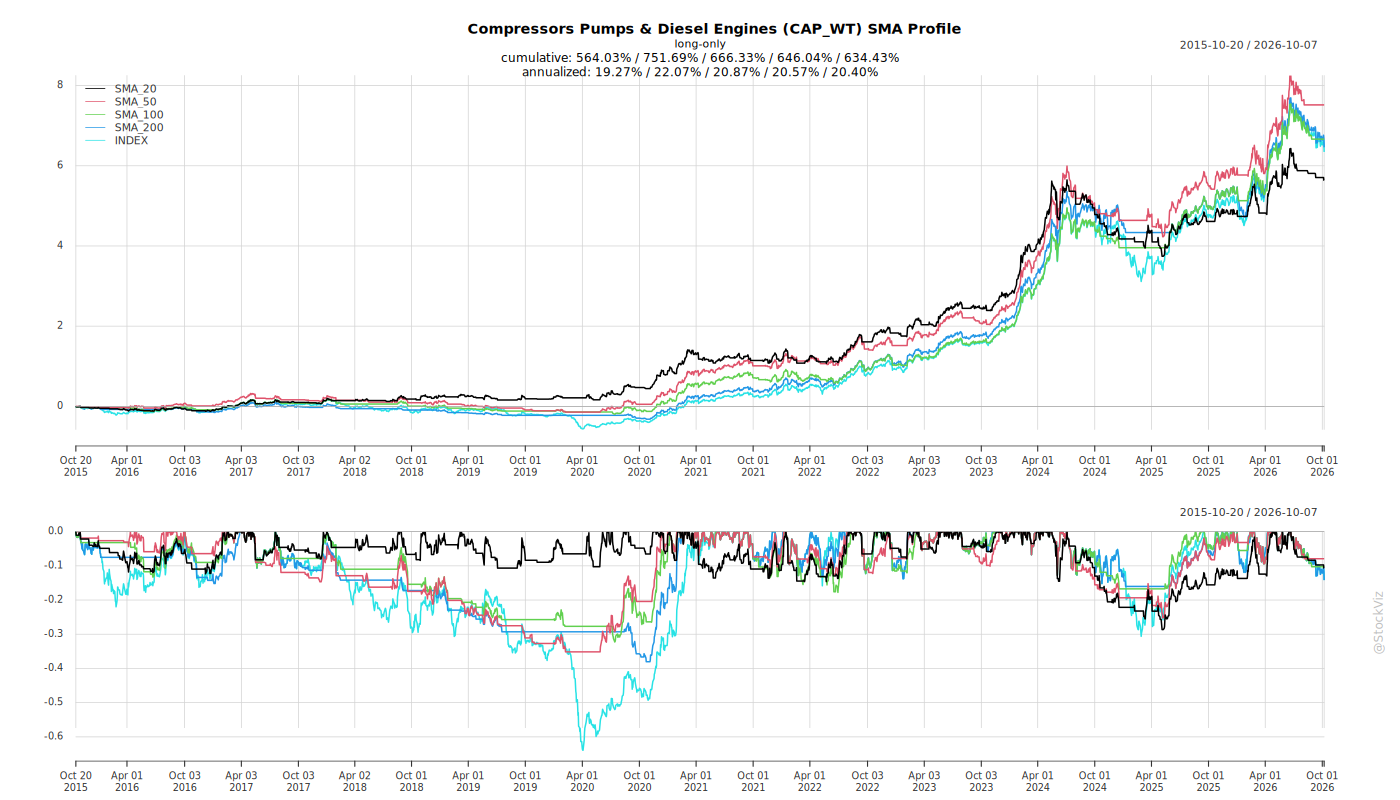
Current Distance from SMA
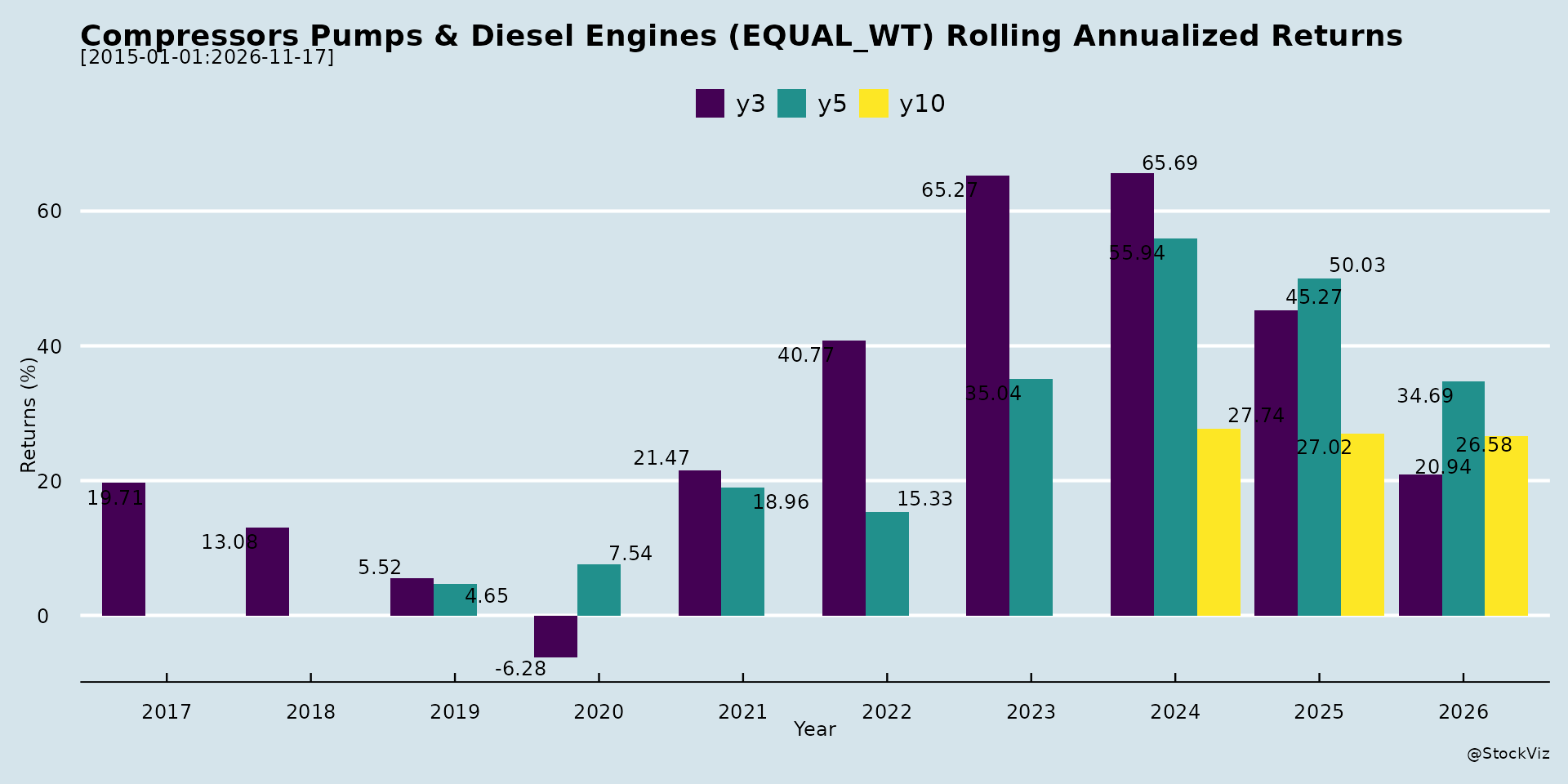
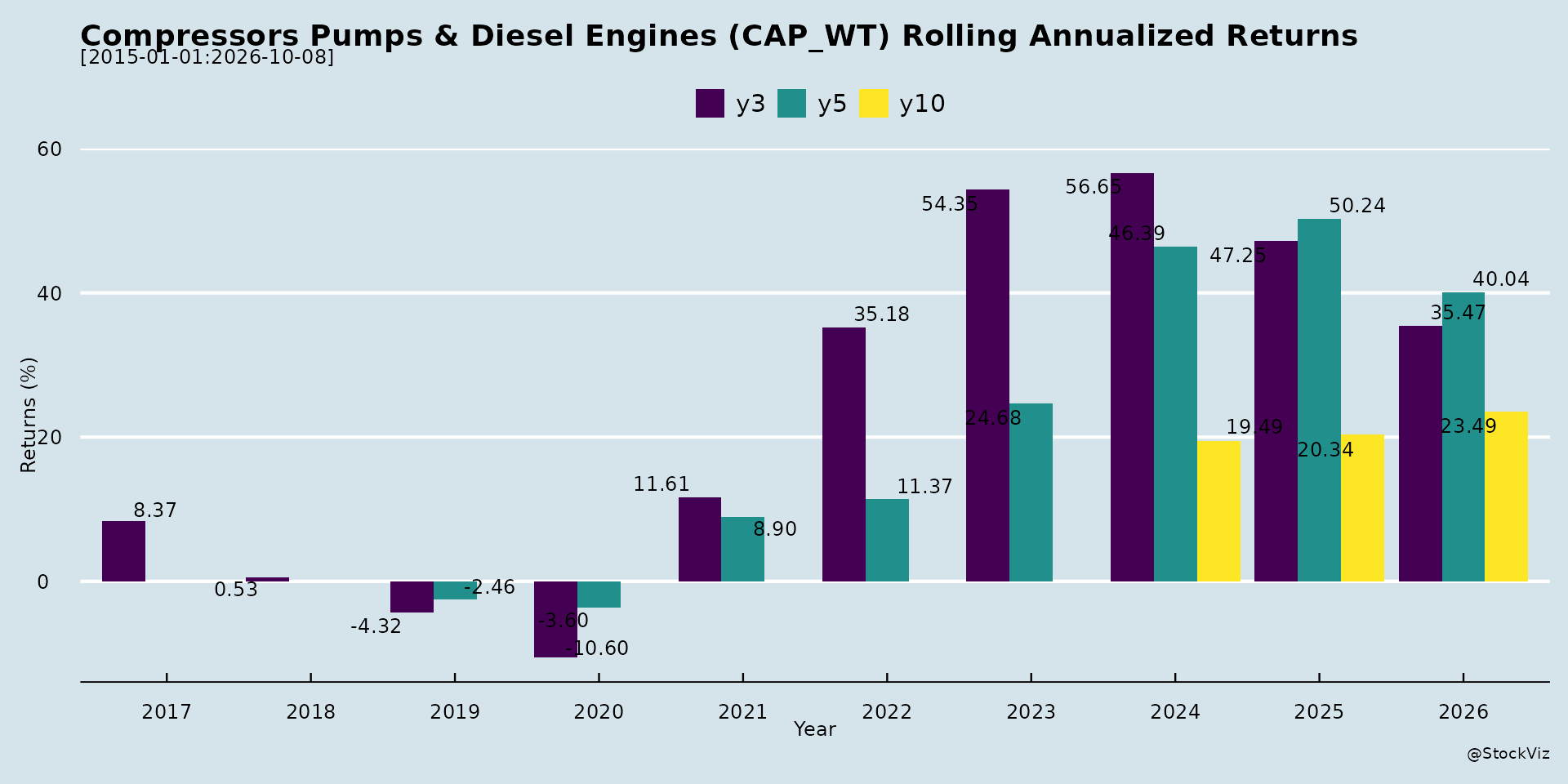
Rolling Returns
Fundamental Ratios
AI Summaries
How have the challenges and oppurtunities evolved over time?
asof: 2026-04-15
Based on the provided sources, the landscape for industrial and manufacturing companies (such as Kirloskar Brothers, KSB Limited, Shakti Pumps, Elgi Equipments, and others) has significantly evolved. These companies have had to navigate shifting geopolitical and regulatory challenges, while capitalizing on emerging opportunities in green energy, infrastructure, and advanced technologies.
Here is a detailed breakdown of how challenges and opportunities have evolved over time:
Evolution of Challenges
1. Geopolitical Uncertainties and Supply Chain Disruptions Over time, global events have increasingly impacted operational stability. * Middle East Conflict: The war in the Middle East has created supply chain constraints, notably affecting Elgi Equipments through the availability and pricing of Liquefied Petroleum Gas (LPG)—a critical manufacturing input—as well as causing disruptions and uncertainties in shipments to the Gulf region [1-3]. Similarly, KSB Limited noted that Middle East disruptions threaten LPG and gas-fired furnaces in foundries, potentially delaying castings and hindering export shipments to the region [4, 5]. * Export Pressures: Companies like Cummins India have faced near-term pressures on their export markets due to these broader geopolitical uncertainties [6].
2. Government Funding Delays and Receivable Issues While government infrastructure schemes offer vast opportunities, reliance on state funding has posed significant working capital challenges: * Jal Jeevan Mission (JJM): Kirloskar Brothers Limited (KBL) suffered a revenue drop of Rs. 50 to 100 crores in a quarter because state governments delayed funding their 20% share of the JJM [7, 8]. To protect its dealers from cash flow crises, KBL had to deliberately hold back inventory and manufacturing [9, 10]. * State-Level Payment Delays: Shakti Pumps had to deliberately pause the execution of orders worth approximately Rs. 2,000 million, primarily in Maharashtra, to address elevated receivable levels and stabilize its balance sheet before AIIB and state funds were finally released [11-13].
3. Regulatory and Compliance Hurdles * New Labour Codes: The Government of India’s consolidation of 29 labour laws into four new Labour Codes has universally increased financial burdens across the sector. Companies like Elgi Equipments, Greaves Cotton, Oswal Pumps, Yuken India, and Shakti Pumps have all had to recognize millions of rupees in incremental expenses and past-service liabilities (e.g., changes in wage definitions affecting gratuity and leave liabilities) [12, 14-18]. * Tax and Governance: Companies have faced increasing compliance scrutiny. For example, Kirloskar Pneumatic received multi-crore demand notices for Custom Tariff reassessments and GST ITC mismatches [19-21], while Roto Pumps received warning letters from the BSE and NSE for exceeding the allowed time gap between Risk Management Committee meetings [22, 23].
4. International Market Shifts and Price Pressures * UK Energy Crisis: KBL’s UK operations faced temporary softness due to the UK government’s net-zero policies and skyrocketing energy prices. High costs caused energy-intensive industries (like steel and petrochemicals) to idle production, which severely reduced KBL’s highly profitable service framework contracts in the region [24-27]. * Raw Material Costs & Competition: Shakti Pumps faced margin compressions due to sustained increases in the prices of copper, steel, and solar panels [12]. Meanwhile, KSB highlighted intense price competition and margin pressures in the domestic engineered project business, particularly in the refinery, petrochemical, and coal-fired thermal sectors [28, 29].
Evolution of Opportunities
1. The Green Transition: Solar and Electric Vehicles (EVs) The shift towards renewable energy has opened massive revenue streams: * Solar Pumping & Rooftop Solar: Government initiatives like the PM-KUSUM scheme and the PM Surya Ghar: Muft Bijli Yojana (which saw its budget enhanced to Rs. 22,000 crores) are driving exponential growth [30, 31]. Shakti Pumps maintains a 25% market share in solar pumps and is investing Rs. 12,000 million to set up a 2.2 GW solar cell and PV module plant [32, 33]. Oswal Pumps recently secured a Rs. 39.40 crore order for 7.46 MWp rooftop solar systems, officially paving its way into the PM Surya Ghar scheme [30, 34, 35]. * Electric Mobility: Greaves Cotton is aggressively expanding its EV footprint, with its Ampere Magnus Grand winning the “Electric Scooter of the Year 2026” award [36]. Shakti Pumps is also establishing an EV motor and controller facility with a Rs. 2,500 million capex [33, 37].
2. Next-Generation Infrastructure: Data Centers The rapid global expansion of data centers has created a lucrative new market for cooling and firefighting pumps. Both KBL and KSB are capitalizing on this, supplying major hyperscalers (like Amazon, Meta, Equinix) in the US and Southeast Asia, and positioning themselves as preferred vendors for the emerging data center boom in India [38-42].
3. Nuclear Energy and Power Generation As India diversifies its energy mix, the nuclear sector has become a “decadal opportunity” [43]. * KSB Limited is currently testing critical Reactor Coolant Pumps for NPCIL and sees potential revenue of Rs. 300-400 crores annually from the nuclear sector [44-47]. * KBL is aggressively developing primary heat transfer pumps for upcoming fleet orders and secondary side pumps [48-50]. * Furthermore, KSB recently won a prestigious order to supply boiler feed pump packages for 800 MW Supercritical Power plants in Gadarwara and Nabinagar [51, 52].
4. Climate Adaptation and Niche Industrial Applications * Flood Control & Environment: Changing climate realities have spurred demand for specialized equipment. KBL is supplying large concrete volute pumps for flood control in Thailand and retrofitting hundreds of pumping stations in the UK and Netherlands with “fish-friendly” pumps to meet new European environmental norms [53-56]. * Defense & Specialized Engineering: Kirloskar Oil Engines recently incorporated a wholly-owned subsidiary, Kirloskar Advanced Systems Private Limited, to develop and supply unmanned systems, platforms, and integrated industrial equipment for India’s defense and railway sectors [57, 58].
5. Localization and Global Export Hubs Companies are heavily investing in making India a global manufacturing hub: * Ingersoll Rand opened a mega manufacturing facility in Sanand, Gujarat, aiming to achieve over 90% localization of rotary screw compressors and scale its output by 1.5x [59-61]. * Roto Pumps launched its new ‘P’ Range compact pumps, targeting critical sectors like mining and oil & gas globally, to drive its ambitious goal of reaching $100 million in revenue by 2028 [62, 63]. * Elgi Equipments noted that despite European headwinds, macroeconomic tailwinds from recent India-US trade agreements are expected to boost growth [64, 65].
What are the headwinds affecting this industry?
asof: 2026-04-15
Geopolitical Tensions and Supply Chain Constraints The ongoing war in the Middle East has created significant logistical and supply chain hurdles for the industry [1, 2]. Companies are facing constraints in the availability and pricing of Liquefied Petroleum Gas (LPG), which is a critical input for gas-fired furnaces used in foundry manufacturing processes [1, 3, 4]. If these restrictions persist, they threaten to disrupt the supply of essential castings from both internal and third-party foundries [3]. Furthermore, the geopolitical situation has caused disruptions in shipments to the Gulf region, hampering export execution and demand conditions in these markets [2, 5, 6]. Manufacturers are also experiencing cascading supply chain challenges regarding the procurement of raw materials, consumables, plastic components, and paints [4].
Raw Material Inflation and Margin Pressures The industry is battling increased input costs, largely driven by global conflicts that threaten to spike commodity prices [7]. There has been a sustained increase in the prices of key raw materials such as copper, steel, and solar panels [8]. These inflationary pressures pose a severe risk to profitability, particularly for domestic engineered project orders that involve long delivery timelines and lack Price Variation Clauses (PVC) to pass costs onto consumers [9, 10]. Additionally, intense competition in highly sought-after segments like the refinery, petrochemical API, and coal-fired thermal businesses is forcing companies to navigate severe price pressures to secure large orders [11]. Some businesses are also facing lower price realisations on specific government orders, further squeezing margins [8].
Delayed Government Funding and Elevated Receivables A major domestic headwind is the severe delay in funding from state governments for large-scale public infrastructure initiatives, particularly the Jal Jeevan Mission (JJM) [12, 13]. While the central government has made its 80% share of financing available, state governments lack the financial health to contribute their requisite 20% [14, 15]. This state-level financial strain is exacerbated by competing capital allocations toward populist welfare schemes [15, 16]. Consequently, manufacturers have faced major disruptions, including: * Holding back dispatches and manufacturing to protect dealers from severe cash flow crises and inventory buildup [17, 18]. * Deliberately pausing execution on massive orders (e.g., pausing Rs. 2,000 million worth of orders in Maharashtra) to arrest elevated receivable levels and consolidate balance sheet strength [8, 19].
Regulatory Changes Increasing Labor Costs The Government of India’s notification of four consolidated Labour Codes (including the Code on Wages and the Code on Social Security) has introduced notable financial liabilities across the sector [20, 21]. Due to changes in wage definitions and employee benefit obligations, companies have had to recognize significant one-time exceptional expenses and past service liabilities [20, 22-24]. These regulatory changes have simultaneously driven up routine manpower and employee costs [8, 25, 26].
International Market Softness and Tariff Barriers Exporters in the industry are dealing with economic headwinds in Europe, which have led to subdued regional performance [27]. In the U.K., exorbitant energy prices (reaching GBP 283 per megawatt hour) have forced energy-intensive industries—such as steel, glass, and petrochemicals—to idle or suspend production [28, 29]. This deindustrialization trend directly reduces revenue from lucrative service framework contracts tied to these plants [29-31]. Additionally, tough tariff conditions, including tariffs as high as 50% to 60% on Indian goods in the United States, pose ongoing challenges to export competitiveness and have previously resulted in the cancellation of lucrative orders [32-34].
Internal Operational Bottlenecks Finally, some companies have faced temporary internal headwinds while upgrading their technological infrastructure. For example, the implementation of new foundry ERP systems has caused short-term deteriorations in operational efficiency, temporarily dropping casting production yields by more than half and directly impacting quarterly revenues [18, 35-37].
What are the key things to understand about this industry?
asof: 2026-04-15
The industrial pump, compressor, and engine manufacturing industry is driven by a mix of massive infrastructure demands, rapid shifts toward renewable energy, and emerging technological sectors. To understand this industry, one must look at its diverse demand drivers, reliance on government policy, unique business model dynamics, and susceptibility to global macroeconomic factors.
Here are the key things to understand about the industry:
1. Primary Growth Drivers and Emerging Sectors * Energy and Power: There is a resurgence in conventional energy, with significant demand for equipment in thermal power plants, such as supercritical boiler feed pumps and boiler circulating pumps [1-5]. Additionally, nuclear energy represents a decadal growth opportunity, with companies developing highly specialized primary heat transfer pumps, reactor coolant pumps, and auxiliary systems for both existing and new fleet projects [2, 5-9]. * Water, Infrastructure, and Climate Change: Mega-infrastructure projects, including water and wastewater treatment, and river linking, are massive growth engines [2, 5, 10, 11]. Furthermore, the effects of global warming and climate change have spurred a specific need for large-scale flood control pumps to manage unpredictable weather events [12, 13]. * The Data Center Boom: The rapid global expansion of data centers presents a highly lucrative new market. These facilities generate massive amounts of heat, creating a substantial need for advanced cooling, HVAC, and firefighting pump systems [14-19]. * Core Industrial Expansion: Sectors such as oil and gas (refinery expansions, offshore platforms), mining, commercial building services, and food processing continue to provide steady, large-scale project opportunities [20-24].
2. The Renewable Energy Transition and Policy Dependence * Solar Initiatives: The industry is undergoing a major transition by replacing traditional electrical and diesel agricultural pumps with solar water pumping systems. This shift is heavily propelled by government initiatives like the PM-KUSUM scheme and the PM-Surya Ghar: Muft Bijli Yojana for rooftop solar [25-28]. To capture this, companies are backward-integrating to manufacture their own solar controllers, DCR cells, and PV modules [1, 4, 29, 30]. * Government Funding Bottlenecks: While state and central schemes (like the Jal Jeevan Mission) offer vast opportunities, they carry distinct financial risks. Because these projects often rely on a split of central and state funding, state-level financial constraints or the diversion of funds to other populist schemes can cause severe payment delays [31-34]. Manufacturers must carefully manage their working capital and inventory to ensure their dealer networks are not financially destabilized by these government delays [35, 36].
3. Business Model Dynamics: Standard Products vs. Projects and Aftermarket * Standard vs. Engineered Projects: The business is typically split between “standard” dealer-driven sales and “engineered” project sales. Standard business offers fast turnover, low fixed costs, and steady margins [20, 37]. In contrast, large-scale engineered projects (like coal-fired thermal or API refinery business) are highly competitive, face intense price pressures, and require long gestation periods involving extensive prototyping and rigorous testing approvals before revenues can be realized [20, 37-41]. * The Critical Role of the Aftermarket: The aftermarket—comprising spare parts, replacement pumps, mechanical seals, and maintenance services—is the most profitable segment of the industry [20, 37, 42, 43]. Securing low-margin initial project orders is often viewed as a strategic investment to establish a long-term installed base, which subsequently generates highly lucrative and stable aftermarket revenues for decades [20, 37, 44, 45].
4. Geopolitical and Supply Chain Vulnerabilities * Global Conflicts Disrupting Production: The industry is highly sensitive to geopolitical tensions, particularly in the Middle East. Conflicts in these regions disrupt logistics and shipments, and directly constrain the availability and pricing of critical manufacturing inputs like Liquefied Petroleum Gas (LPG) and natural gas, which are essential for firing the furnaces in metal foundries [46-49]. * Macro-Energy Prices: Fluctuations in global energy prices drastically impact end-users. For example, exorbitant energy costs in places like the U.K. have forced power-intensive industries (such as steel and chemicals) to idle their production, which directly reduces the service and maintenance framework revenues for equipment suppliers [50, 51]. * Commodity Price Risks: Spikes in raw material costs pose a continuous threat. While export orders and nuclear contracts often have Price Variation Clauses (PVC) or benefit from exchange rate gains, fixed-price domestic project contracts can suffer margin erosion if commodity prices spike during their long delivery windows [52-55].
5. Strategic Focus on Localization and Export Excellence * Import Substitution: To improve margins and support domestic industrial growth, manufacturers are heavily investing in R&D to localize highly complex equipment—such as Boiler Recirculation Pumps and Generation-2 mining slurry pumps—that were historically imported from overseas [1, 3, 4, 56-58]. * Rigorous Export Standards: Expanding into international markets (like the USA, Africa, and the Middle East) is a core strategy to boost profitability [21, 59-61]. However, capturing global market share requires strict adherence to international quality standards—down to the precise quality of painting and packaging—as well as highly efficient, digitized supply chains to ensure on-time delivery across oceans [62-65].
What are the tailwinds affecting this industry?
asof: 2026-04-15
Energy and Power Generation Expansions The resurgence and expansion of the energy sector are massive growth drivers for the industrial machinery and capital goods industry. There is a strong pipeline of thermal power plants being established by major players like NTPC, Adani, and JSW, which drives the demand for boiler feed and boiler circulation pumps, particularly for large supercritical power plants [1-5]. Furthermore, nuclear power is identified as a “decadal opportunity” [6, 7]. With new government initiatives and fleet model ordering by organizations like NPCIL, there is sustained, long-term demand for highly engineered products like reactor coolant pumps, primary heat transfer pumps, and auxiliary pumps [1, 3, 8-11].
Renewable Energy and Government Solar Schemes The transition to clean energy is providing immense tailwinds, heavily supported by government subsidies and agricultural shifts. Programs like the PM-KUSUM scheme (for agricultural solar pumps) and the PM Surya Ghar: Muft Bijli Yojana (for rooftop solar) are driving record order books [12-15]. The Union Budget 2026-27 significantly bolstered this momentum by increasing the PM-KUSUM allocation by 92% to Rs. 50 Billion and the PM Surya Ghar allocation by 10% to Rs. 220 Billion [16]. This creates a massive market for manufacturers of solar water pumps, variable frequency drives, and solar modules [17, 18].
Water, Wastewater, and Infrastructure Investments Extensive government spending on water infrastructure is another critical tailwind. The Jal Jeevan Mission, which recently saw its allocation extended from 3 lakh crore to almost 8 lakh crore, is directly boosting the demand for water transfer and submersible borehole pumps [19-22]. Beyond government drinking water schemes, broader infrastructure projects such as river-linking projects and large-scale water treatment plants are opening up significant opportunities for specialized equipment like vertical turbine pumps [1, 3, 23, 24]. Additionally, rapid urbanization and the effects of climate change are driving demand for essential municipal infrastructure, including large concrete volute pumps used for municipal flood control [25-28].
The Boom in Data Centers and Emerging Technologies The explosive growth of data centers, both in India and globally, is creating a highly lucrative new sub-market. Data centers require extensive firefighting systems, HVAC setups, and specialized cooling pumps to manage and dissipate the immense heat generated by servers [29, 30]. Industrial equipment manufacturers are actively collaborating with major global consultants to supply cooling solutions for hyperscalers like Amazon and Meta [31-34]. Other emerging, fast-growing industrial segments driving equipment demand include semiconductors, electronics, green hydrogen electrolysers, and “green steel” production [35-40].
Export Momentum and Favorable Global Trade Indian manufacturers are benefiting from a structural shift in global supply chains, as Western markets increasingly look to Asian manufacturers for reliable, cost-competitive engineering products [41, 42]. There is strong and sustained export demand across the USA, Middle East, Africa, and Southeast Asia [43-47]. Additionally, favorable macroeconomic tailwinds resulting from the recent India-US trade agreement are expected to further bolster export revenues and market share for Indian industrial manufacturers [48, 49].
Sustained Capital Expenditure and Energy Efficiency Across the board, the domestic industrial environment is showing resilience due to sustained capital expenditure in core sectors such as steel, petrochemicals, mining, and commercial building services [1, 3, 37, 50]. Finally, an industry-wide push toward sustainability is driving a lucrative replacement market, as customers actively upgrade to energy-efficient and contamination-free technologies (such as oil-free rotary compressors and high-efficiency motors) to meet their own ESG commitments [51-53].
What is the general outlook of this industry?
asof: 2026-04-15
The general outlook for the industrial manufacturing sector—specifically encompassing pumps, compressors, valves, and engines—is highly robust, driven by sustained capital expenditure across key domestic sectors and expanding export opportunities. Despite some near-term geopolitical and supply chain headwinds, the industry is poised for significant long-term growth supported by a resilient domestic economy, which is projected to achieve a 7.4% GDP growth rate on the back of stable consumer price indices, favorable crude oil prices, and indirect taxation reforms [1, 2].
Here is a detailed breakdown of the general outlook across various key drivers and segments of the industry:
1. A “Decadal Opportunity” in the Energy and Power Sectors The energy sector is currently one of the primary growth engines for industrial equipment manufacturers: * Nuclear Energy: The nuclear sector is widely viewed as a massive “decadal opportunity” for the industry [3, 4]. There is tremendous potential stemming from upcoming fleet orders for primary and secondary circuit pumps, reactor coolant pumps, and Small Modular Reactors (SMRs) [5-8]. Manufacturers are continuously securing approvals and supplying heavy-duty pumps to power plant operators, creating a highly visible revenue pipeline for the next decade [8-10]. * Thermal Power: Despite the global push for renewables, thermal power—specifically new super-critical thermal power plants (e.g., 800 MW units)—continues to generate immense demand for boiler feed pumps, condensate extraction pumps, and boiler circulation pumps [11-14]. * Emerging Green Technologies: The industry is actively transitioning toward future-ready segments, securing new framework contracts and early-mover advantages in green hydrogen electrolyzers and green steel production [15-17].
2. Exponential Growth in Solar and Renewable Initiatives The solar pump and solar rooftop segments are experiencing unprecedented momentum, heavily subsidized and supported by government schemes. * The PM-KUSUM scheme (for agricultural solar pumps) and the PM Surya Ghar: Muft Bijli Yojana (for solar rooftops) have received massive budgetary boosts, with government allocations growing by 92% (to Rs. 50 Billion) and 10% (to Rs. 220 Billion), respectively [18]. * Companies in this space are enjoying triple-digit order intake growth and are actively doubling their manufacturing capacities for solar structures, motors, and controllers to capture this expanding market share [19-21].
3. Large-Scale Water, Wastewater, and Urban Infrastructure The push toward urbanization and the “Viksit Bharat” vision requires extensive water supply and treatment systems [22]. * Government Water Projects: Mega-projects such as river linking and the Jal Jeevan Mission (JJM) have substantially expanded the market for submersible, vertical turbine, and water transfer pumps [11, 23-25]. * Climate Change Adaptation: Changing global weather patterns have created a new, vital market for large-scale concrete volute pumps used in flood control systems [26, 27]. Similarly, environmental regulations are driving the adoption of specialized “fish-friendly” pumps in canal systems across Europe [28, 29].
4. Rapid Expansion of Data Centers and Commercial Buildings The explosive growth of hyperscale data centers—both in India and globally—is a highly lucrative new avenue for the industry. Data centers require massive HVAC systems, cooling pumps for heat dissipation, and FM/UL-certified firefighting pump systems [30-32]. Because Indian manufacturers are listed as preferred vendors by global data center consultants, this segment is expected to be a major growth driver in the coming years [33, 34]. Furthermore, infrastructure developments like metros, airports, and hospitals continue to fuel the commercial building services market [11, 35].
5. Industrial Manufacturing and Export Momentum * Fast-Growing Domestic Sectors: Beyond traditional heavy industries, there is vigorous demand for compressed air solutions and engineered equipment from fast-growing segments like semiconductors, electronics, and steel [36, 37]. * Global Expansion: Indian manufacturers are increasingly becoming strategic global hubs [38]. Export growth is generally quite strong, particularly in the United States, Middle East, and Africa [39-41]. Recent macroeconomic tailwinds, such as the India-US trade agreement, are expected to further bolster international sales [42].
Challenges and Near-Term Risks While the broader outlook is highly optimistic, the industry is simultaneously navigating several acute challenges: * Geopolitical and Supply Chain Disruptions: Conflicts in the Middle East have constrained the availability and pricing of Liquefied Petroleum Gas (LPG), a critical input for foundries and manufacturing processes [43, 44]. The situation has also disrupted shipping routes and logistics for Middle Eastern exports, alongside causing shortages in raw materials like castings, plastics, and paints [43-47]. * Economic Headwinds in Europe: Energy-intensive industries in regions like the UK are facing deindustrialization due to exceptionally high power costs, resulting in suspended production and a contraction in service margins for equipment suppliers in those regions [40, 48, 49]. * State-Level Funding Delays: While central government funding remains solid, the financial health of some Indian state governments has caused significant delays in fund disbursement for projects like the Jal Jeevan Mission [50-52]. To protect their balance sheets and shield dealer networks, some companies have deliberately paused execution on these orders until state receivables stabilize [53, 54]. * Raw Material Costs: The industry is closely watching commodity prices (like copper and steel). While standard businesses can often pass these costs onto consumers, long-term customized project contracts remain somewhat vulnerable to margin compression if commodity prices spike [55-57].
Summary Overall, the industry is shifting from traditional, lumpy project orders to a more diversified, highly profitable mix of standard products, high-tech exports, and aftermarket services [58-60]. Supported by localization efforts, strict operational discipline, and massive infrastructure cycles, the general outlook remains profoundly positive [61-64].
Copyright © 2023 SAS Data Analytics Pvt. Ltd. All rights reserved.