Aluminium Copper & Zinc Products
Industry Metrics
November 18, 2026
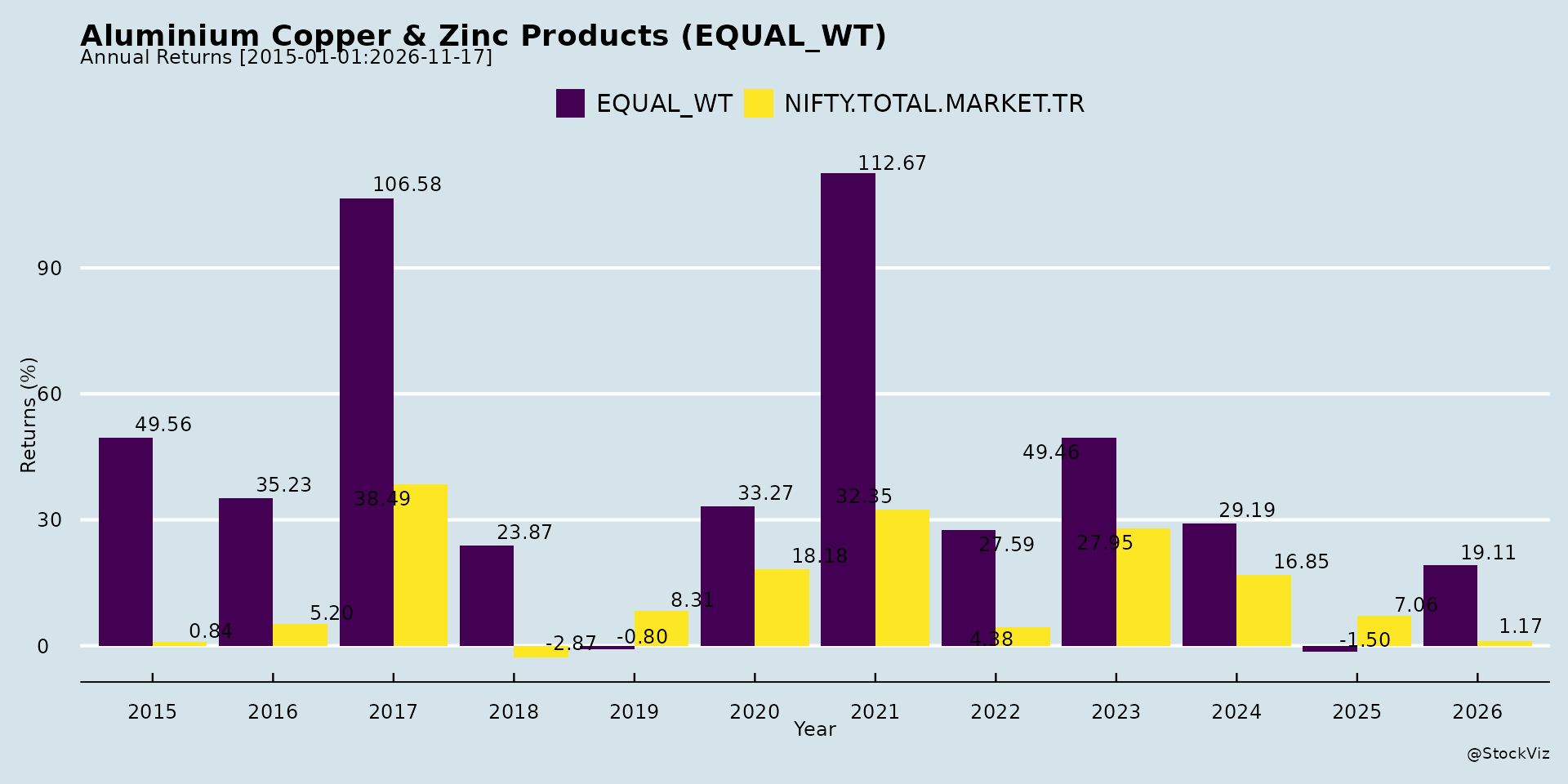
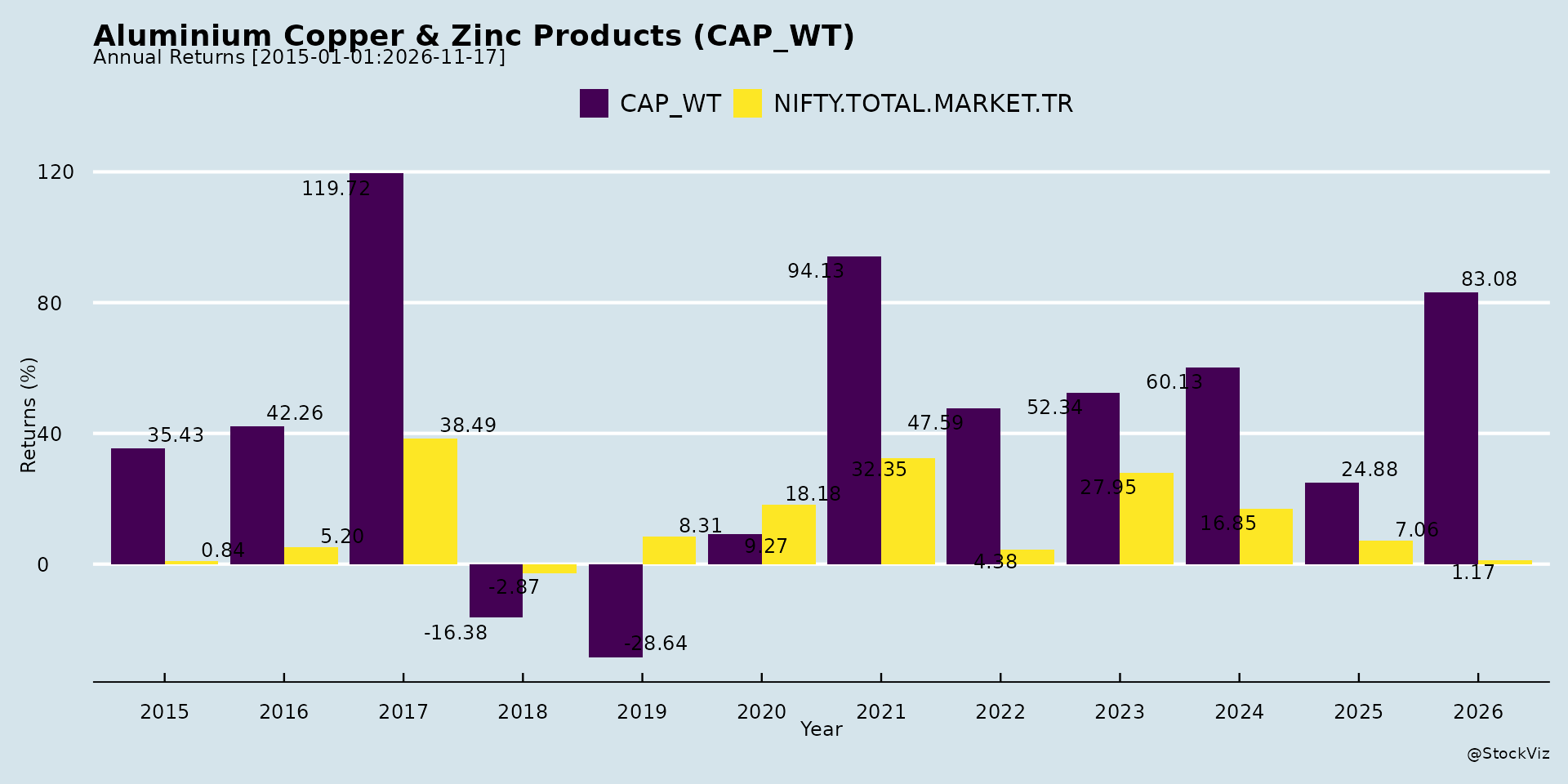
Annual Returns
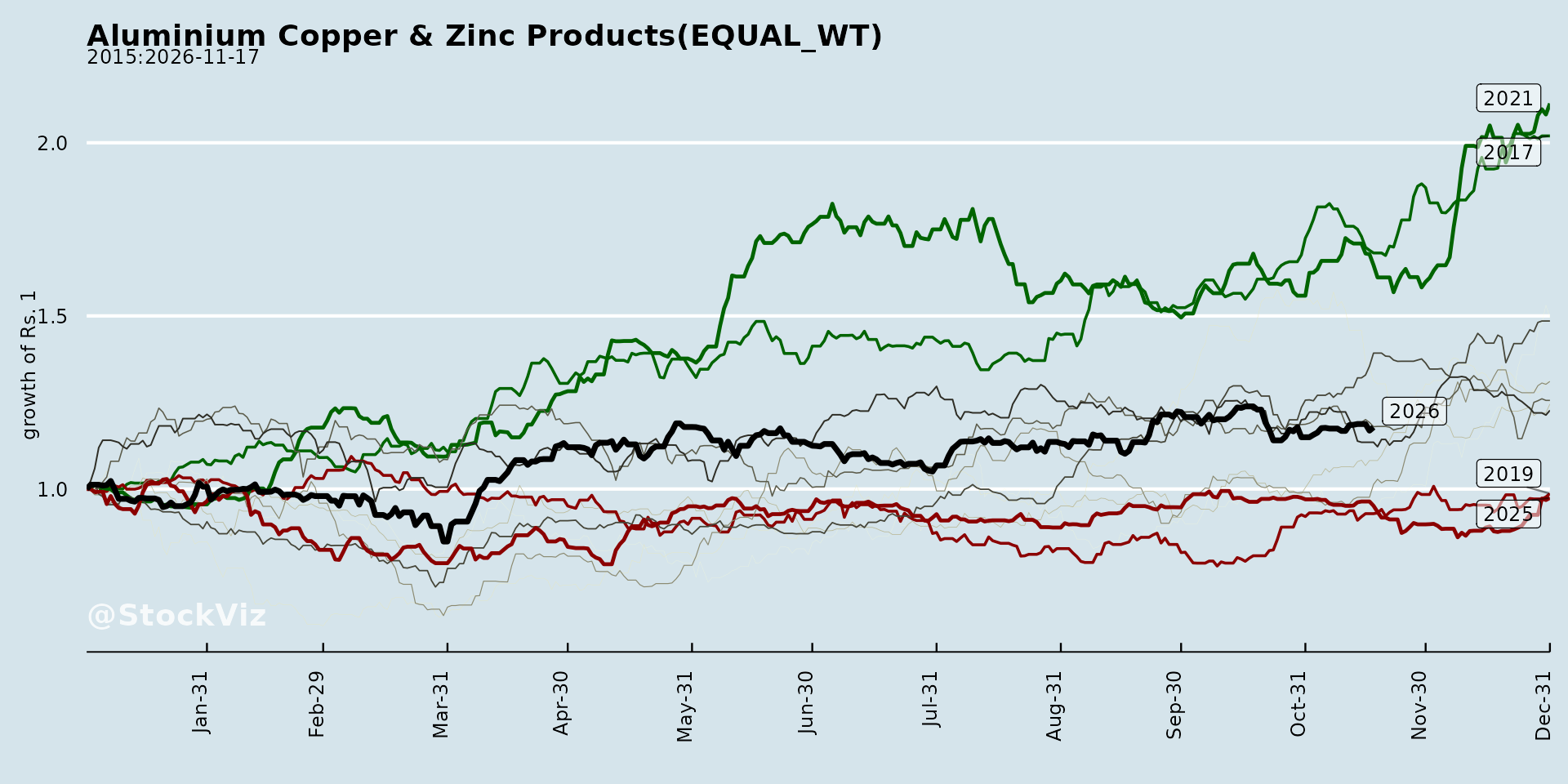
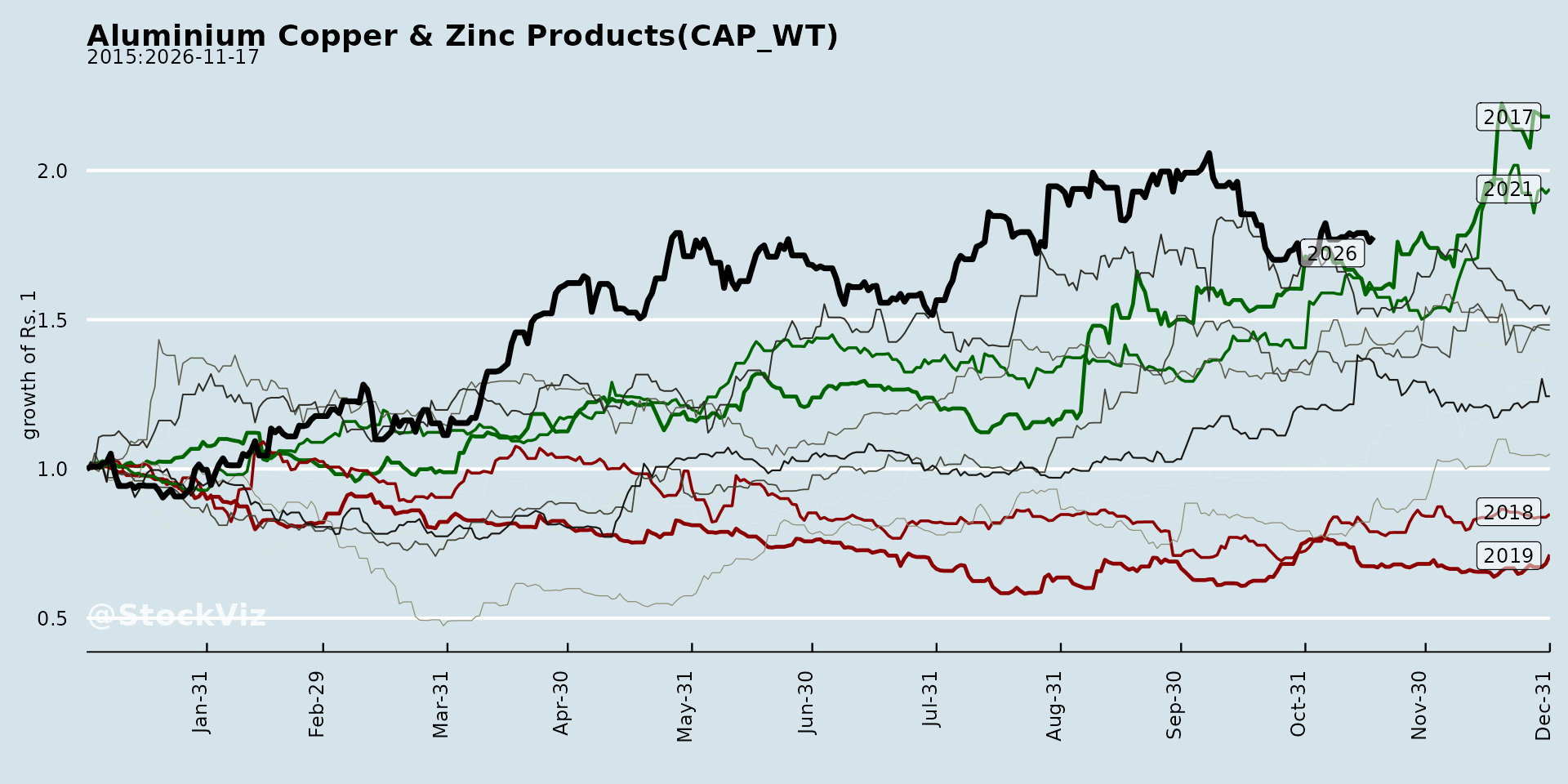
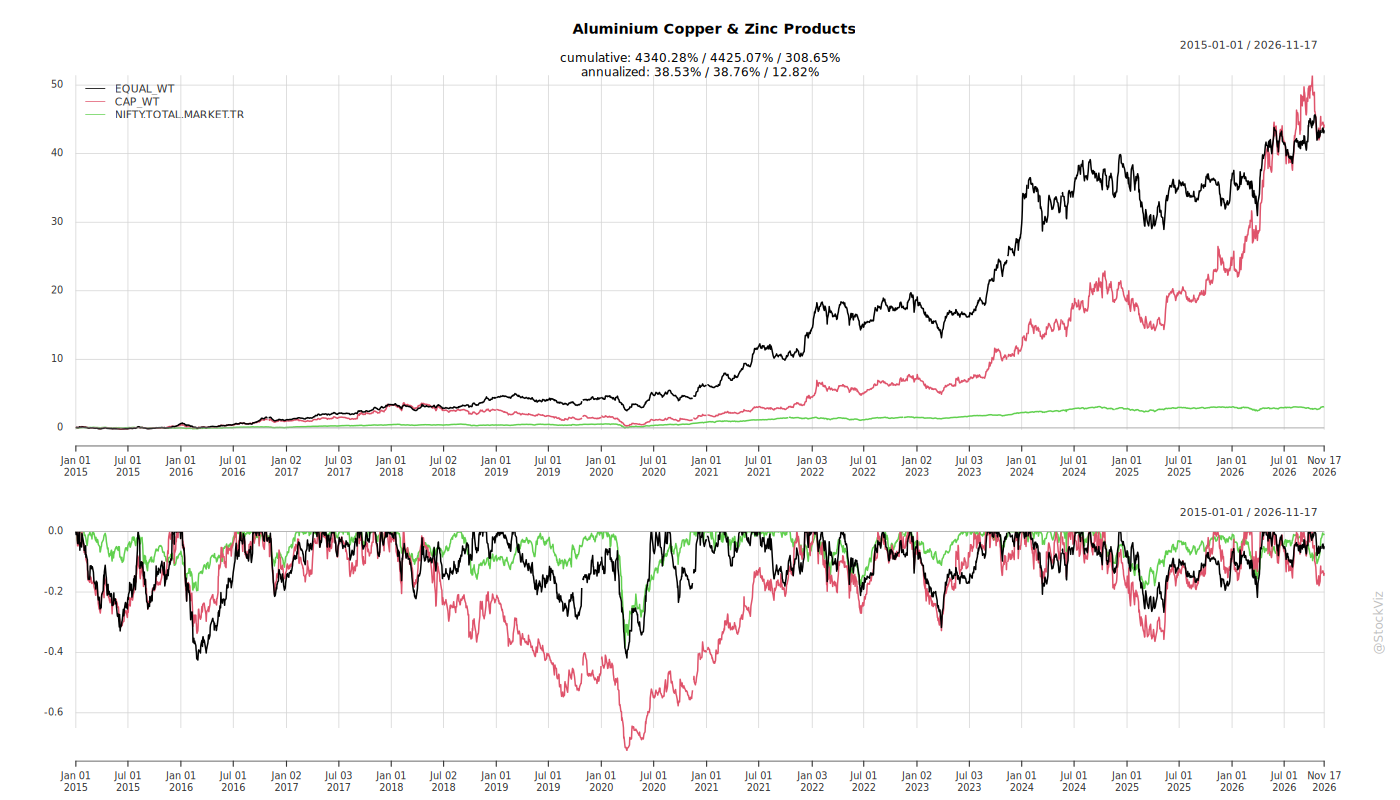
Cumulative Returns and Drawdowns
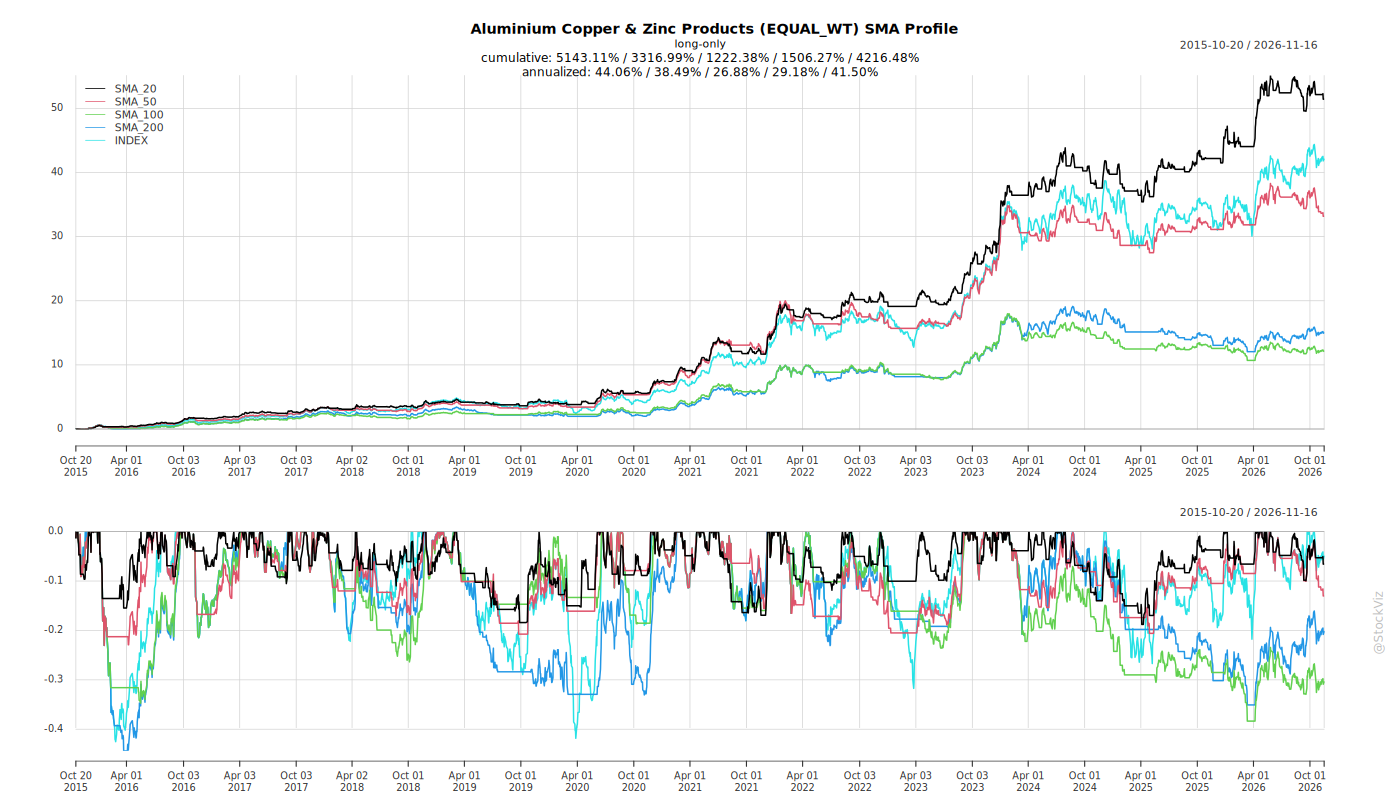
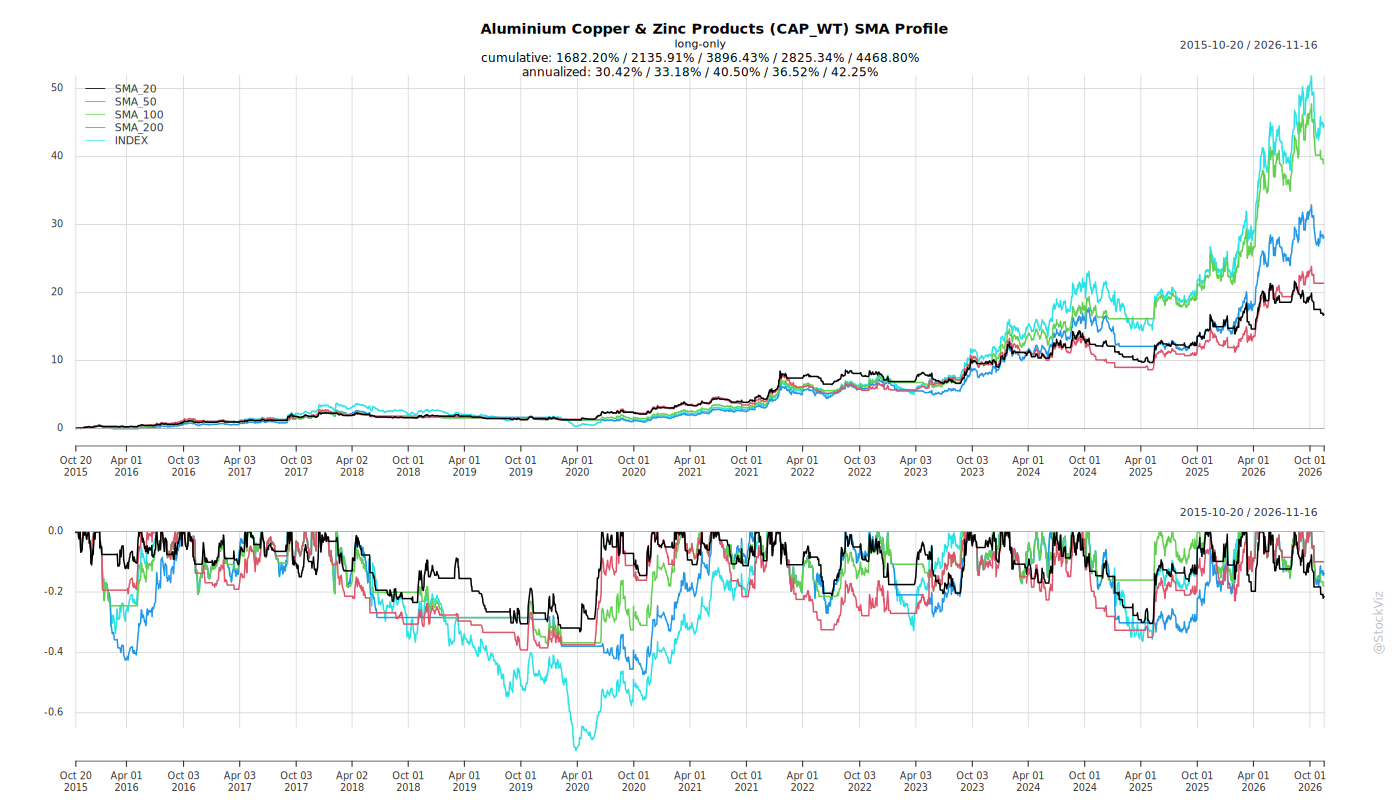
SMA Scenarios
Current Distance from SMA
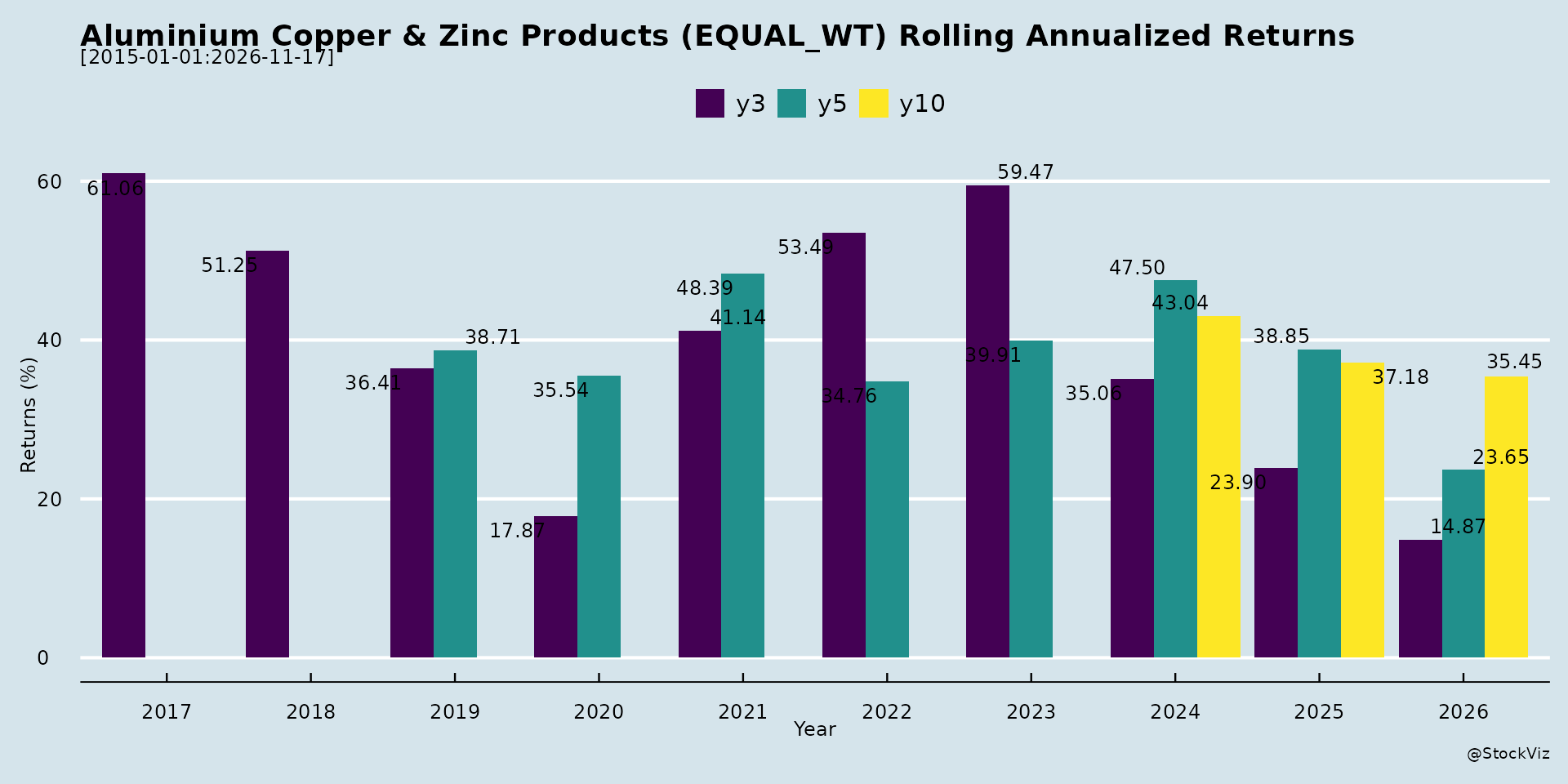
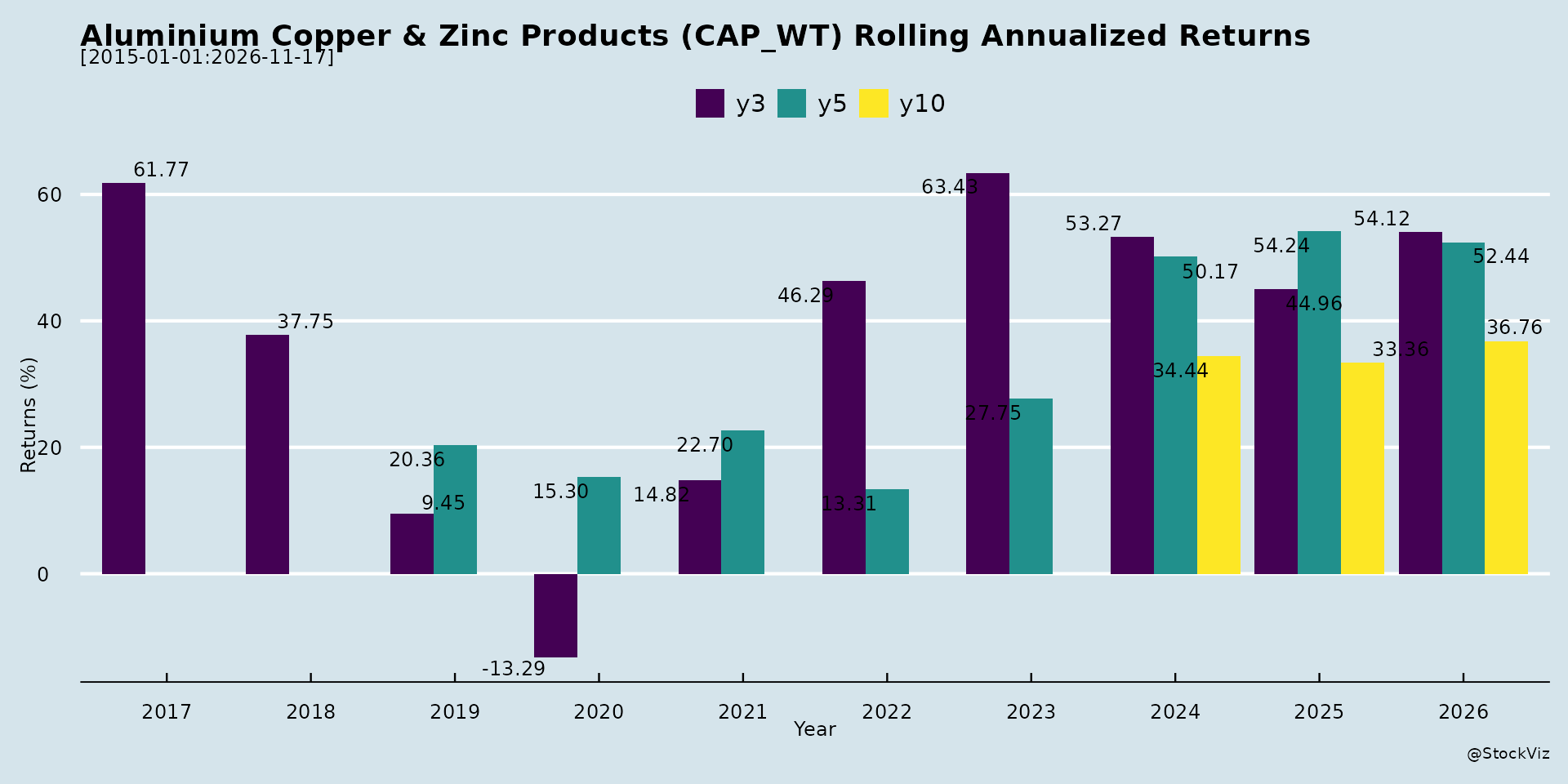
Rolling Returns
Fundamental Ratios
AI Summaries
How have the challenges and oppurtunities evolved over time?
asof: 2026-04-16
The landscape of challenges and opportunities has evolved significantly over time, shaped heavily by the global shift towards renewable energy, growing market demands, and shifting regulatory frameworks.
Evolving Opportunities The transition toward green energy and electric vehicles (EVs) has created a rapidly expanding market for foundational materials like copper and aluminum [1, 2]. * Renewable Energy Goals: India aims to attain approximately 50% of its installed power capacity from non-fossil fuels (500 GW) by 2030, alongside a target of 365 GW of installed solar power capacity by FY2032 [3-5]. This massive infrastructural shift is expected to drive substantial demand for grid integration and transmission efficiency solutions [4]. * EV and Automotive Boom: By 2030, power consumption from EVs is expected to reach 37 TWh, driven by an Indian auto industry that is projected to expand to $113.5 billion by 2028 [4]. * Market Expansion: To support this power generation and transmission boom, the Indian wire and cables market—valued at $17.70 billion in 2023—is expected to grow at a CAGR of 9.5% to reach $27.80 billion by 2028 [4]. Global demand across sectors like transformers, railways, and renewables is also being supported by favorable international policy environments, fueling export-led growth [6]. * Strategic Corporate Growth: Companies are aggressively capitalizing on these evolving opportunities through capacity expansion and global outreach. For example, Vidya Wires is expanding its capacity from 19,680 MT to 37,680 MT to increase its market share from 5.7% to 11.3% [1]. Similarly, Eurobond successfully scaled its production by 22.4% to over 16 lakh sheets in FY26, leveraging backward integration and expanding its geographic footprint into Qatar and Europe [7, 8].
Evolving Challenges Despite strong market tailwinds, companies face a complex and changing array of risks and operational hurdles. * Regulatory Changes: A significant recent challenge has been adapting to sweeping regulatory overhauls. The Government of India introduced the “Labour Codes” (consolidating the Code on Wages 2019, Industrial Relations Code 2020, Code on Social Security 2020, and Occupational Safety, Health and Working Conditions Code 2020), which became effective on November 21, 2025 [9-11]. This forced companies to reassess their employee benefit obligations and expanded eligibility criteria, leading to sudden incremental past service costs that had to be absorbed as exceptional financial items [10, 11]. * Macroeconomic and Operational Risks: Companies must continually navigate inherent risks that can cause actual results to differ from their financial projections. These evolving challenges include fluctuations in earnings, managing rapid growth, intense competition, changing economic conditions, talent retention, contract overruns, and shifting material costs [12]. * Debt and Financial Management: Funding extensive growth requires high capital, making debt management a constant challenge. Companies are actively forced to focus on deleveraging—allocating funds specifically for loan prepayment or repayment—to reduce their interest burdens, strengthen their debt-to-equity ratios, and maintain the financial flexibility necessary to capture future opportunities [13]. * Administrative and Technical Hurdles: At a granular level, evolving compliance requirements continue to present minor but notable challenges, such as companies facing technical difficulties and platform issues when attempting to submit mandatory financial and audit reports to regulatory bodies [14, 15].
What are the headwinds affecting this industry?
asof: 2026-04-16
While the provided sources primarily focus on the financial successes, capacity expansions, and growth drivers of the industry—such as the booming demand from renewable energy and electric vehicle (EV) sectors—they do reveal several headwinds and risk factors affecting companies in the wire, cable, and metal extrusion sectors:
Regulatory Changes and Incremental Labour Costs A significant compliance and financial headwind currently impacting the industry is the Government of India’s notification of the New Labour Codes, which include the Code on Wages 2019, the Code on Social Security 2020, the Industrial Relations Code 2020, and the Occupational Safety, Health and Working Conditions Code 2020 [1-3]. These codes, made effective from November 21, 2025, have forced companies to reassess their employee benefit obligations based on revised wage definitions and expanded eligibility criteria [1]. This has resulted in unexpected, incremental past service costs and higher defined benefit obligations that companies are actively having to absorb and evaluate [1, 3, 4].
Commodity Price Volatility Because the industry is heavily reliant on key raw materials like copper and aluminum, fluctuations in commodity prices represent a continuous headwind [5]. The severity of this risk is evidenced by the mitigation strategies companies must employ; for instance, Vidya Wires highlights that it maintains a “Risk Free Business Model” specifically by utilizing back-to-back copper booking and active copper hedging to protect against price shocks [6].
Macroeconomic and Market Uncertainties Companies face broader economic headwinds that can negatively impact profitability and operations. General risk factors formally identified within the industry include [7]: * Economic fluctuations: Prevailing economic costs, general economic conditions, and national fiscal deficits. * Policy risks: Unforeseen changes in government policies and regulations. * Financial instability: General fluctuations in earnings.
Operational and Competitive Pressures On an operational level, companies in this manufacturing space must navigate intense competition while successfully managing rapid growth and capacity expansions [7, 8]. Additionally, they face internal headwinds related to talent retention and the risk of contract overruns on large-scale manufacturing and supply orders [7].
What are the key things to understand about this industry?
asof: 2026-04-16
The industry primarily encompasses the manufacturing and supply of copper and aluminum products, including specialized winding wires, conductivity products, and metal cladding or architectural facades [1-3].
Here are the key things to understand about the market dynamics, operational strategies, and growth drivers of this industry:
1. Massive Sector Growth and Market Projections The industry is experiencing significant expansion, heavily driven by infrastructure and technological advancements. * Market Size: The Indian wire and cables market was valued at $17.70 billion in 2023 and is projected to reach $27.80 billion by 2028, registering a compound annual growth rate (CAGR) of 9.5% [4]. * Power Generation Boom: India’s overall power generation capacity is expected to double, reaching approximately 900 GW between March 2024 and 2032 [4]. * Automotive Expansion: The automotive manufacturing industry is projected to grow to $113.5 billion by 2028, with EVs driving demand for highly specialized components [4]. By 2030, electric vehicles are expected to consume around 37 TWh of the country’s electricity [4].
2. The Renewable Energy Catalyst The transition to green energy is a massive catalyst for copper and aluminum demand. Copper, in particular, plays an essential role in powering renewable infrastructure [5]. * India aims to achieve a non-fossil fuel-based installed capacity of 500 GW (roughly 50% of its total capacity) by 2030 [6, 7]. * The country is targeting 365 GW of installed solar power capacity by 2032, up from 81.8 GW in FY24, leaving substantial room for expansion [4, 6, 7]. * India holds a vast wind energy potential of up to 695 GW (at 120m), of which only 5% has been tapped so far [5]. This drives continuous demand for grid integration, efficiency solutions, and components like windmill generators [4, 8].
3. Diverse Product Portfolios and Applications Companies in this space manufacture a wide array of highly specialized products (often thousands of SKUs) tailored for critical end-user industries [2]. Key products include: * Paper Insulated Copper Conductors: Wrapped in treated paper and often oil-impregnated, these are indispensable for ensuring stable and safe power flow, handling high currents, and providing high dielectric strength for power distribution and transformers [7-9]. * PV Ribbons and Bus Bars: Flat, wide conductive pathways (often tin or silver-coated) used specifically in photovoltaic solar modules to link cells and efficiently transmit DC power while reducing heat and resistance [9-11]. * Enameled Wires and Conductors: Insulated with coatings for thermal, chemical, and moisture resistance, these are used in EV motors, generators, and home appliances [8, 12]. * Architectural Facade Materials: The industry also includes specialized metal cladding panels—such as AluZn, Eurodual, and SolidAL—designed to meet the evolving demands of the architectural and construction markets [13].
4. End-User Industries The industry serves a highly diversified and critical set of sectors, ensuring a balanced and resilient business model [14]. Major end-users include: * Power & Transmission: Transformers, substations, switchgears, and power distribution systems [15, 16]. * Renewable Energy: Solar and wind energy generation and transmission [15]. * Transportation & Auto: Electric vehicle (EV) motors, internal combustion engine (ICE) vehicles, and railway systems [15, 17, 18]. * Industrial & Consumer Goods: Electrical motors, welding machines, air conditioning, refrigeration, and home appliances [8, 16, 18].
5. Supply Chain and Manufacturing Strategies * Raw Material Sourcing: The primary inputs are copper cathodes, copper rods, aluminum rods, and various insulating materials [14, 15]. * Backward Integration: To maintain strict quality control and optimize costs, manufacturers often utilize backward-integrated setups. For example, some companies process raw copper cathodes into oxygen-free copper rods entirely in-house [15, 19]. * Risk Mitigation: To insulate themselves against volatile commodity prices, companies employ risk-free business models such as back-to-back copper booking and copper hedging [20]. * Customer Diversification: To build a resilient business, companies avoid over-reliance on a single buyer; for instance, ensuring no single customer accounts for more than 9% of total sales [14].
6. Global Footprint and Export-Led Growth The industry is actively expanding its geographical reach due to growing global demand and favorable international policy environments [21]. * Manufacturers export to multiple continents, including the Americas, Europe, the Middle East, Africa, and Australia [3, 9, 20, 22]. * Companies are increasingly establishing overseas operations, marketing setups, and wholly-owned subsidiaries (such as in Qatar) to anchor regional operations, localize support, and ease international business transactions [21, 23, 24].
What are the tailwinds affecting this industry?
asof: 2026-04-16
The copper and aluminum winding and conductivity products industry is currently benefiting from several strong tailwinds, primarily driven by infrastructure expansion, renewable energy goals, and the rise of electric vehicles (EVs).
1. Ambitious Renewable Energy Targets A major driver for copper and aluminum demand is India’s transition to green energy. The country aims to achieve a non-fossil fuel-based installed capacity of approximately 500 GW by 2030 [1-3]. Furthermore, India is targeting 365 GW of installed solar power capacity by FY2032 [1, 2]. The wind energy sector also offers immense room for growth; India has a wind potential of around 302 GW at 100 meters and 695 GW at 120 meters, yet has only tapped into 5% of this potential [4]. This shift requires extensive grid integration and transmission efficiency solutions, driving the need for indispensable materials like paper-insulated copper conductors that ensure stable and safe power flow in renewable infrastructure [2-4].
2. Massive Power Generation Capacity Expansion India’s overall power generation capacity is projected to double, reaching approximately 900 GW between March 2024 and 2032 [2]. This substantial growth will directly increase the demand for winding wires, which act as critical components in electrical infrastructure, including power distribution systems, transformers, and electric motors [2, 5].
3. The Boom in Electric Vehicles (EVs) and the Automotive Sector The shift towards electric mobility is a significant tailwind, as copper plays an essential role in manufacturing EV components and powering the broader green transition [4]. By 2030, power consumption from EVs is expected to account for 37 TWh of India’s total electricity demand [2]. Concurrently, the overall Indian automotive manufacturing industry is expected to expand to $113.5 billion by 2028, growing at a CAGR of 6.1% [2, 6].
4. High Growth in the Domestic Wire and Cables Market Reflecting these broader infrastructural and industrial trends, the Indian wire and cables market itself is experiencing robust growth. Valued at $17.70 billion in 2023, the market is expected to reach $27.80 billion by 2028, registering a Compound Annual Growth Rate (CAGR) of 9.5% [2].
5. Favorable Global Export Environment In addition to domestic growth, there is growing global demand from sectors including transformers, renewable energy, railways, and electric vehicles [7]. This demand is supported by favorable policy environments in key export geographies, providing strong opportunities for companies in the industry to leverage export-led growth strategies [7].
What is the general outlook of this industry?
asof: 2026-04-16
The general outlook for the copper and aluminum winding and conductivity products industry is highly positive, propelled by significant capacity expansions, infrastructural development, and the global transition to green energy [1, 2].
Overall Market Size and Trajectory The Indian wire and cables market demonstrates a strong upward trajectory. Valued at $17.70 billion in 2023, the market is projected to reach $27.80 billion by 2028, growing at a Compound Annual Growth Rate (CAGR) of 9.5% [3].
Expansion of Power Generation Infrastructure A primary catalyst for this industry is the rapid expansion of India’s power generation sector. The country’s power generation capacity is expected to double, reaching approximately 900 GW between March 2024 and 2032 [3]. This massive scale-up directly drives the demand for winding wires, which are critical components required in transformers, electrical motors, and various other electrical infrastructure [3]. Additionally, as modern power systems evolve, there is a growing demand for reliable and efficient energy distribution capable of high-current handling, making specialized products like paper-insulated copper conductors indispensable for safe power flow [4].
Surge in Renewable Energy The shift toward sustainable energy sources is a major growth driver, as copper and aluminum are essential for building renewable infrastructure [2]. The outlook is heavily influenced by ambitious national targets: * Overall Green Energy: India aims to achieve a non-fossil fuel-based installed capacity of roughly 50% (500 GW) by the year 2030 [4, 5]. * Solar Power: The country is targeting 365 GW of installed solar power capacity by FY2032 [5]. As of FY24, India had an installed solar capacity of 81.8 GW, which represents only about 11% of its estimated 749 GW total solar potential, leaving immense room for future installations and corresponding wire demand [4]. * Wind Power: India holds a strong wind potential of around 302 GW at 100 meters and 695 GW at 120 meters, yet has tapped into only 5% of this potential so far [2]. This push toward renewables guarantees sustained demand for grid integration and advanced transmission efficiency solutions [5].
Electric Vehicles (EV) and Automotive Growth Copper plays an essential role in the green transition, particularly in the manufacturing of EV components [2]. The broader Indian automotive manufacturing industry is anticipated to expand to $113.5 billion by 2028, growing at a CAGR of 6.1% [3]. As the auto industry shifts, electric vehicles’ power consumption is expected to reach 37 TWh by 2030, further solidifying the necessity for high-quality conductivity products [3].
Global Export Opportunities The outlook is not limited to domestic growth. There is an increasing global demand originating from sectors such as transformers, renewable energy, railways, and electric vehicles [6]. This demand is heavily supported by favorable policy environments in key international geographies, which will continue to fuel export-led growth strategies for manufacturers in the winding and conductivity space [6].
Copyright © 2023 SAS Data Analytics Pvt. Ltd. All rights reserved.